
Intro
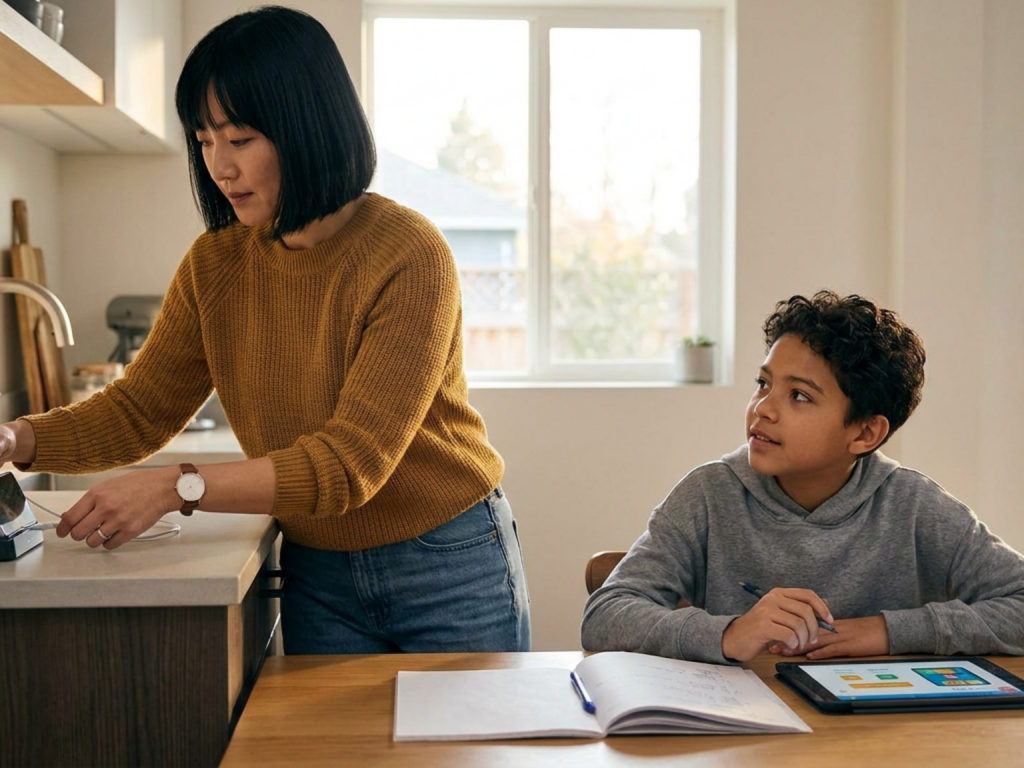
Preteen screen limits can feel surprisingly complicated. Children ages 8 to 12 are old enough to use digital tools for learning, friendship, creativity, and entertainment, but they are still developing executive function, emotional regulation, sleep rhythms, and risk judgment. That combination can make screens both useful and hard to manage.
Highlights
There is no single medically perfect number of screen hours for every preteen; quality, timing, content, and the child’s functioning matter.
Excessive recreational screen use is associated with sleep disruption, emotional symptoms, academic difficulties, sedentary behavior, and conflict at home.
Preteens usually do better with collaborative, predictable rules than with sudden punishment-based restrictions.
Screens should not displace sleep, schoolwork, physical activity, in-person relationships, meals, or coping skills.
Why preteen screen limits are different
Preteens occupy a developmental middle ground. They are no longer little children who need constant hands-on supervision, but they are not adolescents with mature self-monitoring. The prefrontal cortex, which supports inhibition, planning, flexible attention, and delayed gratification, is still developing. At the same time, peer approval, novelty, reward, and autonomy become increasingly motivating. Digital platforms are designed around exactly these reward pathways: variable notifications, achievements, short videos, likes, chat streaks, and autoplay.
This is why screen limits for preteens should not be framed as a moral judgment or as proof that a child lacks willpower. A child who struggles to stop gaming or scrolling may be responding to persuasive design, fatigue, social pressure, or difficulty regulating distress. Supportive limits help create an external scaffold while internal self-regulation is still maturing.
The American Academy of Pediatrics no longer recommends one universal screen-time number for all children. Instead, it emphasizes media quality, co-viewing when helpful, household rules, communication, and whether screen use is crowding out health-promoting routines. This matters because a video call with a grandparent, a school research project, a creative coding activity, and late-night compulsive gaming are all “screen time,” but they do not carry the same developmental meaning.
What counts as too much screen time
Many families want a number, and that is understandable. Some pediatric resources still use practical benchmarks, such as limiting recreational screen time for children age 5 and older to no more than about two hours per day. Other guidance emphasizes a personalized plan because the impact of screens depends on the child, the content, the timing, and the family context. Both perspectives can be useful: a time target gives structure, while a balance-based approach prevents rigid rules from missing the bigger picture.
A practical question is not only “How many hours?” but “What changed because of the hours?” Screen use is more concerning when it regularly displaces sleep, homework, reading, physical activity, chores, family conversation, outdoor play, hobbies, or predictable meals and snacks. It is also concerning when a child becomes highly distressed whenever screens stop, lies about use, withdraws from offline interests, or uses screens as the primary way to manage sadness, anxiety, anger, or boredom.
For many preteens, school-related screen time is unavoidable. Families can separate required educational use from recreational use. A child who spends time on a school platform may still need limits on gaming, short videos, group chats, or streaming. This distinction reduces arguments because the family is not treating all screen activity as identical.
Health effects parents should watch for
Research links heavier screen use in children with a range of outcomes, including more anxiety and depressive symptoms, behavioral problems, lower academic achievement, sleep disruption, and weight-related concerns. These associations do not prove that screens are the only cause; family stress, neurodevelopmental differences, sleep problems, bullying, and mental health conditions may also contribute. Still, the pattern is strong enough that screen habits deserve routine attention in child health conversations.
Sleep is often the first biologic system to be affected. Evening screens can delay bedtime through behavioral stimulation, social engagement, and “one more episode” loops. Bright light exposure may also interfere with circadian signaling, especially when devices are close to the face. Poor sleep then worsens attention, irritability, impulse control, appetite regulation, and emotional resilience. This is why screen time and child sleep should be discussed together, not as separate issues.
Emotional effects may also become circular. A large psychological meta-analysis described a bidirectional pattern: more screen time is associated with later emotional and behavioral problems, and children with emotional difficulties may then use screens more to cope. Gaming may carry higher risk than some other forms of media because of reward schedules, social competition, identity investment, and difficulty stopping mid-game. If a child is using screens to escape distress, simply removing the device without addressing the distress can escalate conflict and miss the underlying need.
Quality of content matters as much as minutes
Not all media exposures are equal. Higher-quality screen use tends to be age-appropriate, prosocial, creative, educational, physically interactive, or socially connecting in a healthy way. Lower-quality use often involves endless autoplay, rapid short-form content, aggressive advertising, violent or sexualized material, gambling-like mechanics, unrealistic body content, or hostile comment sections. The same amount of time can have very different effects depending on these characteristics.
For preteens, co-viewing does not always mean sitting beside them for every minute. It can mean knowing what games they play, what creators they follow, who they message, what privacy settings are active, and how they feel after using a platform. Asking curious, non-shaming questions often works better than interrogation. For example: “What do you like about this game?” “What happens if you stop in the middle?” “Do group chats ever make you feel left out?” “How does your body feel after an hour of videos?”
Families may also set content-specific rules. Educational videos may be allowed before dinner, while multiplayer games may be limited to weekends because stopping is harder. Messaging may be allowed in common areas, while devices stay out of bedrooms overnight. Social platforms may require periodic check-ins about privacy, bullying, and body image. This type of rule teaches discernment rather than presenting all technology as either good or bad.
Building limits that preteens can actually follow
Effective limits are specific, predictable, and connected to values the family can explain. A vague rule such as “Do not be on your tablet so much” invites negotiation and frustration. A clearer rule might be: “On school nights, recreational screens happen after homework and outdoor movement, stop 60 minutes before bedtime, and devices charge in the kitchen.” The goal is not perfection; it is repetition, consistency, and repair after difficult days.
A Family Media Use Plan can help families translate values into routines. Include the preteen in the planning process when possible. Children are more likely to cooperate when they feel heard, even if adults keep final authority. Ask what screen activities matter most to them, what times are hardest to stop, and what offline activities help them reset.
- Define separate categories: schoolwork, communication, creative use, gaming, streaming, and social media.
- Choose screen-free anchors: meals, the first part of the morning, the car ride to school, homework blocks, and the hour before bed.
- Use environmental supports: chargers outside bedrooms, app timers, console settings, router schedules, and visible family calendars.
- Plan transitions: give a 10-minute warning, allow a natural stopping point in games, and have the next activity ready.
- Model adult behavior: preteens notice whether caregivers also put phones away during meals, conversations, and bedtime routines.
If limits trigger intense meltdowns, it can help to reduce gradually rather than abruptly, especially if current use is very high. A sudden major restriction may produce rebound conflict and secrecy. Gradual changes also allow families to identify what the screen was providing: stimulation, peer connection, avoidance of school stress, or relief from loneliness.
Special considerations for gaming, social media, and school devices
Gaming often needs its own plan because many games are not designed around easy stopping. Multiplayer games may involve teammates, penalties for leaving, or long rounds. Competitive games can increase physiological arousal, making bedtime transitions harder. Families can reduce conflict by agreeing in advance on the number of rounds, the latest start time, and what happens if a match runs long. For some children, gaming works better earlier in the day rather than near bedtime.
Social media and group messaging introduce different concerns: social comparison, exclusion, cyberbullying, sleep interruptions, sexual content, and pressure to respond immediately. Preteens may need coaching on privacy, consent, screenshots, location sharing, and how to leave harmful interactions. Adults should avoid assuming that a child will automatically report online distress; shame and fear of losing the device can keep children silent.
School devices can blur boundaries because the same laptop may hold assignments and distractions. Helpful strategies include doing homework in a common area, using browser restrictions when appropriate, keeping phones away during homework, and scheduling short movement breaks. If a child has attention difficulties, learning differences, anxiety, or significant homework battles, consult the school team or pediatric clinician rather than assuming the problem is simply “screen addiction.”
When screen use may signal a deeper problem
Sometimes screen struggles are a symptom rather than the primary issue. A preteen may retreat into screens because of bullying, social anxiety, depression, family conflict, academic frustration, insomnia, neurodevelopmental differences, chronic illness, or lack of safe offline activities. In these situations, stricter limits alone may not improve well-being and may intensify distress.
Consider seeking professional guidance if screen use is accompanied by persistent low mood, panic symptoms, aggression, self-harm talk, major sleep loss, school refusal, declining grades, loss of friendships, eating concerns, or inability to participate in normal family routines. A pediatrician can screen for sleep disorders, mood and anxiety symptoms, attention concerns, headaches, vision strain, and weight-related complications. A mental health professional can help the child develop coping skills that do not rely only on devices.
Parents also deserve support. Managing screens can be exhausting, especially in homes with work demands, multiple children, separated households, or limited childcare. The aim is not to create a flawless digital childhood. The aim is to help a preteen build a sustainable relationship with technology while protecting sleep, movement, learning, connection, and emotional development.
When to get extra help
- Seek urgent help if a child talks about self-harm, suicide, or being unsafe online.
- Consult a pediatrician if screen use is linked with severe sleep loss, headaches, vision complaints, or rapid weight changes.
- Ask for mental health support if screens are the main coping tool for anxiety, depression, aggression, or social withdrawal.
- Do not abruptly remove all digital access if it may isolate a child from essential school, therapy, or safe social supports.
- Report online exploitation, threats, or sexual coercion to appropriate safety services and involve a trusted professional.
Tools & Assistance
- Create a written family media plan with weekday, weekend, bedtime, and school-device rules.
- Use device settings for app limits, content filters, downtime, privacy controls, and purchase restrictions.
- Keep charging stations outside bedrooms and use an analog alarm clock if needed.
- Schedule appealing offline replacements such as sports, music, art, cooking, reading, volunteering, or time with friends.
- Bring screen concerns to the pediatrician, school counselor, or child mental health clinician when functioning is affected.
FAQ
Is two hours per day the right limit for every preteen?
Not necessarily. Two hours of recreational use can be a helpful benchmark, but current pediatric guidance also emphasizes content quality, timing, sleep, physical activity, school performance, and emotional well-being.
Should screens be removed as punishment?
Occasional consequences may be reasonable, but repeated sudden removal can increase secrecy and conflict. Predictable rules, collaborative planning, and consistent routines usually work better.
Are educational apps and homework platforms included in screen limits?
Families often separate required school use from recreational use. Even so, long homework screen sessions should include movement breaks, eye comfort strategies, and a clear end point.
What is the most important screen rule for sleep?
Keep devices out of the bedroom overnight and stop stimulating recreational screens at least about an hour before bedtime when possible.
When is screen use a mental health concern?
It is more concerning when it coincides with persistent sadness, anxiety, aggression, school decline, social withdrawal, major sleep disruption, or inability to enjoy offline activities.
Sources
- American Academy of Pediatrics — Screen Time Guidelines
- CHOC Children's Hospital of Orange County — The effects of screen time on children: The latest research parents should know
- American Psychological Association — Screen time and emotional problems in kids: A vicious circle?
Disclaimer
This article is for informational purposes only and is not a diagnosis or treatment plan. Consult a pediatrician or qualified mental health professional for concerns about a child’s sleep, mood, behavior, learning, or safety.

















Please log in to leave a comment.