
Intro
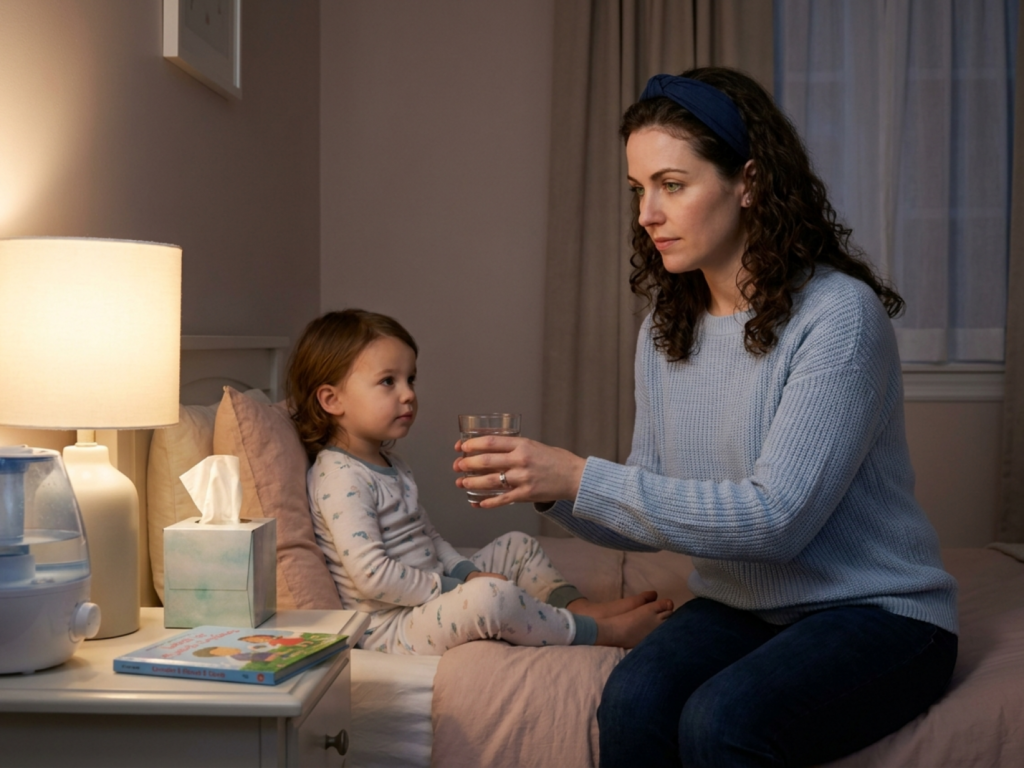
Hearing a child cough through the night can be unsettling, especially when everyone is exhausted and it is hard to tell whether the cough is a normal part of a cold or a sign of something more persistent. Nighttime cough is common in childhood, but its timing, sound, triggers, duration, and associated breathing symptoms can offer useful clues.
This article explains common patterns of nighttime coughing in children, what they may suggest, and when families should seek medical advice. It is not meant to diagnose your child; rather, it can help you observe symptoms more clearly and discuss them with a pediatric clinician.
Highlights
Nighttime cough is often related to viral upper respiratory infections, post-nasal drip, or airway irritation, but persistent or recurrent cough deserves medical review.
A cough that is worse at night, triggered by exercise, cold air, or laughing, or lasting more than three weeks may be associated with asthma in some children.
Urgent care is needed for breathing difficulty, blue or gray color, severe lethargy, dehydration, choking concerns, or noisy breathing at rest.
Over-the-counter cough and cold medicines are not recommended for young children without professional guidance, especially under age 6.
Why coughing often sounds worse at night
Cough is a protective reflex designed to clear mucus, irritants, or secretions from the airway. At night, several normal physiologic changes can make a child’s cough more noticeable. When a child lies flat, nasal secretions may drain toward the throat, stimulating cough receptors in the upper airway. Airway caliber also naturally varies over the day, and some children experience more bronchial narrowing during sleep or in the early morning hours.
Nighttime can also make symptoms feel more dramatic because there are fewer distractions. A mild cough that is barely noticed during play may wake a child repeatedly once the room is quiet. Dry bedroom air, allergens in bedding, residual viral inflammation, and mouth breathing from nasal congestion can all contribute to throat irritation.
For parents, the key question is not only whether coughing happens at night, but how often, how long it lasts, what it sounds like, and whether the child has normal breathing between episodes. A brief cough during a cold is very different from a persistent respiratory pattern that disrupts sleep for weeks or returns every time the child runs, laughs, or enters cold air.
Common cold, post-nasal drip, and viral airway irritation
The most common explanation for nighttime coughing in children is a viral upper respiratory infection. During a cold, inflammation in the nose and throat increases mucus production. When the child lies down, mucus can trickle backward, producing a post-nasal drip cough in children. This cough may be wet or rattly, but the sound alone does not always prove that mucus is deep in the lungs.
Viral cough often lingers after fever, runny nose, and sore throat have improved. The airway lining can remain sensitive for days or sometimes longer, so coughing may be triggered by cool air, crying, exertion, or laughter. Most viral coughs gradually improve, but the trajectory matters: a cough that is worsening, accompanied by new fever, or associated with breathing difficulty should be assessed.
Supportive care for childhood colds usually focuses on hydration, nasal comfort, rest, and monitoring rather than suppressing the cough completely. In infants and younger children, saline drops and gentle nasal suction may help with feeding and sleep when congestion is significant. A cool-mist humidifier may reduce dryness if cleaned carefully to prevent mold or bacterial growth. Because dosing and safety vary by age and weight, parents should check with a clinician or pharmacist before using medicines, especially in young children.
When nighttime cough may point toward asthma
Asthma is one of the important considerations when a child has recurrent or persistent nighttime cough. Cough can be an asthma symptom even when wheezing is not obvious to caregivers. Clinicians become more suspicious when coughing is worse at night, lasts more than three weeks, or is triggered by exercise, cold air, laughing, viral infections, smoke, or allergens. The NHS and Mayo Clinic both note that a long-lasting cough, especially one worse at night or provoked by activity, may warrant evaluation for asthma.
Asthma-related coughing often reflects airway hyperresponsiveness and inflammation. Some children also have shortness of breath, chest tightness, wheeze, reduced exercise tolerance, or recurrent episodes diagnosed as bronchitis. Others mainly cough. This is why persistent respiratory symptoms in children should be interpreted in context rather than by cough sound alone.
Medical evaluation may include a careful history, physical examination, assessment of triggers, and, in children old enough to cooperate, spirometry. Spirometry measures airflow and can help identify reversible airway obstruction. In younger children, diagnosis is more clinical because formal lung function testing may not be reliable. Families should not start, stop, or change asthma medicines without professional advice, but they should seek review if a child repeatedly coughs at night or after running around.
Other possible causes to keep in mind
Not every nighttime cough is due to a cold or asthma. Croup-like viral illnesses can cause a barking cough, often with hoarseness and sometimes stridor, a high-pitched sound during inhalation. Stridor at rest, chest retractions, or significant distress should be treated urgently. Pertussis, or whooping cough, can cause severe coughing fits, sometimes with vomiting or a whoop, particularly in unimmunized or partially immunized children and young infants.
Gastroesophageal reflux may contribute to cough in some children, especially when symptoms include sour taste, regurgitation, discomfort after meals, or cough after lying down. However, reflux is often over-attributed; evaluation should consider the full clinical picture before assuming it is the cause.
Environmental irritants can also worsen cough. Tobacco smoke exposure, vaping aerosols, wood smoke, strong fragrances, indoor dampness, and allergen exposure may inflame the airway. Allergic rhinitis can drive chronic nasal congestion and post-nasal drainage, especially when there is sneezing, itchy eyes, or seasonal variation.
Less common but important causes include aspiration of a foreign body, chronic infection, airway anomalies, immune problems, and complications after severe respiratory illness. A sudden cough after choking, a cough that began abruptly during eating or play, one-sided wheeze, recurrent pneumonia, poor growth, or persistent fever should prompt medical assessment.
What to observe before calling the clinician
A structured symptom history helps pediatric clinicians distinguish a self-limited cough from a pattern that needs investigation. If your child is safe and breathing comfortably, it can be helpful to write down observations over several nights rather than relying on memory after a sleepless week.
- Duration: note when the cough started and whether it is improving, unchanged, or worsening.
- Timing: record whether it occurs only at bedtime, after midnight, toward morning, or throughout the day as well.
- Triggers: include exercise, cold air, laughing, crying, pets, dust, meals, or viral infections.
- Sound and pattern: describe dry, wet, barking, paroxysmal coughing fits, gagging, vomiting, or wheeze.
- Associated symptoms: fever, nasal congestion, chest pain, shortness of breath, reduced activity, poor feeding, weight loss, or sleep disruption.
- Response to measures already advised: document any improvement with prescribed inhalers, allergy treatment, nasal care, or environmental changes.
If possible, a short audio or video recording of the cough and breathing pattern can be useful, provided it does not delay care when urgent symptoms are present. Also note family history of asthma, eczema, allergic rhinitis, or significant respiratory disease, as these can change the level of suspicion for airway hyperreactivity.
Safe comfort measures and what to avoid
For many children with a mild viral cough, the safest approach is supportive care while watching for progression. Offer fluids according to age and appetite; warm drinks may soothe the throat in older children. Honey may reduce cough frequency in some children over 1 year old, but it must not be given to infants under 12 months because of botulism risk. Keeping the child’s nose clear with saline can be especially helpful when congestion is driving cough.
Sleeping slightly more upright may help some older children, but avoid unsafe sleep positioning in infants. Babies should continue to sleep on a firm, flat surface according to safe sleep guidance unless a clinician gives specific instructions. Keep the room free from smoke and strong odors, and avoid using essential oils or vapor rubs in ways that could irritate the airway or be unsafe for age.
Medication decisions require caution. Mayo Clinic notes that over-the-counter cough and cold medicines should not be used in children younger than 6 years old. Even in older children, these products may have limited benefit and can cause side effects or dosing errors. Antibiotics do not treat viral coughs, and inhalers or steroid medicines should be used only as prescribed. If sleep-disordered breathing in children is suspected because of snoring, pauses in breathing, gasping, or restless sleep, that should be discussed with a clinician rather than managed as a simple cough.
When to seek medical help
Trust your instincts if a child’s breathing seems abnormal. Seek urgent medical care for difficulty breathing, ribs pulling in with breaths, grunting, bluish or gray color, severe drowsiness, dehydration, suspected choking, or stridor at rest. Infants, children with chronic lung or heart conditions, immunocompromised children, and those with prematurity-related respiratory history often need a lower threshold for assessment.
Arrange non-urgent but timely medical review if a cough lasts more than three weeks, repeatedly wakes the child, is worse at night without clear improvement, or is triggered by exercise, cold air, or laughing. Also seek review if there are recurrent episodes, persistent fever, weight loss, night sweats, chest pain, coughing up blood, or repeated vomiting after cough.
Night waking from cough can be exhausting for the whole family, and it is understandable to want fast relief. The most effective next step is often a careful clinical evaluation that identifies the likely driver and creates a safe plan. Sometimes that plan is reassurance and supportive care; sometimes it involves testing, follow-up, or treatment for asthma, allergy, infection, reflux, or another condition.
Seek urgent help now if
- Your child is struggling to breathe, has chest retractions, grunting, or cannot speak or feed normally.
- Lips, face, or fingernails look blue or gray, or your child is unusually sleepy or difficult to wake.
- There is stridor at rest, severe wheezing, or a suspected choking or foreign-body event.
- A baby under 3 months has fever, poor feeding, or concerning cough.
- Cough is accompanied by dehydration, persistent high fever, coughing blood, or rapid worsening.
Tools & Assistance
- Keep a nighttime cough diary with timing, triggers, temperature, and sleep disruption.
- Record a short video or audio clip of the cough and breathing pattern if your child is stable.
- Ask your pediatric clinician about evaluation for asthma or allergy if cough is recurrent or exercise-triggered.
- Use a pharmacist or clinician for age-appropriate medicine advice before giving cough or cold products.
- Reduce smoke, vaping aerosols, strong fragrances, and bedroom dust exposure.
FAQ
Is a nighttime cough always asthma?
No. Viral colds and post-nasal drip are very common causes. Asthma becomes more likely when cough is persistent, recurrent, worse at night, or triggered by exercise, cold air, or laughing.
How long is too long for a child’s cough?
A cough lasting more than three weeks, worsening over time, or repeatedly disrupting sleep should be discussed with a healthcare professional.
Can I give over-the-counter cough medicine?
Use caution. Over-the-counter cough and cold medicines are not recommended for children younger than 6 years old, and older children should use them only with appropriate guidance.
Does a wet cough mean my child needs antibiotics?
Not necessarily. Many viral infections cause wet-sounding coughs. Antibiotics are only useful for certain bacterial infections, which require clinical evaluation.
What information should I bring to the appointment?
Bring the cough duration, nighttime pattern, triggers, fever history, breathing symptoms, medications tried, family history of asthma or allergy, and any video of the cough.
Sources
- NHS — Colds, coughs and ear infections in children
- Mayo Clinic News Network — Child's chronic cough may be symptom of asthma
- Mayo Clinic — Cough - Causes and definition
Disclaimer
This article is for general educational purposes only and does not replace medical evaluation, diagnosis, or treatment. Seek advice from a qualified healthcare professional for concerns about your child’s cough or breathing.
















Please log in to leave a comment.