
Intro
Emotional connection during birth can involve tenderness, recognition, relief, protection, awe, or simply a quiet sense of presence. It may begin before labor through familiar voices, touch, and responsive care, then evolve during the hours immediately surrounding birth. For some parents, connection feels immediate; for others, it develops gradually over days or weeks.
Birth is also a medically unpredictable event. Pain, fatigue, anesthesia, operative procedures, separation, or concern about the baby's wellbeing can affect how connection is experienced. None of these circumstances determine the quality of a parent's relationship with their baby. Supportive care can protect emotional wellbeing while maintaining clinical safety.
Highlights
Connection during birth is individual and does not need to look like instant, overwhelming love.
Familiar voices, respectful communication, and supportive touch can help create continuity for parent and baby.
Early skin-to-skin contact may support infant physiological regulation, breastfeeding, and reciprocal interaction when medically appropriate.
A difficult or interrupted birth does not prevent secure attachment from developing later.
Parents should be included in decisions about contact, procedures, separation, and reunification whenever circumstances allow.
What emotional connection during birth can mean
Emotional connection during birth is not a single psychological event. It is a developing relationship expressed through attention, responsiveness, protection, communication, and mutual regulation. A parent may feel deeply connected while holding a baby, listening for a cry, watching a monitor, or asking clinicians for information. Another parent may feel emotionally numb, overwhelmed, or focused almost entirely on getting through labor. All of these responses can occur within normal human variation.
Connection is also relational rather than purely emotional. A parent who is frightened but continues to speak gently, ask questions, or accept help is still participating in a meaningful relationship with the newborn. Likewise, a partner or support person may foster connection by translating information, protecting quiet time, and helping the birthing person remain oriented and safe.
It is useful to distinguish bonding from attachment. Bonding often describes early feelings and behaviors directed toward a baby, whereas attachment refers to the relationship that develops through repeated interactions over time. Immediate bonding is not a prerequisite for healthy attachment. Sleep deprivation, pain, depression, anxiety, traumatic stress, medications, and an unexpected birth may temporarily alter emotional availability without defining the future relationship.
Connection begins before the first breath
Research on prenatal bonding suggests that a relationship can begin during pregnancy through anticipation, imagination, sensory experiences, and repeated interactions. The developing fetus is exposed to patterns of maternal physiology and sound, including the maternal voice. These experiences do not mean that a fetus understands language or that parents must perform special activities to create attachment. They indicate that the prenatal period can provide an early context for familiarity and responsive care.
During labor, familiar sensory cues may offer continuity amid an unfamiliar clinical environment. A parent or support person can speak in a calm, ordinary voice, describe what is happening, or repeat a reassuring phrase. The birthing person may also talk to the baby if that feels natural. There is no required script, and silence can be equally supportive. Clinicians should avoid implying that a particular vocal, breathing, or visualization technique is necessary for a good outcome.
Supportive care matters because emotional and physiological states interact. Fear and uncertainty can increase distress, while clear explanations, privacy, respectful touch, and reliable assistance may help a person feel safer. This does not mean emotions control labor or that a parent is responsible for complications. It means that humane communication is part of clinically appropriate care, especially when decisions need to be made quickly.
The role of voice, touch, and presence
Voice can be a simple bridge between the prenatal and postnatal environments. After birth, a newborn may orient toward familiar sounds, although responses vary with gestational age, alertness, delivery circumstances, and medical condition. Speaking softly, narrating care, or welcoming the baby can help a parent feel involved even when direct holding is temporarily unavailable.
Touch should be guided by comfort, consent, and clinical safety. During labor, a hand held, pressure applied to the lower back, or gentle contact on the shoulder may communicate presence. Some people find touch regulating; others find it intrusive during contractions, examinations, or moments of intense concentration. A birth support plan can state preferences, but staff should check consent in real time because needs may change rapidly.
Continuous presence is often practical rather than dramatic. A support person may maintain eye contact, offer water when permitted, repeat the care team’s explanation, reduce unnecessary conversation, or remain nearby during an epidural or operative birth. The goal is not to guarantee a particular emotional state. It is to ensure that the parent is treated as a participant with preferences, questions, and dignity.
Trauma-informed care is especially relevant for people with previous trauma, infertility experiences, pregnancy loss, sexual violence, or frightening medical encounters. Asking before touch, explaining examinations, offering choices where feasible, and avoiding judgment can reduce the risk of emotional disconnection. These measures should be adapted to the urgency of the situation; emergency care may limit choices, but respectful explanation remains valuable whenever possible.
Early skin-to-skin contact after birth
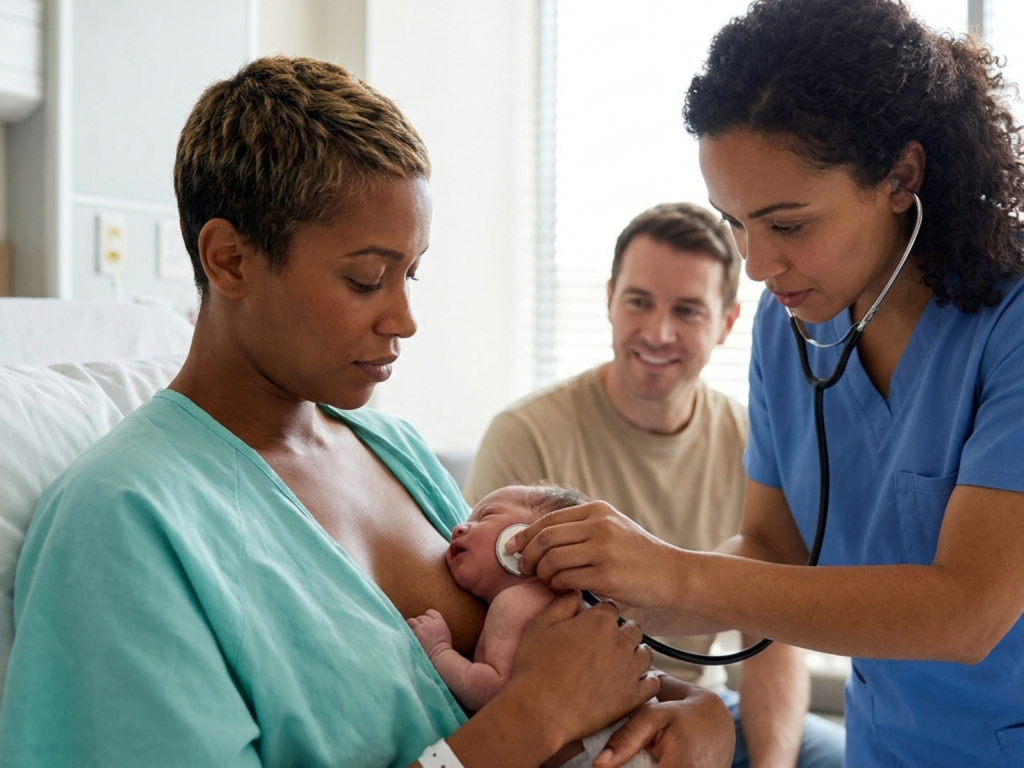
When a healthy newborn and parent are clinically stable, early skin-to-skin contact generally involves placing the undressed or diapered newborn prone on the parent’s bare chest and covering both with a warm blanket. The World Health Organization and NHS describe benefits that include support for temperature regulation, cardiorespiratory stability, calming, breastfeeding initiation, and parent-infant interaction. The baby’s exposure to a parent’s voice and heartbeat may also provide familiar sensory input.
Skin-to-skin contact is not a test of love or a requirement for attachment. It may be delayed or modified because of neonatal respiratory support, maternal hemorrhage, hemodynamic instability, anesthesia, urgent surgery, infection-control considerations, or other clinical needs. A delay does not erase the opportunity for connection. Parents can ask the team when contact may be safe and whether a partner or another appropriate caregiver can provide skin-to-skin care if local policy and the baby’s condition permit.
Safety requires direct observation. The newborn’s face should remain visible, the airway unobstructed, and the parent sufficiently alert to respond. Staff should assess breathing, color, tone, temperature, and positioning according to local protocols. A parent should tell the team promptly if they feel faint, excessively sedated, short of breath, or unable to maintain a safe position. Hospital guidance takes priority over general advice.
For a parent who cannot hold the baby immediately, connection can still be supported by looking at the newborn, speaking, touching a hand or foot when permitted, expressing milk if advised, or receiving regular updates. If separation is necessary, photographs or recorded voice messages may help maintain continuity, but they are optional and should never delay urgent treatment.
When birth does not unfold as expected
Induction, epidural analgesia, cesarean birth, assisted vaginal birth, neonatal admission, or an emergency response can change the timing and texture of connection. A parent may feel gratitude for lifesaving care alongside grief, disappointment, fear, anger, or detachment. Conflicting emotions do not indicate ingratitude or poor parenting. They are understandable responses to a complex event.
Medical intervention can also create a period in which clinicians must focus on stabilization rather than interaction. During an emergency, separation may be necessary for assessment, resuscitation, surgery, or transfer to a neonatal unit. The most important priority is safe care. Once the situation is stable, parents can ask for an explanation of what occurred, the baby’s current condition, and the next realistic opportunity for contact.
Some people experience persistent distress after a frightening birth, including intrusive memories, avoidance, hypervigilance, emotional numbness, panic, or intense guilt. These experiences warrant discussion with a midwife, obstetric clinician, primary-care professional, or mental-health specialist. A postpartum debrief after difficult birth may help clarify the clinical timeline and identify unanswered questions, although it cannot change the event or guarantee emotional closure.
Connection can be rebuilt through repeated, manageable interactions: holding, feeding, talking, changing, comforting, and responding to the baby’s cues. If direct contact is limited, a parent can participate in care decisions, provide expressed milk when appropriate, place a hand on the baby with permission, or learn the neonatal team’s routines. Attachment is shaped by accumulated care, not by one uninterrupted hour immediately after delivery.
Practical ways to protect connection
Before birth, discuss emotional and relational preferences with the maternity team. Useful topics include who should provide support, how staff should explain procedures, preferences about immediate contact, plans for skin-to-skin care, and how the team will communicate if parent and baby must be separated. These preferences are not guarantees, but they give clinicians information about what matters to the family.
- Choose a support person who can remain calm, communicate clearly, and respect changing boundaries.
- Ask clinicians to explain examinations, monitoring, analgesia, and procedures in concise language before they occur when time permits.
- State whether touch is welcome, and identify alternatives such as verbal reassurance or quiet presence.
- Request uninterrupted contact after routine assessments when medically appropriate.
- Ask for a reunification plan if the baby requires observation, treatment, or transfer.
- Accept practical help with food, hydration, rest, and communication; reducing exhaustion can make responsive interaction easier.
After birth, focus on the baby’s cues and on the parent’s capacity. A newborn may be sleepy, unsettled, or medically supported, so a quiet interaction may be the most realistic goal. Parents do not need to manufacture happiness. Looking, listening, learning, and responding are meaningful forms of connection.
Professional support is appropriate when distress interferes with sleep, daily functioning, feeding decisions, relationships, or the ability to feel safe with the baby. Urgent help is needed for thoughts of harming oneself or the baby, severe confusion, hallucinations, or an inability to care safely. Contact local emergency services or a healthcare professional immediately in these situations.
When to seek professional support
- Severe or worsening physical symptoms after birth require prompt clinical assessment.
- Persistent panic, intrusive memories, emotional numbness, or avoidance after a frightening birth should be discussed with a healthcare professional.
- Feeling unable to care safely for yourself or the baby requires urgent support.
- Thoughts of self-harm or harm to the baby, severe confusion, or hallucinations are emergencies.
- Skin-to-skin contact should occur only when the parent and newborn are stable and positioning can be safely observed.
Tools & Assistance
- A written birth preferences document covering communication, touch, skin-to-skin contact, and separation
- A designated support person who can communicate preferences to the maternity team
- A postpartum debrief with the obstetric or midwifery team
- Lactation, neonatal, primary-care, or perinatal mental-health services as clinically appropriate
- A written reunification plan when parent and baby may require separate care
FAQ
What if I did not feel an immediate connection with my baby?
Immediate intense emotion is not required. Connection often develops through repeated caregiving interactions, and pain, exhaustion, medication, medical concerns, or separation can delay those feelings.
Can connection develop after a cesarean or difficult birth?
Yes. A cesarean birth, assisted delivery, or neonatal admission may alter early contact, but attachment develops over time through reliable, responsive care. Ask the clinical team about safe opportunities for holding, voice contact, and participation in care.
Is skin-to-skin contact always possible immediately?
No. It is encouraged when parent and newborn are clinically stable, but urgent treatment or monitoring may require delay. The team can advise when contact is safe and discuss alternatives during separation.
What can a partner do to support emotional connection?
A partner can provide calm presence, protect the birthing person's preferences, explain questions to staff, offer touch only with consent, and help create opportunities for parent-infant contact after birth.
Sources
- PubMed — Bonding and Attachment with Baby in the Womb or ...
- World Health Organization — Early skin-to-skin contact for mothers and their healthy newborn infants
- NHS — Skin-to-skin contact with your newborn - Best Start in Life - NHS
Disclaimer
This article provides general educational information and does not replace individualized medical advice, diagnosis, or treatment. Discuss birth, skin-to-skin contact, postpartum distress, and urgent concerns with a qualified healthcare professional.
















Please log in to leave a comment.