
Intro
Moving an infant from room to room can become physically demanding, especially when feeding, soothing, household tasks, and recovery from childbirth all compete for attention. A thoughtful movement routine can reduce repeated lifting while preserving close supervision, comfort, and safe positioning.
The goal is not to keep a baby in one device all day. Instead, caregivers can create several age-appropriate, supervised stations and use equipment selectively for short transitions. Sleep safety remains the priority: seated or inclined products may help with movement, but they are not substitutes for a firm, flat, separate sleep surface.
Highlights
Plan supervised activity stations so the baby can move with the caregiver without requiring constant carrying.
Use a stroller, carriage, or other mobility aid only according to its instructions and never as a routine sleep space.
Keep transfers predictable with brief warnings, consistent cues, and calm activity transitions for babies.
Reduce caregiver strain by changing the environment and workflow rather than relying on repeated lifting.
Seek individualized advice from a pediatric clinician or physiotherapist when the baby has medical or developmental considerations.
Start With a Room-to-Room Plan
Begin by identifying the rooms you use most often and the activities that occur there: feeding, diapering, cooking, bathing, resting, and work. Then decide where the baby can be placed safely for brief periods in each area. A supervised floor mat in a clear space may work for an awake infant who is not mobile, while a properly assembled play yard may provide a defined boundary when the caregiver needs to move a short distance.
Keep each station free from cords, small objects, hot liquids, unstable furniture, pillows, loose blankets, and other hazards. The surface should be appropriate for the baby’s developmental stage and used only as intended by the manufacturer. As rolling, pivoting, crawling, or pulling to stand emerges, reassess every station; a setup that was adequate at two months may be unsafe later.
Place essential supplies at the stations rather than carrying the baby and several objects simultaneously. A small basket can hold diapers, a clean cloth, and a feeding bib, provided it remains out of the baby’s reach. This approach supports activity transitions for babies while reducing unnecessary lifting and rushed movements.
Choose Mobility Equipment for Short, Supervised Trips
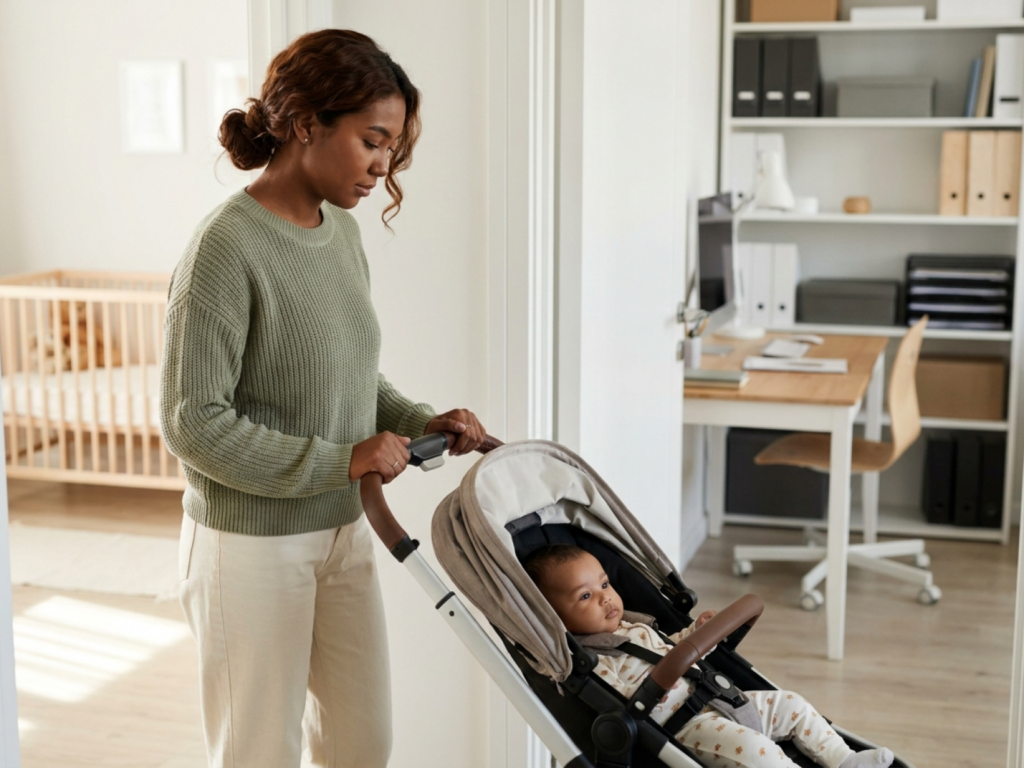
A stroller or carriage can be useful for moving an awake baby between rooms or across a level, uncluttered area when the product is designed for that setting. Apply the brakes before placing the baby inside or removing the baby, use the restraint system as directed, and keep the equipment within sight and reach. Check door thresholds, rugs, stairs, pets, and other obstacles before moving.
Read the manufacturer’s age, weight, and developmental limits. Some products are intended only for infants with adequate head and trunk control; others accept a compatible bassinet or approved infant insert. Do not improvise with extra padding, rolled towels, aftermarket restraints, or attachments that have not been approved for the specific model. These additions can alter posture or interfere with the harness.
A stroller is a transport device, not a place for unattended rest. If the baby falls asleep while being moved, transfer the baby to a safe sleep space as soon as practical. Seated or semi-reclined positioning can allow the head to flex forward, potentially narrowing the airway. Never leave a stroller on a bed, sofa, table, or other elevated surface, and do not use it as a substitute for a crib or bassinet.
Protect Sleep Safety During Transitions
Infants may fall asleep unexpectedly during a walk through the home, in a stroller, or while being carried in a sling or soft carrier. The safest response is to move the sleeping baby to a firm, flat, separate sleep surface, positioned on the back, as soon as possible. Keep the sleep area free of pillows, quilts, bumper pads, toys, and weighted products.
Room-sharing can make nighttime observation and feeding easier, but it does not require carrying the baby back and forth from an adult bed. A crib, bassinet, or other approved sleep space in the caregiver’s room can reduce repeated transfers during the early months. Families considering a nursery move can review a safe nursery sleep environment and discuss timing with a pediatric professional, particularly if the infant was born preterm or has respiratory, neurologic, or cardiorespiratory concerns.
Do not intentionally allow routine sleep in a stroller, swing, bouncer, car seat, sling, or other sitting device. A car seat should be used for travel and installed correctly; once the destination is reached, the baby should be moved to an approved flat sleep surface if sleep continues. This distinction helps caregivers use mobility equipment without confusing convenience with safe sleep.
Make Transfers Predictable and Gentle
Many babies protest not because movement is harmful, but because a change in position, temperature, sound, or caregiver contact is stimulating. A consistent sequence can make transitions more tolerable. Approach slowly, say the same brief phrase, place one hand around the shoulders and another under the pelvis, and pause once the baby is supported. Keep the baby close to your center of gravity rather than reaching with extended arms.
For an awake infant, offer a sensory cue before moving: a quiet voice, a familiar song, or a brief pause after making eye contact. Transition the baby when calm when possible, rather than waiting until hunger or fatigue is severe. These techniques are especially useful when moving from feeding to floor play, from a bedroom to a living area, or from a stroller to a sleep space.
For a sleeping baby, reduce stimulation by dimming lights, minimizing conversation, and preparing the destination first. Check that the sleep surface is ready before lifting. Lower the baby slowly while maintaining support, then remove your hands gradually. If the baby wakes, comfort them safely rather than repeatedly attempting a transfer that is causing escalating distress.
Reduce Strain on the Caregiver
Constant carrying can aggravate back, neck, wrist, shoulder, or pelvic-floor symptoms, particularly during postpartum recovery. Arrange frequently used surfaces at waist height when possible, avoid twisting while holding the baby, and turn your whole body instead of rotating through the spine. When lifting from a low surface, bring the baby close, bend through the hips and knees, and exhale during the effort.
Use a second adult for stairs, awkward thresholds, bathing transitions, or situations in which you feel unstable. Keep one hand free when moving equipment and avoid carrying a baby in one arm while lifting another heavy object. A correctly fitted soft carrier may distribute weight more evenly than an arm carry for an awake infant, but it requires careful attention to the manufacturer’s instructions, the baby’s developmental readiness, and airway visibility.
Pain is information, not a test of endurance. Contact a clinician or physiotherapist if lifting causes persistent pain, numbness, weakness, pelvic pressure, urinary or fecal leakage, wound concerns, dizziness, or worsening symptoms. Individual guidance is particularly important after cesarean birth, significant perineal injury, musculoskeletal disease, or other medical complications.
Know When Extra Caution Is Needed
Some infants need a more individualized movement plan. Discuss transfers and positioning with the child’s healthcare professional if the baby has hypotonia or hypertonia, frequent coughing or choking with feeds, suspected reflux with respiratory symptoms, abnormal breathing, poor head control beyond what is expected, recent surgery, a cast, or equipment such as oxygen or a feeding tube. Do not independently change prescribed positioning or discontinue medical equipment during movement.
Observe the baby during transitions. Concerning signs include blue or gray discoloration, labored or unusually rapid breathing, persistent pauses in breathing, marked limpness, inability to maintain an open airway, repeated vomiting, or a sudden change in responsiveness. Place the baby on a safe firm surface and seek urgent medical assistance for emergency symptoms. Follow local emergency guidance rather than trying to diagnose the cause at home.
Recheck the plan as the baby grows. Increased mobility, changes in head control, and new reaching ability can make a formerly safe device or station inappropriate. The safest routine is flexible: use the least restrictive suitable option for the activity, maintain direct supervision, and move the baby to a dedicated sleep space whenever sleep occurs in a transport or sitting product.
Safety Warnings
- Never leave a baby unattended on a sofa, adult bed, changing table, countertop, or elevated surface.
- Move a sleeping baby from a stroller, sling, carrier, car seat, swing, or bouncer to a firm, flat sleep surface as soon as possible.
- Do not carry hot drinks, boiling water, sharp objects, or heavy items while holding the baby.
- Keep stroller and carriage restraints fastened and apply the brake before placing the baby in or removing the baby from the product.
- Seek urgent help for blue or gray color, severe breathing difficulty, prolonged pauses in breathing, or unresponsiveness.
Tools & Assistance
- A room-by-room hazard check
- Manufacturer instructions for the stroller, carriage, carrier, or play yard
- A firm, flat, approved infant sleep surface
- A postpartum physiotherapist or occupational therapist
- The baby’s pediatrician, family physician, or local urgent-care service
FAQ
Can I let my baby nap in the stroller while I move around the house?
A stroller should not be used as a routine sleep space. If your baby falls asleep, move them to a firm, flat, separate sleep surface on the back as soon as possible, while following the stroller and safe-sleep guidance for your region.
Is a baby carrier safer than carrying my baby in my arms?
A properly fitted carrier may reduce arm strain for some caregivers, but safety depends on the product, the baby’s age and development, and correct positioning. Keep the face visible, the airway unobstructed, and follow the manufacturer’s instructions. Do not use a carrier as a sleep substitute.
How can I move my baby without waking them?
Prepare the destination first, keep the room calm, support the shoulders and pelvis, and lower the baby slowly. Waking is normal and not a safety problem; repeated attempts should stop if the baby becomes distressed or the transfer feels physically unsafe.
When should I ask a clinician for movement advice?
Ask for individualized advice when your baby has breathing, tone, feeding, neurologic, surgical, or equipment-related concerns, or when you have significant postpartum pain, weakness, dizziness, or pelvic-floor symptoms.
Sources
- HealthyChildren.org / American Academy of Pediatrics — How to Keep Your Sleeping Baby Safe: AAP Policy Explained
- Public Health Agency of Canada — Safe sleep on the go
- Health Canada — Stroller and carriage safety
Disclaimer
This article is for general educational purposes and does not diagnose, treat, or replace advice from a qualified healthcare professional. Seek individualized medical guidance for your baby’s positioning, sleep, or movement needs.














Please log in to leave a comment.