
Intro
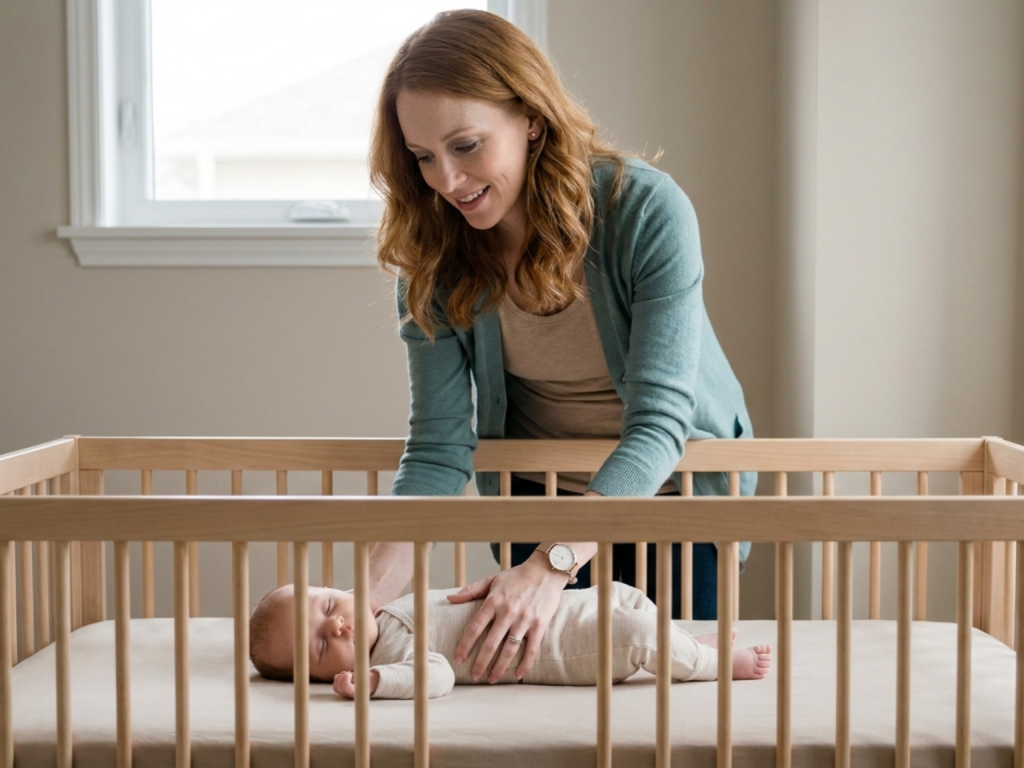
Moving a baby from the parents’ room to a nursery is a meaningful transition, but it does not need to happen on a rigid timetable. Families may consider the move because the baby has outgrown a bassinet, the parents are experiencing disrupted sleep, the nursery is ready, or household circumstances have changed. At the same time, room-sharing remains an important infant-safety recommendation, so the decision deserves careful attention to age, development, sleep environment, and individual medical circumstances.
The American Academy of Pediatrics recommends room-sharing without bed-sharing for at least the first six months and ideally for the first year. If you are considering an earlier or later transition, discuss your baby’s circumstances with a pediatrician or other qualified healthcare professional. A gradual, safety-focused approach can support both infant sleep and parental confidence.
Highlights
Room-sharing on a separate sleep surface is recommended for at least the first six months and ideally up to one year.
A nursery transition is a family decision shaped by safety, medical factors, sleep patterns, and caregiver readiness.
The nursery should use a firm, flat, approved sleep surface with no loose bedding, pillows, bumpers, or soft objects.
Gradual daytime and nighttime exposure can make the new room familiar without requiring a sudden change.
Frequent waking, crying, or parental anxiety does not mean the transition has failed; reassessment and professional guidance are appropriate.
Why Families Consider the Move
Parents may begin thinking about a nursery when their baby is approaching six months, becoming more mobile, waking in response to adult movement, or no longer fitting comfortably in a bassinet. Some families have limited bedroom space, work schedules that make shared-room sleep difficult, or a nursery located close enough to allow prompt nighttime care. Others find that the parents’ sleep is so fragmented that they are concerned about exhaustion and inadvertent unsafe sleep practices.
These concerns are understandable, but the timing should not be based solely on a baby sleeping through the night. Many healthy infants continue to wake for feeding, comfort, or developmental reasons throughout the first year. Conversely, a baby who appears to sleep well may still require a carefully maintained environment because safe sleep risks are not determined by sleep duration alone.
Room-sharing means that the infant sleeps in the same room as the caregiver but on a separate surface, such as a crib, bassinet, or portable play yard. It does not mean placing the baby in an adult bed. The AAP and the National Institute of Child Health and Human Development describe room-sharing as a strategy associated with lower risk than solitary room sleep, particularly during early infancy. Families should weigh this recommendation alongside their healthcare professional’s advice and their actual ability to maintain safe nighttime care.
Assess Timing and Medical Context
There is no universal “correct” night for a nursery transition. A pediatric clinician can help determine whether the timing is reasonable based on gestational age at birth, growth, feeding needs, respiratory history, neurologic or cardiac conditions, and any other relevant medical factors. Premature infants and babies with ongoing medical concerns may need individualized guidance rather than a routine schedule.
Consider whether the proposed move coincides with several other disruptions, such as travel, illness, weaning, a change in caregivers, or a major household move. Combining multiple transitions can make it harder to identify why sleep has changed. When possible, introduce one major change at a time and allow several nights or weeks for observation.
Caregiver readiness matters as well. If the nursery is across the home and a parent is likely to fall asleep while walking with a tired infant, the arrangement may create practical risks. A plan that keeps nighttime feeding and settling manageable is more useful than an idealized plan that leaves caregivers dangerously exhausted. The goal is a safe, sustainable sleep arrangement, not a performance benchmark.
Before starting, identify what would prompt you to pause and seek advice. Examples include a new breathing concern, poor feeding, markedly reduced urine output, unusual lethargy, fever in a young infant, or a sudden and persistent change in behavior. These signs require medical assessment rather than a sleep-training response.
Prepare a Safe Nursery Sleep Environment
Safety preparation should be completed before the first overnight sleep. Use a crib, bassinet, or portable play yard that is designed and approved for infant sleep and has not been modified. The mattress should be firm and flat, with a fitted sheet made for that exact sleep surface. Do not add positioners, wedges, sleep products that restrict movement, or aftermarket accessories unless a healthcare professional specifically directs their use for a documented medical reason.
Place the baby on the back for every sleep, including naps, on an uncluttered surface. Keep pillows, quilts, loose blankets, stuffed animals, bumper pads, and other soft items outside the sleep space. Avoid weighted sleepwear and products that can cover the face or cause overheating. If warmth is a concern, ask a clinician about appropriate clothing layers for the room temperature rather than adding loose bedding.
Keep the crib away from windows, blind cords, electrical cords, heaters, lamps, shelves, and furniture that could be pulled or climbed. The room should be smoke-free. Install functioning smoke alarms and carbon monoxide alarms according to local safety guidance, and check that the door and route to the nursery are unobstructed. The nursery should be calm and comfortable, but decorations belong outside the crib.
A monitor may help caregivers hear or see the baby, but it does not replace direct supervision, safe sleep practices, or medical monitoring. Consumer oxygen, heart-rate, and breathing monitors can produce false alarms and should not be used to prevent sudden infant death unless prescribed and explained by a clinician for a specific condition.
Use a Gradual Transition Plan
Some babies adapt quickly; others benefit from repeated, low-pressure exposure. Start by spending pleasant daytime periods in the nursery: diapering, reading, feeding, or quiet play. These activities can make the room familiar without associating it only with separation. Keep the sleep routine consistent across locations so that the sequence, rather than the room alone, becomes a reliable cue.
A practical plan might begin with one nap in the nursery, followed by additional naps if the environment is working well. After several days, the family may try the first part of the night there, returning to the previous arrangement if the baby or caregivers are struggling. Another option is to move the crib gradually, when the room layout permits, although the sleep surface itself must remain properly assembled and positioned.
Use predictable, low-stimulation cues before sleep: dimmer lighting, a diaper change, feeding as appropriate, a brief book or song, and a consistent phrase. Avoid creating a routine that requires a caregiver to remain awake in an unsafe location. If the baby falls asleep in a car seat, swing, stroller, or other sitting device, move the baby to a firm, flat sleep surface as soon as practicable.
Keep a simple record for several nights of sleep location, feeding, waking, settling, and caregiver fatigue. This is not intended to measure the baby against a target. It can reveal whether the nursery is too warm, whether the timing conflicts with feeding, or whether the family needs a different pace. The plan can be adjusted without treating an interrupted night as failure.
Manage Night Feedings and Reassurance
Moving rooms does not eliminate the need for responsive care. Breastfed and formula-fed infants may continue to wake, and the appropriate feeding schedule depends on age, growth, feeding effectiveness, and clinical advice. Do not intentionally delay or reduce feeds solely to make the nursery transition easier unless the baby’s healthcare professional has recommended that change.
Prepare the room and feeding area before bedtime. Keep necessary supplies within reach, use adequate lighting to assess the baby safely, and return the infant to the designated sleep surface after feeding or comforting. Adults should avoid feeding on sofas, recliners, or adult beds when they are likely to fall asleep. If sleep occurs accidentally, place the baby back in the crib as soon as the caregiver wakes.
A baby may vocalize or briefly stir without needing immediate intervention, but caregivers should respond when the infant appears hungry, distressed, unwell, or unable to settle. A consistent response can include checking breathing and position, addressing feeding or diaper needs, offering brief comfort, and returning the baby to the safe sleep space. There is no requirement to ignore crying, and a nursery transition should not be used to dismiss signs of illness.
Caregiver fatigue deserves active management. Arrange shifts when possible, accept practical help, and place the baby safely in the crib if frustration is escalating. Information about caregiver stress during infant crying and support from a healthcare professional can be valuable when sleep loss is affecting judgment, mood, or safety.
Understand Sleep Outcomes and Expectations
Research on room-sharing and sleep outcomes is complex. Observational studies and reviews have examined associations among room location, nighttime waking, breastfeeding, parental behavior, and sleep consolidation, but these findings do not establish a single best arrangement for every family. A room move may change how quickly caregivers notice sounds, how often the baby is resettled, and how much adult movement disturbs sleep. It may improve parental sleep for some families while increasing anxiety for others.
Expect variability. The baby may sleep longer, wake more often, or show no immediate change. Developmental events such as rolling, sitting, teething, separation anxiety, illness, or changes in feeding can temporarily alter sleep regardless of room location. A short-term regression should not automatically lead to unsafe sleep products or unsupervised sleep training methods.
Review the arrangement after several nights rather than judging it after one difficult episode. Ask whether the baby remains in a safe position and environment, whether feeding and growth remain appropriate, and whether caregivers can provide care without dangerous exhaustion. If the move is not working, returning temporarily to room-sharing is a reasonable option. Safety recommendations are most effective when families can apply them consistently.
When to Seek Professional Guidance
Talk with a pediatrician, family physician, midwife, public health nurse, or sleep-focused clinician before the move when the infant was born prematurely, has chronic lung disease, reflux concerns requiring treatment, recurrent breathing symptoms, poor weight gain, complex feeding needs, or a condition affecting arousal or muscle tone. The clinician can clarify which recommendations apply and whether additional monitoring is medically indicated.
Seek prompt medical care for breathing difficulty, blue or gray coloration, unresponsiveness, a seizure, severe dehydration, or a baby who is unusually difficult to wake. Contact a clinician about persistent feeding problems, repeated vomiting, fever in a young infant, or a notable change in alertness. Do not assume that a sleep problem explains a potentially medical symptom.
Professional support is also appropriate when parents feel unable to stay awake safely, are experiencing severe anxiety, or are struggling with depression or intrusive thoughts. A medically informed plan can address the infant’s sleep environment while also protecting caregiver health. The transition is successful when it supports safe care and a workable family routine, whether that takes days, months, or more time.
Safety reminders
- Do not place an infant to sleep on an adult bed, sofa, recliner, or other soft surface.
- Do not use loose blankets, pillows, crib bumpers, stuffed toys, or inclined sleep products in the crib.
- Do not rely on a consumer monitor to prevent sudden infant death or replace clinical assessment.
- Do not delay medically indicated feeding or ignore breathing, hydration, fever, or alertness concerns.
- If a caregiver may fall asleep while holding the baby, place the baby in the crib and seek support with nighttime care.
Tools & Assistance
- Pediatrician or family healthcare professional for individualized timing advice
- Crib, bassinet, or portable play yard with a firm, flat mattress and fitted sheet
- Smoke and carbon monoxide alarms checked before the transition
- A short sleep-and-feeding log for identifying patterns over several nights
- A shared caregiver plan for nighttime feeding, settling, and fatigue management
FAQ
When is it safe to move a baby to a nursery?
The AAP recommends room-sharing for at least the first six months and ideally up to one year. Timing beyond that depends on the baby’s medical context, the nursery setup, and the caregivers’ ability to provide safe, responsive care.
Should the baby sleep in the nursery for naps before nighttime?
Some families find that brief, supervised daytime sleep helps the baby become familiar with the room. Every sleep still requires the same safe setup: back positioning, a firm flat surface, and an empty crib.
Does moving to a nursery make babies sleep through the night?
Not necessarily. Sleep patterns vary, and room location does not remove normal feeding or developmental waking. A move may change sleep for better or worse, so evaluate safety and family functioning rather than expecting uninterrupted sleep.
Can a baby sleep in the nursery with a monitor?
A monitor can help caregivers hear or observe the baby, but it is not a substitute for safe sleep practices or clinical monitoring. Consumer monitors should not be used to prevent sudden infant death.
What if the transition increases crying or parental anxiety?
Pause, check the sleep environment and the baby’s needs, and consider returning temporarily to room-sharing. Contact a healthcare professional if distress is persistent, unusual, medically concerning, or contributing to unsafe caregiver exhaustion.
Sources
- HealthyChildren.org / American Academy of Pediatrics — How to Keep Your Sleeping Baby Safe: AAP Policy Explained
- National Institute of Child Health and Human Development — Safe Sleep Environment for Baby
- PubMed Central — Mother-Infant Room-Sharing and Sleep Outcomes in the First Year of Life
Disclaimer
This article provides general educational information and does not diagnose, treat, or replace advice from a qualified healthcare professional. Seek individualized medical guidance for your baby, especially when there are prematurity, feeding, breathing, growth, or other health concerns.

















Please log in to leave a comment.