
Intro
It is completely understandable to question everyday products once you are pregnant. Bleach is common in kitchens, bathrooms, laundry rooms, and workplaces, so many people worry whether even brief use could affect the baby.
The reassuring answer, based on current public-health and teratology guidance, is that household bleach used as directed is unlikely to pose a risk in pregnancy. In most situations, the main concern is not fetal harm but irritation to your eyes, skin, throat, and lungs, especially if the area is poorly ventilated or if bleach is mixed with other cleaners.
Highlights
Household bleach is sodium hypochlorite, and normal use according to the label is generally considered low risk in pregnancy.
The main hazard is usually maternal irritation from fumes or splashes, not proven harm to the fetus from routine home use.
Mixing bleach with ammonia or acidic cleaners is dangerous because it can release toxic gases.
If you want to reduce exposure further, ventilation and limiting time around fumes are the most practical steps.
If a strong exposure causes breathing symptoms, seek medical advice promptly rather than trying to judge the risk alone.
What bleach is, and why pregnancy questions come up
When people say “bleach,” they usually mean a household disinfectant containing sodium hypochlorite. It is a strong oxidizing agent, which is why it can kill germs and remove stains, but that same chemistry also makes it irritating to tissue. The fumes can sting, and direct contact can bother skin or eyes.
Pregnancy tends to make these everyday issues feel more significant. That concern is reasonable: you are making decisions not only for yourself, but also for a developing fetus. The good news is that normal home use is very different from industrial exposure, and the dose matters. A product used exactly as the manufacturer recommends is not the same as concentrated bleach, prolonged exposure in an enclosed room, or mixing cleaners together.
It also helps to separate irritation from toxicity. Bleach can certainly irritate your respiratory tract, but irritation to the mother does not automatically mean fetal harm. Most guidance focuses on avoiding unnecessary fumes, using the smallest practical amount, and avoiding situations that create concentrated vapors.
What the evidence says about bleach in pregnancy
The most relevant teratology guidance finds no published human data showing adverse reproductive effects from household bleach itself. That does not prove absolute safety, but it does mean there is no strong human signal that normal household use causes birth defects or other major pregnancy complications. In practical terms, the balance of evidence is reassuring for routine cleaning done according to the label.
UKTIS notes that using household bleach as directed by the manufacturer at any stage of pregnancy is unlikely to pose a risk. That point matters because people often assume that any chemical exposure must be harmful during the first trimester. In reality, pregnancy risk depends on the chemical, the dose, the route of exposure, and the duration.
Some studies have looked at environmental chlorination by-products in water or broader environmental exposures, and a few have reported associations with adverse outcomes. However, those findings are inconclusive and not clearly applicable to normal household bleach use. In other words, the evidence does not justify panic about cleaning a bathroom or disinfecting a surface in a well-ventilated room.
How bleach exposure happens: fumes, splashes, and dangerous mixtures
Most concerns during pregnancy come from inhalational exposure, meaning breathing in fumes, or from accidental skin and eye contact. Because bleach is corrosive, higher concentrations can irritate or burn the respiratory tract, and strong fumes may make you cough, feel short of breath, or develop watery eyes. That is unpleasant for anyone, and pregnancy can make nausea and smell sensitivity worse.
Another important issue is bleach and ammonia exposure. Mixing bleach with ammonia, vinegar, acidic toilet cleaners, or some other household products can release toxic gases, including chlorine-containing fumes. This is a preventable hazard and has more to do with chemical interaction than with pregnancy itself. The safest approach is to use only one cleaning product at a time, rinse surfaces if needed, and never improvise a mixture unless the label specifically says it is safe.
Accidental swallowing is uncommon in adults but serious. If bleach is ingested, or if fumes cause significant symptoms, the issue becomes urgent medical triage rather than a routine pregnancy question.
Ways to reduce exposure without giving up household hygiene
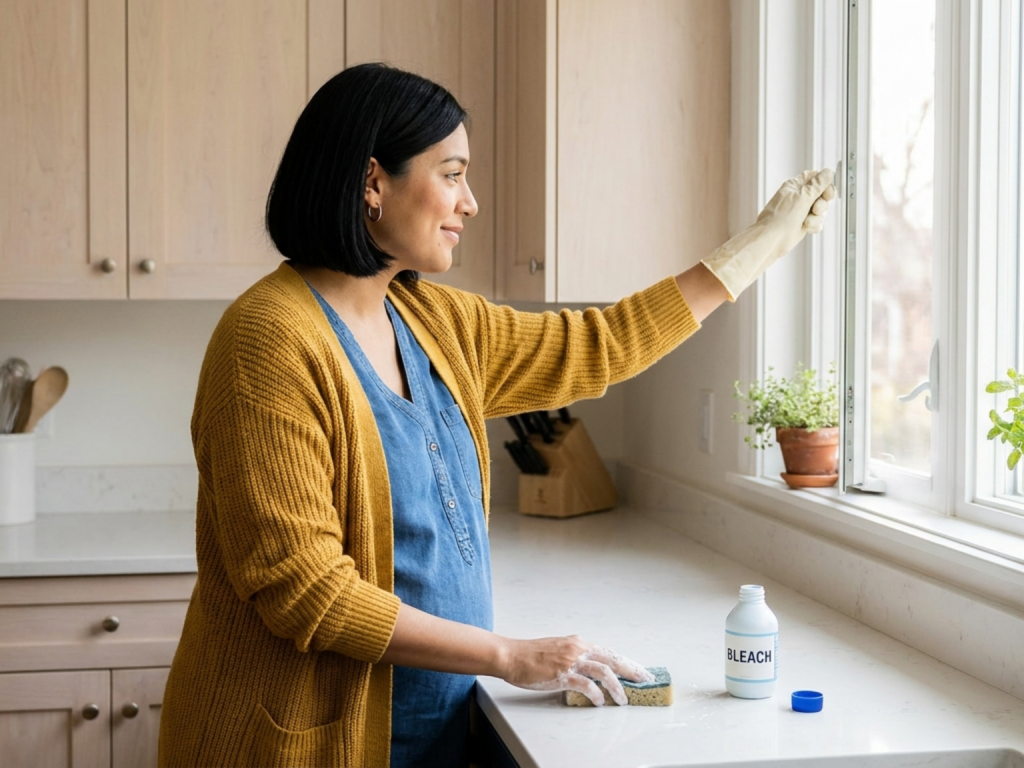
If you want to keep cleaning but reduce risk, a few practical steps make the biggest difference. Open windows and doors, run an exhaust fan if you have one, and step away from the room between tasks. Short, targeted cleaning is better than spending a long time in a closed space with a strong smell.
Follow the dilution instructions carefully. More bleach is not better, and stronger solutions increase the chance of irritation without adding meaningful benefit for typical household cleaning. If the job can be done with soap and water, a non-bleach cleaner, or by someone else, that is often an easy way to lower exposure further.
Some pregnant people choose to delay nonessential deep cleaning, especially in early pregnancy, simply to reduce cumulative chemical exposure and avoid nausea triggered by odors. That is a reasonable preference, not a medical requirement. Tommy’s notes that the amount of chemicals in bleach products is low and not highly toxic, while also suggesting that those who want extra caution in the first trimester may wait until after 12 weeks for optional exposures. The key is flexibility: protect yourself, but do not feel you must avoid every cleaning task.
When bleach use is not a good idea
Bleach is best avoided when ventilation is poor, when you cannot follow the label, or when it will be combined with another product. It is also sensible to stop and move away if you notice eye burning, throat irritation, coughing, wheezing, dizziness, or nausea that seems linked to the fumes. Those symptoms are usually a sign that the concentration is too high for comfort, even if the exposure is not expected to harm the baby.
If you have a known respiratory condition, such as asthma, you may be more sensitive to irritants. Pregnancy can sometimes make breathing feel different even without a preexisting condition, so it is wise to be conservative with strong-smelling cleaners and to ask your clinician for advice if you have repeated symptoms around household chemicals.
Seek urgent help if you have trouble breathing, chest tightness, persistent coughing after an exposure, eye pain, or if bleach was swallowed. For less dramatic but still concerning exposure, a poison center or your maternity team can help you judge whether any follow-up is needed. In most routine home situations, the answer will be reassurance plus better ventilation rather than a complex intervention.
Bottom line: what most pregnant people can take away
For most pregnancies, the message is reassuring: household bleach used properly is unlikely to harm the baby. The evidence base is limited, but the available guidance does not show a clear reproductive risk from normal home use. The bigger practical issue is protecting you from irritation and preventing dangerous chemical combinations.
If bleach is part of your normal cleaning routine, focus on common-sense precautions: use it only as directed, keep air moving, avoid mixing products, and leave the room if the fumes bother you. If you are feeling anxious, it is reasonable to reduce exposure even further by asking someone else to handle heavy cleaning, choosing gentler products for everyday tasks, or postponing nonessential chores until later in pregnancy.
Pregnancy often turns ordinary decisions into uncertain ones. You do not need to be perfect; you just need a plan that is safe, practical, and sustainable. If you are unsure about a specific exposure, your obstetric clinician, midwife, or a poison information service can help you interpret the situation in context.
Get medical help if any of these happen
- You have trouble breathing, wheezing, chest tightness, or persistent coughing after bleach fumes.
- Bleach is swallowed, gets into the eyes, or causes a chemical burn on the skin.
- You mixed bleach with ammonia, vinegar, or another cleaner and now feel unwell.
- Symptoms such as severe dizziness, vomiting, or confusion occur after exposure.
- You are unsure how strong the exposure was and want individualized pregnancy advice.
Tools & Assistance
- Your obstetric clinician or midwife for exposure-specific reassurance
- A local poison center or poison information service for accidental inhalation or ingestion
- Manufacturer product label and safety instructions for dilution and ventilation guidance
- An exhaust fan or open windows to improve airflow while cleaning
- A household alternative cleaner for tasks that do not require bleach
FAQ
Can I clean the bathroom with bleach while pregnant?
Usually yes, if you use a household product as directed, keep the room ventilated, and avoid mixing it with other cleaners.
Is breathing bleach fumes dangerous for the baby?
Normal low-level inhalation is not known to harm the baby; the more common issue is irritation of your airways and eyes.
Is bleach safer after the first trimester?
Household bleach used properly is generally considered low risk at any stage, though some people choose to minimize optional exposures early in pregnancy.
What should I do if I mixed bleach with another cleaner?
Leave the area for fresh air, improve ventilation if you can do so safely, and contact a poison center or clinician if you have symptoms.
Sources
- UK Teratology Information Service — Use of Sodium Hypochlorite (Bleach) in Pregnancy
- Tommy's — Chemicals and air pollution in pregnancy
- Institut national de santé publique du Québec — Use of household products during pregnancy
Disclaimer
This article is for general information only and does not replace personalized medical advice. If you are pregnant and worried about a bleach exposure, contact your obstetric clinician, midwife, poison center, or emergency services for urgent symptoms.
















Please log in to leave a comment.