
Intro
Cleaning a newborn’s umbilical cord area can feel intimidating, especially during the first days at home. The umbilical stump is drying tissue attached to a healing skin edge, so it may look unusual as it changes from moist and pale to dark, firm, and eventually detached. In most healthy newborns, routine care is simple: keep the area clean and dry, protect it from friction and contamination, and allow the stump to separate naturally.
This guide explains how to clean the umbilical cord area, what normal healing may look like, and which findings require prompt advice from a midwife, pediatrician, family doctor, or other qualified healthcare professional. Recommendations can differ in settings where newborn infection risk is elevated, so follow the instructions provided by your maternity or pediatric care team.
Highlights
Wash your hands before and after touching the umbilical stump, and use clean water and gauze if the area is visibly soiled.
Keep the stump dry and exposed to air when possible; fold the diaper below it to reduce rubbing and exposure to urine.
Use sponge baths until the stump falls off and the navel has healed, unless your healthcare professional gives different instructions.
Do not pull off a partly attached stump or apply alcohol, antiseptics, powders, oils, or herbal products unless specifically advised.
Redness spreading onto the surrounding skin, foul-smelling drainage, fever, poor feeding, or unusual sleepiness needs prompt medical attention.
What the umbilical stump is and how it heals
After birth, the umbilical cord is clamped and cut, leaving a short remnant called the umbilical stump. The stump contains no functioning nerves, but the skin around its base is healing tissue and should be handled gently. As it dries, the stump commonly becomes yellow-brown, gray, or black, shrivels, and separates from the navel. This usually happens during the first few weeks of life, although the timing varies between newborns.
A small amount of clear, yellowish, or blood-tinged moisture may appear as the stump dries or shortly after it detaches. A spot of blood on clothing or a diaper can also occur. These findings should be limited and should not be accompanied by progressive redness, swelling, warmth, tenderness, or a bad odor. The appearance of the stump can change from day to day, so assess the surrounding skin and your baby’s overall condition rather than focusing on color alone.
In most high-resource settings, evidence-based guidance favors dry cord care: keeping the stump clean and allowing it to remain exposed to air. In some communities with higher neonatal mortality or infection risk, chlorhexidine may be recommended as part of a local public-health protocol. Use the plan given by your newborn care team, particularly if you are in a setting where a specific cord antiseptic is routinely advised.
How to clean the umbilical cord area step by step
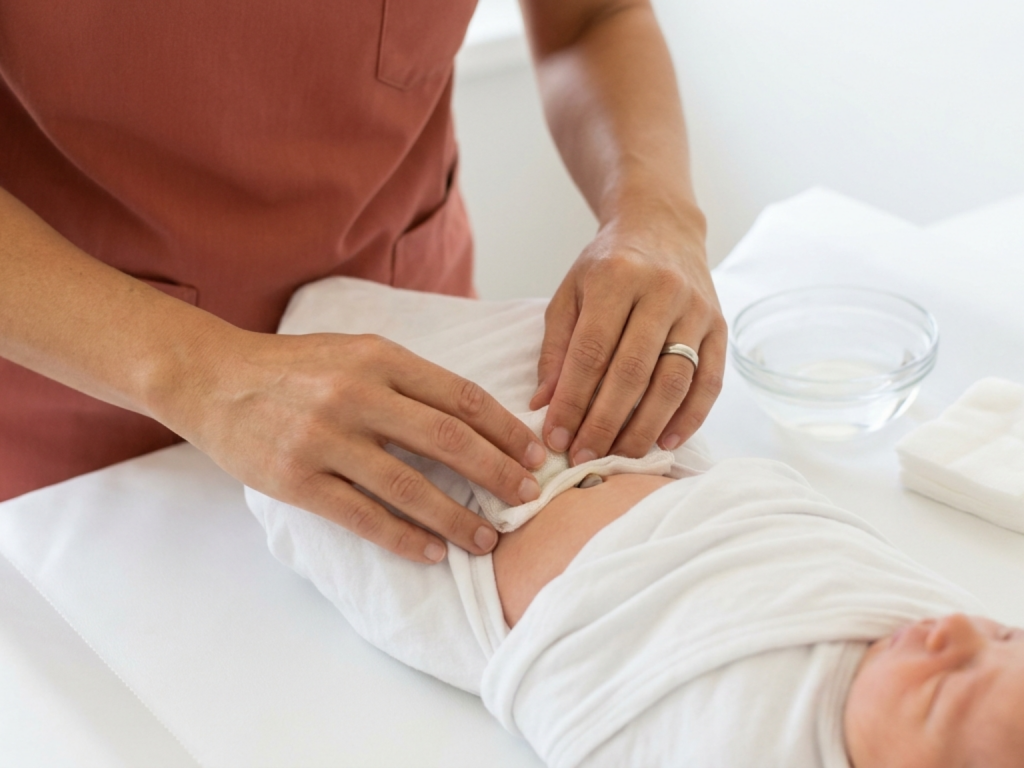
Most routine care does not require repeated cleaning if the stump is dry and visibly clean. Clean it when it becomes contaminated with urine, stool, bath water, or another substance. Prepare clean water, sterile or clean gauze, and a clean diaper. Avoid rushing: support your baby securely and keep the stump from being tugged.
- Wash your hands. Use soap and running water before and after cord care. Dry your hands with a clean towel. Hand hygiene is the most important way to reduce transfer of microorganisms to the healing area.
- Inspect without pulling. Look at the stump and the skin at its base. Do not twist, scrape, lift, or detach tissue that is still connected.
- Use clean water if needed. Moisten gauze with clean water and gently wipe away visible soil. Begin at the base and move outward, using a fresh part of the gauze for each pass. Do not scrub.
- Dry thoroughly. Pat around the area with clean gauze or allow it to air-dry. Do not cover the stump with a dressing unless a healthcare professional has instructed you to do so.
- Position the diaper below the stump. Fold the upper edge down or use a newborn diaper designed with a cord cutout. This limits friction and helps prevent urine from contacting the stump.
If stool has reached the cord, clean it promptly with clean water and gauze, then dry the area. Tell your healthcare professional if contamination happens repeatedly or if the skin becomes increasingly irritated. A routine safe diaper-changing hygiene approach, including careful handwashing and keeping the diaper edge away from the stump, can make cord care easier.
Bathing, clothing, and everyday protection
Until the stump falls off and the navel is dry and healed, sponge baths are generally preferred to immersion in a baby bathtub. Lay your newborn on a secure, warm surface and clean one body area at a time with a damp cloth. Keep the cord area as dry as practical. If the stump becomes wet, gently pat it dry rather than rubbing it.
After the stump detaches, continue sponge bathing until there is no ongoing moisture or discharge and the skin appears healed. Your healthcare professional may give different bathing instructions based on your baby’s medical history, local practice, or the condition of the navel.
Choose loose, breathable clothing that does not press tightly over the abdomen. Avoid adhesive bandages, tight abdominal binders, cotton swabs inserted into the navel, and objects intended to push the navel inward. These measures do not speed healing and may irritate tissue or introduce bacteria. Keep the stump exposed to air when this is compatible with warmth and safe newborn care.
During handling, pick your baby up with support under the head, neck, and body rather than by holding near the abdomen. The stump may catch on clothing or blankets, so check that fabric is not snagging it. Do not try to accelerate separation. Letting the stump detach naturally reduces unnecessary bleeding and trauma.
What to avoid during cord care
Traditional cord-care practices vary widely, but products that seem soothing can damage the skin barrier or introduce contamination. Unless your healthcare professional specifically recommends a product, avoid rubbing alcohol, hydrogen peroxide, iodine, antiseptic solutions, powders, oils, butter, plant preparations, and household substances. Mayo Clinic guidance specifically notes that rubbing alcohol is generally unnecessary unless it has been prescribed or recommended for your baby’s situation.
Do not cover the stump with a wet cloth, plastic wrap, or an occlusive dressing. Moisture trapped against the base can delay drying. Do not repeatedly manipulate a dry stump simply to check whether it is ready to come off. If it is attached by a small strand, leave it alone. A healthcare professional can examine persistent concerns safely.
Do not apply antibiotic ointment unless it has been recommended for your newborn. Unnecessary topical medication can cause irritation, allergic contact dermatitis, or confusion about whether a developing infection needs clinical evaluation. Do not share towels, gauze, or cord-care supplies between babies, and keep clean supplies in a dry place.
If your baby was premature, hospitalized, immunocompromised, or has a condition affecting healing or infection risk, ask for individualized instructions. General dry-care advice may need to be adapted to the clinical context.
Recognizing normal healing versus warning signs
Normal healing usually involves a stump that becomes progressively drier, smaller, and darker. The base may have a small amount of clear or blood-stained discharge, particularly around separation. Mild brief spotting can occur when the stump rubs against clothing. The surrounding abdominal skin should remain generally normal in color and temperature, without redness that expands outward.
Contact your newborn’s healthcare professional promptly if you notice redness extending from the navel onto the surrounding skin, increasing swelling or warmth, significant tenderness, pus-like drainage, persistent wetness, or a foul smell. These findings may indicate a local problem requiring examination; they should not be diagnosed or treated at home based only on an article.
Seek urgent medical care if your baby has a fever, is difficult to wake, is feeding poorly, has repeated vomiting, appears unusually weak, or has breathing difficulty, especially when any of these occur with umbilical redness or drainage. For a newborn, changes in behavior or feeding can be clinically important even when the cord itself does not look dramatic.
Also contact a healthcare professional if bleeding continues, soaks through gauze, or keeps recurring; if the stump remains attached beyond the timeframe your care team advised; or if the navel continues to drain after separation. Do not wait for a scheduled visit when your baby appears unwell. If you are uncertain, call the maternity unit, pediatric clinic, or local urgent-care service for triage advice.
A calm routine for parents and caregivers
Cord care is usually a brief part of ordinary newborn care rather than a separate procedure requiring extensive equipment. Keeping a consistent routine can reduce anxiety: wash your hands, check the area during diaper changes, clean only when soiled, dry it carefully, and keep the diaper folded below the stump. Ask every caregiver to follow the same instructions.
At routine newborn visits, show the clinician the stump if you have questions about its color, odor, moisture, bleeding, or separation. Taking a dated photograph for your own reference may help you describe changes by telephone, but a photograph cannot replace an examination when warning signs are present. Record your baby’s temperature only with an age-appropriate method and follow local clinical advice about fever thresholds and urgent evaluation.
It is understandable to feel protective when the stump looks dark, loose, or slightly unpleasant. Avoiding unnecessary handling is usually more helpful than trying to make it fall off sooner. With clean hands, dry care, and attention to your baby’s overall behavior, most families can manage this short healing period safely while staying connected with their healthcare team.
When to seek medical advice
- Redness, warmth, swelling, or tenderness spreading around the navel
- Pus-like drainage or a persistent foul odor
- Bleeding that is more than minor spotting, continues, or soaks gauze
- Fever, poor feeding, unusual sleepiness, weakness, or repeated vomiting
- Persistent drainage after the stump has fallen off or delayed separation that concerns your care team
Tools & Assistance
- Clean running water and soap for handwashing
- Clean or sterile gauze
- A clean diaper folded below the stump
- A soft cloth for sponge baths
- Your newborn’s pediatric clinic, midwife, maternity unit, or local urgent-care service
FAQ
Should I clean the umbilical stump every day?
Not necessarily. If it is clean and dry, routine handling is usually unnecessary. Clean it with clean water and gauze when it becomes soiled, then dry it gently. Follow your healthcare professional’s instructions if they differ.
Can I use rubbing alcohol on the umbilical cord?
Do not use rubbing alcohol unless a qualified healthcare professional specifically recommends it. Dry cord care is preferred in many settings, while some areas use chlorhexidine because of local infection risk.
When can my baby have a regular bath?
Use sponge baths until the stump falls off and the navel is dry and healed, unless your healthcare professional gives different advice. Afterward, immersion bathing can usually resume according to local newborn-care guidance.
Is a little blood normal when the stump falls off?
A small amount of brief spotting can occur as the stump separates. Ongoing bleeding, recurrent bleeding, or blood that soaks gauze should be discussed promptly with a healthcare professional.
What should I do if the stump smells bad?
A strong or persistent foul odor, especially with drainage, redness, warmth, swelling, or a baby who seems unwell, needs prompt medical assessment. Do not try to mask the odor with powders, oils, or antiseptics.
Sources
- Mayo Clinic — Umbilical cord care: Do's and don'ts for parents
- MedlinePlus, U.S. National Library of Medicine — Umbilical cord care in newborns
- American Academy of Pediatrics — Umbilical Cord Care in the Newborn Infant
Disclaimer
This article provides general educational information and does not diagnose, treat, or replace advice from a qualified healthcare professional. Contact your newborn’s healthcare team promptly about concerning cord changes or any sign that your baby is unwell.














Please log in to leave a comment.