
Intro
Travel can stretch a baby’s feeding routine in ways that feel surprisingly emotional: a delayed flight, a missed nap, a different time zone, or a bottle that needs warming when there is nowhere convenient to stop. If your baby has a predictable rhythm at home, it is understandable to worry that travel will undo hard-won progress.
The goal is not to keep every feed perfectly on the clock. A safer, more realistic approach is to protect the medical basics: adequate intake, hydration, safe milk handling, responsive feeding cues, and your own ability to cope. With preparation and flexibility, most families can travel while keeping feeding steady enough for the baby and manageable for caregivers.
Highlights
A travel feeding plan works best when it combines your usual rhythm with responsive feeding cues rather than relying only on the clock.
Breast milk, formula, pumping equipment, and complementary foods need different safety strategies during transit, delays, and overnight stays.
Hydration, diaper output, behavior, and feeding tolerance are more useful than schedule perfection when assessing how travel is going.
Time zone changes, overstimulation, and disrupted sleep can temporarily alter appetite, so recovery time after arrival matters.
Start with the baby you have, not the schedule you wish you had
A useful travel plan begins with your baby’s real feeding pattern over several ordinary days. Note the usual time between feeds, approximate bottle volumes if relevant, breastfeeding duration or sides offered, solid food timing, wet diapers, stool pattern, and the situations that make feeding harder. This written baseline is more clinically useful than a perfect timetable because it shows what is normal for your baby.
For young infants, especially newborns and babies with growth, prematurity, cardiac, metabolic, or feeding concerns, schedule changes should be discussed with a pediatric clinician before travel. Some babies need minimum feeding frequencies or specific volume goals, and those targets should not be casually stretched to fit an itinerary. For healthy older babies, the plan can usually be more flexible, but hydration and intake still matter.
If you use a Baby feeding schedule by age as a reference, treat it as a framework rather than a travel rulebook. Age, weight, corrected gestational age, milk transfer, reflux symptoms, oral-motor skills, and sleep pressure all influence how feeds unfold. The priority during travel is to preserve enough opportunities to feed while responding to hunger and fullness signals.
Build a flexible feeding map for the travel day
Instead of scheduling feeds only by clock time, map the day around predictable transition points: before leaving home, after security or check-in, before boarding, during a long drive stop, at arrival, and before the first sleep in the new place. These anchor points create structure while leaving room for delays. A baby who feeds earlier than usual before boarding may be calmer than one asked to wait for the original schedule.
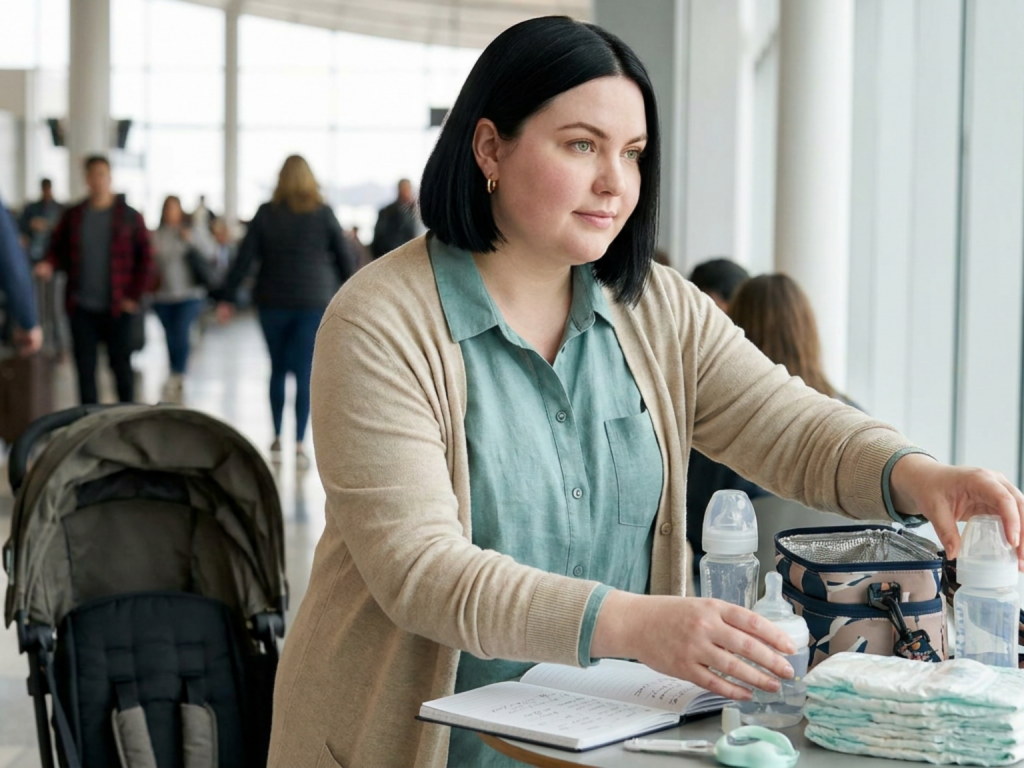
Pack for the longest realistic version of the journey, not the advertised travel time. Delays, traffic, lost luggage, and missed connections are common enough that feeding supplies should stay in a carry-on or accessible day bag. A practical packing list may include:
- More diapers and wipes than the scheduled trip requires
- Extra bottles, nipples, caps, and expressed milk or formula supplies
- A manual pump or hand-expression backup if pumping is part of feeding
- Clean containers or bags for expressed milk
- Age-appropriate snacks or complementary foods for babies already eating solids
- A small towel, bibs, and spare clothing for spit-up or spills
For road travel, plan stops where feeding can happen safely outside a moving vehicle. Babies should not be bottle-fed in a car seat while the car is moving if the caregiver cannot monitor swallowing and breathing. For air or rail travel, feeding during takeoff or landing may comfort some babies, but it is not mandatory; use hunger cues and your baby’s tolerance.
Breastfeeding and pumping while away from home
For a directly breastfed baby, feeding on demand is often the simplest travel strategy. It reduces the need to carry large amounts of milk and helps maintain supply through regular milk removal. Travel stress, dehydration, missed feeds, and long separations can make breasts feel overly full or can reduce stimulation, so protecting feeding or expression opportunities is both a comfort and supply issue.
If you pump, try to stay close to your usual pumping interval, especially if your baby is young or your supply is still regulating. A short expression session is often better than skipping completely. Hand hygiene matters: wash hands with soap and water when available, or use hand sanitizer when washing is not possible. Keep pump parts as clean as circumstances allow, and follow manufacturer and public health guidance for cleaning and storage.
A manual pump or knowledge of hand expression can be valuable if electricity, batteries, privacy, or luggage access becomes a problem. If traveling without the baby, plan how expressed milk will be stored, chilled, transported, or discarded if safe storage is not available. Many parents feel grief or frustration if milk cannot be saved during travel; that reaction is valid, and it can help to decide ahead of time what your safety thresholds will be.
Breast discomfort, plugged ducts, fever, worsening breast redness, or flu-like symptoms should prompt medical advice, because travel can delay care. Do not ignore significant pain simply to keep the itinerary moving.
Formula, bottles, and safe milk handling in transit
Formula-fed and combination-fed babies can travel well with careful preparation. The main risks are running out of supplies, using unsafe water, keeping prepared feeds too long at unsafe temperatures, or being unable to clean bottles adequately. If your baby uses a specific formula for allergy, prematurity, metabolic needs, or gastrointestinal tolerance, carry more than expected and avoid assuming it will be available at your destination.
Ready-to-feed formula can be convenient during travel because it reduces water-preparation concerns, though it may be heavier and more expensive. Powdered formula requires safe water and clean preparation technique. Families should follow the formula label and clinician guidance, particularly for infants who are premature, immunocompromised, or under 2 months of age, because they may need additional precautions.
Use insulated storage and cold packs when carrying expressed breast milk or prepared formula that needs refrigeration. Keep milk containers sealed, labeled if needed, and separated from items that may contaminate them. If you are unsure whether milk or formula has been kept safely because of heat exposure or a long delay, it is safer to discard it than risk feeding spoiled milk. This can feel wasteful and upsetting, but gastrointestinal illness during travel is far more disruptive.
When cleaning bottles away from home, use the cleanest available method: safe water, dish soap, a dedicated brush if you use one, and thorough drying on a clean surface. If clean water is uncertain, ask your child’s healthcare professional before travel about the safest feeding strategy for your baby’s age and health status.
Solids, snacks, and appetite changes
For babies who have started complementary foods around 6 months, travel meals should stay simple, familiar, and developmentally appropriate. This is usually not the best time to introduce multiple new foods, complex textures, or choking-risk foods. Milk remains a major source of nutrition through the first year, so a baby who eats fewer solids for a day during travel may still be fine if breast milk or infant formula intake and diaper output remain reassuring.
Choose foods that are easy to serve safely: sealed pouches used appropriately, soft fruit, yogurt kept cold, iron-rich foods your baby already tolerates, or simple finger foods matched to oral-motor skills. Always supervise eating. Avoid feeding solids when the baby is reclined in a stroller or car seat, because posture affects airway protection and swallowing coordination.
Travel can reduce appetite because of fatigue, overstimulation, constipation, heat, or unfamiliar surroundings. Responsive feeding cues in newborns and older babies remain important: rooting, hand-to-mouth movement, alertness, reaching for food, turning away, pushing food out, arching, or closing the mouth all provide information. Pressuring a tired baby to finish a bottle or meal can increase distress and may worsen vomiting or aversion.
If your child has food allergies, feeding therapy needs, poor weight gain, dysphagia, or a history of aspiration, ask the clinical team for a travel-specific plan. Bring emergency medications if prescribed, and keep them accessible rather than packed in checked luggage.
Time zones, sleep disruption, and getting back on rhythm
Time zone changes affect feeding because they affect sleep, light exposure, caregiver availability, and the baby’s hunger pattern. For short trips, it may be easier to keep feeds close to home time, especially for younger babies. For longer trips or larger time shifts, gradually moving feeds, naps, and bedtime toward local time can help. Light exposure in the morning and calm, dim feeds at night support circadian adjustment, although infants vary widely in how quickly they adapt.
Do not force a hungry baby to wait for the new local schedule. Instead, use a flexible feeding routine for babies: offer feeds at local anchor points while allowing extra comfort feeds or smaller feeds during the transition. Some babies cluster feed after a long travel day; others sleep more and feed less for a brief period. Watch overall intake, wet diapers, alertness, and hydration rather than one unusual feed.
Adjusting care routines while traveling also means protecting the caregiver. Feeding decisions become harder when adults are sleep-deprived, dehydrated, or trying to manage luggage, siblings, and transportation. If possible, assign roles: one adult tracks feeds and supplies, another handles documents or bags. A simple shared note on a phone can prevent accidental long gaps, duplicated formula preparation, or uncertainty about medication timing.
After arrival, expect a recovery window. Many babies need one to three days to regain their usual feeding rhythm after travel, and longer if illness, jet lag, or major sleep disruption occurs. Return to familiar cues, feeding spaces, and pre-sleep routines without trying to correct everything in one day.
When to pause the plan and seek medical guidance
Most travel-related feeding disruption is temporary, but some signs deserve prompt clinical advice. Contact a healthcare professional urgently if your baby has markedly fewer wet diapers than usual, persistent vomiting, signs of dehydration such as very dry mouth or unusual lethargy, breathing difficulty during feeds, blue color changes, fever in a young infant, blood in stool or vomit, or refusal of multiple feeds. For newborns, premature infants, and medically complex babies, the threshold for calling should be lower.
It is also appropriate to ask for help before travel if feeding already feels fragile. Lactation consultants, pediatricians, dietitians, speech-language pathologists with feeding expertise, and specialist nurses can help adapt the plan. They may suggest what to monitor, how to maintain milk supply, whether weight checks are needed, and what supplies are medically necessary. This is not overreacting; it is preventive care.
Emotionally, travel feeding can activate guilt: guilt about screen use during a meal, a skipped pumping session, a discarded bottle, or a baby eating less than usual. A compassionate standard is better than a perfect one. If your baby is safe, hydrated, and has access to appropriate nutrition, you are doing the essential work. The schedule is a tool to support care, not a measure of your competence.
Seek medical advice promptly
- A baby has very few wet diapers, unusual lethargy, or signs of dehydration.
- A newborn, premature infant, or medically complex baby misses feeds or feeds poorly.
- There is persistent vomiting, blood in stool or vomit, or breathing difficulty during feeds.
- Breast pain with fever, spreading redness, or flu-like symptoms develops while traveling.
- You are unsure whether expressed milk or formula has been stored safely.
Tools & Assistance
- Create a written travel feeding plan with usual intervals, volumes, and emergency contacts.
- Pack feeding supplies in accessible carry-on or day luggage, not checked bags only.
- Use a phone note or shared log to track feeds, pumping, diapers, and medications.
- Identify lactation, pediatric, pharmacy, or urgent care options near the destination.
- Carry a backup feeding method such as ready-to-feed formula, manual pump, or clean spare bottles when appropriate.
FAQ
Should I keep my baby on the exact home feeding schedule while traveling?
Usually no. Use the home schedule as a guide, but respond to hunger, sleep disruption, delays, and hydration needs. Some medically vulnerable babies need stricter plans from their clinician.
Can travel temporarily reduce breast milk supply?
Missed feeds, dehydration, stress, and long separations can reduce milk removal and may affect supply. Feeding or expressing at roughly usual intervals helps protect supply.
What if my baby eats fewer solids during a trip?
For many babies under 12 months, a short dip in solids is not unusual if breast milk or formula intake and wet diapers remain adequate. Seek advice if intake is poor overall or your baby seems unwell.
How much extra formula or milk should I bring?
Pack more than the planned journey requires because delays are common. The exact amount depends on age, usual intake, trip length, and whether the formula is easily available at the destination.
Is it safe to introduce new foods while traveling?
It is usually simpler to rely on familiar, age-appropriate foods during travel. Discuss higher-risk situations, allergies, or special diets with your child’s healthcare professional.
Sources
- Centers for Disease Control and Prevention (CDC) — Travel Recommendations for Nursing Mothers
- National Health Service (NHS) — Breastfeeding and travelling with your baby
- Clair de Lune — How to Manage Feeding & Mealtimes While You're Travelling
Disclaimer
This article is for general educational purposes and does not replace medical advice. Consult your baby’s healthcare professional for feeding concerns, illness, prematurity, growth issues, or individualized travel planning.













Please log in to leave a comment.