
Intro
Perineal tearing during vaginal birth is common, and it is not a sign that you pushed badly or that your body failed. Tears happen when the vaginal opening and perineal tissues stretch quickly as the baby’s head and shoulders are born. Some tears are minor and heal well; deeper tears need more careful repair and follow-up.
You cannot guarantee a tear-free birth, but several evidence-informed measures may reduce risk or severity. The most useful approach combines preparation before labor, attentive support during the second stage, controlled birth of the head, and individualized clinical judgment from your midwife, obstetrician, or birth team.
Highlights
Tearing cannot always be prevented, but warm perineal support, controlled crowning, and appropriate positioning may reduce risk.
A slower birth of the baby’s head gives the perineum more time to stretch, especially during crowning.
Perineal massage in late pregnancy may help some first-time birthing people reduce the chance of more significant trauma.
Your clinical situation matters: fetal position, speed of birth, instrumental delivery, epidural use, previous tears, and episiotomy decisions all change the safest plan.
Understand what tearing is and why it happens
Perineal tears occur when the tissue between the vaginal opening and anus, and sometimes the vaginal wall or nearby structures, stretch beyond their capacity during birth. Clinicians usually classify tears by depth. First-degree tears involve skin or superficial tissue. Second-degree tears extend into perineal muscles. Third- and fourth-degree tears involve the anal sphincter complex, and fourth-degree tears extend into the rectal mucosa. The aim of prevention is not only to avoid any tear, but especially to reduce severe perineal trauma.
Several factors influence risk. A first vaginal birth, a larger baby, a very rapid birth of the head, persistent occiput posterior fetal position, shoulder dystocia, instrumental birth with forceps or vacuum, and a previous severe tear can all increase risk. Tissue elasticity, hormonal changes, pelvic floor tone, fetal head position, and the direction of force during pushing also matter. Some factors are modifiable; others are not.
This is why a realistic plan is better than a rigid promise. Avoiding tearing is partly about giving the perineum time, warmth, and support. It is also about recognizing when the safest choice for the baby or parent may require faster birth, assisted birth, or an episiotomy. A good birth team will balance perineal protection with maternal and fetal wellbeing in real time.
Prepare the perineum before labor
Perineal massage in the final weeks of pregnancy may help some people, especially those planning their first vaginal birth. The technique usually involves gently stretching and massaging the lower vaginal opening with clean hands and a suitable lubricant. The goal is not to force tissue open, but to become familiar with the stretching sensation and encourage gradual flexibility.
Ask your clinician whether perineal massage is appropriate for you, particularly if you have vaginal bleeding, ruptured membranes, active genital infection, placenta-related concerns, or any instruction to avoid vaginal insertion. If it is appropriate, your care team can explain timing, hygiene, pressure, and when to stop. Pain, burning, bleeding, or distress are reasons to pause and seek guidance.
Pelvic floor work before birth should include relaxation as well as strength. A very tense pelvic floor may resist descent, while a fatigued or poorly coordinated pelvic floor may make pushing feel less controlled. Many people benefit from learning pelvic floor relaxation during birth, diaphragmatic breathing, and the difference between bearing down and clenching. A pelvic health physiotherapist can individualize this if you have pelvic pain, vaginismus, a history of trauma, previous severe tearing, or significant anxiety about crowning.
Use warmth and hands-on support during pushing
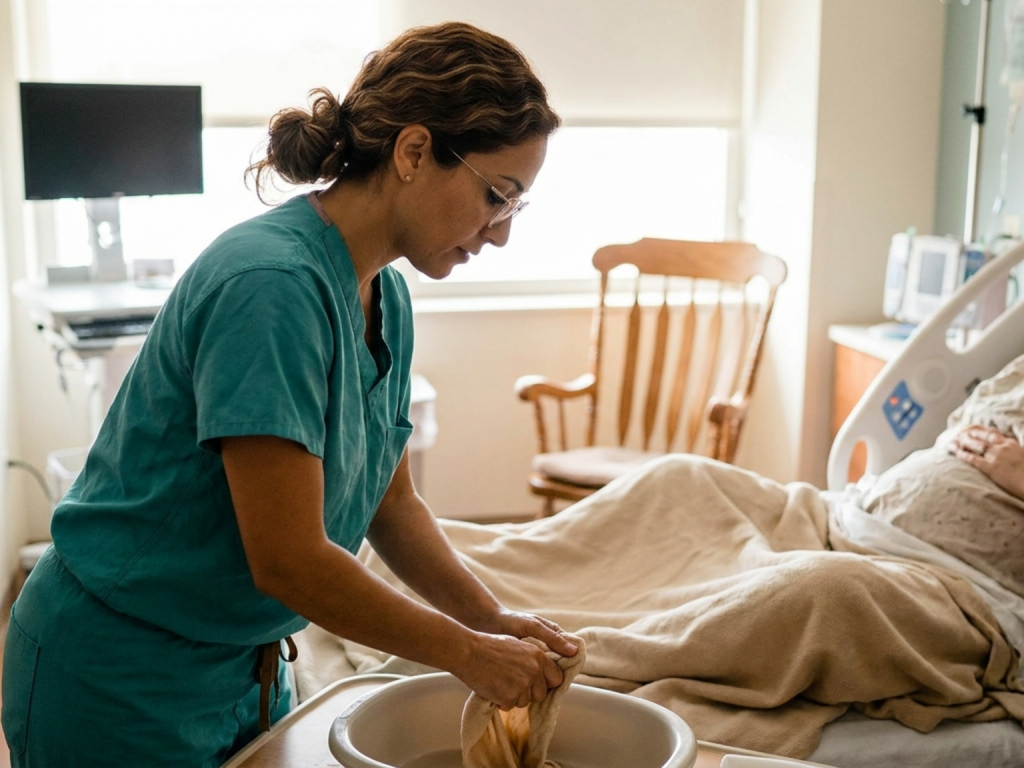
Warm compresses on the perineum during the pushing stage are one of the most commonly recommended risk-reduction measures. Warmth may improve comfort, support tissue relaxation, and help the perineum stretch more gradually as the head descends. Your midwife or nurse may place a warm, clean cloth against the perineum between or during contractions, adjusting pressure according to your comfort and the clinical situation.
Some birth attendants also use hands-on perineal support as the head crowns. This can include supporting the perineum, guiding the speed of the head’s birth, or helping the baby’s head flex so that a smaller diameter presents through the vaginal opening. Other clinicians use a more hands-poised approach, staying ready to intervene while minimizing touch unless needed. The best method depends on the clinician’s skill, your preference, the speed of birth, and fetal wellbeing.
It is reasonable to discuss perineal support before labor: whether your hospital routinely uses warm compresses, how they approach crowning, and how they communicate when they need you to slow down. In the moment, clear, calm instructions can make a difference. Short cues such as “small breaths,” “pause,” or “let the contraction do the work” may help you avoid a sudden forceful push when the perineum is maximally stretched.
Slow the birth of the head at crowning
Crowning is the point when the baby’s head remains visible at the vaginal opening between contractions. This is often the most intense stretch. Many people feel burning, pressure, or an urgent reflex to push hard. That urge is physiologic, but a very forceful push at this point can sometimes speed the head through the perineum before the tissue has time to accommodate.
One practical strategy is controlled exhalation at crowning. Instead of holding the breath and pushing with maximum force, your clinician may ask you to pant, blow, sigh, or take shallow breaths while the head eases out. This does not mean refusing to push; it means modulating pressure. The uterus is still contracting, and the baby may continue to descend even while you reduce voluntary bearing down.
Breathing during pushing can vary. Earlier in the second stage, stronger directed pushing may be useful for some people, especially with epidural anesthesia or when progress is slow. Near crowning, however, the focus often shifts from power to control. If your team says the baby needs to be born quickly because of fetal heart rate concerns or another urgent issue, they may advise stronger pushing or recommend an intervention. Otherwise, slowing the final moments can be a useful perineal protection strategy.
Choose positions that support control
No single birth position prevents tearing for everyone. Position changes can alter pelvic dimensions, fetal descent, sacral mobility, pressure on the perineum, and how well you can sense crowning. The most useful position is one that supports fetal wellbeing, gives you enough stability, and allows the clinician to monitor and assist if needed.
Upright positions may use gravity and help some people push effectively, but they can also make birth feel fast for others. Hands-and-knees may reduce pressure on the lower back and can be useful when fetal position or maternal comfort calls for it. A side-lying pushing position can be helpful for some people because it may slow the birth of the head, reduce sustained perineal tension, and allow the upper leg to be supported without forcing the hips into extreme flexion.
For first-time mothers with epidural anesthesia, some hospital guidance notes that side-lying may be considered in certain situations. This does not mean it is automatically best for everyone. Epidural density, leg strength, fetal monitoring, maternal blood pressure, and urgency all affect position choice. Ask your team what positions are feasible in your birth setting, including with continuous monitoring, an IV, or regional anesthesia.
Push with coordination, not constant maximum force
The second stage of labor has two related tasks: helping the baby descend and protecting tissue as the baby is born. Early in pushing, the work may be more about rhythm and descent. As the head reaches the perineum, the work becomes more about precision. Constant maximum effort is not always necessary and can be exhausting.
Some people naturally use spontaneous pushing: following the body’s urge, pushing for shorter periods, and breathing between efforts. Others need coached pushing, especially with reduced sensation from an epidural, prolonged second stage, or specific fetal concerns. Neither approach is morally better. What matters is whether the approach is effective, tolerable, and safe in your clinical context.
Try to release the jaw, glutes, and pelvic floor between contractions. Resting between pushes helps oxygenation, reduces fatigue, and may improve coordination for the next contraction. If you feel panic as crowning intensifies, ask for one simple cue at a time. Too many instructions can make it harder to respond. A calm voice guiding you to breathe, soften, or pause can be more useful than complex coaching.
Know when interventions may change the plan
Sometimes the safest birth requires intervention despite good preparation. An episiotomy, a surgical cut at the vaginal opening, is not recommended routinely in many modern maternity settings, but it may be used selectively. For example, clinicians may consider it when an instrumental birth is needed, when the baby must be born urgently, or when the perineum is not stretching and delay would create risk. The type and angle of episiotomy matter and should be repaired by a trained clinician.
Forceps or vacuum birth can increase the risk of perineal trauma, but these tools can also prevent more serious problems when birth needs assistance. If an assisted birth becomes necessary, your clinician should explain the indication, expected benefits, risks, pain relief options, and repair plan as clearly as the urgency allows.
If you have a history of third- or fourth-degree tear, anal sphincter symptoms, pelvic floor surgery, female genital cutting, connective tissue disorder, or significant birth trauma, request an antenatal discussion about mode of birth and perineal protection. Individual planning is especially important in these situations. Avoiding tearing is not a single technique; it is a risk-management conversation before and during birth.
Seek urgent clinical guidance
- Severe pain, heavy bleeding, fever, foul-smelling discharge, or wound separation after birth needs prompt medical review.
- Loss of control of gas or stool after birth should be discussed with a clinician, especially after a deep tear.
- Do not perform perineal massage if your clinician has advised pelvic rest or if you have unexplained bleeding or infection symptoms.
- If fetal heart rate concerns arise during pushing, perineal protection may need to be balanced against urgent birth.
- Persistent pelvic pain, painful sex, or scar tenderness after healing deserves pelvic health assessment.
Tools & Assistance
- Antenatal appointment to discuss perineal tear risk and birth preferences
- Pelvic health physiotherapy assessment when available
- Warm compresses during the pushing stage
- Birth plan note asking for calm crowning cues and perineal support
- Postpartum perineal check and referral pathway if symptoms persist
FAQ
Can I completely prevent tearing during birth?
No method can guarantee this. Warm compresses, controlled crowning, appropriate positioning, and individualized support may reduce risk or severity, but some tears occur despite excellent care.
Is perineal massage safe for everyone?
Not always. Ask your clinician first if you have bleeding, infection symptoms, ruptured membranes, placenta concerns, pain, or instructions to avoid vaginal insertion.
Should I avoid pushing hard?
Not necessarily. Strong pushing may be useful earlier or in specific clinical situations. Near crowning, your team may guide you to slow down with smaller breaths to help the tissues stretch.
Does an epidural increase tearing risk?
Epidural anesthesia can change sensation, mobility, and pushing style, but risk depends on many factors including fetal position, assisted birth, duration of pushing, and clinical management.
Is episiotomy better than tearing naturally?
Routine episiotomy is generally avoided in many settings, but selective episiotomy can be appropriate when clinically indicated. Discuss your preferences and ask how decisions are made in your birth unit.
Sources
- Mayo Clinic — Can vaginal tears during childbirth be prevented?
- Royal College of Obstetricians and Gynaecologists — Reducing your risk of perineal tears
- The Hillingdon Hospitals NHS Foundation Trust — Reducing perineal tears
Disclaimer
This article is for general medical information only and does not replace care from a qualified clinician. Always ask your midwife, obstetrician, or healthcare professional for advice tailored to your pregnancy and birth.















Please log in to leave a comment.