
Intro
Family traditions do not need to be elaborate, expensive, or perfectly consistent to matter. A tradition can be as small as pancakes on the first Saturday of the month, a bedtime phrase repeated every night, a walk after dinner, or a yearly way of remembering a loved one. What makes it meaningful is not its complexity but the shared sense of identity, emotional safety, and continuity it creates.
Highlights
Family traditions can support connection, predictability, and a child’s sense of belonging, especially during periods of developmental change or family stress.
The most durable traditions are usually simple, flexible, and aligned with a family’s real values rather than an idealized image of what family life should look like.
Children benefit when traditions include their voices, developmental needs, sensory preferences, and emotional capacity.
Traditions should be supportive rather than compulsory; if a ritual consistently causes distress, conflict, or exclusion, it may need to be adapted.
Why family traditions matter
Family rituals are repeated, symbolically meaningful practices that help families express who they are. Research reviews describe them as more than routines: a routine might be brushing teeth before bed, while a ritual adds emotional or symbolic meaning, such as a parent saying the same comforting phrase, sharing one good thing from the day, or singing a familiar song. Both routines and rituals can help organize family life, but traditions often carry identity, memory, and values.
For children, predictability can reduce cognitive load. When a child knows what usually happens on Friday evenings, birthdays, holidays, or before bedtime, the nervous system may have fewer uncertainties to process. This does not mean traditions prevent stress or solve behavioral concerns, but they can become part of emotionally healthy family routines that support regulation, attachment, and communication.
Traditions also help children understand continuity: “This is what our family does,” “This is how we care for each other,” and “This is how we remember important moments.” In a world where schedules, schools, friendships, and developmental abilities change quickly, repeated shared practices can act like psychological landmarks.
Start with values, not perfection
A meaningful tradition begins with a simple question: what do we want our children to feel and remember? Some families want to emphasize service, faith, humor, cultural heritage, nature, learning, creativity, rest, or connection with extended family. Others want traditions that repair the rush of everyday life, such as a weekly device-free meal or a Sunday check-in.
It can help to name one or two core values and build from there:
- If the value is connection, try a weekly “family question” at dinner.
- If the value is gratitude, try a short appreciation ritual before sleep.
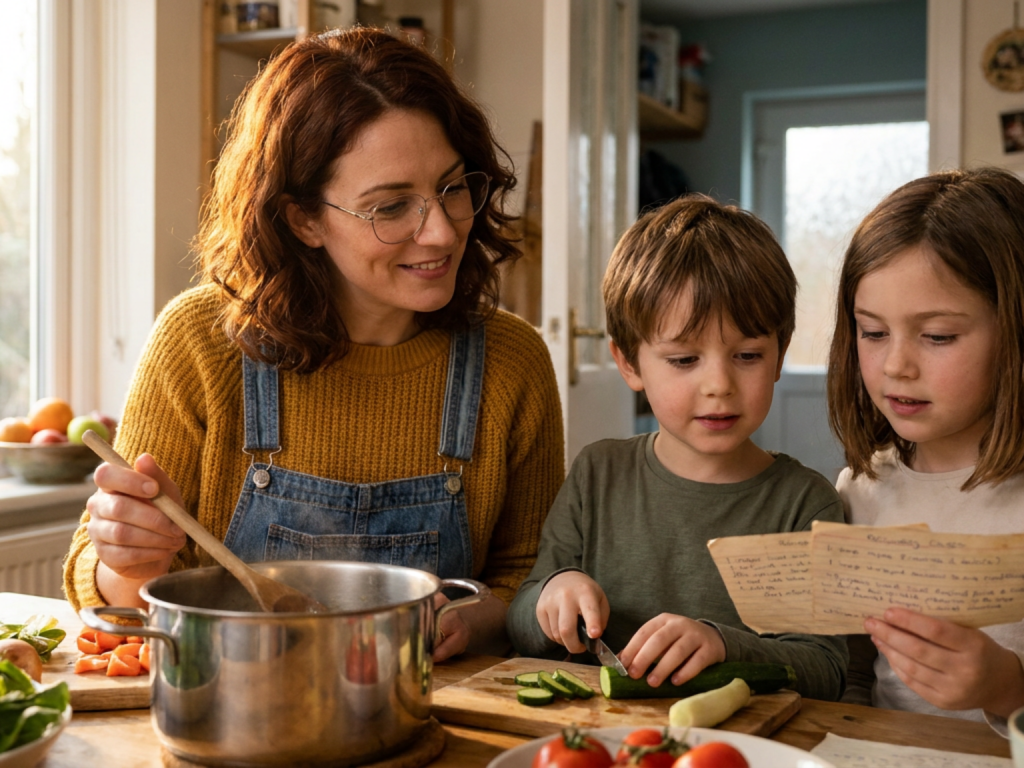
- If the value is culture, cook a family recipe and tell the story behind it.
- If the value is service, choose one manageable act of helping each month.
- If the value is health, create a healthy family tradition such as a weekend walk, a shared fruit-and-yogurt breakfast, or stretching together before school.
Perfection is not the goal. A tradition that happens imperfectly but warmly is often more powerful than one that requires a parent to become exhausted, resentful, or rigid. Children tend to remember emotional tone as much as the activity itself.
Choose traditions that fit your child’s development
Traditions work best when they match a child’s developmental stage. Infants and toddlers often benefit from sensory repetition: a song, a bath-time pattern, a morning cuddle, or a predictable goodbye. Preschool children may enjoy simple roles, such as placing napkins on the table for a special meal. School-age children can help plan menus, decorate, choose music, or create family games. Teenagers may prefer traditions that respect autonomy, humor, privacy, and peer commitments.
It is normal for traditions to change as children grow. A bedtime story may become reading side by side, then a brief night-time check-in. A family outing may shift from the zoo to a hike, a café conversation, or volunteering. Family routines for teenagers often need more negotiation than command; adolescents may participate more willingly when they have genuine influence over timing, format, and relevance.
For neurodivergent children, children with anxiety, sensory processing differences, chronic illness, or disabilities, traditions may need thoughtful adaptation. Predictable visual schedules, reduced noise, shorter duration, movement breaks, accessible locations, and clear expectations can help. If a child has significant distress around transitions, food, crowds, sleep, or social demands, it is wise to consult a pediatrician, developmental specialist, occupational therapist, psychologist, or other qualified clinician for individualized guidance.
Build small daily, weekly, and seasonal rituals
Many parents assume traditions must be tied to major holidays, but daily and weekly rituals often have the strongest cumulative effect. The Raising Children Network highlights everyday rituals, special family time, and cultural or religious observances as ways families express identity and values. Small repeated acts can communicate, “You matter, and we belong to each other.”
Consider traditions in three time frames:
- Daily: a morning phrase, a goodbye handshake, a bedtime routine and emotional regulation check, a two-minute gratitude round, or a song while packing school bags.
- Weekly: Friday pizza and board games, Sunday soup, a family walk, a library visit, a shared planning meeting, or one-on-one time with each child.
- Seasonal or annual: first-day-of-school photos, birthday letters, planting herbs in spring, a winter lights walk, holiday cooking, or a remembrance ritual for a relative who has died.
If life is already full, use the minimum version of a habit. A family movie night may become 20 minutes of a show together. A holiday craft may become lighting a candle and sharing one memory. A weekly family dinner may become breakfast on Saturday. The smallest sustainable version is better than a beautiful plan that collapses under pressure.
Make traditions inclusive and emotionally safe
A tradition should strengthen belonging, not create a test of loyalty. Families are diverse: single-parent households, blended families, foster and adoptive families, co-parenting arrangements, families separated by distance, families with different religious or cultural backgrounds, and families navigating grief or estrangement. Meaningful traditions can honor this reality rather than pretend it does not exist.
Inclusive traditions use language such as “In our home, we often…” rather than “Real families always…”. Children may have traditions in more than one household, and that can be emotionally healthy when adults avoid competition. In blended families, it may help to preserve some older rituals while creating new ones that belong to the current household.
Emotional safety also means allowing mixed feelings. A child may love a holiday and still feel sad because a parent is absent. A teenager may want to skip a ritual one year. A parent may feel grief during a celebration. Naming feelings calmly can deepen, rather than ruin, a tradition: “We can enjoy this and miss Grandma at the same time.” If sadness, irritability, or withdrawal becomes persistent, severe, or associated with sleep changes, appetite changes, self-harm thoughts, school decline, or functional impairment, consult a qualified healthcare or mental health professional.
Let children help design the ritual
Children are more likely to value traditions when they feel ownership. Even young children can choose between two options: “Should we have our special breakfast on Saturday or Sunday?” Older children can help design a birthday ritual, choose a service project, make a playlist, or decide which holiday activities to keep and which to retire.
A simple family meeting can help. Ask: What do we already do that feels special? What do we want more of: fun, calm, connection, faith, culture, movement, kindness, or rest? What feels stressful and should be simplified? This collaborative approach supports autonomy and reduces the chance that a tradition becomes another parental performance task.
Some families keep a “tradition menu” rather than a fixed calendar. The menu might include baking, a park visit, a movie, a call with grandparents, a family service tradition, or a game night. During busy seasons, the family chooses one. During calmer seasons, they may choose several. Flexibility preserves meaning.
When traditions become stressful
Traditions can become burdensome when they are too expensive, too time-consuming, too rigid, or too tied to a parent’s fear of disappointing others. A ritual may need revision if it regularly leads to conflict, sensory overload, financial strain, sleep deprivation, or exclusion of one family member.
Watch for signs that the tradition is serving the image of family more than the actual family. Are parents staying up late to create “magic” while becoming depleted and irritable? Is a child forced into hugs, photos, foods, religious practices, or performances that cause significant distress? Are separated caregivers competing through bigger celebrations? Are traditions being used to avoid necessary conversations about grief, conflict, or health?
It is compassionate, not selfish, to simplify. Caregiver burnout and routines are closely connected: when the adults are chronically depleted, even good rituals can feel impossible. Try reducing the frequency, shortening the event, sharing labor, lowering costs, or changing the location. If conflict is intense, a family therapist, pediatric clinician, or other qualified professional can help identify patterns without blaming any one person.
Practical ideas to adapt
The best tradition is one your family can actually live with. Inspiration lists can be useful, but every idea should be filtered through your family’s health needs, budget, culture, time, and temperament.
Examples include:
- Connection rituals: high-low of the day, one-on-one breakfast dates, family jokes, bedtime notes, or a “welcome home” greeting.
- Food rituals: taco Tuesday, soup on rainy days, birthday pancakes, cooking a grandparent’s recipe, or a picnic dinner in the yard.
- Movement rituals: evening walks, dance breaks, weekend hikes, stretching before school, or a seasonal bike ride with appropriate safety equipment.
- Service rituals: donating gently used items, making cards for neighbors, helping at a community event, or choosing a birthday charity.
- Memory rituals: annual letters, a jar of funny quotes, a photo book, a remembrance candle, or storytelling about family history.
- Calm rituals: quiet reading hour, tea or warm milk after a hard day if medically appropriate, breathing together, prayer, meditation, or soft music before bed.
For children with food allergies, metabolic conditions, feeding disorders, diabetes, gastrointestinal disorders, or other medical concerns, food-based traditions should be planned with professional advice. For movement-based traditions, consider asthma, mobility limitations, pain, fatigue, heat sensitivity, and safety. Traditions should support well-being, not pressure a child to exceed medically appropriate limits.
When to pause and seek support
- A child shows persistent distress, panic, shutdown, aggression, or acute emotional dysregulation around a family ritual.
- A tradition involves unsafe food exposure, sleep deprivation, forced physical affection, humiliation, or disregard for medical needs.
- Family conflict around holidays or rituals includes threats, coercion, violence, or fear.
- Grief, anxiety, depression, eating concerns, or behavioral changes interfere with school, sleep, appetite, relationships, or daily functioning.
- A parent feels chronically overwhelmed, resentful, or unable to cope despite simplifying expectations.
Tools & Assistance
- Create a short family values list and choose one tradition that reflects it.
- Use a shared calendar to mark simple daily, weekly, and seasonal rituals.
- Hold a brief family meeting to ask which traditions to keep, change, or retire.
- Consult a pediatrician, mental health professional, occupational therapist, or dietitian when health, sensory, feeding, or emotional concerns affect participation.
- Keep a memory box, photo folder, or journal to preserve traditions without making them performative.
FAQ
What is the difference between a routine and a tradition?
A routine is a repeated pattern that helps life run smoothly, such as brushing teeth. A tradition or ritual usually carries extra emotional or symbolic meaning, such as a special bedtime phrase that communicates love and security.
What if we are too busy for family traditions?
Choose a very small version. A two-minute goodbye ritual, a weekly shared snack, or one monthly outing can still create continuity. Sustainability matters more than scale.
Should teenagers be required to participate?
Some family expectations are reasonable, but teenagers often engage better when traditions respect autonomy. Invite their input, offer choices, and consider adapting rituals that feel childish or intrusive.
How can separated or blended families handle traditions?
Avoid competition between households. Preserve a few comforting older rituals when possible, and create new ones that fit the current family structure. Children can benefit from having meaningful traditions in more than one home.
Can traditions help with child anxiety or behavior problems?
Predictable rituals may support emotional regulation and connection, but they are not a substitute for clinical care. If anxiety, aggression, sleep problems, or functional impairment persists, consult a qualified healthcare or mental health professional.
Sources
- Journal of Family Psychology / Springer — Family Rituals: A Review
- Raising Children Network — Why are family traditions & rituals important?
- Focus on the Family Canada — 100+ fun family traditions
Disclaimer
This article is for informational purposes only and does not diagnose, treat, or replace medical or mental health care. Consult qualified healthcare professionals for concerns about your child’s development, behavior, nutrition, sleep, safety, or emotional well-being.

















Please log in to leave a comment.