
Intro
Children do not learn to communicate all at once. From the first cry to the first story, communication grows through thousands of small exchanges: a baby looks up when a voice is heard, a toddler points to share interest, a preschooler asks questions, and an older child learns to explain feelings and ideas. These abilities depend on brain maturation, hearing, social attention, memory, and the everyday back-and-forth of family life.
For caregivers, it can help to think of communication as both receptive language, what a child understands, and expressive language, what a child can show through sounds, words, gestures, facial expression, and play. Supportive interaction, rich language exposure, and timely professional input when concerns arise all help children move forward at their own pace.
Highlights
Communication begins long before first words, with crying, eye contact, vocal play, and gestures.
Babbling, pointing, and shared attention are early signs that a child is building language skills.
Responsive conversation helps children learn vocabulary, grammar, turn-taking, and social meaning.
Bilingual, signed, and picture-based communication can all support healthy development.
Communication starts before first words
Communication skills development is deeply social. Newborns cry to signal discomfort, and over the first months they begin to quiet to familiar voices, gaze at faces, and respond to rhythm and tone. These early exchanges are not just emotional; they help organize attention and lay the groundwork for language learning.
By around 2 to 6 months, many infants coo and experiment with vocal play. Babbling follows as a child practices consonant-vowel combinations such as ba-ba or da-da. These sounds are not random noise; they are early motor practice for speech. At the same time, babies learn that communication is reciprocal. A caregiver pauses, the baby vocalizes, the caregiver responds, and a tiny conversation begins.
This early stage shows why children need more than exposure to words in the background. They benefit most from responsive human interaction, where sounds, smiles, touch, and words are linked in a predictable pattern.
Milestones from infancy to preschool
From the second half of the first year, infants increasingly use gestures such as reaching, showing, pointing, and waving. Joint attention, the shared focus of two people on the same object or event, becomes a major driver of learning because it connects a word with a real-world referent. Around the first birthday, many children understand familiar words and use one or more meaningful words, often alongside gesture.
Between 12 and 24 months, expressive language typically accelerates. Vocabulary grows, children begin to combine words, and they use language to request, protest, comment, and name things. By the preschool years, many children can answer simple questions, retell familiar events, and use more complex grammar. Their speech becomes easier for unfamiliar listeners to understand, although articulation is still maturing.
These milestones are broad patterns, not rigid deadlines. Bilingual children may distribute words across languages and still be developing on a healthy path. What matters most is steady progress in understanding, social engagement, and attempts to communicate in any form.
Why responsive interaction matters
Children learn fastest in responsive relationships. When an adult notices a child’s signal, interprets it correctly, and answers promptly, the child gets immediate feedback that communication works. This is the basis of parent-child communication skills: looking, listening, waiting, and then adding a slightly richer model than the child used.
For example, if a toddler says dog, an adult might reply, Yes, a big dog is running. That expansion adds vocabulary and grammar without pressuring the child to repeat it perfectly. The same approach works for emotions. Children often use multimodal emotional communication, combining facial expression, gesture, body posture, and a few words long before they can explain a feeling in full sentences. Naming the feeling, staying calm, and offering a simple choice can help the child feel understood and stay engaged.
Back-and-forth conversation also teaches repair. If a message is unclear, adults can model how to ask again, point, rephrase, or use another clue. These repair skills are central to pragmatic language, the social use of communication in context.
Learning through play, reading, and routines
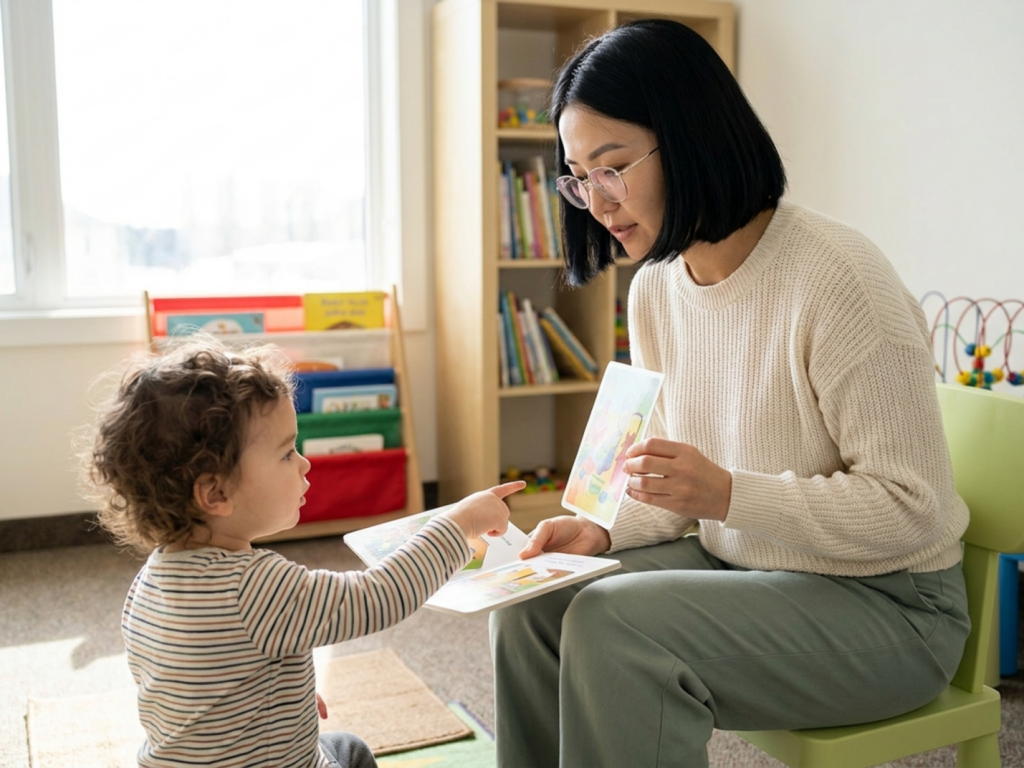
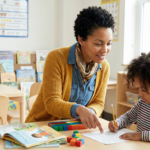
Everyday routines are powerful teaching moments. Shared reading for communication skills works best when the adult slows down, points to pictures, asks simple questions, and waits for the child’s response. Repeated books build receptive vocabulary, narrative structure, and prediction skills. Songs, nursery rhymes, and finger plays add rhythm and phonological awareness, which supports later speech and literacy.
Play is equally important. Pretend play gives children a safe way to practice conversation, turn-taking, and perspective-taking. A child pretending to cook, care for a doll, or drive a bus is also rehearsing the language of roles, actions, and sequences. During mealtime, dressing, bath time, or a trip to the store, adults can use clear instructions for children, one step at a time, then add more language as the child succeeds.
It helps to keep expectations developmentally appropriate. Young children often need extra time to process a request, especially when they are tired, excited, or distracted. Gentle repetition is not a failure; it is part of learning. The goal is not perfect obedience, but meaningful communication that can be shared and understood.
Bilingual and multimodal communication
Children can learn more than one language, and bilingual development is not the same as confusion. A child may use different words with different people, or seem stronger in one language for a period of time. That pattern often reflects where the child hears each language most often, not a problem in learning. Families should use the languages they know best, because warm, fluent interaction matters more than perfect grammar from the adult.
Communication is also broader than spoken words. Gestures, pointing, drawing, pictures, sign language, and augmentative and alternative communication can all support understanding and expression. For some children, these tools reduce frustration while language is growing. They do not prevent speech; they often make communication more successful and less stressful. The key is to match support to the child’s current abilities while preserving opportunities for natural conversation.
When communication is flexible and multimodal, children can participate more fully with siblings, peers, and caregivers. That participation gives them more chances to practice vocabulary, sentence patterns, and social rules in real time.
When to seek professional advice
Most variation in early communication is normal, but some patterns deserve attention. If a child does not startle or turn toward sound, has very limited babbling, rarely uses gestures, loses words they previously used, or seems unable to follow simple spoken directions, a hearing evaluation and a speech-language review can be helpful. persistent listening concerns in children should never be dismissed as simply being stubborn or shy.
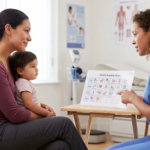
Seek professional guidance sooner rather than later if communication problems are affecting feeding, social connection, preschool participation, or family stress. A pediatrician, audiologist, or speech-language pathologist can help determine whether the issue is hearing, language comprehension, speech production, or something broader. Early evaluation does not mean a diagnosis is certain; it means the child deserves a careful look and appropriate support.
For families, the most reassuring message is this: communication grows through relationship. With time, practice, and the right help when needed, many children make meaningful gains.
When to get professional advice
- Do not ignore poor response to sound or a sudden loss of words or gestures.
- A hearing problem can look like a language delay, so hearing should be considered early.
- Regression in speech, social engagement, or understanding needs prompt evaluation.
- If concerns persist, speak with a pediatrician or speech-language pathologist rather than waiting.
Tools & Assistance
- Pediatric hearing screening
- Speech-language pathology evaluation
- Early intervention services
- Shared reading and language-rich routines
- Bilingual family language support
FAQ
When do children usually say their first words?
Many children say first meaningful words around 12 months, but the range is broad. Understanding, gestures, and social engagement matter too.
Is babbling really important?
Yes. Babbling is a practice stage for speech sounds, rhythm, and turn-taking, and it helps prepare the mouth and brain for words.
Do bilingual children get confused by hearing two languages?
No. Bilingual children can learn both languages. They may use each language in different situations, which is normal.
Can gestures count as communication?
Absolutely. Pointing, showing, waving, and facial expression are important early communication tools and often support later speech.
When should I ask for help?
Ask sooner if you notice poor response to sound, regression, very limited babbling or gestures, or ongoing concerns about understanding and speech.
Sources
- National Institute on Deafness and Other Communication Disorders — Speech and Language Developmental Milestones
- American Speech-Language-Hearing Association — What To Expect: Your Child's Communication Development
- PubMed Central — Introduction to Language Development in Children
Disclaimer
This article is for general educational purposes only and does not replace medical advice, diagnosis, or treatment. If you have concerns about a child’s hearing, speech, or language, please consult a qualified healthcare professional.












Please log in to leave a comment.