
Intro
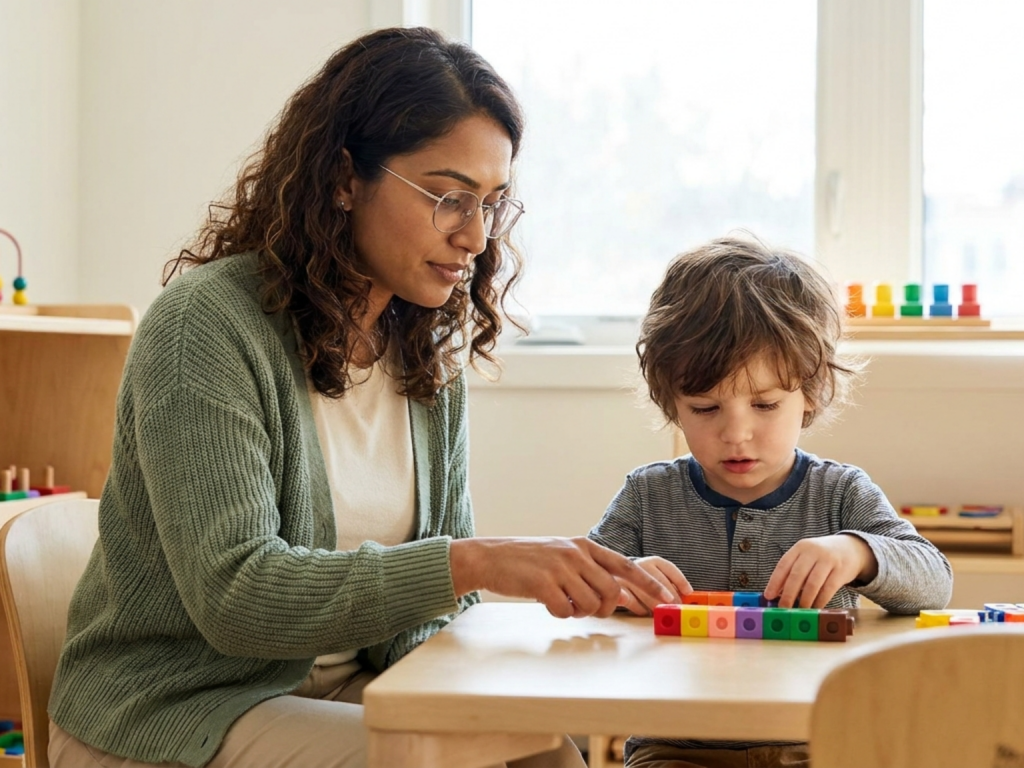
Learning is not simply a matter of motivation or teaching style. In childhood, it is deeply shaped by the developing brain: how neural circuits form, how sensory systems mature, how attention and memory become more efficient, and how relationships buffer stress. This can feel both hopeful and heavy for families, because a child’s learning profile may reflect biology, experience, health, sleep, stress, and opportunity all at once.
Highlights
Children learn through changing neural networks, not through willpower alone. Brain structure, function, and connectivity mature over time and influence how efficiently a child can learn new skills.
Early experiences matter because they help shape synapses, sensory pathways, language circuits, and stress-response systems. Responsive relationships are especially protective.
Learning also changes the brain. Practice, play, language exposure, movement, and meaningful feedback can strengthen circuits over time.
Concerns about learning should be approached with curiosity rather than blame. A pediatrician, developmental specialist, psychologist, speech-language pathologist, or school team can help clarify needs.
Brain development is the foundation for learning
A child’s brain is not a smaller version of an adult brain. It is a dynamic organ undergoing rapid structural and functional change. Neurons form circuits, synapses are created and refined, white matter pathways become more efficient through myelination, and brain regions become increasingly coordinated. These processes help determine how easily a child can attend, process information, remember instructions, use language, regulate emotions, and apply new concepts.
Brain development and learning influence each other in both directions. Maturation can make certain kinds of learning easier: for example, improved auditory processing supports speech sound discrimination, and stronger frontoparietal networks support working memory and problem solving. At the same time, experience-dependent learning can alter brain structure and function. Repeated reading practice, music training, social play, and guided problem solving can strengthen relevant neural pathways.
This bidirectional relationship is one reason children do not all learn at the same pace. A child who struggles with phonological awareness, fine motor coordination, or attention may not be choosing not to learn; the neural systems needed for that task may still be developing, inefficient, stressed, or affected by another medical, sensory, emotional, or environmental factor. Supportive teaching works best when it respects the child’s developmental stage while still offering appropriate challenge.
Early brain architecture: genes, timing, and experience
Brain architecture begins before birth and is shaped by the interaction of genetic programming, prenatal and postnatal health, timing, and experience. Early circuits are built first, and later, more complex circuits are built on top of them. This hierarchical organization means that higher-level abilities such as language, academic reasoning, impulse control, and social problem solving depend partly on earlier sensory, motor, perceptual, and emotional foundations.
Synaptogenesis, the formation of connections between neurons, is especially active in early life. Over time, synaptic pruning removes less-used connections and preserves or strengthens frequently used ones. This is not a loss in a negative sense; it is a refinement process that helps the brain become more efficient. However, pruning and circuit strengthening are highly experience-sensitive. Rich, responsive, safe, and varied experiences give the brain useful input. Severe deprivation, chronic neglect, unmanaged toxic stress, or unaddressed sensory impairment can interfere with expected development.
One practical example is language development. Babies need intact or supported hearing, social interaction, turn-taking sounds, facial expression, and repeated exposure to meaningful speech. These early exchanges support later vocabulary, grammar, reading readiness, and classroom participation. Similarly, early motor exploration supports spatial awareness and problem solving, while secure relationships support curiosity and persistence.
Serve-and-return interactions teach the brain how to learn
One of the most powerful learning mechanisms in early childhood is the reciprocal exchange often called serve and return. A child looks, babbles, points, gestures, asks, cries, or shows interest; a responsive caregiver notices and responds with words, touch, shared attention, comfort, or help. These repeated exchanges build neural circuits for language, social communication, emotional safety, and attention.
Serve-and-return does not require perfect parenting or expensive materials. It can happen during feeding, diaper changes, bath time, walks, reading, cooking, or waiting for a bus. What matters is contingent responsiveness: the adult’s response is connected to the child’s signal. This teaches the child that communication has meaning and that exploration is safer when a trusted person is emotionally available.
For learning, this matters because children are not just absorbing facts. They are learning how to focus on another person’s face and voice, shift attention, predict patterns, tolerate frustration, and try again after mistakes. These are neurodevelopmental skills. When a child is repeatedly ignored, frightened, or overwhelmed, the brain may prioritize vigilance and survival over exploration. When a child feels safe enough, the brain can allocate more resources toward curiosity, memory, language, and flexible thinking.
Sensory and motor systems come before many academic skills
Learning begins with the body. Vision, hearing, touch, proprioception, vestibular processing, posture, and fine motor control all contribute to classroom readiness. A child who cannot clearly hear speech sounds may miss phonics instruction. A child with uncorrected visual problems may avoid reading or appear inattentive. A child with poor postural endurance or hand strength may know an answer but struggle to write it down.
Sensory processing also affects learning behavior. Some children are easily overwhelmed by noise, bright light, crowded spaces, or unexpected touch. Others seek movement or pressure to stay regulated. These patterns are not diagnoses by themselves, but they can influence attention, participation, and emotional regulation. If sensory differences are intense, persistent, or interfering with daily life, professional evaluation may be useful.
Motor development supports cognition in subtle ways. Crawling, reaching, stacking, drawing, climbing, and manipulating objects help children build spatial maps, cause-and-effect understanding, bilateral coordination, and planning. Later, these foundations can support handwriting, geometry, tool use, sports, self-care, and laboratory tasks. When adults notice the link between movement and learning, they can provide developmentally appropriate play rather than expecting young children to learn only by sitting still.
Memory, attention, and executive function mature gradually
Executive function refers to cognitive processes such as inhibition, working memory, cognitive flexibility, planning, and self-monitoring. These abilities depend heavily on distributed networks that include the prefrontal cortex and its connections with sensory, limbic, and motor systems. They develop over many years, continuing through adolescence and young adulthood.
This gradual maturation explains why children may understand a rule but still fail to follow it consistently. Knowing and doing are not identical neurodevelopmental tasks. A preschooler may know not to grab a toy but lack the inhibitory control to stop in the moment. A school-age child may understand homework instructions but lose track of multistep directions because working memory is overloaded. A teenager may reason abstractly in a calm setting but make impulsive choices under emotional or peer stress.
Learning environments can either support or overload these developing systems. Helpful supports include predictable routines, visual schedules, short instructions, movement breaks, explicit modeling, retrieval practice, and feedback that focuses on strategy rather than shame. As children mature, adults can gradually transfer responsibility: first co-regulating and organizing with the child, then helping the child practice independent planning. This approach respects cognitive development while still building competence.
Emotion, stress physiology, and learning capacity
Emotion and cognition are biologically intertwined. The amygdala, hippocampus, prefrontal cortex, autonomic nervous system, and hypothalamic-pituitary-adrenal axis all participate in how children respond to safety, novelty, threat, and challenge. Mild, manageable stress can support alertness and learning. Severe, chronic, or unpredictable stress can impair attention, memory consolidation, sleep, and emotional flexibility.
Toxic stress is not the same as ordinary frustration or age-appropriate limits. It refers to prolonged activation of stress-response systems without adequate protective relationships or recovery. In such conditions, a child’s brain may become more oriented toward threat detection than exploration. This can look like distractibility, aggression, withdrawal, perfectionism, shutdown, somatic complaints, or avoidance of schoolwork.
Supportive relationships are a biological intervention in the broadest sense. Warm, consistent adults help children regulate arousal, label feelings, recover after distress, and re-engage with tasks. Emotional development therefore affects academic learning directly. A child who feels understood is often better able to take learning risks, ask questions, tolerate mistakes, and persist through difficulty. If anxiety, mood changes, trauma exposure, sleep disruption, or behavioral changes are interfering with learning, families should seek guidance from qualified healthcare or mental health professionals.
Sensitive periods, plasticity, and realistic hope
Some neural systems have sensitive periods, windows when the brain is especially responsive to particular kinds of input. Early visual, auditory, language, and attachment-related experiences are important examples. This is why early identification of hearing loss, vision problems, developmental delays, and significant environmental deprivation matters. Timely support can improve access to learning during periods when circuits are highly adaptable.
At the same time, sensitive periods should not be interpreted fatalistically. The developing brain remains plastic, meaning it can change in response to experience, practice, therapy, education, and supportive relationships. Plasticity may be greater in some domains and ages than others, and progress may require more intensity or specialized support later, but improvement is often possible.
For families, realistic hope means avoiding two extremes. One extreme is assuming a child will simply outgrow every difficulty without assessment. The other is assuming early struggles define a child’s future. A balanced approach is to observe carefully, support consistently, and seek evaluation when concerns persist. Interventions such as speech-language therapy, occupational therapy, educational supports, hearing or vision care, mental health care, and individualized school planning can reduce barriers to learning when matched to the child’s needs.
How adults can support the learning brain
Adults cannot control every aspect of brain development, and families should not be made to feel responsible for every learning challenge. Genetics, prematurity, medical conditions, neurodevelopmental differences, sensory impairments, sleep disorders, nutrition, stress exposure, and school context can all play roles. Still, everyday environments can strongly support learning.
- Protect sleep: Sleep supports memory consolidation, attention, emotional regulation, growth, and immune function. Persistent snoring, insomnia, restless sleep, or daytime sleepiness should be discussed with a clinician.
- Use responsive interaction: Talk, read, sing, explain, listen, and respond to the child’s interests. Conversation is more powerful when it is reciprocal rather than only instructional.
- Build routines: Predictable structure reduces cognitive load and helps children practice independence.
- Encourage play and movement: Play integrates motor, sensory, language, social, and problem-solving networks.
- Reduce toxic stress where possible: Safety, stable caregiving, food security, and access to healthcare support brain systems needed for learning.
- Ask for help early: If a child is losing skills, not meeting expected milestones, struggling significantly in school, or showing major changes in behavior, professional guidance is appropriate.
The most helpful question is often not “Why won’t this child learn?” but “What brain systems, experiences, supports, or health factors might make this learning task easier?” That shift preserves dignity and opens the door to practical support.
When to seek prompt guidance
- Loss of previously acquired language, motor, social, or academic skills should be discussed with a healthcare professional promptly.
- Concerns about hearing, vision, seizures, sleep-disordered breathing, head injury, or significant developmental delay need medical evaluation.
- Severe anxiety, persistent sadness, trauma symptoms, self-harm talk, or major behavior change should be addressed urgently with qualified professionals.
- Do not assume a learning difficulty is laziness or poor motivation without considering developmental, medical, sensory, emotional, and educational factors.
- If school struggles are persistent, ask about formal educational evaluation and appropriate supports.
Tools & Assistance
- Schedule a pediatric visit to review development, sleep, hearing, vision, growth, and medical history.
- Request developmental screening or psychoeducational evaluation when learning concerns persist.
- Consult speech-language therapy, occupational therapy, psychology, or developmental-behavioral pediatrics when recommended.
- Use predictable routines, visual supports, shared reading, movement breaks, and responsive conversation at home.
- Collaborate with teachers to identify patterns across settings and adjust supports.
FAQ
Does brain development determine a child’s intelligence?
Not in a fixed or simple way. Brain development influences learning efficiency, but experience, health, relationships, instruction, practice, and support also shape outcomes.
Can learning change the brain?
Yes. Practice and experience can modify neural circuits, strengthen connectivity, and improve efficiency, especially when learning is meaningful, repeated, and appropriately supported.
Are early years the only time that matters?
No. Early years are highly influential, but the brain remains plastic through childhood, adolescence, and beyond. Later support can still be valuable.
When should parents worry about learning differences?
Seek guidance if difficulties are persistent, worsening, causing distress, affecting daily function, or accompanied by regression, sensory concerns, sleep problems, or major behavior changes.
Sources
- Nature Publishing Group — A methodological perspective on learning in the developing brain
- National Center for Biotechnology Information (NCBI) — Brain Development and the Role of Experience in the Early Years
- Harvard Center on the Developing Child — Brain Architecture: An ongoing process that begins before birth
Disclaimer
This article is for informational purposes only and does not diagnose or treat any condition. Consult a qualified healthcare professional for concerns about a child’s development, behavior, learning, or mental health.


















Please log in to leave a comment.