
Intro
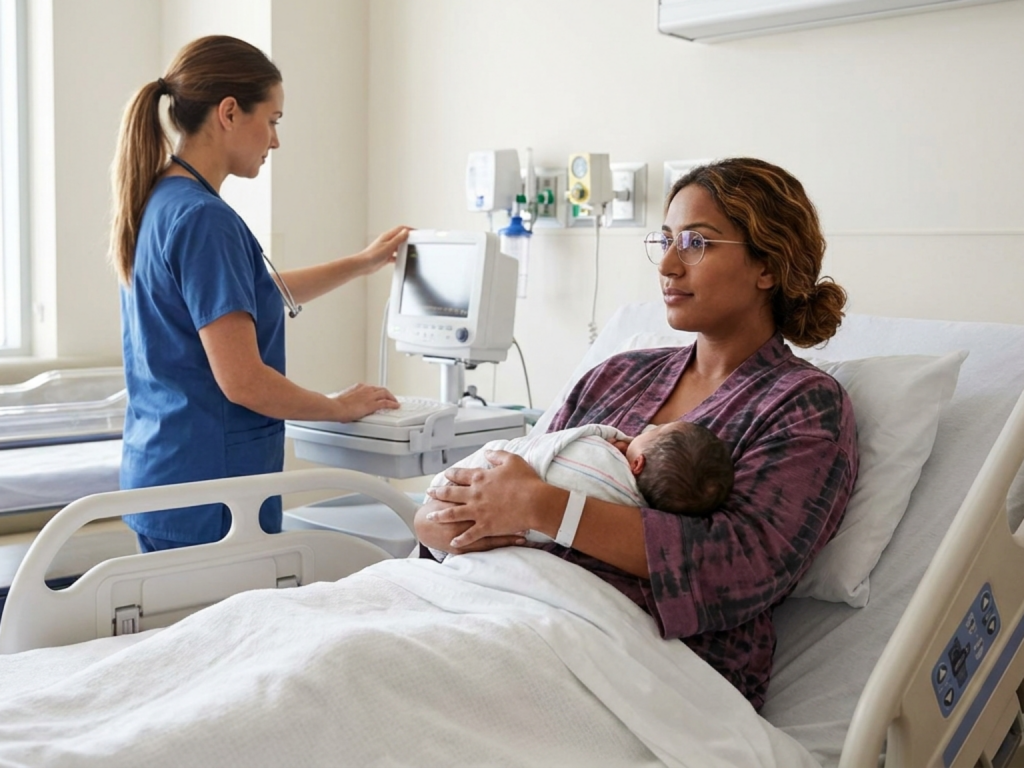
The hours after birth combine recovery, observation, newborn adaptation, feeding, bonding, education, and discharge planning. Even after an uncomplicated delivery, the number of checks and staff visits can feel surprising when you are tired and absorbing a major life transition.
Exact routines vary by hospital, country, mode of birth, and individual clinical needs. You remain entitled to respectful communication, informed consent, privacy, pain relief, and explanations of proposed care. Ask your maternity or neonatal team how local protocols apply to you and your baby.
Highlights
Most stable newborns can receive warmth, assessment, and early feeding support while remaining close to the birthing parent.
The parent is monitored for bleeding, uterine contraction, vital signs, pain, bladder function, mobility, and complications related to delivery or anesthesia.
Routine newborn care usually includes repeated physical assessments, feeding evaluation, preventive treatments, and screening tests.
Discharge depends on clinical stability, not simply the number of hours since birth, and should include clear follow-up arrangements.
The first minutes after delivery
If parent and baby are clinically stable, the newborn is commonly dried, kept warm, and placed skin to skin on the parent’s chest. Newborn skin-to-skin care supports temperature regulation, early feeding behavior, cardiorespiratory transition, and bonding. Staff assess breathing, heart rate, tone, color, and response to stimulation, often without interrupting contact. Apgar scores summarize adaptation at defined time points but do not predict an individual child’s long-term outcome.
The umbilical cord is clamped according to the clinical situation and local practice. The placenta is then delivered, and clinicians assess uterine tone after delivery, blood loss, and the genital tract or surgical incision. Perineal tears or an episiotomy may require repair under local, regional, or existing anesthesia.
Immediate post-birth monitoring becomes more intensive if there is heavy bleeding, abnormal vital signs, respiratory difficulty, prematurity, meconium-related concern, or another complication. A neonatal team may move the baby to a warmer or specialized unit when stabilization cannot safely occur at the bedside. Staff should explain urgent actions and reunite the family as soon as clinically appropriate.
Recovery-room monitoring for the birthing parent
During the early recovery period, nurses or midwives repeatedly check blood pressure, pulse, temperature, breathing, vaginal bleeding, uterine firmness, and pain. They may gently palpate the abdomen to confirm that the uterus is contracting. Excessive bleeding and a poorly contracted uterus can indicate increased postpartum hemorrhage risk and require prompt evaluation.
Staff also assess sensation and movement after epidural or spinal anesthesia, nausea, itching, dizziness, hydration, and the ability to pass urine. An overfull bladder can interfere with uterine contraction, so temporary catheterization may be needed in some circumstances. Before walking, ask for help until strength, balance, and lower-limb sensation have returned.
Following vaginal birth, care may include ice packs, perineal hygiene guidance, and evaluation of swelling or repair sites. Following cesarean birth, hospital postpartum monitoring additionally covers the abdominal incision, urinary catheter, intravenous therapy, anesthesia recovery, and prevention of immobility-related complications. Pain management should be individualized by the treating team, particularly when breastfeeding or managing allergies and other conditions.
The newborn examination and routine care
A clinician performs a structured newborn examination, sometimes after the first feeding or period of uninterrupted contact. This generally includes weight and measurements, temperature, heart and lung assessment, pulses, abdomen, mouth and palate, spine, hips, genitalia, skin, reflexes, and neurologic tone. Findings are interpreted in the context of gestational age and the events surrounding birth.
Routine newborn procedures after birth vary by jurisdiction and parental consent. Vitamin K is commonly offered to reduce the risk of vitamin K deficiency bleeding. Eye prophylaxis and the first hepatitis B vaccination may be offered or required depending on local policy and maternal infection status. Identification bands and security procedures are checked carefully.
Some newborns need blood glucose monitoring, including babies who are preterm, unusually small or large for gestational age, symptomatic, or born to a parent with diabetes. This is not routinely required for every healthy term infant. Any medication, injection, blood test, or temporary newborn separation should be explained, including its purpose, expected benefits, possible harms, and alternatives when time permits.
Feeding, bonding, and rooming-in
Early feeding support should reflect the family’s goals and the baby’s clinical needs. A nurse, midwife, or lactation professional may observe alertness, feeding cues, positioning, latch, swallowing, and maternal comfort. Colostrum is produced in small amounts suited to a newborn’s stomach, and frequent feeding attempts are common. If direct breastfeeding is delayed, staff may discuss hand expression or pumping.
Families using formula should receive guidance on safe preparation, responsive feeding, bottle positioning, and appropriate volumes. Supplementation may be medically indicated in some situations, but the reason and available options should be discussed with the family. A newborn feeding assessment considers intake alongside urine and stool output, weight trajectory, hydration, jaundice, and clinical behavior.
Many hospitals encourage rooming-in, meaning the baby remains in the parent’s room while staff provide care. This can support feeding recognition and confidence, but recovery and safety matter too. If exhaustion, medication effects, illness, or limited mobility make newborn handling unsafe, ask for assistance. Babies should sleep on their backs in a separate, flat hospital bassinet rather than in an adult bed or chair.
Screening tests before discharge
Newborn screening is designed to identify uncommon but important conditions before obvious symptoms develop. The exact panel and timing depend on national or regional programs. A heel-prick blood sample may screen for metabolic, endocrine, hematologic, or genetic disorders. Some tests must be repeated if collected early, if the sample is inadequate, or if local protocols require a later specimen.
Hearing screening is usually performed with a brief automated test while the baby is quiet or asleep. A non-passing result does not establish hearing loss; fluid, movement, or background noise can affect the result, so timely repeat testing or audiology referral is important. Pulse oximetry screening compares oxygen saturation measurements, usually from the right hand and a foot, to help identify certain critical congenital heart defects. It does not detect every cardiac condition.
Staff also assess jaundice using skin measurements or a blood test when indicated. Results are interpreted according to the baby’s age in hours, gestation, and risk factors. Screening is not the same as diagnosis: abnormal or borderline results require confirmation and professional follow-up. Before discharge, make sure you know which tests were completed, which results are pending, and who will contact you.
How long the hospital stay may be
Length of stay varies substantially. After an uncomplicated vaginal birth, some families leave after approximately one to two days, while cesarean recovery often takes longer. Medical complications, prematurity, feeding difficulty, jaundice, infection risk, anesthesia effects, social support, local policy, and access to follow-up can all change the timeline. WHO guidance emphasizes adequate facility-based observation and a coordinated transition to postnatal care rather than discharge based solely on convenience.
Discharge readiness for the parent generally includes stable vital signs and bleeding, manageable pain, safe mobility, bladder function, and a plan for medications and wound or perineal care. Readiness for the newborn includes stable temperature and cardiorespiratory status, completed examinations, an acceptable feeding plan, assessment of jaundice, and arrangements for outstanding screening.
After cesarean birth, clinicians may also confirm gastrointestinal recovery, incision condition, and the ability to move safely. If parent and baby have different clinical needs, one may be ready before the other. Ask about options for staying nearby, visiting, expressing milk, and participating in care if neonatal admission or another temporary separation is necessary.
Discharge education and the transition home
Before leaving, the team should review expected postpartum recovery, hygiene, activity, nutrition, prescribed medication instructions, contraception, emotional well-being, and follow-up. Written guidance should explain postpartum hemorrhage warning signs, infection concerns, blood-pressure symptoms, thromboembolism warning signs, wound problems, and when to seek emergency help. Families should also understand normal newborn feeding frequency, diaper output, safe sleep, cord care, temperature assessment, jaundice, and signs of illness.
A clinician should verify that the baby has an appropriate car seat or locally suitable transport arrangement. Obtain contact details for the maternity unit, pediatric or primary care service, lactation support, and urgent care. Confirm the dates and locations of maternal and newborn appointments, especially if blood-pressure review, weight monitoring, bilirubin reassessment, wound review, or repeat screening is required. Postnatal support should continue after discharge rather than ending at the hospital door.
Ask for clarification if instructions conflict or feel unmanageable. Language interpretation, disability accommodations, mental health support, social work, and safeguarding services should be available when needed. Seek individualized advice after a complicated birth, pregnancy hypertension, diabetes, infection, significant blood loss, preterm delivery, or neonatal admission. A safe transition depends on clinical planning, informed participation, practical support, and knowing where to turn when something does not feel right.
Seek urgent medical help
- Call emergency services for severe breathing difficulty, chest pain, collapse, seizure, confusion, or thoughts of harming yourself or the baby.
- Obtain urgent assessment for heavy or rapidly increasing bleeding, severe abdominal pain, faintness, or a racing heartbeat.
- Contact a clinician promptly for severe headache, visual disturbance, sudden swelling, high blood pressure, fever, or a red and painful leg.
- A newborn needs urgent assessment for breathing difficulty, blue or gray coloring, marked lethargy, seizure, fever, poor feeding, or substantially fewer wet diapers.
- Report rapidly worsening jaundice, repeated forceful or green vomit, or redness spreading from the umbilical area without delay.
Tools & Assistance
- Save the maternity unit and newborn care contact numbers in your phone before discharge.
- Use a written feeding, diaper, medication, and symptom log if your care team recommends monitoring.
- Request a lactation consultant, interpreter, social worker, physiotherapist, or mental health professional when needed.
- Confirm maternal and newborn follow-up appointments and any pending laboratory or screening results.
- Ask the discharge nurse to demonstrate wound, perineal, cord, and safe-sleep care.
FAQ
Can my baby usually stay with me immediately after birth?
Yes, stable parents and newborns can often remain together for skin-to-skin contact and early feeding. Clinical instability may require treatment or temporary separation.
Can I decline a routine newborn procedure?
Consent requirements vary, but clinicians should explain the purpose, benefits, risks, and alternatives of proposed care. Discuss concerns with the newborn team before deciding.
When can I shower and walk after birth?
Timing depends on bleeding, strength, anesthesia recovery, surgery, and catheter removal. Ask staff to assist with the first walk and follow individualized postoperative guidance.
What if feeding is not going well before discharge?
Request an observed feed and a documented plan covering technique, intake, output, weight follow-up, supplementation if clinically indicated, and where to obtain prompt support.
Sources
- World Health Organization — WHO recommendations on maternal and newborn care for a positive postnatal experience
- MedlinePlus — After vaginal delivery - in the hospital
- Cleveland Clinic — Newborn Care in the Hospital: What To Expect
Disclaimer
This article provides general medical information and is not a substitute for individualized advice, diagnosis, or treatment. Consult your maternity and newborn healthcare professionals about your specific circumstances.

















Please log in to leave a comment.