
Intro
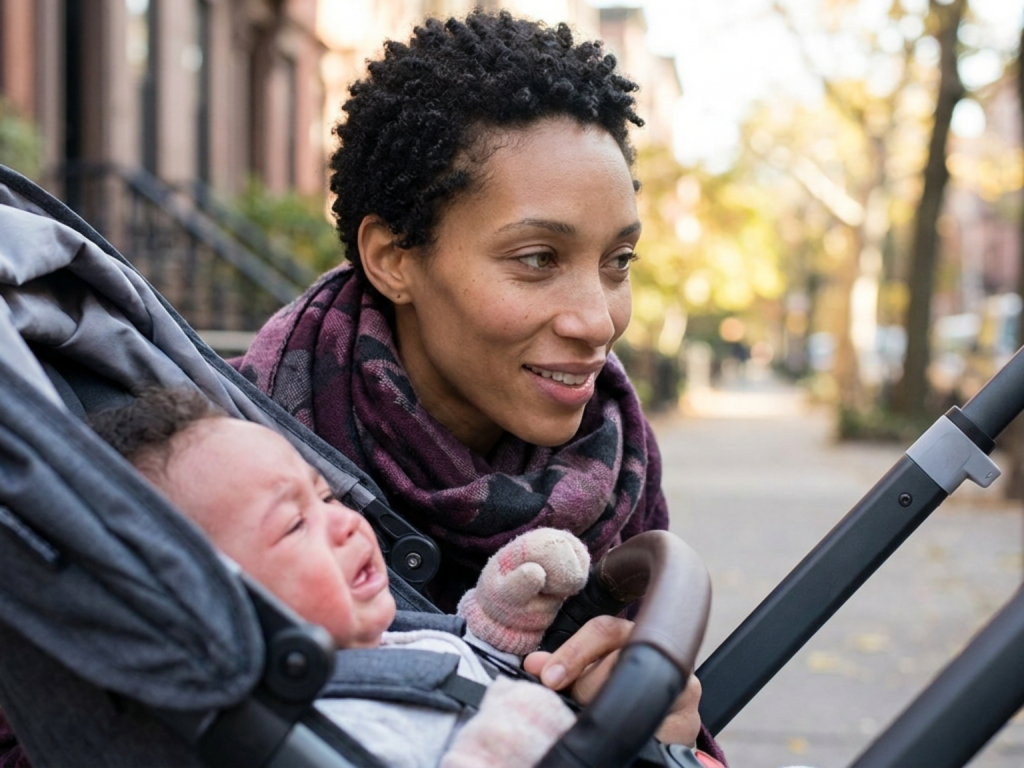
Stroller crying can turn a simple walk or errand into a stressful experience, especially when a baby seemed comfortable moments earlier. It is understandable to wonder whether the crying signals discomfort, hunger, overstimulation, pain, or a problem with the stroller itself.
Most stroller crying has an ordinary, temporary explanation, but the pattern and the baby’s overall condition matter. A calm, systematic check can help you respond safely while recognizing when professional assessment is needed.
Highlights
Crying in a stroller is often related to ordinary needs such as feeding, a wet diaper, temperature discomfort, fatigue, or wanting contact with a caregiver.
Stroller fit, recline, harness placement, sunlight, noise, and rough surfaces can all affect comfort and tolerance.
A sudden change in crying behavior, persistent inconsolable crying, or signs of illness warrants timely medical advice.
Why a Baby May Cry in the Stroller
A stroller does not remove the usual reasons babies cry. Hunger, a need to burp, a soiled diaper, fatigue, heat, cold, and a desire for close physical contact may become more obvious once a baby is restrained and moving. Babies also have limited ability to regulate their state: a busy outing can become overwhelming when they are already tired or have had too much sensory input.
Timing provides useful context. Crying shortly before a usual feed may reflect hunger, whereas fussing after a feed may coincide with swallowed air during feeding or a need for a quiet upright cuddle while awake. Crying that begins only after a long outing can suggest fatigue, overheating, or sensory overload. Some babies object to the transition into the stroller but settle once the walk becomes predictable; others dislike movement or separation from a caregiver’s body.
Try to observe the whole pattern rather than assigning one cause immediately. Is the cry brief and responsive to a pause, or intense and escalating? Does it happen in every stroller, only outdoors, only after feeds, or mainly near naps? These details can make a pediatric conversation more productive if the problem persists.
Check Comfort, Fit, and the Immediate Environment
Start with simple, reversible causes. Check the diaper, clothing layers, and whether the baby appears too warm or cool. Babies can overheat in a stroller when a canopy, blanket, or cover limits airflow, particularly in warm weather. Feel the chest or back rather than relying only on hands and feet, which may feel cool even when core temperature is comfortable.
Confirm that the stroller setup follows the manufacturer’s age, weight, and recline instructions. Newborn stroller positioning should support the head and neck without allowing the chin to fall toward the chest. This flexed posture can compromise airway patency in young infants. Use the integrated restraint system as directed, usually a five-point stroller harness, and avoid adding cushions, inserts, toys, or head supports that were not approved for that model.
External stimulation can be surprisingly intense. Bright low-angle sun, wind, rain, traffic noise, crowded spaces, unfamiliar voices, and a constantly moving visual field may overwhelm some babies. Adjusting the route, using the canopy while maintaining ventilation, slowing down, or stopping in a quieter place may help. Avoid fully draping the stroller with a blanket because it can trap heat and reduce ventilation.
Motion and Vibration Can Affect Tolerance
Many babies find gentle movement regulating, but movement is not automatically soothing. Abrupt turns, repeated curb drops, uneven paving, cobblestones, and fast walking can create jostling that a baby finds uncomfortable. Emerging research on stroller vibration indicates that exposures can exceed recognized comfort limits, raising reasonable concern about ride quality and the effect of rough surfaces. This does not mean a crying baby has been harmed, but it supports taking persistent distress seriously and choosing smoother routes when possible.
Consider whether the crying starts at a particular point on the journey. If it occurs on rough paths but improves on smooth indoor flooring, vibration or motion may be contributing. Check that wheels, suspension, and the seat mechanism are functioning correctly according to the manufacturer’s instructions. Do not attempt improvised modifications that could affect stability, restraint performance, or the stroller’s safety certification.
A calmer pace can reduce both vibration and sensory load. Lift rather than bump the stroller over curbs when feasible, avoid prolonged travel over uneven surfaces, and take regular breaks on longer walks. Stop promptly if the baby seems increasingly distressed. A stroller should be a supervised transport tool, not a setting in which a baby must remain upset for the sake of completing an errand.
Use a Calm, Structured Response
When crying begins, pause somewhere safe before trying to troubleshoot. Your own stress response can rise quickly when a baby cries in public, so a short sequence helps prevent rushed decisions. Look at the baby’s color, breathing, alertness, and position first. Then address the most likely basic needs without repeatedly changing several things at once.
- Park securely, apply the brake, and keep one hand on the stroller when appropriate.
- Check breathing, posture, harness fit, diaper status, and temperature comfort.
- Offer a feed if the baby is due and can be fed safely outside the moving stroller.
- Pause for burping during natural feeding pauses, if that is part of the baby’s usual feeding routine.
- Move to a quieter, shaded, well-ventilated area and offer calm voice contact or a brief cuddle.
- Resume only when the baby is settled enough and the setup remains safe.
For a young infant, avoid relying on a stroller as a routine sleep space. If a baby falls asleep during supervised travel, monitor position and breathing. For planned sleep, transfer the baby to a firm, flat infant sleep surface as soon as practical. Never leave a baby unattended in a stroller, even if the crying stops.
Consider Patterns Beyond the Stroller
When crying is frequent across settings, the stroller may be the place where an underlying pattern becomes most visible rather than the cause. Normal infant crying commonly rises in early infancy and may cluster in the late afternoon or evening. Some babies have colic crying, meaning prolonged episodes of otherwise unexplained distress in an infant who appears well between episodes. This is a descriptive pattern, not a diagnosis to make independently.
Feeding-related concerns may deserve discussion when crying regularly occurs after feeds, is associated with frequent vomiting, poor feeding, coughing, arching, or impaired growth. Gastrointestinal discomfort, including gas and crying in babies, is commonly suspected by caregivers, but these signs are nonspecific. Avoid changing formula, eliminating foods, or using over-the-counter remedies without advice from the clinician who knows the baby’s history.
Keep a brief record for several days: feeds, wet and soiled diapers, sleep periods, stroller timing, route conditions, crying duration, and what helped. A log can reveal that crying consistently follows an overtired wake period, a particular route, or a tight outing schedule. It can also give a healthcare professional clearer clinical information than a general impression that the baby cries “all the time.”
Know When Crying Needs Urgent Attention
Trust a meaningful change from your baby’s usual behavior. Persistent inconsolable crying, especially a high-pitched, weak, unusual, or pain-like cry, should not be dismissed as simple stroller dislike. The same applies when crying is accompanied by fever, repeated vomiting, poor feeding, fewer wet diapers, marked sleepiness, reduced responsiveness, difficulty breathing, blue or pale color, rash, swelling, injury, or a swollen abdomen.
For infants younger than three months, a rectal temperature of 38 degrees C or 100.4 degrees F or higher needs prompt medical guidance because fever at this age can require urgent evaluation. Seek emergency help immediately for trouble breathing, unresponsiveness, seizure-like activity, blue lips or face, serious injury, or any concern that the airway is not clear.
It is also appropriate to contact a pediatric clinician when stroller crying is recurrent, disruptive, or making it difficult to leave home. You do not need to prove that something is wrong before asking. A professional can review feeding, growth, sleep, development, examination findings, and the circumstances of the crying. If you feel overwhelmed, place the baby safely in the stroller or another appropriate safe location, step back briefly if needed, and call a trusted support person or healthcare service.
Seek Medical Help Promptly
- Seek urgent care for breathing difficulty, blue or pale color, unresponsiveness, seizure-like activity, or a serious injury.
- Contact a clinician promptly for fever in an infant younger than three months, especially 38 degrees C or 100.4 degrees F or higher.
- Do not continue an outing if crying is intense, unusual, or accompanied by vomiting, poor feeding, lethargy, or fewer wet diapers.
- Do not use unapproved stroller inserts, positioners, blankets, or accessories to stop crying.
- Never leave a baby unattended in a stroller or use the stroller as an unsupervised sleep space.
Tools & Assistance
- A brief feeding, sleep, diaper, and crying log
- The stroller manufacturer’s age, weight, recline, and harness instructions
- A pediatrician, family physician, or child health nurse
- Local urgent care or emergency services for concerning symptoms
FAQ
Is it normal for a baby to cry every time they enter the stroller?
It can be common, particularly during transitions or when a baby is tired, hungry, overstimulated, or seeking contact. Recurrent crying still merits a check of fit, positioning, timing, and the baby’s overall health.
Should I keep walking if movement seems to make my baby cry?
No. Stop in a safe place and check the baby’s position, comfort, breathing, and immediate needs. If rough motion appears to worsen crying, use smoother routes and a slower pace.
Can a baby sleep in a stroller during a walk?
A baby may fall asleep during supervised transport, but their position and breathing should be monitored. For planned or prolonged sleep, transfer to a firm, flat infant sleep surface when practical.
When should I ask a clinician about stroller crying?
Ask when crying is persistent, worsening, unusually intense, happens across settings, affects feeding or sleep, or comes with any illness signs. Seek urgent help for emergency warning signs.
Sources
- PubMed — Preliminary assessment of vibrations received by children in a baby stroller
- MedlinePlus — Crying in infancy: MedlinePlus Medical Encyclopedia
- The Royal Children's Hospital Melbourne — Clinical Practice Guidelines: Unsettled or crying babies
Disclaimer
This article is for general information and does not diagnose or replace care from a qualified healthcare professional. Seek medical advice for concerns about your baby, and urgent help for emergency symptoms.














Please log in to leave a comment.