
Intro
Pregnancy can amplify nighttime worry in a very real, physiological way. Hormonal shifts, nocturia, reflux, fetal movement awareness, discomfort, and anticipatory fear about birth or parenting can all raise arousal at the exact time the body needs to downshift into sleep.
The result is often a self-reinforcing loop: you feel anxious about not sleeping, the anxiety raises sympathetic activation, sleep becomes more difficult, and the next day fatigue makes the whole process feel even more fragile. The encouraging news is that this cycle is modifiable. Gentle, repeatable routines and relaxation skills can reduce pre-sleep arousal and help the bed become associated with rest again.
Highlights
Nighttime anxiety in pregnancy is common and often driven by a mix of physiologic discomfort and cognitive hyperarousal, not by weakness or lack of discipline.
A short wind-down routine can reduce stimulation before bed and give the nervous system time to shift from alertness to rest.
Slow breathing, progressive muscle relaxation, and guided imagery can lower physical tension and interrupt racing thoughts.
Breaking the sleep-anxiety loop usually means changing both daytime habits and what happens when you are awake in bed at night.
Persistent insomnia, panic symptoms, or mood changes deserve professional assessment, especially in pregnancy when sleep problems can overlap with medical causes.
Why the anxiety-sleep cycle becomes stronger in pregnancy
Sleep and anxiety influence each other through a feedback loop. When the brain anticipates poor sleep, it can trigger heightened arousal: faster heart rate, shallow breathing, muscle tension, and repetitive worry. In pregnancy, that loop is easier to activate because the body already has more reasons to wake up, from bladder pressure to positional discomfort and reflux. Many patients describe pregnancy insomnia and racing thoughts as if the night becomes a mental problem-solving session that never ends.
It helps to name the pattern accurately. This is often not simply insomnia; it is conditioned arousal, meaning the brain begins to associate bed with effort, vigilance, and disappointment rather than sleep. Once that association forms, the body can start reacting to the bedroom itself as a cue for alertness. That is why the goal is not to force sleep, but to reduce arousal and re-train the sleep environment.
For some people, the anxiety is focused on fetal wellbeing, birth, or whether every movement is normal. For others, it is more diffuse: a sense that sleep must happen perfectly or the next day will be unmanageable. Either way, the cycle is understandable and treatable. Recognizing the mechanism can reduce self-blame and make relaxation practices feel more purposeful.
Build a calm pre-sleep routine that starts before you feel exhausted
A reliable wind-down is one of the simplest ways to support sleep initiation. Mayo Clinic recommends calming activities before bedtime, such as taking a bath or using relaxation techniques, because the brain responds well to predictable cues that the active part of the day is ending. For pregnancy, the routine does not need to be long, but it should be consistent.
Think of sleep hygiene for pregnant people as a set of repeatable signals. Dim lights about 30 to 60 minutes before bed, silence unnecessary notifications, and shift to low-stimulation tasks such as reading something gentle, stretching lightly, or preparing items for the next day. A warm bath or shower can be useful if it feels comfortable and does not worsen dizziness or overheating. If your mind tends to race, write a short worry list or a next-day task list earlier in the evening so the brain does not need to hold everything at once.
Try to keep the bedroom behaviorally simple. Bed is for sleep, rest, and intimacy rather than work, argument, or prolonged scrolling. That separation matters because it helps prevent the bed from becoming a place where anxiety rehearses itself. Consistency is more effective than perfection; repeated cues matter more than a flawless routine.
Use relaxation techniques that lower physical arousal
When anxiety is driving insomnia, the body often needs a direct signal to relax. Johns Hopkins Medicine describes slow breathing and progressive muscle relaxation as practical techniques that can be done in a quiet setting before bed, and the effect tends to improve with daily repetition. StatPearls also summarizes relaxation methods as useful tools for reducing stress-related physiologic activation. These approaches do not erase worry instantly, but they can reduce the intensity of the bodily stress response that keeps sleep out of reach.
For breathing, the aim is not large, dramatic breaths. Use slow diaphragmatic breathing: inhale gently through the nose, allow the abdomen to rise, then exhale more slowly than you inhale. A long exhale is often especially calming because it helps shift the autonomic nervous system away from a fight-or-flight pattern. If you feel lightheaded, shorten the breaths and make them smaller rather than deeper.
Progressive muscle relaxation works by briefly tightening and then releasing muscle groups from the feet upward or from the face downward. Notice the contrast between tension and release. This is particularly helpful if your pregnancy anxiety shows up as jaw clenching, shoulder tightness, or a restless urge to move. Guided imagery, mindfulness, or soft background audio can be added if they help, but the central goal is the same: lower arousal enough that sleep can emerge naturally.
These skills are often most effective when practiced during the day as well, not only after a bad night. Repetition teaches the nervous system the pathway back to calm.
Break the loop that keeps bed linked to worry
Once the brain starts expecting struggle in bed, behavioral patterns can perpetuate the problem. Common examples include checking the clock repeatedly, mentally calculating how many hours are left, staying in bed while fully awake and frustrated, or treating each restless night as evidence that something is wrong. These behaviors are understandable, but they can increase arousal and strengthen the association between bed and alertness.
A useful approach is stimulus control, a core insomnia strategy. If you are awake for a prolonged period and feel keyed up, get out of bed and do something quiet and non-stimulating in dim light until you feel sleepy again. That might mean sitting on a couch with a blanket, listening to a calm audio track, or reading a few pages of something unremarkable. The point is to avoid training the brain to stay vigilant in bed. Returning only when sleepy helps re-establish the bed-sleep connection.
It is also worth examining daytime factors that make the loop stronger. Excess caffeine, irregular sleep timing, long late naps, and constant reassurance-seeking about sleep can all keep the mind focused on sleep performance. A short daytime worry period can be useful: choose a fixed time earlier in the day to think through concerns, write them down, and decide what is actionable. That leaves less emotional material to process at 1 a.m.
Breaking the cycle is rarely about one perfect night. It is about changing the pattern enough times that the nervous system learns a new expectation.
Adapt the techniques to common pregnancy sleep problems
Pregnancy is not a generic insomnia scenario, so the calming plan should be tailored to the actual cause of wakefulness. If reflux is prominent, avoid heavy late meals and discuss symptom management with your clinician. If frequent urination is the main issue, reduce the frustration by making the path to the bathroom safe and well lit. If discomfort is central, use pillows for support and review positioning with your obstetric team. These practical steps do not replace relaxation; they make relaxation more accessible.
If anxiety is focused on fetal movement, labor, or parenting fears, it may help to validate the fear first and then return to a specific calming task rather than debating every thought. A useful phrase is: I can notice this worry without solving it at 2 a.m. Pair that with breathing exercises for prenatal anxiety or muscle relaxation so the mind has something concrete to do while the body settles.
When sleep difficulty feels persistent, ask whether you need pregnancy-safe sleep strategies individualized to your medical history. A clinician can screen for contributors such as anemia, thyroid dysfunction, restless legs syndrome, sleep apnea, depression, or medication side effects. In some cases, perinatal mental health support, cognitive behavioral therapy for insomnia, or targeted treatment for anxiety may be more effective than self-help alone. The goal is not to tough it out; it is to address the full picture in a way that protects both sleep and wellbeing.
When to seek help and how to make a plan for the next night
Seek professional guidance if insomnia is lasting more than a couple of weeks, if anxiety is escalating into panic, if you feel unable to function during the day, or if you notice depressive symptoms such as loss of interest, hopelessness, or thoughts of self-harm. In pregnancy, worsening sleep problems deserve attention because they may overlap with mental health conditions or medical issues that should not be managed by willpower alone.
A practical next-night plan can reduce helplessness. Decide in advance what time you will begin winding down, which relaxation technique you will try first, what you will do if you are awake in bed, and who you can contact if fear becomes overwhelming. This is where stress management in pregnancy becomes very concrete: fewer decisions at night, less uncertainty, and more confidence that you have a script to follow.
Many people do best with a layered approach: a predictable evening routine, one or two relaxation skills, and medical follow-up when needed. The point is not to eliminate every wake-up or every worry. It is to make nights feel safer, less effortful, and less dominated by anticipation. With repetition, the nervous system can relearn that bedtime is a cue for rest rather than alarm.
When to get medical help sooner
- Chest pain, severe shortness of breath, fainting, or palpitations need urgent medical assessment.
- If you go several nights with almost no sleep and feel mentally unsafe or unable to cope, contact a clinician promptly.
- New or worsening depression, panic attacks, or thoughts of self-harm require immediate professional support.
- If snoring, gasping, restless legs, or marked daytime sleepiness are present, ask about sleep-disordered breathing or other medical causes.
- Do not start supplements or sedating medications without discussing them with your obstetric team.
Tools & Assistance
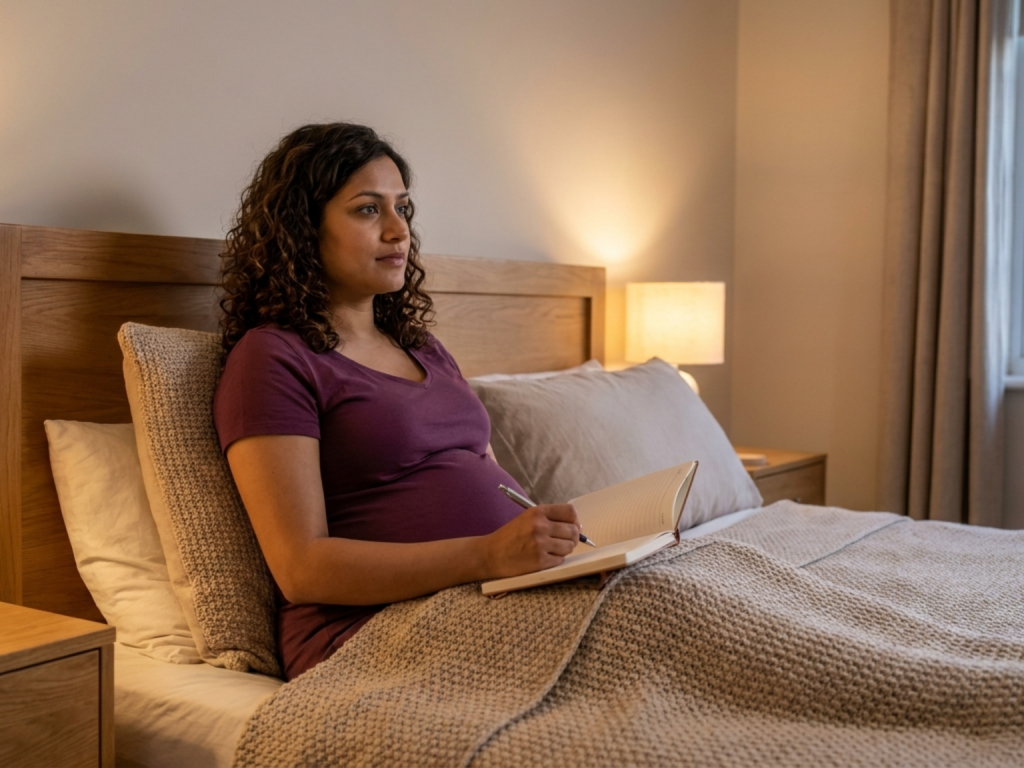
- A paper notebook for a brief worry list and next-day plan
- A short guided breathing or relaxation audio you can use nightly
- A warm bath or shower as part of a consistent wind-down routine
- A quiet dim room with a predictable bedtime schedule
- Your obstetric clinician, midwife, or perinatal mental health specialist
FAQ
Is it normal to feel more anxious at night during pregnancy?
Yes. Nighttime often magnifies worry because the environment is quieter and the body is more aware of sensations. If it becomes persistent or disabling, discuss it with your clinician.
What is the quickest calming technique before bed?
Slow breathing is often the easiest place to start. A long, gentle exhale can reduce arousal within minutes, especially when paired with a quiet routine.
Should I stay in bed trying to force sleep?
Usually not for long periods. If you are awake and frustrated, getting up briefly for a quiet activity can help break the association between bed and alertness.
Can relaxation techniques replace medical treatment for insomnia or anxiety?
They can help, but they do not replace evaluation when symptoms are persistent, severe, or accompanied by mood changes or medical concerns.
When should I ask about perinatal mental health support?
If sleep anxiety is frequent, you are having panic symptoms, or worry is affecting daily functioning, it is reasonable to ask early rather than waiting.
Sources
- Johns Hopkins Medicine — Sleepless Nights? Try Stress Relief Techniques
- Mayo Clinic — Sleep tips: 6 steps to better sleep
- NCBI Bookshelf — Relaxation Techniques - StatPearls
Disclaimer
This article is for educational purposes only and does not replace personalized medical advice, diagnosis, or treatment. In pregnancy, new, severe, or persistent sleep or anxiety symptoms should be reviewed with your obstetric clinician or another qualified health professional.

















Please log in to leave a comment.