
Intro
Sleep problems in preteens can be confusing because they often sit at the intersection of biology, behavior, school demands, emotions, and family routines. A 10- to 12-year-old may still need substantial sleep, yet begin showing adolescent-like patterns: later sleepiness, more privacy, stronger peer influence, and more evening screen use.
Most sleep difficulties in this age group improve with consistent, calm, practical changes, but some patterns warrant medical evaluation. The aim is not to blame the child or the parent, but to understand what sleep is doing, what might be interfering with it, and when professional support is appropriate.
Highlights
Behavioral sleep problems are common in preteens and can include difficulty falling asleep, night waking, and early waking.
Puberty-related circadian changes, busy schedules, anxiety, screens, and inconsistent routines can all push sleep later.
Habitual snoring, gasping, restless sleep, severe daytime sleepiness, or major mood changes should be discussed with a clinician.
Sleep plans work best when they are predictable, collaborative, and focused on small changes rather than punishment.
Why sleep problems often emerge in the preteen years
Preteens are in a transitional developmental window. They are no longer young children, but they are not yet neurologically or socially ready for full adolescent independence. Sleep can become one of the first places where this transition shows. A child who once accepted bedtime may begin negotiating, worrying, messaging friends, finishing homework late, or saying they are simply not tired.
Several forces converge at once. Pubertal maturation can begin to shift the circadian rhythm, meaning the internal body clock starts preferring a later bedtime and later wake time. This is sometimes described as circadian phase delay. At the same time, school start times often require early waking, so a child may accumulate sleep debt during the week and try to compensate on weekends. Irregular weekend sleep-ins can then make Sunday night insomnia worse.
Developmentally, preteens also seek more autonomy. Bedtime may become a boundary-testing moment, especially when screens, games, social media, or group chats are involved. Peer pressure and fear of missing out can make it harder to disconnect. For some children, sleep problems are closely tied to preteen behavior changes and challenges, including emotional reactivity, increased privacy needs, and conflict around rules.
It helps to view sleep as a biological behavior rather than a simple obedience issue. A preteen who is overtired may look oppositional, unfocused, or unmotivated. In reality, the brain systems that regulate impulse control, emotional modulation, attention, and sleep-wake timing are all under pressure.
Common patterns parents may notice
Sleep problems in preteens can look different from child to child. The Royal Children’s Hospital describes common patterns such as trouble falling asleep, waking during the night, waking too early, and difficulty returning to sleep. In this age group, behavioral contributors are among the most common causes, but the word behavioral should not be understood as deliberate misbehavior. It often means the sleep pattern has been learned or reinforced over time.
A child may repeatedly delay bedtime by asking for snacks, reassurance, homework help, or one more episode. Another may fall asleep only if a parent stays nearby, then wake overnight and need the same condition again. Some preteens lie in bed for long periods because bedtime is too early for their circadian rhythm, because they are anxious, or because stimulating evening activities have made their brain more alert.
Night waking can also occur. Brief arousals are normal during sleep cycles, but problems arise when the child becomes fully awake, distressed, or dependent on a specific response to resettle. Early morning waking may be related to anxiety, light exposure, noise, insufficient sleep pressure, or mood difficulties.
Families may also see parasomnias such as sleepwalking or night terrors. These are partial arousal phenomena, more common in childhood, and often occur during deep non-rapid eye movement sleep. Safety is the first priority: keeping pathways clear, securing doors or windows if needed, and avoiding abrupt waking unless there is danger. Recurrent, injurious, unusual, or late-night episodes should be discussed with a clinician.
Behavioral insomnia and learned sleep associations
Behavioral insomnia of childhood is a recognized clinical concept, with estimates in children commonly reported around 10% to 30%. It refers to a learned difficulty initiating or maintaining sleep. In preteens, this may show as bedtime resistance, dependence on parental presence, prolonged negotiations, or inconsistent limits that make sleep timing unpredictable.
There are two broad patterns. In a sleep-onset association pattern, the child has learned to fall asleep only under certain conditions, such as with a parent in the room, with a device playing, or after repeated reassurance. When they naturally wake overnight, they may need the same condition to fall back asleep. In a limit-setting pattern, bedtime is delayed because the child resists and caregivers, often understandably exhausted, have difficulty maintaining consistent boundaries.
Supportive management usually begins with predictable routines rather than medication. A useful pre-bed routine is calm, brief, and repeatable: hygiene, preparation for the next day, quiet reading or relaxation, lights out. Bedtime and wake time should be consistent enough to strengthen the circadian signal, including on weekends. Screens are best removed from the bedroom and stopped before bedtime because light exposure, emotional stimulation, and interactive content can delay sleep onset.
Caregivers can also use a collaborative plan. For example, explain that the goal is to help the body learn sleep again, agree on a routine in advance, and calmly return to the plan when protests occur. Rewards can focus on effort and consistency, not perfect sleep. If anxiety is driving repeated reassurance-seeking, the plan should include daytime problem-solving and, when needed, mental health support.
Medical and psychological causes to consider
Not all sleep problems are primarily behavioral. Some require medical assessment, especially when symptoms suggest sleep-disordered breathing, neurologic sleep disorders, significant anxiety, depression, or medication effects. Parents should avoid trying to diagnose at home, but careful observation can help a pediatrician decide what evaluation is needed.
Obstructive sleep apnea can occur in children and preteens, particularly when the upper airway is repeatedly narrowed or blocked during sleep. Warning signs may include habitual snoring, gasping, pauses in breathing, restless sleep, mouth breathing, morning headaches, enuresis, poor concentration, or daytime sleepiness. Enlarged tonsils or adenoids can contribute. Polysomnography, an overnight sleep study, is the standard objective test when obstructive sleep apnea is suspected, and treatment depends on the cause and severity. In some children, adenotonsillectomy is considered by specialists.
Delayed sleep phase disorder is another possibility. This is more than a preference for staying up late; it is a persistent mismatch between the child’s internal clock and required schedule. A preteen may be unable to fall asleep until very late but sleep well if allowed to wake late. Management can involve structured light exposure, consistent wake times, and behavioral scheduling under professional guidance.
Restless legs syndrome, periodic limb movement disorder, chronic pain, asthma symptoms, reflux, eczema itch, and certain medications can also fragment sleep. Anxiety is especially relevant in preteens. Worries about school performance, friendships, family stress, bullying, body changes, or safety may become loudest at bedtime. Sleep loss can then intensify Mood swings in preteens, creating a cycle of irritability, worry, and poorer rest.
How sleep loss affects mood, learning, and family life
Sleep is not just rest; it supports memory consolidation, emotional regulation, immune function, metabolic processes, and executive functioning. When preteens do not get enough sleep, the effects may appear as school problems, forgetfulness, impulsivity, headaches, stomachaches, low frustration tolerance, or social withdrawal.
Unlike adults, children and preteens do not always look sleepy when they are sleep-deprived. Some become hyperactive, silly, argumentative, or tearful. Others shut down and seem apathetic. Preteen sleep debt and irritability can be misread as attitude, laziness, or defiance, especially during morning routines and homework time.
Chronic insufficient sleep may also worsen attention and learning. A child may study longer but retain less, or take much more time to complete assignments because fatigue reduces cognitive efficiency. This can push homework later into the evening, which further delays sleep. Families then become trapped in a cycle of late work, late bedtime, rushed mornings, and escalating conflict.
Parents can help by separating the child from the problem. Instead of saying, “You never cooperate at bedtime,” it may be more effective to say, “Your body is having trouble shifting into sleep, and we are going to help it practice.” This approach preserves connection while still setting limits. It also makes it easier to notice whether a sleep issue is a cause, a consequence, or both in broader emotional or behavioral concerns.
Practical sleep strategies for preteens
Effective sleep support is usually built from small, consistent changes. The most important anchor is wake time. A regular morning wake time helps set the circadian clock, even if bedtime has been rough. Weekend wake times do not need to be identical, but large shifts can undermine progress.
A preteen sleep plan may include:
- Consistent timing: choose a realistic bedtime and wake time based on the child’s age, school schedule, and sleep need.
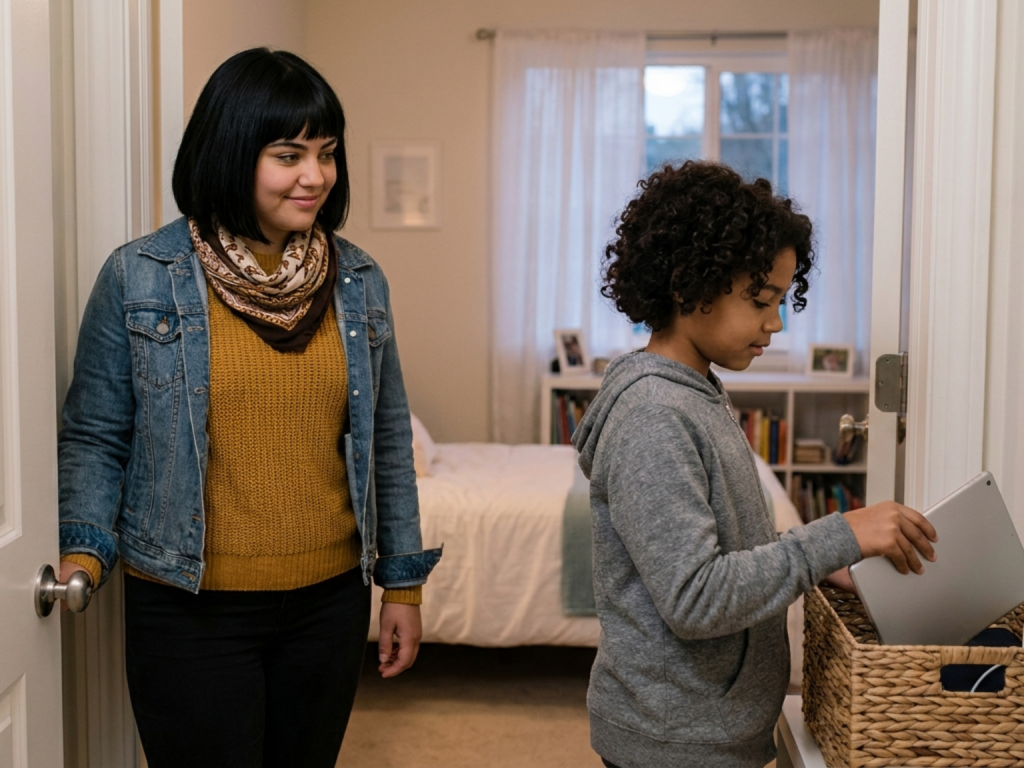
- Screen boundaries: remove phones, tablets, gaming devices, and televisions from the bedroom at night; charge devices outside the room.
- A calming wind-down: use low-stimulation activities such as reading, stretching, quiet music, breathing exercises, or preparing school items.
- Bedroom cues: keep the sleep space dark, quiet, cool, and associated mainly with sleep rather than homework or gaming.
- Morning light: exposure to daylight soon after waking can strengthen circadian timing.
- Caffeine awareness: avoid caffeinated drinks, energy drinks, and strong tea or coffee, particularly from afternoon onward.
It is also useful to protect the last part of the evening from emotionally charged conversations when possible. Serious topics such as grades, chores, or device misuse are often better handled earlier in the day. If bedtime anxiety is present, schedule a brief “worry time” after school or early evening so the child can write down concerns and possible next steps before the night routine begins.
Melatonin is sometimes discussed for children and adolescents when behavioral strategies are insufficient, particularly in circadian delay. However, it should be considered with a healthcare professional rather than started casually. Product quality, timing, dose, interactions, and the underlying reason for insomnia all matter.
When to seek professional help
Professional input is appropriate when sleep problems are persistent, worsening, impairing daytime functioning, or associated with concerning symptoms. A pediatrician can review growth, puberty, medications, mental health, breathing symptoms, neurologic signs, and family sleep history. They may recommend a sleep diary for children, screening questionnaires, laboratory tests in selected cases, referral to behavioral health, or pediatric sleep specialist evaluation.
Bring specific observations rather than only a general statement that the child “doesn’t sleep.” Useful details include bedtime, estimated sleep onset time, wake time, night wakings, snoring, unusual movements, nightmares, naps, caffeine, device use, school performance, mood, and weekend schedule. If possible, track these for one to two weeks.
Urgent or prompt assessment is needed if the child has breathing pauses, bluish color, severe daytime sleepiness, episodes of falling asleep in unsafe situations, sudden weakness triggered by emotion, self-harm thoughts, severe anxiety, major depression symptoms, or rapid functional decline. Sleep can be a window into broader health, and it is reasonable to ask for help early.
Parents should also seek support if sleep conflict is overwhelming family life. A clinician, psychologist, or sleep-trained professional can help tailor strategies without shaming the child. The goal is to restore safe, sufficient, developmentally appropriate sleep while also respecting the preteen’s growing need for autonomy.
Seek medical advice promptly if you notice
- Habitual snoring, gasping, choking, or pauses in breathing during sleep.
- Severe daytime sleepiness, falling asleep in class repeatedly, or unsafe sleep episodes.
- Sleep problems with persistent low mood, panic, self-harm thoughts, or major behavior change.
- Injurious sleepwalking, unusual nighttime events, or episodes that look like seizures.
- Insomnia that persists despite consistent routines or significantly affects school and family life.
Tools & Assistance
- Keep a 1- to 2-week sleep diary with bedtime, wake time, screens, caffeine, and night wakings.
- Create a family charging station outside bedrooms for phones and tablets overnight.
- Ask the pediatrician about snoring, breathing pauses, restless legs, anxiety, medications, and puberty timing.
- Use a predictable 20- to 30-minute wind-down routine that your preteen helps design.
- Request referral to a pediatric sleep clinic or mental health professional when symptoms are persistent or complex.
FAQ
How much sleep does a preteen usually need?
Many school-age children and preteens need around 9 to 12 hours per night, though individual needs vary. If a child struggles to wake, is irritable, or sleeps much longer on weekends, sleep debt may be present.
Are screens really a major cause of preteen sleep problems?
They can be. Screens may delay sleep through light exposure, emotional stimulation, gaming or messaging, and loss of time awareness. Removing devices from the bedroom is often a high-impact first step.
Is melatonin safe for preteens?
Melatonin may be considered in some cases, especially circadian delay, but it should be discussed with a healthcare professional. Timing, dose, product quality, and the reason for insomnia are important.
When is snoring in a preteen concerning?
Habitual snoring, gasping, pauses in breathing, restless sleep, morning headaches, or daytime sleepiness should be assessed by a clinician because obstructive sleep apnea is possible.
Can anxiety cause insomnia in preteens?
Yes. School pressure, friendships, bullying, family stress, and body changes can intensify at night. If worry repeatedly prevents sleep or affects daily life, professional support can help.
Sources
- Royal Children's Hospital — Sleep problems – children and teens
- UCLA Health — Sleep Problems in Teens
- American Academy of Family Physicians — Common Sleep Disorders in Children
Disclaimer
This article is for general educational purposes and does not diagnose or treat sleep disorders. Consult a qualified healthcare professional for concerns about your child’s sleep, breathing, mood, or safety.
















Please log in to leave a comment.