
Intro
Between ages 6 and 9, sleep is a major driver of learning, emotional regulation, growth, immune function, and family wellbeing. Many children this age are adjusting to longer school days, homework, extracurricular activities, social demands, and increasing access to screens, all of which can push bedtime later than their body can comfortably tolerate.
Most children in this age group need 9 to 12 hours of sleep in a 24-hour period. A child’s exact need varies, but persistent difficulty waking, daytime sleepiness, irritability, hyperactivity, or falling school performance may indicate that sleep quantity, sleep quality, or both deserve closer attention.
Highlights
Children ages 6 to 9 generally need 9 to 12 hours of sleep per 24 hours, with consistent timing often as important as total duration.
Insufficient sleep may look like tiredness, but it can also look like impulsivity, emotional outbursts, inattention, or hyperactivity.
A predictable evening routine, limited evening screen exposure, and a calm sleep environment can improve sleep onset and sleep quality.
Snoring, breathing pauses, restless sleep, persistent insomnia, or major daytime impairment should be discussed with a healthcare professional.
Why sleep matters so much from ages 6 to 9
Ages 6 to 9 are part of middle childhood, a period of rapid cognitive, social, and emotional maturation. Children are developing literacy, numeracy, working memory, impulse control, peer relationships, and a stronger sense of independence. Sleep supports these processes through memory consolidation, synaptic remodeling, metabolic regulation, and restoration of attention networks. In practical terms, a well-rested child is usually better equipped to listen, persist with challenging tasks, manage frustration, and recover from ordinary disappointments.
Sleep also affects physical health. Growth hormone secretion is linked with deep sleep, and adequate sleep supports immune function and appetite regulation. When sleep is short or fragmented, some children appear sleepy, but many do not. Instead, sleep loss may present as emotional lability, oppositional behavior, restlessness, or attention problems. This overlap can be confusing for families and teachers because daytime impairment from poor sleep may resemble behavioral or learning difficulties.
For parents and caregivers, it helps to view sleep as a health routine rather than a character issue. A child who resists bedtime is not necessarily being difficult; they may be overtired, anxious, overstimulated, inconsistently scheduled, or dependent on a parent’s presence to fall asleep. A compassionate, structured approach is usually more effective than escalating conflict.
How much sleep 6- to 9-year-olds need
Authoritative pediatric sleep guidance consistently places school-age children in a recommended range of 9 to 12 hours of sleep per 24 hours. For a child who must wake at 6:30 a.m., this often means being asleep between about 6:30 p.m. and 9:30 p.m., depending on the child’s individual sleep need and how quickly they fall asleep. Because most 6- to 9-year-olds no longer nap regularly, nighttime sleep usually carries nearly the whole burden of restoration.
The range matters. Some children function well near 9 hours, while others clearly need 10.5 to 12 hours to wake spontaneously and regulate well during the day. A useful practical marker is not only the clock, but the child’s functioning: Can they wake without a prolonged struggle? Do they remain reasonably alert at school? Can they handle transitions without frequent meltdowns? Do weekends bring very long catch-up sleep? Regular weekend oversleeping may suggest an accumulated weekday sleep debt.
Consistency is physiologically important because circadian rhythms depend on repeated light, activity, meal, and sleep cues. Large shifts between school nights and weekends can create a mild social jet lag, making Sunday night sleep difficult and Monday morning especially hard. Families do not need perfection, but keeping wake time and bedtime within a fairly stable window often improves sleep onset and morning alertness.
Signs a child may not be getting enough sleep
Sleep deprivation in school-age children can be subtle. Adults often expect a tired child to slow down, but many children become more dysregulated. They may talk excessively, move constantly, argue more, cry easily, or have trouble following multistep instructions. Teachers may report inattention, unfinished work, or falling asleep during quiet activities. At home, parents may notice explosive behavior after school, headaches, stomachaches, or increased conflict around homework.
Common clues include:
- Difficulty waking in the morning despite an adequate opportunity for sleep
- Falling asleep in the car, during reading, or at unusual daytime times
- Irritability, tearfulness, impulsivity, or low frustration tolerance
- Hyperactivity or attention problems that worsen later in the day
- Frequent bedtime battles, prolonged sleep onset, or repeated night wakings
- Weekend catch-up sleep that is much longer than weekday sleep
These signs do not diagnose a sleep disorder, and they can overlap with anxiety, neurodevelopmental differences, learning disorders, family stress, or medical illness. However, sleep is often a high-yield starting point because improving the sleep schedule can clarify what symptoms remain. If a child has persistent school difficulty, mood changes, or disruptive behavior, it is reasonable to consider sleep alongside school-age behavior problems, learning needs, and emotional stressors.
Building a bedtime routine that actually works
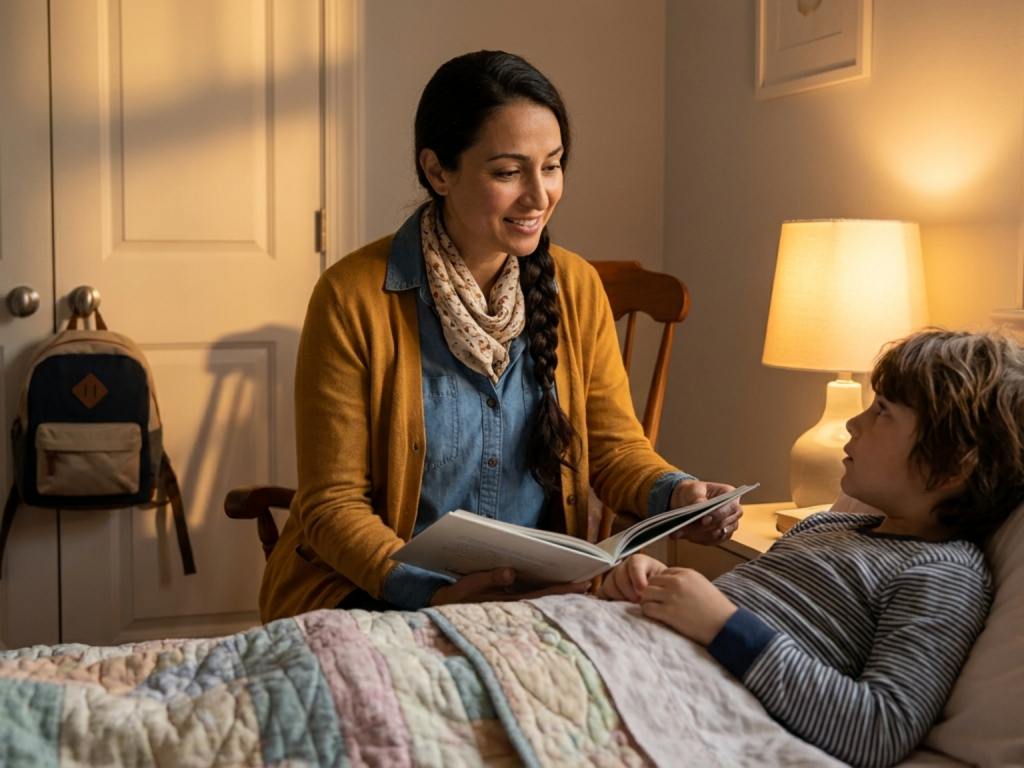
A good bedtime routine is predictable, brief enough to repeat, and emotionally warm without becoming open-ended. For many 6- to 9-year-olds, 30 to 45 minutes is sufficient. The routine may include washing, pajamas, brushing teeth, preparing the school bag, reading, a quiet conversation, and a consistent goodnight phrase. The goal is to give the nervous system repeated cues that the day is ending.
Parents often need to adjust the routine based on the child’s temperament. A child who becomes silly or activated by roughhousing may need physical play earlier in the evening, followed by quieter sensory input. A child with worries may benefit from a brief scheduled “worry time” before the bedtime routine, rather than processing every concern after lights out. A child who repeatedly leaves the room may need calm, consistent returns with minimal negotiation.
Helpful routine principles include:
- Start the routine early enough that sleep is not already lost before it begins.
- Use the same sequence most nights, including weekends when possible.
- Keep choices limited, such as choosing between two books or two pairs of pajamas.
- Separate bedtime from punishment; the bed should feel safe, not like a consequence.
- Praise cooperation in the morning or during the routine, using positive reinforcement for children rather than only reacting to resistance.
If a bedtime plan triggers intense distress or worsens family conflict, caregivers should seek individualized guidance. Some children need adaptations for anxiety, trauma history, sensory processing differences, autism spectrum disorder, ADHD, or medical conditions.
Screens, light, and the bedroom environment
Evening technology use is one of the most common barriers to sleep in this age group. Screens can delay sleep through several mechanisms: bright light can suppress melatonin signaling, interactive content can increase arousal, and games or videos can make stopping feel emotionally difficult. A practical approach is to create a device curfew at least 30 to 60 minutes before bed and keep screens out of the bedroom overnight. Charging devices outside the child’s room reduces temptation and prevents notifications from fragmenting sleep.
The sleep environment should support the body’s natural transition into sleep. A cool, dark, and quiet room is often best. Some children need a night-light for reassurance, but it should be dim. Blackout curtains can help if outdoor light is bright, and white noise may be useful when household or street noise is disruptive. Bedding should be comfortable and appropriate for the season, without overheating.
Bedrooms also work better when they are strongly associated with sleep. If possible, avoid turning the bed into the main location for homework, video games, or emotionally intense conversations. Children who read quietly in bed may do well, but stimulating activities are better placed elsewhere. A no-screen zone in the bedroom is not about blaming technology; it is about protecting a physiologic sleep space during years when self-regulation is still developing.
School, activity, food, and family rhythms
Sleep does not happen in isolation. School start times, transportation, homework load, sports, music lessons, family work schedules, and shared bedrooms can all influence bedtime. Some families cannot control every factor, and it is important not to frame sleep challenges as parental failure. Small changes can still help: packing the school bag earlier, moving baths before dinner, setting a homework stop time, or choosing fewer late-evening activities during stressful periods.
Physical activity during the day generally supports sleep, especially outdoor movement with natural light exposure. However, vigorous activity very close to bedtime may be activating for some children. Similarly, nutrition during middle childhood can influence sleep comfort. Heavy meals, hunger, excess fluid right before bed, or caffeine exposure from soda, tea, energy drinks, chocolate-containing products, or some specialty beverages may interfere with sleep. Children in this age range should not rely on caffeinated drinks for energy.
Family stress and parental sleep patterns also matter. Children often mirror the emotional tempo of the household. A caregiver who is rushed, worried, or negotiating repeatedly at bedtime may unintentionally keep the child alert. A calm script, consistent expectations, and a predictable end point can lower arousal for everyone. If siblings share a room, it may help to stagger bedtimes or give the younger or more sleep-sensitive child a head start.
Night wakings, fears, and independence
Night wakings can occur in healthy children, especially during illness, stress, travel, or developmental transitions. Many 6- to 9-year-olds also experience fears about darkness, separation, storms, intruders, or imagined dangers. These fears are real to the child, even when adults know the situation is safe. The aim is to provide reassurance while gradually supporting independent sleep skills.
Caregivers can validate the feeling without expanding the fear: “I know your body feels worried; you are safe, and it is sleep time.” Long discussions, repeated checking, or allowing a child to restart the evening routine after every waking can unintentionally reinforce wakefulness. Some families use a brief check-in schedule, a comfort object, a small night-light, or a written bedtime pass for one short request. These strategies should be gentle and adjusted to the child’s developmental level.
If night waking is accompanied by fever, pain, vomiting, breathing difficulty, new bedwetting, trauma symptoms, or major daytime changes, the issue should be evaluated in context. Night waking with illness symptoms may require medical advice, especially if symptoms are recurrent or severe. When caregivers feel stuck, a sleep diary for one to two weeks can reveal patterns in bedtime, sleep onset, wakings, wake time, naps, caffeine, screens, and behavior.
When sleep problems need professional assessment
Many sleep difficulties improve with routine and environmental changes, but some signs warrant professional evaluation. Habitual snoring in children, gasping, witnessed pauses in breathing, restless sleep with unusual positions, morning headaches, or persistent mouth breathing can raise concern for sleep-disordered breathing. Enlarged tonsils or adenoids, allergic rhinitis, craniofacial factors, and other medical issues may contribute, but assessment should be individualized by a clinician.
Other concerns include persistent insomnia despite a consistent routine, excessive daytime sleepiness, frequent nightmares with distress, sleepwalking that creates safety risk, restless legs symptoms, unusual nocturnal movements, or a sudden major change in sleep. Medication effects, anxiety, depression, ADHD, seizures, asthma, eczema, gastrointestinal reflux, and pain conditions can all affect sleep quality. A pediatrician can help determine whether reassurance, behavioral support, school coordination, laboratory testing, specialty referral, or another evaluation is appropriate.
Families should avoid giving sleep medications, supplements, or melatonin without discussing it with a qualified healthcare professional. Even products sold over the counter can have side effects, dosing concerns, interactions, or quality variability. The safest first steps are usually regular timing, reduced evening stimulation, an appropriate sleep environment, and attention to possible medical red flags.
Seek medical advice promptly if
- Your child snores most nights, gasps, pauses breathing, or seems to struggle to breathe during sleep.
- Daytime sleepiness is severe, persistent, or associated with falling asleep at school.
- Sleep problems appear suddenly with fever, pain, weight loss, neurologic symptoms, or major mood changes.
- Night wakings include dangerous behaviors, confusion, injury risk, or repeated episodes you cannot safely manage.
- You are considering melatonin, antihistamines, herbal products, or other sleep aids for your child.
Tools & Assistance
- Keep a 1- to 2-week child sleep diary with bedtime, wake time, night wakings, screens, caffeine, and daytime behavior.
- Create a consistent 30- to 45-minute wind-down routine with the same sequence most nights.
- Move device charging outside the bedroom and set an evening screen curfew.
- Discuss persistent sleep concerns with your child’s pediatrician or family clinician.
- Coordinate with the school if sleepiness, attention, or behavior is affecting classroom functioning.
FAQ
What bedtime is best for a 6- to 9-year-old?
Work backward from the required wake time and aim for 9 to 12 hours of sleep opportunity. For many children, this means lights out between about 7:30 p.m. and 9:00 p.m., depending on wake time and individual need.
Is it normal for a tired child to become hyperactive?
Yes. Some children respond to insufficient sleep with hyperactivity, impulsivity, irritability, or attention problems rather than obvious sleepiness.
Should screens be allowed in the bedroom?
For most school-age children, it is better to keep screens out of the bedroom overnight. This reduces light exposure, stimulation, notifications, and bedtime negotiation.
Are weekend late nights okay?
Occasional flexibility is usually fine, but large weekend shifts can disrupt circadian rhythm and make school-night sleep harder. A relatively consistent schedule is best.
When should I ask a doctor about my child’s sleep?
Ask if sleep problems are persistent, impair daytime functioning, involve snoring or breathing pauses, include severe anxiety or unusual night behaviors, or if you are considering any sleep medication or supplement.
Sources
- Centers for Disease Control and Prevention (CDC) — Sleep in Middle and High School Students
- Nemours KidsHealth — How Much Sleep Do Kids Need?
- Sleep Foundation — Children and Sleep: Healthy Sleep Habits for Kids
Disclaimer
This article is for general educational purposes and does not replace medical evaluation, diagnosis, or treatment. Consult a qualified healthcare professional for concerns about your child’s sleep, breathing, behavior, or medication use.


















Please log in to leave a comment.