
Intro
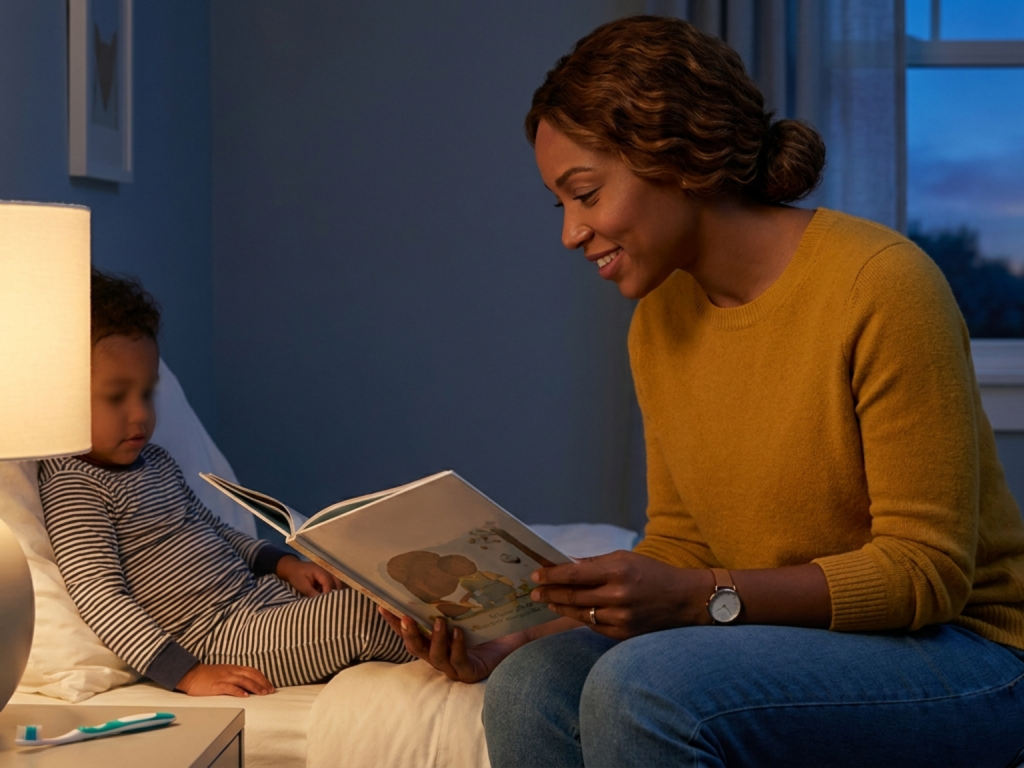
Bedtime with a preschooler can be tender, chaotic, funny, and exhausting, sometimes all within the same ten minutes. At this age, children are developing autonomy, language, imagination, emotional regulation, and circadian stability, so resistance at bedtime is not a sign that a caregiver is failing. It is often a predictable mismatch between a tired brain and a child’s growing wish for control.
A consistent preschool bedtime routine is one of the most practical, low-risk tools families can use to support sleep health. Evidence suggests that routines built around predictable timing, toothbrushing, reading, calming connection, and reduced stimulation are associated with longer sleep duration, earlier sleep onset, and more stable sleep-wake patterns.
Highlights
A strong preschool bedtime routine is predictable, calming, and brief enough to repeat most nights.
Core elements include toothbrushing, a consistent bedtime, reading, avoiding screens, avoiding food and drinks close to bed, and quiet calming activities.
Bedtime resistance often reflects developmental needs for autonomy and co-regulation, not intentional misbehavior.
Medical issues such as snoring, sleep-disordered breathing, restless sleep, pain, or severe anxiety should be discussed with a healthcare professional.
Why bedtime routines matter in the preschool years
Preschool children, usually ages 3 to 5, are in a period of rapid neurodevelopment. Their brains are refining executive functions such as inhibitory control, working memory, flexible thinking, and emotional regulation. These systems are immature, especially when the child is hungry, overstimulated, worried, or overtired. A bedtime routine works partly because it reduces decision-making and provides external structure while these internal regulatory systems are still developing.
Sleep is regulated by two interacting biological processes: circadian rhythm, the body’s roughly 24-hour clock, and homeostatic sleep pressure, the increasing need for sleep that builds during wakefulness. Preschoolers often fight sleep even when physiologically tired because play, separation concerns, or screen stimulation can override their ability to settle. A predictable routine cues the nervous system that active daytime behavior is ending and sleep is approaching.
Research on preschool bedtime routines has identified several adaptive components: brushing teeth, keeping bedtime consistent, reading a story, avoiding food and drinks close to bed, avoiding electronic devices, and using calming activities such as a bath, quiet conversation, or cuddling. In a cross-sectional study of preschoolers, consistent routines were associated with longer sleep duration, earlier sleep onset, and reduced social jet lag, meaning less mismatch between sleep timing on weekdays and weekends.
Longitudinal research in toddlers also suggests that consistent bedtime routines at least five nights per week may be associated with later social-emotional benefits, including less behavioral dysregulation and fewer internalizing and externalizing problems. This does not mean a routine is a cure for all sleep or behavior concerns. It does mean that bedtime structure is a meaningful developmental support, especially when it is warm, repeatable, and realistic for the family.
The six core ingredients of an adaptive routine
An effective routine does not need to be elaborate. In fact, overly complicated routines can become hard to maintain and easier for a preschooler to stretch indefinitely. The most evidence-aligned routines include a small number of repeated steps that occur in the same order on most nights.
- Toothbrushing: Brushing before bed reduces dental caries risk and provides a clear transition from eating to sleeping. If a child resists, caregivers can offer limited choices, such as which toothbrush or which song to play.
- Consistent bedtime: A stable lights-out time helps anchor circadian rhythm. Many families do best when bedtime varies by no more than about 30 to 60 minutes, including weekends when possible.
- Reading a story: Shared reading supports language development, attachment, and physiological calming. It is also a predictable, non-screen activity that helps the child shift from movement to rest.
- Avoiding food and drinks close to bed: Late snacks, juice, milk after brushing, or frequent drinks can reinforce stalling and may contribute to dental concerns or night waking. If a child truly needs an evening snack, planned timing before toothbrushing is usually easier than negotiating at the bedside.
- Avoiding electronic devices: Screens can increase cognitive and emotional arousal. Bright light, rapid content, and interactive media may delay sleep onset in sensitive children.
- Calming activities: A warm bath, gentle stretching, quiet talk, breathing games, or soft music can support downshifting from sympathetic arousal toward parasympathetic settling.
The goal is not perfection. A routine that happens consistently five or six nights per week is often more useful than an ideal routine that is too demanding to sustain. Families with shift work, shared custody, crowded housing, or multiple children may need a simplified version. The clinical principle is consistency of cues, not a specific aesthetic version of bedtime.
Building a realistic evening sequence
A preschool bedtime routine often works best when it begins before the child is visibly exhausted. Once a child becomes overtired, cortisol and behavioral activation may increase, leading to silliness, running, crying, or defiance. Many caregivers interpret this as the child having extra energy, but it may be a sign that the optimal sleep window has been missed.
A practical sequence might begin with dinner, followed by quiet play, bath or wash-up, pajamas, toothbrushing, toileting, story, brief connection, and lights out. If your child tends to become hungry at bedtime, consider structured meals and snacks earlier in the evening rather than repeated bedside food requests. Avoid sugary drinks, caffeinated beverages, and large fluid intake close to bed unless your child’s clinician has given different advice for a medical reason.
Preschoolers usually cooperate better when they know what comes next. Visual schedules can be especially helpful because they externalize the routine. A simple chart with pictures for pajamas, toilet, teeth, story, hug, and bed can reduce verbal negotiation. The caregiver can point to the chart and say, “The chart says teeth are next,” instead of entering a debate.
Offer autonomy within boundaries. For example: “Do you want the dinosaur pajamas or the striped pajamas?” “Do you want one long book or two short books?” “Do you want the door open a little or halfway?” Choices should be real but limited. Too many choices can overwhelm a tired child and prolong bedtime.
For many families, the final connection moment matters most. A brief predictable ritual, such as three things about the day, a goodnight phrase, or a short cuddle, can reduce separation distress. Keep it warm and firm: “I love you. It is time for sleep. I will check on you in five minutes.” The tone should communicate safety, not uncertainty.
Handling stalling, fears, and bedtime protest
Stalling is common in preschoolers because they are learning that requests can delay separation. Water, another hug, a different blanket, one more question, or a sudden need to tell an important story may all appear after lights out. These requests are not necessarily manipulative in a malicious sense; they are often a child’s immature attempt to manage anxiety, curiosity, or desire for control.
A helpful strategy is to anticipate needs before lights out. Build in one bathroom trip, one drink before toothbrushing if appropriate, one or two books, and one final question. Some families use a “bedtime pass,” a small card the child can exchange once for a brief post-bed request. After the pass is used, the caregiver calmly returns the child to bed with minimal interaction.
Fears are also developmentally typical. Preschool imagination is vivid, and the distinction between fantasy and reality is still developing. Avoid lengthy reassurance rituals that require checking the closet many times, because repeated checking can unintentionally reinforce the fear. Instead, validate and contain: “That felt scary. You are safe. I checked once, and now it is sleeping time.” A comfort object, night-light, or quiet predictable check-in may help.
If a child leaves the bedroom repeatedly, caregivers can use a calm return method: guide the child back with minimal talking, repeat the same phrase, and avoid adding new negotiations. Consistency is more important than intensity. Harsh punishment, shaming, or frightening threats can increase arousal and worsen bedtime anxiety.
When bedtime protest is severe, it is worth looking upstream. Is the child napping too late? Is bedtime too early for their current sleep pressure? Are screens ending too close to bed? Is there family stress, a new sibling, daycare transition, or separation anxiety? The behavior at 8 p.m. may reflect something that began at 5 p.m., or even earlier in the day.
Sleep hygiene, environment, and family context
Sleep hygiene refers to behavioral and environmental conditions that support sleep. For preschoolers, the most useful sleep hygiene strategies are usually simple: a dark or dim room, comfortable temperature, reduced noise when feasible, a consistent wake time, active daytime play, and a screen-free wind-down period. The sleep space should be safe and appropriate for the child’s developmental stage.
Light exposure matters. Bright morning light helps strengthen circadian timing, while bright evening light may delay melatonin onset, the body’s natural signal for sleep. Outdoor play during the day can support both circadian rhythm and sleep pressure. In the evening, dimming lights and reducing stimulating play can help the child’s physiology align with the bedtime routine.
Family context matters too. A caregiver who is exhausted, working late, caring for multiple children, or managing financial stress may not be able to implement a long routine. A medically realistic plan respects caregiver capacity. A ten-minute routine done calmly most nights is often better than a 45-minute routine that leaves everyone depleted.
For siblings sharing a room, staggered bedtimes may help if one child is more disruptive. For children who split time between households, try to keep the sequence similar even if the exact room, caregiver, or schedule differs. The child benefits from recognizable cues: teeth, toilet, book, cuddle, lights out.
Nutrition and toileting can affect bedtime. A child who drinks large amounts late in the evening may wake to urinate or request help. A child who eats too little at dinner may genuinely feel hungry. Rather than turning bedtime into a food negotiation, consider a predictable evening snack at the table before toothbrushing if it fits your family’s nutrition plan and your child’s medical needs.
When to seek professional guidance
Many bedtime struggles improve with a consistent routine, but some sleep difficulties deserve medical attention. Caregivers should discuss concerns with a pediatrician or qualified healthcare professional if the child snores frequently, has pauses in breathing, gasps during sleep, sweats heavily at night, has persistent mouth breathing, or seems excessively sleepy during the day. These can be associated with sleep-disordered breathing, including obstructive sleep apnea, which requires clinical evaluation.
Restless sleep, leg discomfort, frequent night waking, unusual movements, or difficulty settling may also merit assessment, particularly if there are concerns about iron deficiency, neurodevelopmental differences, medication effects, eczema, reflux, constipation, pain, or anxiety. No article can determine the cause of an individual child’s sleep difficulty, and families should avoid starting supplements, sedating medications, or sleep aids without professional advice.
Behavioral sleep interventions can be very effective, but they should be matched to the child’s temperament, developmental profile, and family values. Children with autism spectrum disorder, attention-deficit/hyperactivity disorder, trauma exposure, significant anxiety, or sensory processing differences may need more individualized strategies. An early childhood mental health professional, pediatric sleep specialist, occupational therapist, or behavioral clinician may help when bedtime has become a nightly crisis.
It is also appropriate to seek help when caregiver distress is high. Sleep deprivation affects parental mood, patience, work functioning, and safety. Asking for support is not an overreaction. A sustainable bedtime routine should protect the child’s sleep and the caregiver-child relationship.
The most helpful mindset is compassionate consistency. Preschoolers need warmth and limits at the same time. A routine says, “You are safe, I am here, and sleep is what comes next.” Repeated night after night, that message becomes a powerful cue for the child’s body, brain, and sense of security.
When bedtime may need medical attention
- Frequent loud snoring, gasping, or pauses in breathing during sleep should be discussed with a pediatrician.
- Severe daytime sleepiness, morning headaches, or behavioral deterioration may warrant sleep evaluation.
- Persistent pain, reflux symptoms, eczema itching, constipation, or restless legs can interfere with sleep and need clinical guidance.
- Do not give melatonin, sedating antihistamines, herbal products, or other sleep aids without advice from a healthcare professional.
- Sudden major sleep changes after stress, trauma, illness, or medication changes should be reviewed with a clinician.
Tools & Assistance
- Create a simple picture-based bedtime chart with 5 to 7 steps.
- Track bedtime, lights-out time, night wakings, and wake time for one to two weeks.
- Discuss persistent sleep problems with your child’s pediatrician.
- Use a predictable screen-free wind-down period before bed.
- Coordinate routines between caregivers or households when possible.
FAQ
What is a good bedtime for a preschooler?
It depends on wake time, naps, and individual sleep need. Many preschoolers do best with a consistent bedtime that allows adequate total sleep and does not vary dramatically between weekdays and weekends.
How long should a preschool bedtime routine take?
Many families do well with 20 to 30 minutes, but shorter can work if it is calm and consistent. Very long routines may increase stalling.
Should my preschooler have a snack before bed?
If hunger is a recurring issue, consider a planned snack before toothbrushing rather than food in bed. Ask a clinician or dietitian for guidance if growth, reflux, diabetes risk, allergies, or feeding concerns are present.
Are bedtime fears normal at this age?
Yes, many preschoolers have fears related to darkness, separation, or imagination. Validate the feeling, keep reassurance brief, and maintain the routine. Seek help if anxiety is intense or impairing.
What if consistency is impossible because of work schedules?
Aim for consistent cues rather than perfection. Even if timing varies, repeating the same basic steps, such as teeth, toilet, story, and goodnight phrase, can still help.
Sources
- PubMed Central (National Institutes of Health) — The relationships between bedtime routines and preschooler's sleep health and well-being: A cross-sectional study
- Frontiers in Sleep — Bedtime routines, development, and caregiver educational attainment in toddlers: A longitudinal study
- University of Manchester — Study defines ideal children's bedtime routine
Disclaimer
This article is for informational purposes only and does not replace medical advice, diagnosis, or treatment. Consult a pediatrician or qualified healthcare professional about persistent sleep problems or health concerns.
















Please log in to leave a comment.