
Intro
Preparing for birth is not about proving you can follow one perfect plan. It is about understanding your options, anticipating likely scenarios, and building enough flexibility that you feel cared for whether labor is unmedicated, supported by an epidural, or completed by cesarean birth.
Many parents hope for a physiologic or low-intervention labor while also wanting to be emotionally and medically ready for neuraxial analgesia or a C-section if needed. This blended preparation can be empowering: it respects the body’s capacity for birth while acknowledging that modern obstetric and anesthesia care can be protective, appropriate, and sometimes essential.
Highlights
A low-intervention birth plan can coexist with clear preparation for epidural analgesia and cesarean delivery.
Nonpharmacologic coping methods such as movement, water therapy, massage, breathing, and continuous support are skills that require practice before labor.
Epidural and C-section preparation is best discussed antenatally with your obstetric clinician, midwife, anesthesiology team, and birth support person.
Flexibility is not failure; it is a safety-oriented strategy for responding to maternal, fetal, and labor changes.
Reframing preparation: natural, epidural, and surgical birth can overlap
The phrase “natural birth” is often used to mean unmedicated vaginal birth, but it can carry emotional weight. A more useful clinical framing is physiologic birth with individualized support. This includes spontaneous labor when appropriate, freedom of movement, upright positioning, intermittent or continuous fetal monitoring as indicated, and nonpharmacologic labor coping methods. It does not require refusing every intervention.
Likewise, labor epidural analgesia and cesarean delivery are not opposites of a meaningful birth. An epidural is a neuraxial technique that delivers analgesic medication near spinal nerves, reducing contraction pain while allowing the birthing person to remain awake and engaged. A C-section is major abdominal surgery, but it may be planned for medical reasons or performed intrapartum when maternal or fetal safety requires it.
Preparation works best when it is layered. First, prepare your body and mind for labor: nutrition, regular pregnancy-appropriate activity, rest, childbirth education, and coping practice. Second, prepare your decision-making: what matters most, what you fear, what information you need before consenting, and who can advocate with you. Third, prepare for contingencies: epidural placement, operative vaginal birth, hemorrhage protocols, neonatal support, or cesarean birth. This approach protects autonomy without pretending birth is fully controllable.
Building a low-intervention foundation before labor
Low-intervention preparation begins weeks to months before birth. Ask your obstetrician, midwife, or family physician whether your pregnancy is considered low risk and what monitoring or interventions may be recommended in your situation. Medical factors such as hypertensive disorders, diabetes, fetal growth concerns, placenta location, previous uterine surgery, breech presentation, or multiple gestation can change the risk-benefit balance.
For many people, regular movement improves stamina and confidence. Walking, swimming, pelvic mobility work, and prenatal yoga may support comfort and endurance, provided your clinician has not advised activity restriction. Balanced meals and hydration support general health, while sleep and mental health care help reduce physiologic stress. None of these guarantee a specific birth outcome, but they can make labor demands more manageable.
Childbirth education is especially valuable when it teaches both normal labor physiology and medical decision points. A good class should cover cervical dilation and effacement, fetal descent and rotation, coping with transition, pushing options, indications for induction or augmentation, and when cesarean delivery may become advisable. If you are planning unmedicated vaginal birth preparation, include your support person so they understand how labor often looks and sounds.
A concise birth plan can help communicate preferences. Consider including mobility, hydration, monitoring, pain relief options, delayed cord clamping if appropriate, newborn skin-to-skin, and preferences if cesarean becomes necessary. Keep the plan short, respectful, and flexible. The most effective plans are not scripts; they are communication tools.
Practicing nonpharmacologic pain-coping skills
Non-medical coping methods are most useful when practiced before contractions begin. During active labor, the brain is less available for learning new techniques. Rehearsal helps your body associate certain cues with relaxation, rhythm, and safety.
- Breathing and vocalization: Slow breathing, patterned breathing, humming, or low tones can reduce panic and help regulate the autonomic nervous system.
- Movement and positioning: Walking, swaying, hands-and-knees positioning, lunges, supported squats, and side-lying positions may help comfort and fetal rotation, depending on the situation.
- Water therapy: A shower or tub can reduce muscle tension and provide sensory relief, if available and medically appropriate.
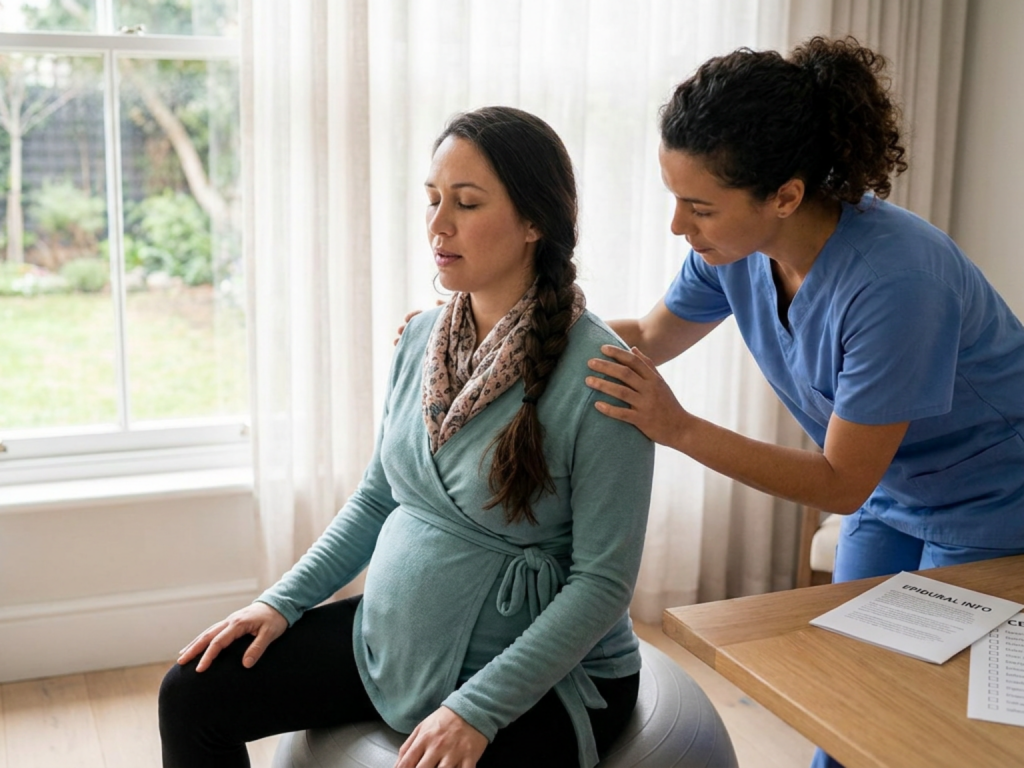
- Massage and counterpressure: Firm pressure over the sacrum, hip squeezes, shoulder release, or rhythmic touch can be helpful, particularly with back labor.
- Environment: Dim lighting, music, privacy, aromatherapy if tolerated, and limited unnecessary conversation may support oxytocin release and concentration.
- Mental strategies: Meditation, hypnosis-based scripts, visualization, prayer, or affirmations can provide structure during intense contractions.
Practice should include realistic scenarios. For example, rehearse what you will do if contractions become closer together, if nausea appears, if monitoring limits movement, or if you request medication. A support person can learn specific phrases that help: “Relax your jaw,” “Drop your shoulders,” “One contraction at a time,” or “You can reassess after the next few.”
Preparing for labor epidural analgesia without losing agency
Even if you hope to avoid an epidural, it is wise to understand labor epidural analgesia before labor. Pain relief decisions are easier when you know the basics: an anesthesia clinician places a small catheter in the epidural space in the lower back, medication is infused or given intermittently, and the goal is analgesia rather than complete unconsciousness. Some institutions offer patient-controlled epidural analgesia, allowing carefully limited self-dosing within programmed safety parameters.
Discuss your preferences during prenatal care, especially if you have scoliosis, prior spine surgery, bleeding disorders, anticoagulant medication, neurologic disease, severe anxiety about needles, or a history of difficult anesthesia. An antenatal anesthesia consultation may be appropriate for complex medical or surgical histories. Ask what monitoring is required, how mobility is handled, whether a urinary catheter is routine, what side effects are common, and how patchy epidural block is managed.
Agency with an epidural means staying involved. You can still use position changes, peanut balls, side-lying release, rest, and emotional support. Depending on local policy and motor strength, walking may or may not be allowed. If pushing begins with dense numbness, the team may suggest laboring down, coached pushing, or positional changes. If the epidural does not provide adequate relief, tell the team promptly; troubleshooting is part of safe care.
It is also reasonable to define decision points in advance. Some people plan to reassess at a specific cervical dilation, after a period of active labor, or if exhaustion becomes overwhelming. Others prefer to request an epidural early. Neither choice is morally superior. The goal is informed, consent-centered care.
C-section readiness: planned and unplanned scenarios
C-section preparation is useful even when vaginal birth is likely. Cesarean birth may be planned because of placenta previa, certain fetal presentations, previous uterine surgery, multiple gestation, or other individualized indications. It may also occur after labor begins due to nonreassuring fetal status, arrest of dilation or descent, infection concerns, malpresentation, or other complications.
For planned cesarean birth preparation, ask about timing, fasting instructions, medication adjustments, preoperative labs, antiseptic wash, arrival time, support person policies, and anesthesia planning. Most scheduled cesareans use regional anesthesia for C-section, commonly spinal or combined spinal-epidural techniques, so the birthing person is awake while the abdomen is numb. General anesthesia is less common but may be necessary in emergencies or specific medical circumstances.
For an unplanned C-section, emotional preparation matters. Discuss in advance what you would want if time allows: explanation before surgery, presence of a support person, clear consent language, drape options, newborn skin-to-skin when safe, photos if allowed, and feeding support in recovery. In urgent situations, not every preference may be possible, but staff can often preserve dignity through communication.
Recovery planning should also begin before birth. Arrange help for lifting restrictions, meals, transportation, older children, and wound care questions. High-waisted underwear after C-section, loose clothing, pillows for abdominal support, and an accessible feeding station can make early days easier. Early walking after cesarean birth is often encouraged to reduce thromboembolic risk and support bowel function, but activity should follow your surgical team’s guidance.
Choosing and coordinating your support team
Your support team can shape the birth experience as much as the written plan. Choose a clinician or practice whose philosophy aligns with your values and whose recommendations you trust when plans change. Ask how they support physiologic labor, when they recommend admission, how they approach induction, and how they communicate during urgent decisions.
A doula can provide continuous nonclinical support, including comfort measures, positioning suggestions, reassurance, and help with communication. Doulas do not replace medical staff or make clinical decisions, but evidence-informed emotional and physical support can be valuable for many families. If you do not hire a doula, a partner, relative, or friend can still prepare for this role by attending classes and learning comfort techniques.
Clarify roles before labor. One person may track contractions and logistics; another may provide touch and verbal encouragement. Decide who will ask questions using a simple framework: What is happening? What are the benefits and risks? Are there alternatives? How urgent is the decision? What happens if we wait? These questions can be used for epidural placement, amniotomy, oxytocin augmentation, operative delivery, or cesarean birth.
Support also includes postpartum planning. Whether birth is unmedicated, epidural-assisted, or surgical, recovery can involve bleeding, perineal pain, incision pain, mood changes, lactation challenges, and sleep deprivation. A strong plan includes meals, rest shifts, follow-up appointments, and a clear path for calling the care team.
Making flexibility part of the birth plan
Flexibility is not the same as passivity. It means knowing your preferences while staying responsive to clinical information. A person may begin with low-intervention goals, choose an epidural for exhaustion, and later need cesarean delivery. Another may plan a C-section and still benefit from breathing practice, grounding techniques, and postpartum mobility planning. Each path can be safe, valid, and emotionally meaningful.
Consider writing two or three versions of your preferences: ideal physiologic labor, labor with epidural, and cesarean birth. This reduces the feeling of being forced into an unknown pathway if circumstances change. Include what helps you feel respected: being addressed directly, having procedures explained, avoiding fear-based language when possible, and being offered a moment to process when the situation is not emergent.
Finally, prepare for the emotional aftermath. Some people feel proud, relieved, disappointed, frightened, or all of these at once. A medically safe birth can still be psychologically intense. If the experience felt traumatic, confusing, or not aligned with your expectations, ask for a debrief with your clinician. Support from a mental health professional, postpartum support group, or trauma-informed therapist can be appropriate. Birth preparation should include the possibility of needing care not only for the body, but also for the story you carry afterward.
When to seek urgent medical guidance
- Call your maternity unit or emergency services for heavy vaginal bleeding, severe abdominal pain, seizures, or loss of consciousness.
- Report decreased or absent fetal movement promptly according to your clinician’s instructions.
- Seek immediate care for severe headache, visual changes, chest pain, shortness of breath, or sudden swelling.
- During labor, persistent fever, foul-smelling fluid, or severe constant pain should be assessed urgently.
- After birth, incision redness spreading, pus, fever, severe mood symptoms, or thoughts of self-harm require prompt professional help.
Tools & Assistance
- Prenatal appointment to review birth preferences and medical risk factors
- Childbirth education class that covers unmedicated labor, epidurals, and cesarean birth
- Hospital or birth center tour with questions about anesthesia and C-section policies
- Doula or trained support person for continuous labor support
- Postpartum home plan for meals, mobility limits, infant feeding, and follow-up care
FAQ
Can I plan a natural birth and still learn about epidurals?
Yes. Understanding epidurals does not commit you to using one; it helps you make an informed decision if pain, exhaustion, or clinical circumstances change.
Does getting an epidural mean I cannot move at all?
Not always, but mobility depends on medication dose, leg strength, monitoring, and hospital policy. Many people can still change positions with assistance.
Should everyone prepare for a C-section?
Basic preparation is useful for everyone because cesarean birth can become medically necessary even when a vaginal birth is expected.
Are aromatherapy, massage, and water therapy safe in labor?
They may be helpful for some people, but safety depends on allergies, pregnancy risks, facility policy, and clinical status. Discuss them with your care team.
What if my birth does not match my plan?
A changed plan is not a personal failure. Ask for explanations, support, and a postpartum debrief if you need help understanding or processing what happened.
Sources
- American College of Obstetricians and Gynecologists (ACOG) — Thinking About Childbirth Without Pain Medication? Here's How You Can Prepare
- Nebraska Medicine — 8 ways to prepare for natural birth: Easing labor pain without an epidural
- UT Southwestern Medical Center — 5 tips on natural childbirth from an Ob/Gyn who experienced it
Disclaimer
This article is for informational purposes only and is not a substitute for individualized medical advice. Always discuss birth planning, pain relief, and surgical preparation with your qualified healthcare team.
















Please log in to leave a comment.