
Intro
Travel with a baby can feel both exciting and intimidating. The safest timing depends on your baby’s age, birth history, medical stability, the type of travel, and how much exposure to crowds, illness, and long periods of restraint the trip will involve. For most healthy, full-term infants, travel can be safe when planned carefully, but the margin for error is smaller than it is for older children.
This article focuses on practical, medically grounded guidance for deciding when travel is reasonable, what situations deserve extra caution, and how to reduce common risks such as infection exposure, overheating, feeding disruption, dehydration, ear discomfort, and unsafe sleep or restraint practices.
Highlights
For most healthy, full-term babies, travel is often possible, but the best timing depends on medical stability and trip conditions.
Newborns can fly as early as the first week of life in many cases, though many clinicians and pediatric sources suggest waiting until 2 to 3 months when feasible because immune systems are still immature.
Premature infants, babies with heart or lung disease, and infants with other medical complexity may need individualized clearance before flying or high-altitude travel.
The safest trip is the one that protects breathing, feeding, sleep, temperature control, and infection prevention at every stage.
A short discussion with your baby’s clinician can help decide whether the destination, altitude, duration, and transportation method are appropriate.
What “safe to travel” really means for a baby
There is no single age at which every baby becomes automatically ready to travel. Safety depends on whether the infant is medically stable, feeding well, maintaining temperature, breathing comfortably, and able to tolerate the physical demands of the journey. A baby who is thriving at home may still be vulnerable in a crowded airport, a hot car, or a destination with limited access to clean water, medical care, or reliable sleep space.
For many families, the question is not whether travel is absolutely allowed, but whether the benefits outweigh the added risks. Short, essential trips may be reasonable earlier than long international itineraries. Nonessential travel is often easier to postpone until the baby is older and immune defenses are more mature.
Age guidance: newborns, young infants, and older babies
HealthyChildren.org, the American Academy of Pediatrics parent resource, notes that newborns are generally able to fly after 7 days of life, and many families are advised to wait until about 2 to 3 months if possible. Mayo Clinic similarly notes that air travel is typically safe for most healthy, full-term infants after the first few weeks. These are not hard rules for every child, but they are useful reference points.
The earliest weeks deserve special caution because newborns have less reserve for stressors such as dehydration, infection exposure, and feeding disruption. By 2 to 3 months, many infants are more physiologically resilient, though they still need careful protection. Older babies usually tolerate travel better, but they can still be affected by sleep disruption, ear pressure, motion sickness, and exposure to illness.
If your baby was born prematurely, had a prolonged newborn hospitalization, or has ongoing medical needs, age alone is not enough to judge readiness. Those infants may need a different timeline and more specific guidance from their care team.
When travel should be delayed or reviewed by a clinician
Travel is usually not the right choice if a baby is currently unwell, feeding poorly, losing fluid, or having breathing concerns. It should also be reviewed carefully if the infant has congenital heart disease, chronic lung disease, apnea history, significant jaundice, recent surgery, or a history of oxygen need. High-altitude destinations deserve extra caution because lower oxygen availability can stress vulnerable infants.
Premature babies are a special case. Their lung development, oxygenation, and temperature regulation may be less robust, and some may have residual apnea or other complications. Mayo Clinic recommends medical consultation for higher-risk situations, and that advice is especially important when planning air travel or travel to altitude.
Any baby with fever, significant vomiting, diarrhea, labored breathing, dehydration, or an acute illness should be evaluated before departure. In these situations, the safest decision may be to postpone travel until recovery is more complete.
Air travel: what makes it safer or riskier
Commercial flying is generally safe for most healthy infants, but it brings several predictable challenges. Cabin air is dry, schedules are rigid, and the infant must spend long periods in close quarters with many people. Ear discomfort during ascent and descent is common because pressure changes can affect the middle ear. Feeding during takeoff and landing can help some babies equalize pressure, but every infant is different.
If possible, use an FAA-approved child restraint system rather than holding the baby in arms during the flight. A properly used restraint is safer in turbulence and during abrupt movement. The CDC also emphasizes safer restraint systems in planes and cars. Safe sleep practices still matter in transit: avoid loose bedding, keep the airway clear, and do not improvise unsafe sleeping positions.
Hand hygiene is especially important on planes, in terminals, and in other enclosed spaces. Because young infants are less able to fight infections, limiting close contact with visibly ill people, washing hands before feeding, and cleaning frequently touched items can reduce risk. The CDC also advises attention to food and water safety and sun protection when travel includes destination exposures beyond the flight itself.
Road trips, car seats, and long periods of restraint
Many families assume road travel is automatically easier than flying, but long car rides have their own risks. The infant should travel in a correctly installed rear-facing car seat that fits the baby’s size and developmental stage. The seat should be used exactly as directed by the manufacturer, because incorrect angles, loose harnessing, or bulky layers can undermine safety.
Newborns and young infants should not remain in a car seat for extended stretches without breaks. Prolonged semi-upright positioning can make breathing and circulation less comfortable, especially in very young or medically fragile babies. It is safer to stop periodically so the baby can come out of the seat, be fed, changed, and checked.
If you are unsure whether the fit is correct, a certified child passenger safety technician can help confirm installation and harness positioning. That support is particularly valuable for premature infants or babies with a small birth weight, because fit and positioning matter even more in those cases.
Feeding, sleep, and infection control while traveling
Travel often disrupts the routines that keep babies regulated. Feeding may happen later than usual, naps may be shorter, and stimulation may be high. A practical feeding plan reduces stress for everyone. Pack enough formula, pumping supplies, or breastfeeding supports to cover delays, changes in schedule, and unexpected stops. If your baby takes medication, bring extra supplies and a clear schedule so doses are not missed.
Sleep safety also deserves special attention. Babies should sleep on a firm, flat surface that meets safe sleep standards, even away from home. Sofas, car seats, and adult beds are not equivalent substitutes for routine sleep. When the destination does not offer a reliable sleep setup, it may be worth postponing the trip or bringing a travel sleep option that supports safe positioning.
Infection prevention is central to safe travel in the first months of life. Avoid crowded indoor settings when possible, keep hands clean before feeding or touching the baby’s face, and be thoughtful about visitors. The CDC recommends practical hygiene and exposure-reduction measures because infants are more vulnerable to communicable illness than older children. If the trip involves regions with unsafe water or food, strict precautions become even more important.
How to decide whether a specific trip is reasonable
Useful questions include: Is the baby healthy and feeding well? Is the trip essential or optional? Will there be easy access to pediatric care if needed? Is the destination at high altitude, very hot, very cold, or crowded with illness exposure? Will the journey involve long periods in a car seat, stroller, carrier, or plane seat?
It can help to think in terms of stability rather than age alone. A thriving full-term infant with a straightforward travel plan may do well with careful preparation. By contrast, a baby who is premature, recently ill, or medically complex may need a more conservative plan even if the calendar age seems old enough.
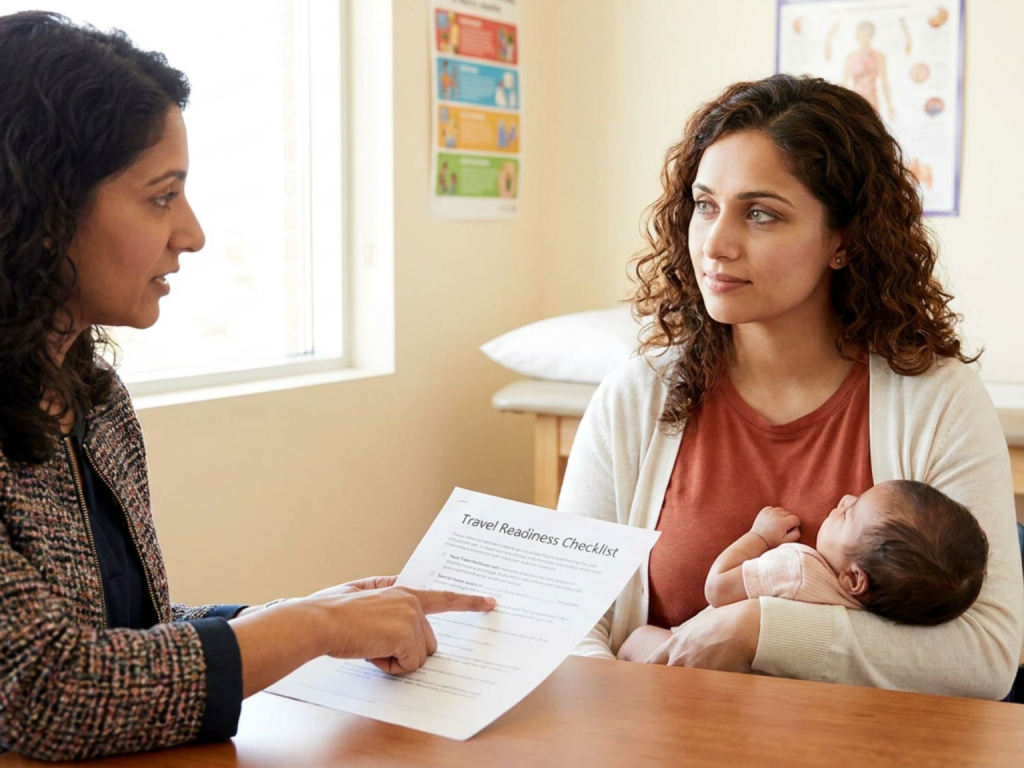
When in doubt, ask your baby’s clinician before booking. A brief pre-travel conversation can clarify whether your infant needs extra precautions, a delay, or specialty input. That is especially important for international trips, altitude exposure, or any travel where medical help will be hard to access quickly.
When to pause and call a clinician
- Breathing looks fast, noisy, or effortful.
- Feeding is poor, or the baby seems dehydrated.
- The infant was born prematurely or has heart or lung disease.
- The destination is at high altitude or has limited medical access.
- The baby has a fever, vomiting, diarrhea, or worsening jaundice.
- You are unsure whether the car seat, sleep setup, or flight plan is safe.
Tools & Assistance
- Your baby’s pediatrician or family doctor
- A certified child passenger safety technician
- The airline’s policies for infant restraints and bassinets
- A written feeding, sleep, and medication plan for the trip
- A destination-specific travel health clinic if the trip is international
FAQ
Can a healthy newborn travel at all?
Often yes, but timing depends on the type of travel and the baby’s stability. Many healthy newborns can fly after the first week, though many families wait until 2 to 3 months when feasible.
Is flying riskier than driving for a baby?
Neither is risk-free. Flying adds crowd exposure and cabin pressure changes, while driving can add long periods in a car seat. The safer option depends on the route, duration, and how well the baby can tolerate restraint.
Do premature babies need special clearance?
Often yes. Prematurity can affect breathing, oxygen needs, and temperature regulation, so travel plans should be reviewed with a clinician, especially for flying or high-altitude destinations.
Should I feed my baby during takeoff and landing?
Feeding during pressure changes can help some babies with ear discomfort, but not all babies need it. Your baby’s usual feeding pattern and age matter, so it is fine to ask your clinician if you are unsure.
When is the best time to seek medical advice before a trip?
As soon as travel becomes likely, especially if the baby was premature, recently ill, or has any heart, lung, or feeding concerns.
Sources
- Centers for Disease Control and Prevention (CDC) — Traveling Safely with Infants and Children
- HealthyChildren.org / American Academy of Pediatrics — Flying With Baby: Parent FAQs & Tips for Safer, Easier Air Travel
- Mayo Clinic — Air travel with infant: Is it safe?
Disclaimer
This article is for educational purposes only and does not replace individualized medical advice. If your baby is premature, medically complex, or currently unwell, consult your pediatrician or other qualified clinician before traveling.

















Please log in to leave a comment.