
Intro
Car seat safety can feel surprisingly stressful, especially when you are recovering from birth, managing a crying newborn, or trying to interpret a thick instruction manual in a parking lot. The goal is not perfection on the first try; it is building a reliable safety routine that fits your baby, your vehicle, and the way your family actually travels.
In the United States, expert guidance from pediatric and public-health organizations is consistent on the fundamentals: babies should ride in an age- and size-appropriate car seat, installed correctly, in the back seat, rear-facing for as long as possible within the seat manufacturer’s height and weight limits. If your baby was premature, has low muscle tone, airway concerns, a medical device, or a complex health history, ask your pediatrician, neonatology team, or a certified child passenger safety technician for individualized guidance.
Highlights
Rear-facing travel is the safest orientation for babies because it supports the head, neck, and spine during a crash.
A car seat is a crash-protection device, not a routine sleep space; move a sleeping baby to a firm, flat infant sleep surface when you arrive.
Correct harness fit matters every ride: snug straps, chest clip at armpit level, and no bulky coats under the harness.
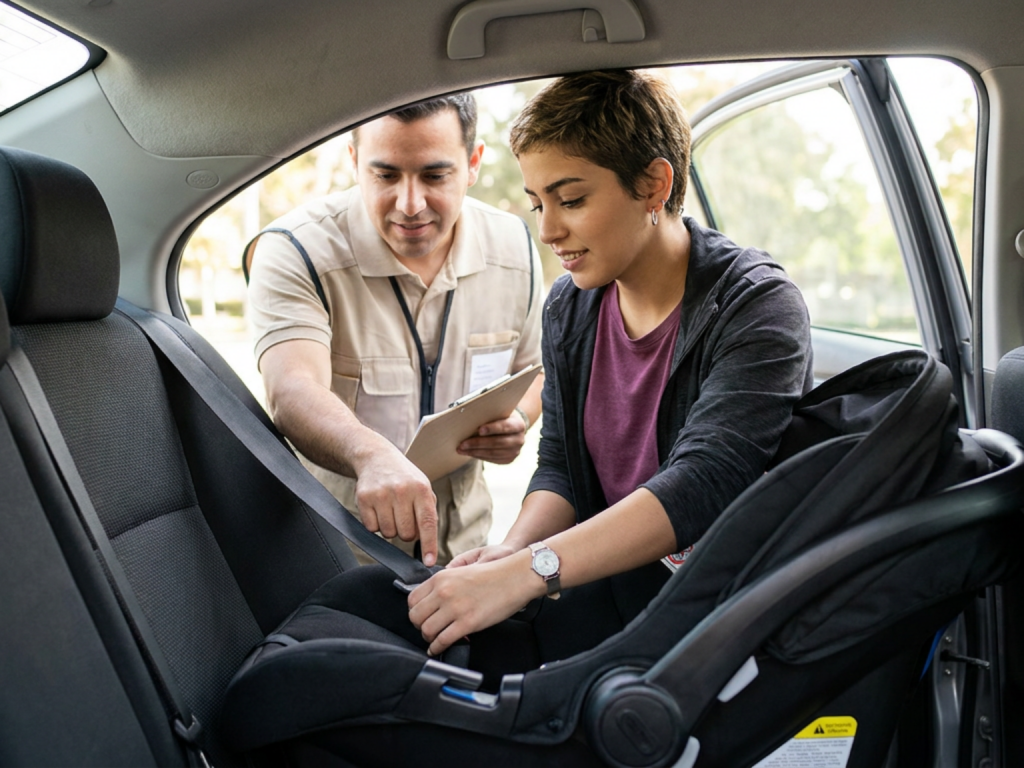
Professional help is available. Many communities offer car seat checks with certified child passenger safety technicians.
Why car seat safety matters for babies
Motor vehicle crashes remain a major preventable cause of injury for children, and infants have anatomy that makes correct restraint especially important. A baby’s head is proportionally large, the cervical spine is still developing, and neck musculature is immature. In a sudden stop or crash, a properly used rear-facing car seat spreads crash forces across the back of the seat shell and helps keep the head, neck, and torso aligned.
This is why US guidance emphasizes restraint use that matches the child’s age, height, weight, and developmental stage. A baby should never ride unrestrained, on an adult’s lap, in a carrier not designed for motor vehicle use, or in a seat that is not installed according to both the car seat manual and the vehicle owner’s manual. Even short, familiar routes deserve the same level of protection as long highway trips.
Rear-facing is the safest starting point
Babies should ride rear-facing from the first trip home and continue rear-facing as long as possible, up to the maximum height or weight limit allowed by their car seat. Many infant-only seats are rear-facing only and attach to a base; convertible seats can often be used rear-facing first and later turned forward-facing when the child is older and meets the seat limits.
Rear-facing seats must be placed in the back seat. Never place a rear-facing car seat in front of an active passenger air bag. If an air bag deploys, it can strike the back of the infant seat with severe force. The center back seat may be safest when the car seat fits there securely and the vehicle permits that installation, but a correct installation in a side rear seat is safer than a poor installation in the center.
Parents sometimes worry when a baby’s legs bend or touch the vehicle seat while rear-facing. Bent legs alone are not a reason to turn a baby forward-facing. The more important questions are whether the baby is within the seat’s stated height and weight limits and whether the head position meets the manufacturer’s instructions, such as having enough space between the top of the baby’s head and the top of the seat shell.
Choosing the right seat for your baby
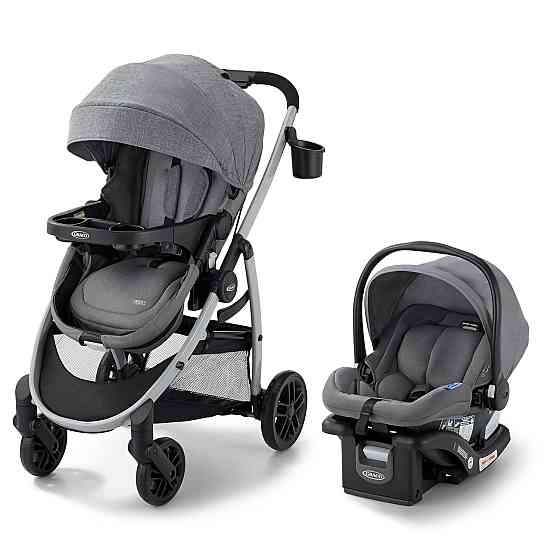
For newborns and young babies, families usually choose either an infant-only rear-facing seat or a convertible seat that can be used from birth if the baby meets the minimum weight, height, and fit requirements. Infant-only seats are portable and often click into a stroller, but babies eventually outgrow them. Convertible seats are less portable but may allow longer rear-facing use.
Before buying or using a seat, check several practical details:
- The seat fits your baby’s current weight and height, including any minimum weight requirement.
- The harness can be positioned at or below the baby’s shoulders for rear-facing use, as directed by the manual.
- The seat fits securely in your vehicle without forcing the front seat into an unsafe position.
- The seat has not expired, has not been recalled without repair, and has not been in a crash unless the manufacturer says continued use is allowed.
- You have the manual or can access the manufacturer’s instructions.
Be cautious with secondhand seats. A used seat may be reasonable only if you know its full history, it has all parts and labels, it is not expired, and it has not been involved in a crash that requires replacement. If you are unsure, it is safer to choose another seat or consult a child passenger safety technician.
Installation basics: secure, level, and compatible
A correctly installed car seat should move less than 1 inch side-to-side or front-to-back when tested at the belt path. You can usually install with either the vehicle seat belt or the lower anchors, but not both unless both the car seat and vehicle manuals explicitly allow it. Lower anchors also have weight limits, so families using convertible seats should know when to switch to seat belt installation.
The recline angle is especially important for newborns because excessive upright positioning can allow the head to slump forward, potentially narrowing the airway. Most rear-facing seats include an angle indicator or recline guide. Follow the indicator for your baby’s age, weight, and developmental stage. Newborn head and neck support should come from the properly reclined seat and the approved harness system, not from improvised pillows, blankets, or aftermarket inserts.
Do not add products that did not come with the seat or were not specifically approved by the car seat manufacturer. Extra padding, strap covers, head positioners, mirrors attached insecurely, or toys clipped to the seat can change how the restraint performs in a crash or become projectiles. If your baby seems poorly positioned despite correct use, contact the manufacturer, a certified technician, or your pediatric clinician rather than modifying the seat on your own.
Harness fit every ride
The harness is what keeps the baby coupled to the car seat during a crash. For rear-facing babies, harness straps usually need to come from slots at or below the shoulders, but always confirm with the manual. The straps should lie flat without twists. After buckling, tighten until you cannot pinch a fold of webbing at the collarbone. The chest clip should sit at armpit level, not on the abdomen or neck.
Bulky coats, thick bunting, and padded snowsuits should not go under the harness because they compress in a crash, leaving slack. In cold weather, dress the baby in thin layers, buckle and tighten the harness, then place a blanket or coat over the harness. Make sure the baby does not overheat, especially during longer drives or when the car warms up.
Before each trip, do a quick sequence: seat secure at the belt path, recline angle correct, harness flat and snug, chest clip at armpits, baby’s back and bottom fully against the seat, and no loose objects around the baby. This routine becomes faster with practice and is more reliable than relying on memory when everyone is tired.
Sleep, breathing, and long trips
Many babies fall asleep in the car, and that is normal. The safety concern is using a car seat as a routine sleep location outside the vehicle or leaving a sleeping baby in the seat longer than necessary after travel. Car seats are designed for crash protection, not for unsupervised or prolonged infant sleep. When you arrive, move the baby to a firm, flat infant sleep surface that follows safe sleep practices.
For long drives, plan breaks so an adult can check the baby’s color, breathing, temperature, and position. A young infant’s head should not be slumped forward with the chin compressed toward the chest. If your baby was premature, had oxygen desaturation episodes, has reflux with respiratory concerns, has hypotonia, or uses medical equipment, ask the healthcare team whether a car seat tolerance screening, travel plan, or adapted restraint is needed.
Avoid feeding a baby while the car is moving unless your clinician has given specific guidance and another adult can safely supervise. Bottles, pacifiers, and small items can become choking hazards or projectiles. If the baby needs care, stop in a safe place first.
When babies outgrow a seat
A baby has outgrown a car seat when they exceed any manufacturer limit for height, weight, or fit. For many infant-only seats, one key fit sign is the head being too close to the top of the shell, even if the baby has not reached the weight limit. Do not wait for every limit to be exceeded; reaching one limit is enough to require the next appropriate seat.
The next step is usually a convertible car seat used rear-facing, not forward-facing. The goal is to keep the child rear-facing to the highest height or weight allowed by the convertible seat. Turning forward-facing too early reduces protection for the head, neck, and spine. State laws set minimum requirements, but pediatric safety recommendations often go beyond the legal minimum.
Getting help without judgment
Car seat installation is technical, and needing help does not mean you have failed. Vehicle seats vary, car seat manuals are detailed, and small errors are common. A certified child passenger safety technician can teach you how to install and use your seat correctly rather than simply doing it for you.
Consider a car seat check before the baby is born, after switching vehicles, after changing to a convertible seat, or anytime the seat seems unstable. Bring the car seat, base if applicable, vehicle manual, car seat manual, and your baby if possible. If cost is a barrier, ask your pediatric office, hospital, local health department, fire department, or community safety program about low-cost seats or inspection events.
Safety warnings to take seriously
- Never place a rear-facing car seat in the front seat with an active passenger air bag.
- Do not use a car seat as a routine sleep space after travel; transfer the baby to a safe infant sleep surface.
- Do not put bulky coats, thick blankets, or aftermarket padding under the harness.
- Do not use a seat that is expired, missing parts, recalled without repair, or has an unknown crash history.
- Seek medical guidance for premature infants or babies with airway, muscle tone, neurologic, or cardiopulmonary concerns.
Tools & Assistance
- Schedule a car seat inspection with a certified child passenger safety technician.
- Read both the car seat manual and the vehicle owner’s manual before installation.
- Register the car seat with the manufacturer to receive recall notices.
- Ask your pediatrician or hospital discharge team about special travel needs for premature or medically complex babies.
- Keep a simple pre-drive checklist for harness fit, recline angle, and seat movement.
FAQ
How long should my baby stay rear-facing?
Keep your baby rear-facing as long as possible, until they reach the maximum height or weight limit allowed by the car seat manufacturer. Many children can remain rear-facing beyond infancy in a convertible seat.
Is the middle back seat always best?
The back seat is essential, and the center position may reduce side-impact exposure if the car seat installs correctly there. A secure installation in an allowed rear side position is preferable to an unstable center installation.
Can my baby wear a winter coat in the car seat?
Avoid bulky clothing under the harness. Use thin layers, tighten the harness snugly, and place a blanket or coat over the secured harness if warmth is needed.
What if my newborn’s head falls forward?
Stop and check the recline angle, harness position, and whether the baby meets the seat’s minimum size requirements. If positioning remains difficult, consult a pediatric clinician or certified technician, especially for premature or medically fragile infants.
Do I need to replace a car seat after a crash?
Follow the car seat manufacturer’s instructions and your vehicle insurance process. Some seats require replacement after any crash, while others follow specific criteria for minor crashes.
Sources
- Centers for Disease Control and Prevention — Child Passenger Safety
- HealthyChildren.org / American Academy of Pediatrics — Car Seats: Information for Families
- Children’s Hospital of Philadelphia — Car Seat Safety: Newborn to 2 Years
Disclaimer
This article is for general educational purposes and is not a substitute for medical care, emergency advice, or individualized car seat assessment. Consult your pediatrician, hospital team, car seat manufacturer, or a certified child passenger safety technician for guidance specific to your baby.















Please log in to leave a comment.