
Intro
Hair care in the first year of life is usually less about styling and more about protecting a delicate scalp. Infant hair shafts are fine, follicles are still maturing, and the scalp barrier can be easily irritated by friction, over-washing, or tight hairstyles. In many babies, a simple routine is enough: gentle cleansing when needed, careful detangling, and an eye on scalp comfort rather than hair length or appearance.
It is also common for parents and caregivers to worry about shedding, patchiness, cradle cap, or uneven growth. Some of these changes are normal in infancy, while others deserve a conversation with a pediatrician. The goal is to keep hair care calm, low-friction, and responsive to your baby's individual hair type and scalp condition.
Highlights
A baby's scalp is often more sensitive than the hair itself, so the safest routine is usually gentle and minimal.
Frequent washing is not always necessary; many babies do well with mild cleansing only as needed.
Shedding, temporary patchiness, and changes in texture can be normal during infancy.
Tight styles, rough brushing, and repeated rubbing can irritate the scalp and increase hair breakage.
Cradle cap and persistent redness should be discussed with a healthcare professional if they do not improve.
Hair care starts with scalp care
In the first year, the scalp is the main focus. Hair may be sparse, fine, curly, straight, silky, or coiled, and the best routine depends on both the hair type and the scalp. The point is not to make the hair look “managed” every day, but to keep the skin underneath clean enough to prevent buildup while avoiding unnecessary dryness or friction.
For many families, this means using mild fragrance-free products, washing only when the hair or scalp actually needs it, and being especially gentle around the hairline, behind the ears, and at the nape of the neck. If your baby has a dry scalp, greasy scaling, or visible flakes, a pediatrician can help you decide whether the routine should change.
How often to wash a baby's hair
There is no single schedule that fits every infant. Some babies need their hair washed only occasionally, while others need more frequent cleansing because of spit-up, sweat, cradle cap, or product buildup. In general, very frequent washing is not necessary and may dry the scalp or make fine hair more brittle.
A practical approach is to wash the hair when it looks or feels dirty, when the scalp is visibly oily, or when your baby’s clinician has suggested a more regular schedule. Use lukewarm water, a small amount of gentle cleanser, and rinse well. A quick bath does not need to turn into a full scrub; the scalp usually benefits more from consistency and softness than from aggressive cleaning.
- Wash more often if the scalp is sweaty or crusted.
- Wash less often if the scalp is dry or easily irritated.
- Do not use adult shampoos unless a clinician recommends them.
- Pat the hair dry rather than rubbing it vigorously.
Brushing and detangling without breakage
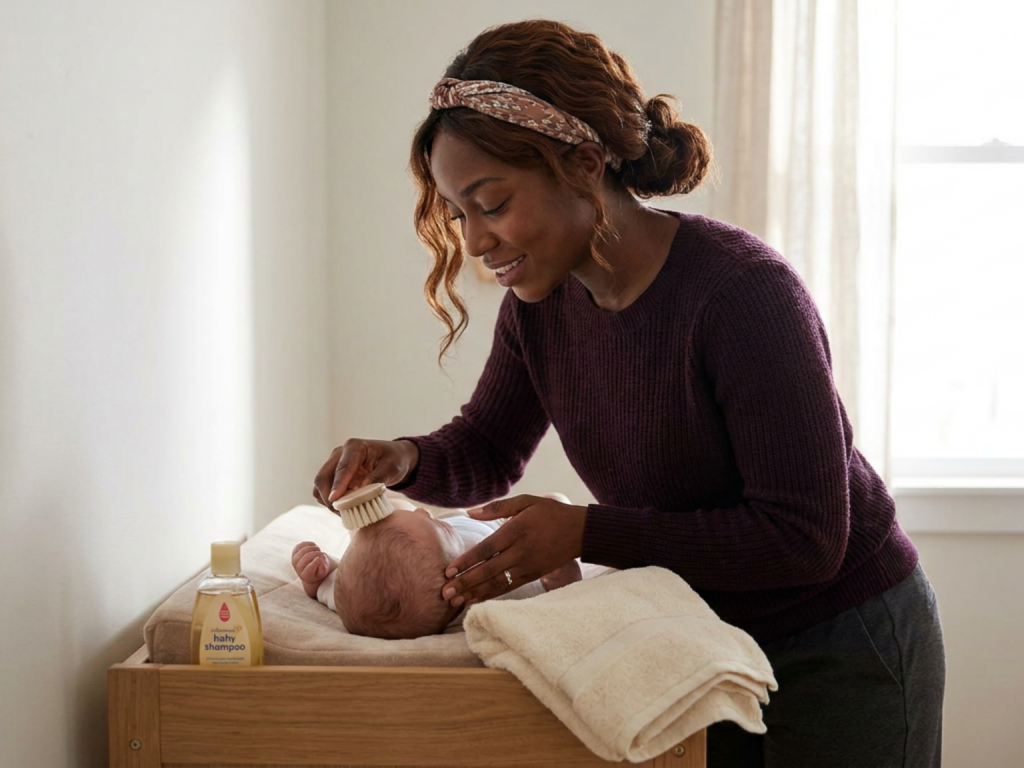
Infant hair breaks easily, especially when it is wet, tightly coiled, or tangled from sleep, hats, or constant rubbing. A soft-bristled baby brush or a wide-tooth comb is usually enough. Start at the ends and work upward in small sections so you do not pull on the roots. If your baby has textured hair, detangling slowly and in small sections can reduce pain and breakage.
For many infants, the safest rule is to avoid force. If you meet a knot that does not release easily, add a little water or a baby-appropriate detangling product and work patiently rather than tugging. Hair care should not cause tears. If it does, the method likely needs to be gentler.
- Brush only as much as needed to smooth tangles.
- Use your fingers first for stubborn knots.
- Avoid hard bristles, metal picks, and repeated pulling.
- Check the hairline and behind the ears for irritation after combing.
What is normal in the first year
It can be unsettling to see hair thin out, shed, or grow in unevenly, but temporary changes are common during infancy. Some babies lose hair from the back of the head because of friction against a mattress, car seat, or carrier. Others shed the hair they were born with and grow a different texture over time. Patchy areas can also appear when hair is constantly rubbed in the same direction.
This is one reason many clinicians encourage supervised tummy time and other forms of safe floor time for infants. These activities reduce prolonged pressure on the back of the head and give the scalp a break from one position. They also support gross motor development, which is a useful side benefit even when the main concern is hair loss from friction.
It is important not to assume that every bald patch is the same thing. Normal shedding, friction-related thinning, eczema, fungal infection, and other scalp conditions can look similar at first. If the pattern is persistent, inflamed, or worrying to you, it deserves medical review.
Cradle cap, flakes, and scalp irritation
Cradle cap, or infant seborrheic dermatitis, is common in the first year. It often appears as greasy yellowish scale or adherent flakes on the scalp. Although it can look dramatic, it is usually not an emergency. The most important rule is not to pick or scrub hard, because that can inflame the skin and worsen irritation.
A gentle approach usually works better: soften the scale during bathing, brush lightly with a soft brush, and ask your pediatrician if a medicated shampoo or other treatment is appropriate. If the scalp is red, swollen, painful, oozing, or very itchy, or if the rash extends beyond the scalp, the baby should be examined. Several different conditions can look like cradle cap, so persistent or atypical cases are best evaluated by a clinician.
Hairstyles, accessories, and pressure on the scalp
Hair styling in infancy should protect the roots, not place tension on them. Tight ponytails, braids, rubber bands, clips, glued accessories, or repeated tension in one spot can pull on the hairline and lead to breakage or traction-related hair loss. This risk matters even in very young babies, especially when the hair is fine or sparse.
If you like to keep hair off the face, choose the loosest possible style and change the placement often. Soft fabric headbands, if used at all, should never leave marks or slide into the eyes. Around sleep and play, try to minimize repeated rubbing on the same spot. Babies do not need elaborate styles to have healthy hair; comfort and low tension are the priorities.
Caregivers of textured hair often do best with a low-manipulation routine. That can mean gentle cleansing, slow detangling, and hairstyles that avoid daily pulling. The overall principle is the same for every hair type: keep the scalp calm and the follicles unstrained.
When to ask for medical advice
Many hair concerns in infancy are harmless, but some deserve prompt evaluation. Seek advice if hair loss is sudden, patchy and expanding, associated with redness or scale that does not improve, or accompanied by pain, swelling, pus, fever, or poor feeding. Also ask about hair care if your baby seems uncomfortable during brushing, if the scalp bleeds easily, or if there are signs of eczema or another skin condition.
A routine well-child visit is a good time to bring up hair or scalp concerns, even if they seem minor. Your clinician can look for friction-related thinning, cradle cap, dermatitis, or other causes and help you tailor care to your baby’s age and hair type. It is always reasonable to ask for help when something feels uncertain.
When to get help sooner
- Hair loss that is rapid, expanding, or clearly patchy should be checked.
- Do not pick, scrub, or peel crusts from the scalp.
- Get medical advice for redness, swelling, drainage, pain, or fever.
- Avoid tight hairstyles, rubber bands, and accessories that leave marks.
- Do not use medicated shampoos or adult products without professional guidance.
Tools & Assistance
- A soft-bristled baby brush
- A wide-tooth comb for gentle detangling
- Mild fragrance-free baby cleanser
- A soft towel for pat-drying the scalp
- Your baby's pediatrician or family doctor
FAQ
How often should I wash my baby's hair in the first year?
Often less frequently than adults wash their hair. Many babies only need gentle washing when the scalp is dirty, oily, or affected by cradle cap.
Is it normal for a baby to lose hair?
Yes, temporary shedding or patchiness can be normal in infancy, especially from friction on the back of the head or during the transition from newborn hair to later hair.
Should I brush my baby's hair every day?
Only as much as needed. Use a soft brush or wide-tooth comb and stop if brushing causes discomfort or breakage.
What should I do about cradle cap?
Use a gentle, non-picking approach and ask a clinician if the scale is persistent, inflamed, or spreading.
When should I call the doctor about hair or scalp changes?
Call if there is rapid hair loss, redness, swelling, drainage, fever, pain, or a scalp rash that does not improve.
Sources
- Happiest Baby — Newborn Haircare: How to Care for a Baby's Hair
- WebMD — Baby Hair Care: Tips for Natural Hair, From Doctors
- Centers for Disease Control and Prevention — Developmental Milestones: 0 to 12 Months
Disclaimer
This article is for educational purposes only and does not replace advice from your pediatrician or another qualified clinician. If your baby has concerning scalp symptoms, rapid hair loss, fever, pain, or signs of infection, seek medical care.















Please log in to leave a comment.