
Intro
A diaper area care routine is one of the most repeated forms of baby care, and it can also be one of the most reassuring. Each diaper change is a chance to protect the skin barrier, reduce exposure to irritants, prevent spread of germs, and notice early changes such as redness, erosions, unusual discharge, or fewer wet diapers.
Most diaper-area irritation is related to moisture, friction, urine, stool enzymes, and prolonged contact with occlusive materials. A calm, consistent routine can lower the risk of irritant contact diaper dermatitis while also making care feel predictable for both baby and caregiver. This article offers practical, medically cautious guidance; it cannot determine the cause of a rash or replace individualized advice from your child’s healthcare professional.
Highlights
Prompt diaper changes reduce contact time with urine and stool, which helps protect the infant skin barrier.
Gentle cleansing, thorough drying, and a thin barrier layer are the core steps of diaper dermatitis prevention.
Fragrance-free diaper wipes or plain water are generally preferred when the skin is sensitive or already red.
Persistent redness, open sores, fever, pus, blisters, or spreading rash should be discussed with a healthcare professional.
Why the diaper area needs special care
The diaper area is a high-risk microenvironment for skin irritation. It is warm, moist, occluded, and exposed to urine, stool, digestive enzymes, and mechanical friction. Infant skin also has a developing barrier function, with a thinner stratum corneum and higher susceptibility to transepidermal water loss than mature adult skin. This does not mean the skin is fragile in every situation, but it does mean small routine choices can matter.
Diaper dermatitis is often multifactorial. Urine can increase local moisture and alter skin pH. Stool contains enzymes that may irritate skin, especially when stooling is frequent. Rubbing from diapers or vigorous wiping can worsen barrier disruption. Once the barrier is compromised, the area may become more vulnerable to secondary infection or inflammatory flares.
A helpful routine is not complicated. It aims to shorten exposure to irritants, cleanse without stripping the skin, allow drying time, protect the surface with a barrier when needed, and maintain good hand and surface hygiene. Parents and caregivers should not feel blamed when redness occurs; diaper rashes are common even with attentive care.
A step-by-step diaper change routine
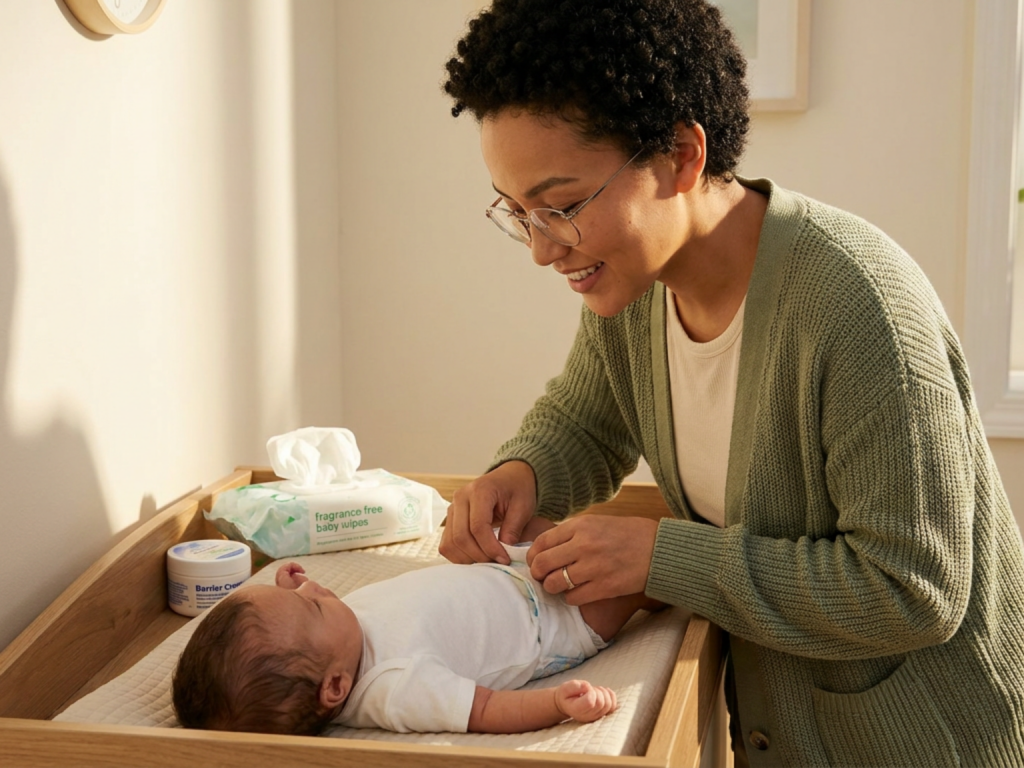
A reliable sequence helps reduce mess, stress, and contamination. Before opening the diaper, gather supplies: a clean diaper, wipes or water and soft cloths, barrier ointment if used, a disposal bag or covered bin, and a clean changing surface. Keeping one hand on the baby during changes helps prevent falls.
- Place the baby on a safe, clean changing surface and open the diaper.
- If there is stool, use the front of the diaper to gently remove the bulk before wiping.
- Clean from front to back, especially for babies with a vulva, to reduce transfer of stool bacteria toward the urethral area.
- Use gentle pressure rather than scrubbing. Plain water, a soft cloth, or fragrance-free diaper wipes are reasonable options.
- Let the skin air dry briefly, or pat dry with a soft cloth. Avoid rubbing.
- Apply a barrier product if the skin is red, prone to irritation, or will be in a diaper for a longer stretch.
- Fasten the clean diaper snugly but not tightly, then dispose of waste safely.
- Clean the changing surface and wash hands thoroughly.
The Centers for Disease Control and Prevention emphasizes practical hygiene steps such as safe disposal, cleaning the changing area, and handwashing. These steps are not just about neatness; they reduce the spread of organisms that can cause gastrointestinal or skin infections.
Cleansing without damaging the skin barrier
Diaper-area skin benefits from effective but low-irritation cleansing. The goal is to remove urine, stool, and residue while preserving the lipid-rich barrier. Over-cleansing, scrubbing, fragranced products, and harsh soaps can worsen dryness or stinging, particularly if the skin is already inflamed.
For urine-only diapers, some babies may need only a gentle wipe or brief cleanse, depending on age, skin sensitivity, and caregiver preference. For stool, thorough removal is important because stool enzymes can irritate the skin. If redness is present, consider using water and a soft cloth or fragrance-free diaper wipes, then pat dry. Avoid alcohol-containing or heavily scented products unless a clinician specifically recommends them.
Research on newborn diaper care regimens supports the idea that product choice and technique can affect skin barrier outcomes. The practical takeaway is not that one product is perfect for every baby, but that gentle cleansing and barrier support are central to maintaining skin integrity.
If a product seems to cause stinging, increased redness, or new bumps, stop using it and discuss alternatives with your pediatric clinician. Babies with eczema, prematurity, frequent stools, or a history of recurrent rashes may need more individualized product selection.
Drying and barrier protection
After cleansing, drying is more important than it may seem. Moisture trapped under a diaper increases friction and maceration, which makes skin more susceptible to breakdown. A short period of air drying can be helpful, especially when the skin is red. If time is limited, gentle patting is preferable to rubbing.
Barrier ointments create a protective layer between the skin and irritants. Common ingredients include zinc oxide, petrolatum, or dimethicone. A zinc oxide barrier cream is often used when skin remains red or is exposed to frequent stooling. The layer does not need to be aggressively removed at every change; wiping until the skin is raw can defeat the purpose. Remove stool and soiled product gently, then reapply as needed.
For routine prevention, some babies do well with barrier ointments only overnight, during diarrhea, or during periods of frequent stooling. Others benefit from a light layer more often. The amount and frequency depend on the baby’s skin, stool pattern, diaper fit, and the presence of irritation.
Do not apply medicated antifungal, antibacterial, or steroid creams unless a healthcare professional has advised it for your baby. These products can be helpful in specific conditions, but using them without assessment may mask symptoms, irritate the skin, or delay appropriate care.
Diaper fit, frequency, and observation
Changing wet or dirty diapers promptly is a cornerstone of care. Newborns may stool frequently, and wet diapers in newborns can also help families monitor hydration in the early days. If you are unsure what is normal for your baby’s age, feeding pattern, or medical situation, ask your pediatric clinician.
Fit matters. A diaper that is too tight may increase friction at the waist, thighs, or skin folds. A diaper that is too loose may leak and keep moisture against the skin. Look for red pressure marks, chafing at elastic edges, or repeated leaks as clues that size or brand may need adjustment.
Observation should be gentle and matter-of-fact. During each change, notice the color and location of redness, whether the skin is intact, whether folds are involved, and whether the baby seems unusually uncomfortable. Irritant contact diaper dermatitis often affects convex surfaces that contact the diaper, while some infections or inflammatory conditions may have different patterns. However, pattern recognition is not a substitute for diagnosis by a qualified clinician.
A morning diaper change is also a useful moment to assess overnight skin exposure. If the skin is repeatedly red after long sleep stretches, caregivers can consider a thicker nighttime barrier layer, a more absorbent diaper, or a discussion with a healthcare professional if redness persists.
What to do when mild redness appears
Mild redness can be upsetting, but it often improves with supportive care. Increase diaper-change frequency, clean gently, allow the area to dry, and apply a protective barrier. Avoid new fragranced products, bubble baths, unnecessary powders, and vigorous wiping. Diaper rash causes and treatment can vary, so the safest approach is to focus first on reducing irritation and monitoring response.
Powders are generally not a first-line solution for routine diaper-area care because inhalation can be harmful, especially for infants. If a clinician recommends a powder for a specific reason, use it exactly as instructed and keep it away from the baby’s face.
During diarrhea or frequent stools, the skin may deteriorate quickly. In these periods, use prompt changes, generous barrier protection, and gentle cleansing. If the baby has signs of dehydration, blood in the stool, fever, lethargy, or persistent diarrhea, seek medical advice promptly.
If redness does not start to improve after a few days of careful home care, or if the rash is worsening, painful, bleeding, blistering, or spreading beyond the diaper area, arrange medical evaluation. Some rashes require targeted treatment, and visual examination is often necessary.
Hygiene for caregivers and the changing area
Good diaper hygiene protects the whole household. After removing a soiled diaper, fold it closed, place it in a lined or covered container, and avoid placing contaminated items on clean surfaces. If using cloth diapers, follow the manufacturer’s laundering instructions and any public health guidance relevant to handling stool.
Clean and disinfect the changing surface regularly, especially after stool leaks. Keep diaper supplies within reach but separate from feeding items. Wash your hands with soap and water after every change when possible. If soap and water are unavailable, use hand sanitizer, then wash hands as soon as practical.
These steps may sound basic, but they are particularly important in homes with newborns, premature infants, immunocompromised family members, or siblings in childcare settings. A calm routine can make hygiene feel automatic rather than burdensome.
When to seek medical advice
- Rash with fever, lethargy, poor feeding, or a baby who seems significantly unwell.
- Blisters, pus, open sores, bleeding, rapidly spreading redness, or severe pain with diaper changes.
- Rash that persists or worsens despite several days of gentle cleansing and barrier care.
- Bright red rash involving skin folds, satellite papules, or recurrent rashes that may need clinical evaluation.
- Fewer wet diapers, signs of dehydration, persistent diarrhea, or blood in the stool.
Tools & Assistance
- Keep a small diaper-care station stocked with clean diapers, fragrance-free wipes, soft cloths, and barrier ointment.
- Use a simple feeding and diaper log if hydration, stool frequency, or rash timing is a concern.
- Ask your pediatrician, family physician, or pediatric dermatologist about persistent or recurrent diaper dermatitis.
- Follow CDC-style hygiene steps: safe disposal, surface cleaning, and handwashing after diaper changes.
- Bring photos and a list of products used if you seek medical evaluation for a rash.
FAQ
Should I use wipes or water for every diaper change?
Either may be appropriate. For sensitive or irritated skin, plain water with a soft cloth or fragrance-free diaper wipes are often gentler choices. Avoid scrubbing and pat the area dry.
Do I need barrier cream at every change?
Not always. Some babies need it mainly overnight, during frequent stooling, or when redness appears. If the skin is persistently red, a zinc oxide barrier cream may help protect it while you seek guidance if it does not improve.
How long should I wait before calling a doctor about diaper rash?
Seek advice sooner for fever, blisters, pus, open sores, severe pain, spreading rash, or a baby who seems unwell. If mild redness does not improve after a few days of careful routine care, contact a healthcare professional.
Can diaper rash be caused by infection?
Yes, some diaper-area rashes can involve yeast or bacteria, but appearance alone can be misleading. A clinician should evaluate persistent, severe, recurrent, or unusual rashes before medicated treatments are used.
Is diaper-free time useful?
Short supervised diaper-free periods can help air dry irritated skin and reduce moisture. Use a washable pad, keep the baby warm, and avoid unsafe surfaces or situations where the baby could roll or fall.
Sources
- American Academy of Dermatology — How to treat diaper rash
- PubMed Central — Improving newborn skin health: Effects of diaper care regimens on skin barrier function and diaper dermatitis
- Centers for Disease Control and Prevention — Healthy Habits: Diaper Changing at Home
Disclaimer
This article is for informational purposes only and does not diagnose, treat, or replace care from a qualified healthcare professional. Consult your child’s clinician for persistent rash, severe symptoms, or any concern about your baby’s health.














Please log in to leave a comment.