
Intro
Bleeding in the third trimester can feel terrifying, and it deserves careful attention. While some causes are minor, bleeding after about 28 weeks can also be the first sign of a serious obstetric condition involving the placenta, the uterus, or fetal blood vessels. Because maternal and fetal status can change quickly, the safest approach is to treat third-trimester bleeding as a reason to contact a maternity care professional or labor and delivery unit promptly.
This article explains the major causes of late-pregnancy bleeding, the warning signs that should trigger emergency care, and what assessment may involve. It is written for medically literate readers, but it cannot determine the cause of bleeding in an individual pregnancy. If you are bleeding now, especially if the bleeding is more than spotting, painful, recurrent, or accompanied by reduced fetal movement, seek urgent medical advice.
Highlights
Third-trimester bleeding may be benign, but it can also signal placenta previa, placental abruption, vasa previa, uterine rupture, or labor-related cervical change.
Heavy bleeding, abdominal pain, uterine tenderness, fainting, hypotension, tachycardia, contractions, or reduced fetal movement are emergency warning signs.
Digital vaginal examination is generally avoided until placenta previa has been excluded, because it can worsen bleeding.
Prompt evaluation focuses on maternal stability, fetal well-being, gestational age, bleeding severity, placental location, and whether urgent delivery is needed.
Even small amounts of bleeding should be discussed with a clinician in late pregnancy, particularly if you have placenta previa, prior cesarean birth, hypertension, trauma, or multiple pregnancy.
Why bleeding late in pregnancy is taken seriously
Bleeding in the third trimester is clinically significant because it may represent maternal blood loss, fetal blood loss, or both. The uterus has a large blood supply near term, and placental complications can evolve from mild bleeding to hemodynamic instability or fetal distress in a short time. The amount of visible vaginal bleeding does not always match the severity of the underlying problem; for example, placental abruption can involve concealed bleeding behind the placenta.
Clinicians usually assess two patients at once: the pregnant person and the fetus. Maternal evaluation looks for signs of hypovolemia, coagulopathy, pain, uterine tone, and ongoing bleeding. Fetal evaluation may include heart rate monitoring, ultrasound assessment, and consideration of gestational age and viability. The goal is not simply to identify the source of bleeding, but to decide whether continued observation, hospitalization, transfusion, medication, or urgent delivery is safest.
Common and serious causes of third-trimester bleeding
Several conditions can cause bleeding in late pregnancy. Some are related to cervical change or irritation, while others are obstetric emergencies.
- Placenta previa: The placenta partially or completely covers the internal cervical os. Bleeding is often painless and bright red, and it may recur. Because touching the cervix can provoke severe hemorrhage, clinicians generally confirm placental location before any digital cervical examination.
- Placental abruption: The placenta separates prematurely from the uterine wall. It may cause vaginal bleeding, abdominal or back pain, uterine tenderness, frequent contractions, a firm or hypertonic uterus, and fetal heart rate abnormalities. Bleeding may be visible or concealed.
- Vasa previa: Fetal blood vessels run near or across the cervical os without adequate protection. When membranes rupture, these vessels can tear, causing fetal hemorrhage. This is rare but highly time-sensitive.
- Uterine rupture: A tear in the uterine wall, more likely in people with a prior uterine scar, can cause pain, bleeding, abnormal fetal heart tracing, loss of fetal station, and maternal instability. It is an obstetric emergency.
- Labor-related cervical change: A small amount of bloody mucus, often called bloody show, may occur as the cervix softens and dilates. However, it should not be assumed to be benign if bleeding is heavy, persistent, painful, or accompanied by other concerning signs.
- Cervical or vaginal causes: Cervicitis, polyps, recent intercourse, vaginal infection, or trauma can cause spotting. These are usually less dangerous than placental causes but still require context-specific assessment in late pregnancy.
If you have been told you have placenta previa, a low-lying placenta, a suspected placental problem, fetal growth restriction, hypertension, preeclampsia, a prior cesarean incision, or a history of abruption, report any bleeding promptly.
Emergency warning signs: when to seek immediate care
In the third trimester, it is reasonable to contact your maternity unit or clinician for any vaginal bleeding. Some symptoms, however, should be treated as emergencies. Call emergency services or go to labor and delivery immediately if bleeding is heavy, rapidly increasing, associated with pain, or accompanied by symptoms suggesting maternal or fetal compromise.
- Heavy bleeding: Soaking a pad, passing clots, blood running down the legs, or bleeding that does not slow down.
- Maternal instability: Fainting, severe dizziness, confusion, pallor, shortness of breath, chest pain, racing pulse, or feeling cold and clammy.
- Severe abdominal or back pain: Especially constant pain, uterine tenderness, a rigid uterus, or painful contractions close together.
- Reduced or absent fetal movement: A noticeable decrease in fetal activity should be assessed urgently, whether or not bleeding is heavy.
- Rupture of membranes with bleeding: A gush or leak of fluid followed by bleeding can be concerning for vasa previa or labor complications.
- Signs of preterm labor: Regular contractions, pelvic pressure, low backache, or cervical-type cramping before term, especially with bleeding.
- Trauma: A fall, motor vehicle collision, abdominal impact, or intimate partner violence can precipitate abruption even if initial bleeding is minimal.
Do not wait to see whether severe symptoms improve. Third-trimester bleeding can require rapid IV access, fluids, blood products, fetal monitoring, specialist consultation, and sometimes immediate cesarean delivery.
What to do while arranging medical evaluation
If you are bleeding, prioritize safety and rapid communication. Call your obstetric clinician, midwife, or local labor and delivery triage unit. If bleeding is heavy, you feel weak or faint, or fetal movement is decreased, call emergency medical services rather than driving yourself.
- Use a sanitary pad, not a tampon or menstrual cup, so the amount and color of bleeding can be assessed.
- Note the time bleeding started, the amount, whether clots are present, and whether there is pain, contractions, fluid leakage, or reduced fetal movement.
- Avoid intercourse, vaginal insertion, and self-checking the cervix unless a clinician has specifically advised otherwise.
- If possible, bring your prenatal records, medication list, blood type information, ultrasound reports, and details of prior cesarean or uterine surgery.
- Do not eat or drink large amounts if severe bleeding is occurring, because anesthesia or urgent surgery may be needed; follow emergency team instructions.
It can be emotionally overwhelming to seek urgent care for bleeding, especially if you have had previous pregnancy loss or complications. Needing evaluation does not mean something catastrophic is definitely happening; it means the situation deserves timely, skilled assessment.
How clinicians evaluate bleeding in the third trimester
Initial assessment is usually structured around maternal stabilization and fetal assessment. Clinicians may check vital signs repeatedly, estimate blood loss, place one or two large-bore IV lines, draw blood, and begin fluids or blood products if indicated. Laboratory testing may include complete blood count, blood type and screen or crossmatch, coagulation studies, fibrinogen, and tests guided by the clinical situation. Rh-negative patients may need evaluation for anti-D immune globulin according to local protocols.
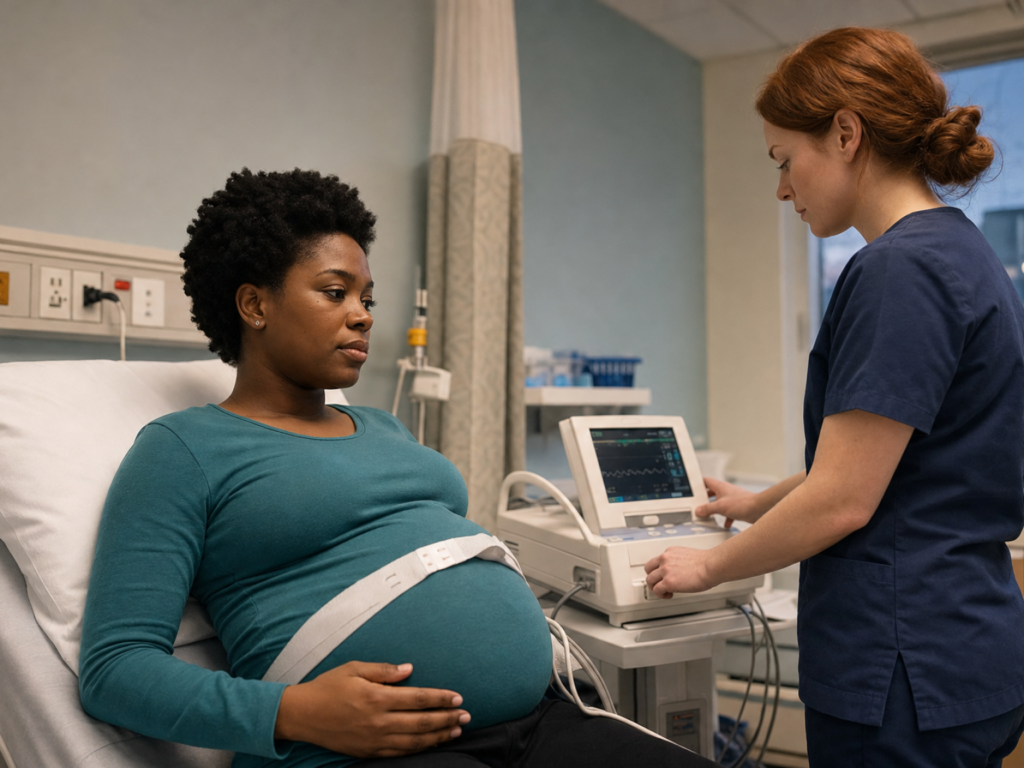
Fetal monitoring commonly includes continuous electronic fetal heart rate monitoring when gestational age is appropriate. A nonreassuring fetal heart tracing, recurrent decelerations, bradycardia, or loss of variability may change the urgency of delivery. Ultrasound can help identify placental location, fetal presentation, amniotic fluid, and sometimes signs of abruption, though a normal ultrasound does not rule out abruption.
A speculum examination may be performed in some cases to assess cervical or vaginal bleeding, membrane rupture, or lesions. However, a digital vaginal examination is typically deferred until placenta previa has been excluded. This precaution matters because manipulation of a cervix covered by placenta can precipitate major hemorrhage.
Treatment decisions: observation, stabilization, or urgent delivery
Management depends on the suspected cause, bleeding severity, gestational age, maternal stability, fetal status, and available neonatal resources. Some people with mild bleeding and reassuring evaluation may be observed, admitted, or followed closely with activity guidance individualized by the clinical team. Others may need corticosteroids for fetal lung maturation if preterm delivery is possible, magnesium sulfate for fetal neuroprotection at certain gestational ages, anti-D prophylaxis if Rh-negative, or transfer to a facility with appropriate obstetric, anesthesia, blood bank, and neonatal intensive care capabilities.
Urgent delivery may be recommended when there is maternal hemodynamic instability, ongoing significant hemorrhage, suspected uterine rupture, fetal distress, vasa previa with vessel rupture, or severe placental abruption. Cesarean birth is often required in placenta previa with active bleeding, vasa previa, uterine rupture, and many unstable situations. In other circumstances, vaginal delivery may be appropriate, but this decision is highly individualized and should be made by the obstetric team in real time.
Because the differential diagnosis includes rapidly evolving emergencies, it is unsafe to diagnose the cause of third-trimester bleeding based only on color, amount, or the presence or absence of pain. Clinical evaluation is the key step.
Risk factors that make prompt reporting especially important
Bleeding can occur without known risk factors, but certain histories increase concern. Placenta previa is more common with prior cesarean birth, uterine surgery, multiple gestation, increasing parity, smoking, and assisted reproductive technology. Placental abruption is associated with hypertension, preeclampsia, abdominal trauma, cocaine use, smoking, prior abruption, ruptured membranes, and some thrombophilic or vascular conditions. Uterine rupture risk is higher with a prior classical cesarean incision, extensive uterine surgery, or certain labor patterns in a scarred uterus.
If you have any of these risk factors, your care team may have already discussed individualized instructions. Still, the practical rule remains simple: any third-trimester bleeding is worth a call, and any bleeding with pain, instability, contractions, fluid leakage, or decreased fetal movement is urgent.
Emotional support and planning ahead
Bleeding late in pregnancy often triggers fear for the baby, fear of surgery, and fear of losing control. These reactions are understandable. If you are going to triage, ask a support person to come with you if possible, bring essentials, and let the team know about anxiety, trauma history, language needs, or previous pregnancy complications. Clear communication can help you feel more grounded during a high-stakes evaluation.
If you have a known placenta previa, recurrent bleeding, or a history of placental complications, ask your clinician in advance where to go after hours, when to call emergency services, whether your hospital has the needed neonatal services, and what symptoms should override routine office contact. A plan does not remove uncertainty, but it can reduce delays when minutes matter.
Seek emergency care now if
- Bleeding is heavy, soaking a pad, passing clots, or increasing quickly.
- You feel faint, dizzy, confused, short of breath, or have a racing heartbeat.
- There is severe abdominal pain, back pain, uterine tenderness, or a rigid uterus.
- Fetal movement is reduced, absent, or clearly different from usual.
- Bleeding occurs after a fall, collision, abdominal trauma, or fluid leakage.
- You have known placenta previa, suspected vasa previa, or a prior uterine scar with pain or bleeding.
Tools & Assistance
- Call your obstetric clinician, midwife, or labor and delivery triage unit for any third-trimester bleeding.
- Use emergency medical services if bleeding is heavy or you feel weak, faint, or unstable.
- Wear a pad and record bleeding amount, color, clots, pain, contractions, fluid leakage, and fetal movement changes.
- Bring prenatal records, ultrasound reports, medication list, allergy list, and blood type information if available.
- Ask your care team for a written late-pregnancy bleeding plan if you have placenta previa, prior abruption, or a uterine scar.
FAQ
Is a small amount of spotting in the third trimester always an emergency?
Not always, but it should still be reported to your maternity care team. Light spotting may come from the cervix, but placental causes must be considered in late pregnancy.
Can placental abruption happen without heavy visible bleeding?
Yes. Some bleeding may be concealed behind the placenta, so pain, uterine tenderness, frequent contractions, or fetal heart rate changes can be more concerning than the visible amount of blood.
Why should I avoid checking my cervix if I am bleeding?
If placenta previa is present, digital cervical examination can worsen hemorrhage. Clinicians usually confirm placental location before performing a digital exam.
Does bright red painless bleeding mean placenta previa?
It can be a classic pattern, but it is not diagnostic. Ultrasound and clinical assessment are needed to determine placental location and rule out other causes.
Will bleeding in the third trimester always require cesarean delivery?
No. Delivery route depends on cause, gestational age, bleeding severity, maternal stability, fetal status, and placental location. Some situations require urgent cesarean, while others may be monitored or managed differently.
Sources
- PubMed — Prompt evaluation and treatment of third-trimester bleeding
- American Academy of Family Physicians — Late Pregnancy Bleeding
- Merck Manual Professional Edition — Vaginal Bleeding During Late Pregnancy
Disclaimer
This article is for informational purposes only and is not a diagnosis or treatment plan. Any bleeding in the third trimester should be discussed promptly with a qualified healthcare professional or emergency service.


















Please log in to leave a comment.