
Intro
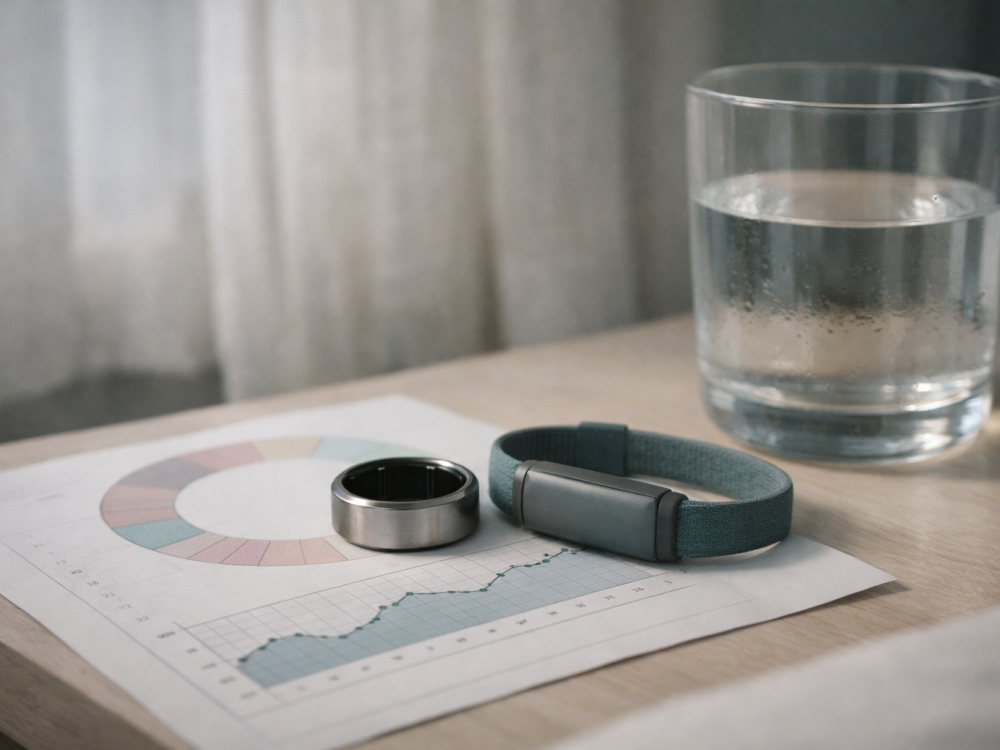
Wearable fertility trackers promise something many people deeply want: a clearer, less burdensome way to understand the fertile window. Instead of taking an oral basal body temperature at the same time every morning, some devices collect overnight or continuous physiologic data from a ring, wristband, patch, sensor, or thermometer-like wearable and translate it into cycle insights.
These tools can be genuinely helpful, especially when used with realistic expectations. They do not directly “see” ovulation in the way an ultrasound follicle scan or blood progesterone testing can. Most infer cycle phase from patterns in temperature, heart rate, heart rate variability, sleep, respiratory rate, or urinary hormone metabolites. For people trying to conceive, avoiding pregnancy, or simply learning their cycles, understanding what wearables can and cannot do is essential.
Highlights
Most wearable fertility trackers estimate the fertile window by detecting physiologic patterns, especially temperature shifts and sometimes heart rate, heart rate variability, sleep, respiratory rate, or urinary hormone metabolites.
Temperature-based wearables often confirm a post-ovulatory rise, which is useful for pattern recognition but may be less useful for predicting the most fertile days before ovulation unless combined with algorithms or other signs.
Accuracy varies by device, population, cycle regularity, user adherence, and whether the outcome measured is ovulation confirmation, fertile-window prediction, or pregnancy-avoidance effectiveness.
Wearables can reduce the burden of manual tracking, but they may be less reliable during illness, disrupted sleep, postpartum cycles, perimenopause, polycystic ovary syndrome, or after stopping hormonal contraception.
What wearable fertility trackers are
Wearable fertility trackers are consumer devices designed to estimate menstrual-cycle phase and fertile days using biologic signals collected from the body. They may look like a smart ring, wrist wearable, armband, patch, vaginal sensor, or connected thermometer. Some are used with an app that displays predicted fertile days, estimates, cycle length, trends, and sometimes pregnancy or period predictions.
The key distinction is that a wearable collects data passively or semi-passively, often overnight, rather than relying entirely on the user to enter symptoms or take a manually. This can be appealing for people who find standard basal body tracking stressful, inconsistent, or incompatible with shift work or early-morning routines.
However, “wearable fertility tracker” is a broad category. Some devices are primarily -based. Others combine temperature with heart rate, heart rate variability, respiratory rate, sleep metrics, or activity patterns. Some fertility systems are not wearable in the usual sense but include connected home hormone monitors that measure urinary metabolites such as luteinizing hormone or estrogen-related metabolites. The clinical meaning of the output depends heavily on what the device measures and how its algorithm interprets the data.
The biology behind fertility tracking
The is the limited interval during which intercourse or insemination can result in pregnancy. Biologically, it reflects two facts: sperm can survive for several days in fertile , while the oocyte is viable for a shorter period after . The highest-probability days are generally the days leading up to ovulation and the day of ovulation itself.
Hormonal changes drive the observable signs that fertility trackers try to detect. Rising estradiol before ovulation changes and may influence and other physiologic measures. The luteinizing hormone surge precedes ovulation and is what many detect. After ovulation, the corpus luteum produces , which has a thermogenic effect and usually raises ]] or overnight skin .
This timing matters. A rise is typically a retrospective sign: it helps indicate that ovulation likely occurred, but it usually appears after the most fertile days have already begun or passed. By contrast, urinary LH testing can give advance notice of impending ovulation, although it does not prove that ovulation actually occurred. Wearables that rely mainly on ]] must therefore use prior cycle patterns and algorithmic prediction to estimate fertile days before the post-ovulatory temperature shift is visible.
How different wearables collect data
Modern fertility wearables use several types of physiologic inputs. Their value depends on data quality, consistency of wear, and whether the measured signal changes reliably across the cycle for that individual.
- Skin or peripheral temperature: Rings, wristbands, patches, and some sensors measure temperature continuously or at repeated intervals, often during sleep. Continuous overnight measurement may smooth out some of the noise seen with one-time oral readings, but skin temperature is still affected by ambient temperature, illness, alcohol, travel, and sleep disruption.
- Basal –style measurements: Some devices use connected thermometers or sensors to identify the post-ovulatory -related temperature rise. This can support ovulation confirmation when a sustained biphasic pattern is present.
- Heart rate and heart rate variability: Resting heart rate may increase in the luteal phase for some people, while heart rate variability can shift with autonomic nervous system changes. These measures are promising but not specific to ovulation; stress, exercise, infection, medications, and sleep can all alter them.
- Respiratory rate and sleep patterns: Some wearables incorporate these metrics because they can vary with hormonal state and overall physiology. They are usually adjunctive signals rather than direct fertility markers.
- Urinary hormone metabolites: Some connected fertility systems measure LH, estrone-3-glucuronide, or pregnanediol glucuronide. These are not always “wearables,” but they are often discussed alongside fertility tech because they provide hormone-based cycle information.
Algorithms combine these inputs with cycle history, logged bleeding dates, and sometimes user-entered information such as , symptoms, intercourse, or results. The app then labels days as higher fertility, lower fertility, predicted ovulation, or confirmed ovulation depending on the product design.
Accuracy: what the evidence can and cannot tell us
Accuracy is not a single number. A tracker can be good at detecting a shift after but less precise at predicting the in advance. It can estimate cycle phase reasonably well in people with regular ovulatory cycles yet perform poorly in people with irregular cycles. It can also be accurate in a study setting but less reliable in ordinary life if the device is worn inconsistently.
Evidence reviews suggest that many fertility devices rely on , skin temperature, urinary hormone metabolites, or combinations of physiologic data. Temperature-based methods are biologically plausible because progesterone raises temperature after , but this same feature limits their predictive power: by the time a sustained rise is clear, may already have happened. Continuous skin-temperature monitoring may improve convenience and trend detection compared with a single morning measurement, but it does not eliminate confounding factors.
Wearables that use multiple signals may better differentiate broad cycle phases, such as follicular versus luteal phase, than identify the exact day for every user. Studies of wearable cycle tracking are still heterogeneous: devices differ, algorithms are proprietary, sample sizes may be modest, and validation standards vary. Some studies compare predictions with , others with temperature shift, ultrasound, or hormone testing. These outcomes are related but not interchangeable.
For trying to conceive, a wearable may be useful if it helps time intercourse across several potentially fertile days rather than focusing on a single predicted day. For avoiding pregnancy, the stakes are different. Users should look for method-specific effectiveness data, regulatory status where applicable, and clear instructions about abstinence or barrier use on fertile and uncertain days. Anyone for whom pregnancy would pose a major medical, emotional, or practical risk should discuss contraception options with a qualified clinician rather than relying on a device without personalized counseling.
Pros of wearable fertility trackers
For many people, the greatest benefit is reduced daily friction. A ring or wrist sensor worn during sleep can feel easier than remembering a thermometer immediately on waking. This may produce more complete datasets and reduce the guilt or frustration that can come with missed measurements.
- Convenience: Passive overnight data collection can be easier for people with busy mornings, variable wake times, or caregiving responsibilities.
- Richer physiologic trends: Continuous or repeated measurements can reveal patterns that a single daily temperature may miss.
- Cycle literacy: Seeing temperature shifts, predicted periods, and possible fertile windows can help users understand their own cycle variability.
- Helpful for timing conception attempts: When combined with regular intercourse during the , awareness, or , wearables may support better timing.
- Less invasive than clinical monitoring: For general cycle awareness, wearables are far less intensive than repeated blood tests or ultrasound scans.
Emotional benefits also matter. Trying to conceive can make time feel highly charged. A tool that organizes data may help some users feel more grounded. At the same time, more data is not always more reassuring; for some people it can intensify anxiety, especially if predictions change from day to day.
Cons and limitations to consider
The main limitation is that wearable outputs can appear more certain than they truly are. A polished app interface may label a fertile day or date with confidence, but the underlying estimate can be affected by physiology, data gaps, and algorithmic assumptions.
- Temperature often confirms rather than predicts: A is useful, but the most fertile days are before and around ovulation.
- Illness and lifestyle factors can distort signals: Fever, poor sleep, alcohol, jet lag, intense exercise, stress, and some medications can change temperature or heart-rate metrics.
- Irregular ovulation is challenging: Polycystic ovary syndrome, postpartum and breastfeeding states, perimenopause, thyroid disease, hyperprolactinemia, eating disorders, and recent hormonal contraceptive discontinuation can make prediction less reliable.
- Proprietary algorithms are difficult to evaluate: Users and clinicians may not know exactly how the device weights different signals.
- Cost and access vary: Some devices require a subscription, replacement sensors, or compatible smartphones.
- Privacy concerns are real: Reproductive health data can be sensitive. Users should review data storage, sharing, deletion, and consent policies.
Another practical issue is user behavior. If the device must be worn nightly, removed for charging, synchronized with an app, or used with morning hormone tests, missed steps can reduce reliability. A tracker should fit your life, not make you feel that every cycle depends on perfect behavior.
Using a wearable wisely when trying to conceive
If you are , a wearable is best viewed as one source of information rather than the final authority. The most robust approach is often to combine several indicators: predicted , changes, predictor kits, and a later temperature shift that supports .
Rather than timing intercourse only on the app’s single predicted ovulation day, consider the broader fertile interval if that aligns with your clinician’s advice and personal circumstances. Sperm survival means that intercourse in the days before ovulation can be very relevant. A device that helps you identify a several-day window may be more useful than one that encourages over-focus on a precise date.
Seek medical guidance earlier if you have known reproductive conditions, very irregular cycles, absent periods, recurrent pregnancy loss, severe pelvic pain, suspected endometriosis, a history of pelvic inflammatory disease, or if you are over 35 and have been trying for 6 months without pregnancy. People under 35 are often advised to seek evaluation after 12 months of trying, but individual factors can change that timing.
Using a wearable for pregnancy avoidance
Using tracking to avoid pregnancy requires more caution than using it for conception timing. The consequence of a wrong fertile-day estimate is different. If a wearable is being used as part of a fertility awareness-based method, the user needs clear rules for fertile days, uncertain days, barrier use, abstinence, and what to do when data are missing or disrupted.
Some digital fertility products have contraceptive indications in certain jurisdictions, while others are marketed only for cycle tracking or conception support. These are not equivalent. If avoiding pregnancy is important, check the device’s regulatory status, published effectiveness data, and whether its instructions match your cycle pattern and life circumstances.
require learning and consistency. They may be less suitable as a sole method during postpartum cycles, breastfeeding, perimenopause, adolescence soon after menarche, irregular cycles, or periods of frequent travel or disrupted sleep unless guided by an experienced clinician or certified fertility awareness educator.
How to choose a wearable fertility tracker
Before buying a device, clarify your primary goal: cycle awareness, timing conception, confirming patterns, or avoiding pregnancy. Then compare devices based on the signals they measure, the evidence behind their algorithm, comfort, data privacy, cost, and the amount of daily effort required.
- Ask what it measures: Temperature alone, temperature plus cardiovascular signals, urinary hormones, or a combined approach?
- Look for validation: Has the device been compared with accepted ovulation markers such as LH testing, serum hormones, ultrasound, or well-defined temperature criteria?
- Check the intended use: A cycle-awareness tool is not automatically a contraceptive method.
- Consider your cycle context: Irregular cycles, PCOS, postpartum changes, perimenopause, shift work, and sleep disorders may reduce performance.
- Review privacy policies: Understand whether data can be shared, sold, de-identified, exported, or deleted.
- Plan for interpretation: Decide in advance how you will handle conflicting signals, missing data, illness, or an unexpected late period.
A wearable can be empowering when it supports body literacy and informed choices. It becomes less helpful when it creates pressure to micromanage every physiologic fluctuation. If the data are causing significant anxiety, it is reasonable to pause, simplify, or ask a healthcare professional to help interpret patterns.
When to be cautious
- Do not assume a wearable has confirmed ovulation if you have persistent irregular or absent periods; clinical evaluation may be needed.
- If avoiding pregnancy is essential, discuss reliable contraception options with a healthcare professional.
- Fever, poor sleep, alcohol, travel, and some medications can make temperature and heart-rate data misleading.
- Seek care promptly for severe pelvic pain, very heavy bleeding, fainting, or a positive pregnancy test with one-sided pain or bleeding.
- If fertility tracking is increasing distress or compulsive checking, consider simplifying your method and asking for support.
Tools & Assistance
- Track bleeding dates, device predictions, and any ovulation test results in one consistent record.
- Use ovulation predictor kits or cervical mucus observations as complementary information when trying to conceive.
- Bring 3 to 6 months of cycle data to an OB-GYN, reproductive endocrinologist, midwife, or fertility awareness educator.
- Review the device’s privacy policy and app permissions before entering sensitive reproductive health data.
- Seek individualized medical advice if cycles are irregular, periods are absent, or pregnancy has not occurred after an appropriate trying interval.
FAQ
Can a wearable fertility tracker tell me the exact day I ovulated?
It may estimate or retrospectively identify a likely ovulation day, especially if it detects a sustained temperature shift, but it cannot guarantee the exact day for every cycle. Ultrasound monitoring and selected hormone testing are more direct clinical tools.
Are wearable trackers better than basal body temperature charting?
They may be more convenient and can collect more frequent overnight temperature data, but they are still affected by illness, sleep disruption, alcohol, and other factors. Better convenience does not automatically mean perfect accuracy.
Can I use a wearable fertility tracker instead of contraception?
Only use a device for pregnancy avoidance if it is specifically intended for that purpose, you understand the method rules, and you are comfortable with its effectiveness and limitations. A clinician can help you choose contraception that matches your risk tolerance.
Do wearables work with PCOS or irregular cycles?
They may still provide useful cycle information, but prediction is often less reliable when ovulation is irregular or delayed. People with PCOS, absent periods, or highly variable cycles should consider medical guidance.
What should I do if my wearable and ovulation test disagree?
Treat the result as uncertain. LH tests, temperature shifts, and algorithm predictions measure different parts of the ovulatory process. If the pattern repeats or you are trying to conceive without success, discuss the data with a healthcare professional.
Sources
- Facts About Fertility — Wearables and Devices to Track the Fertile Window: A Review
- PubMed Central, National Library of Medicine — Innovative Approaches to Menstruation and Fertility Tracking Using Wearable Devices
- Natural Cycles — How does Natural Cycles Work? | Temperature Birth Control
Disclaimer
This article is for informational purposes only and does not replace personalized medical advice, diagnosis, or treatment. Consult a qualified healthcare professional about fertility concerns, contraception, irregular cycles, or pregnancy symptoms.











Please log in to leave a comment.