
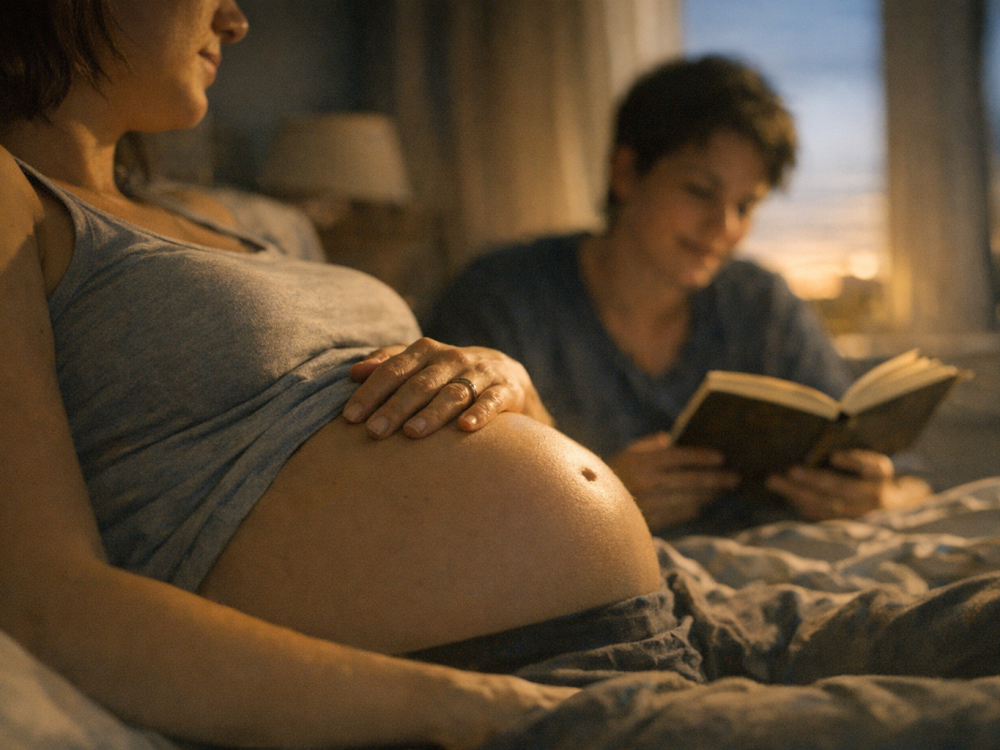
Intro
At 22 weeks of pregnancy, your baby is still small, but the sensory world is becoming more complex. One of the most meaningful developments around this time is the maturation of hearing: the structures of the ear and the auditory pathways are continuing to develop, and many fetuses begin to respond to sound between about 22 and 24 weeks.
If you have started talking, singing, or playing music near your belly, it is natural to wonder what your baby can actually hear. The answer is both fascinating and reassuring: at this stage, sounds are muffled by amniotic fluid, uterine tissue, and your abdominal wall, but low-frequency sounds, including your heartbeat, blood flow, digestion, and the rhythm of your voice, may already be part of your baby’s early sensory environment.
Highlights
Around 22 weeks, fetal hearing is entering an important developmental window, although sound perception is still immature and muffled.
Low-frequency sounds are likely easier for the fetus to detect first, especially internal maternal body sounds and the deeper tones of voices.
Some babies may move, startle, or change activity after sound exposure, but responses are variable and not a reliable measure of well-being.
Loud, prolonged, or very close noise exposure should be avoided when possible; ask your maternity care team about occupational or environmental noise concerns.
Talking or singing to your baby can be a comforting bonding ritual, even though there is no need to use special devices or high-volume stimulation.
What hearing development looks like at 22 weeks
By week 22, the fetus is in the , and the external ears are already more recognizable. Mayo Clinic describes that around 18 weeks, the ears begin to stand out from the sides of the head and hearing may begin. Week 22 sits in the next phase of this progression: the ear structures and auditory pathways are continuing to mature, and early responses to sound may start to appear.
Hearing is not simply a matter of the ears being present. Sound must be transmitted through the outer, middle, and inner ear, then converted into neural signals that travel through the auditory nerve to the brain. In fetal life, these systems are still developing. The cochlea, a spiral-shaped structure in the inner ear responsible for translating vibration into nerve signals, is becoming increasingly functional, but auditory processing remains immature compared with a newborn’s hearing.
This means your baby’s sound world is not crisp or clear. It is more like hearing through layers of water and tissue: rhythmic, vibratory, and filtered. Still, this early exposure may help prepare the auditory system for later recognition of voices and sound patterns.
What your baby may hear inside the uterus
The uterus is not silent. In fact, the fetus is surrounded by a constant internal soundscape. Your heartbeat, blood moving through large vessels, breathing, digestion, and movement all create low-frequency vibrations. Your voice is especially important because it reaches the fetus in two ways: externally through the air and internally through vibration conducted by your body tissues.
At around 22 weeks, low-frequency sounds are thought to be easier for the fetus to detect than high-pitched sounds. This is partly because low-frequency sound travels more effectively through fluid and tissue. The deeper components of voices, music, household sounds, or environmental noise may therefore be more noticeable than sharper, higher-pitched tones.
Common sounds that may reach your baby include:
- Your heartbeat and blood flow
- Your breathing and digestive sounds
- Your voice, especially its rhythm and lower tones
- Other nearby voices, more muffled than your own
- Music or household sounds at moderate volume
- Environmental sounds such as traffic, machinery, or crowded places, depending on intensity and duration
It is important to keep expectations realistic. Your baby is not understanding words or music in the way an older infant would. Instead, the auditory system is receiving patterns of vibration, rhythm, pitch, and intensity.
How babies may respond to surrounding sounds
Many parents first think about fetal hearing when they notice a kick after a loud noise or a burst of movement during music. Research summaries and clinical resources often describe fetal responses to sound beginning around 22 to 24 weeks, with reactions becoming more organized later in pregnancy. By about 25 weeks, some es may move in response to familiar sounds, including voices.
A fetal response can look or feel like a kick, roll, startle-like movement, or a temporary change in activity. However, these patterns are not always easy to interpret. At 22 weeks, movement can still be sporadic. The fetus has sleep-wake cycles, changing positions, and periods of activity that may not be related to sound at all.
Equally important, the absence of a noticeable response does not mean something is wrong. The baby may be asleep, facing a different direction, positioned in a way that makes movement harder to feel, or simply too immature to respond consistently. Placental location also matters; for example, an anterior placenta can cushion movements and make them harder to perceive.
If you are tracking fetal movement later in pregnancy, follow your clinician’s guidance. Formal kick-count routines are usually emphasized later than 22 weeks, when movement patterns are more consistent. If you have sudden concerns about decreased movement at any gestational age, it is appropriate to contact your maternity care team.
Voice, bonding, and the early sound environment
Speaking or singing to your baby at 22 weeks can be emotionally meaningful, even if fetal hearing is still developing. Your baby may begin to experience the rhythm and vibration of your voice before they can distinguish complex sound patterns. Over time, especially in the late second and third trimesters, es may become increasingly able to recognize familiar voices and repeated sound patterns.
There is no need to perform, teach, or stimulate constantly. Ordinary interaction is enough. Reading aloud, singing a song you enjoy, talking during a walk, or letting your partner or loved ones speak near your belly can all be gentle ways to connect. These practices may also support your own emotional well-being during pregnancy.
Some people feel instantly bonded through these rituals; others feel awkward, distracted, or emotionally distant. Both experiences are common. Pregnancy can bring joy, anxiety, grief, fatigue, or ambivalence, sometimes all in the same day. If talking to your belly feels comforting, continue. If it does not, you are not failing your baby. Bonding can happen in many ways and at many times, including after birth.
Music, headphones, and safe sound levels
Many parents wonder whether playing music to the baby improves development. While music can be soothing for the pregnant person and may be part of a pleasant routine, there is no requirement to play special prenatal music or use belly headphones. The fetus already receives a rich sound environment through everyday life.
If you choose to play music, keep it at a comfortable volume for you. Avoid placing speakers or headphones directly on the abdomen at high volume. Because sound transmission through tissue and fluid is complex, a volume that seems moderate externally may still create strong vibration close to the uterus if a device is pressed directly against the belly.
Practical sound safety suggestions include:
- Choose moderate volume rather than loud stimulation.
- Take breaks from prolonged noise exposure.
- Avoid very loud concerts, machinery, or impulse noise when possible.
- Use hearing protection for yourself in loud environments.
- Discuss workplace noise exposure with your clinician, occupational health team, or employer if you are regularly around loud equipment.
Most everyday sounds are not a cause for alarm. The goal is not silence; it is avoiding repeated, intense, or prolonged noise exposure when reasonable.
Week 22 in the broader second-trimester picture
Week 22 often follows the major period, when many people have recently received detailed information about fetal growth and anatomy. If your scan occurred around week 20, you may already have learned about the baby’s position, , amniotic fluid, and visible organ development. Hearing development, however, is a functional process that continues beyond what a standard can fully show.
At this stage, your baby is also developing more coordinated movement, sleep-wake cycling, and sensory responsiveness. These systems do not mature all at once. A baby who reacts dramatically to one sound and ignores another may be behaving entirely normally. Similarly, a quiet day at 22 weeks does not necessarily predict a problem.
If you are comparing your experience with someone else’s pregnancy, try to be gentle with yourself. Fetal position, body shape, parity, placental location, and individual developmental variation all influence what you feel. A person in a second or third pregnancy may identify subtle movement earlier than someone pregnant for the first time.
When to ask your healthcare team
Questions about fetal hearing are usually part of normal pregnancy curiosity, but certain situations deserve individualized medical guidance. If you work in a loud environment, have had exposure to a very loud blast or accident, take medications known to affect hearing, or have a family history of congenital hearing loss, your clinician can help you understand what is relevant to your pregnancy.
You should also contact your maternity care team if you have concerns about fetal movement, bleeding, fluid leakage, painful contractions, fever, trauma, or any symptom that feels urgent or unusual. Sound exposure alone rarely requires emergency care, but the full context matters.
After birth, newborn hearing screening is the standard way to evaluate early hearing function. Fetal reactions to sound during pregnancy cannot confirm normal hearing, and lack of reaction at 22 weeks cannot diagnose hearing impairment. If there are risk factors, your pediatric or neonatal team can advise on screening and follow-up.
When to seek medical advice
- Contact your maternity care team promptly for a noticeable decrease in fetal movement, especially later in pregnancy when patterns are established.
- Ask for guidance if you are regularly exposed to loud occupational noise, machinery, concerts, firearms, or explosions.
- Seek care after abdominal trauma, falls, fluid leakage, bleeding, painful contractions, or severe abdominal pain.
- Do not use high-volume speakers or headphones pressed directly against the abdomen for fetal stimulation.
- Discuss medication exposures or family history of congenital hearing loss with your clinician rather than relying on fetal sound responses.
Tools & Assistance
- Prenatal visit with an obstetrician, midwife, or maternal-fetal medicine specialist
- Occupational health consultation for workplace noise exposure
- Pregnancy movement awareness guidance from your maternity care team
- Newborn hearing screening after delivery
- A simple bonding routine such as reading, singing, or quiet conversation at comfortable volume
FAQ
Can my baby hear my voice at 22 weeks?
Your baby may begin detecting sound around this stage, especially low-frequency vibration and rhythm. Your voice is likely more prominent than outside voices because it also travels through your body tissues.
Should my baby kick when I play music?
Not necessarily. Some fetuses move after sound exposure, but responses at 22 weeks can be inconsistent. Lack of a kick after music does not by itself indicate a problem.
Is it safe to put headphones on my belly?
It is better not to place headphones or speakers directly on the abdomen at high volume. If you play music, keep it at a comfortable room volume and avoid prolonged loud exposure.
Can loud noises harm fetal hearing?
Everyday sounds are usually not concerning, but repeated or very loud noise exposure may warrant caution. If you work around loud machinery or have had an intense noise exposure, discuss it with your healthcare professional.
Can fetal sound response prove that hearing is normal?
No. Movement in response to sound cannot confirm normal hearing, and no response cannot diagnose hearing loss. Newborn hearing screening after birth is the appropriate early assessment.
Sources
- Mayo Clinic — Fetal development: The 2nd trimester
- Medical News Today — What and when can a fetus hear?
- HealthPartners — When and what your baby can hear in the womb
Disclaimer
This article is for informational purposes only and does not replace personalized medical advice, diagnosis, or treatment. Always consult your obstetrician, midwife, or qualified healthcare professional about concerns during pregnancy.
















Please log in to leave a comment.