
Intro
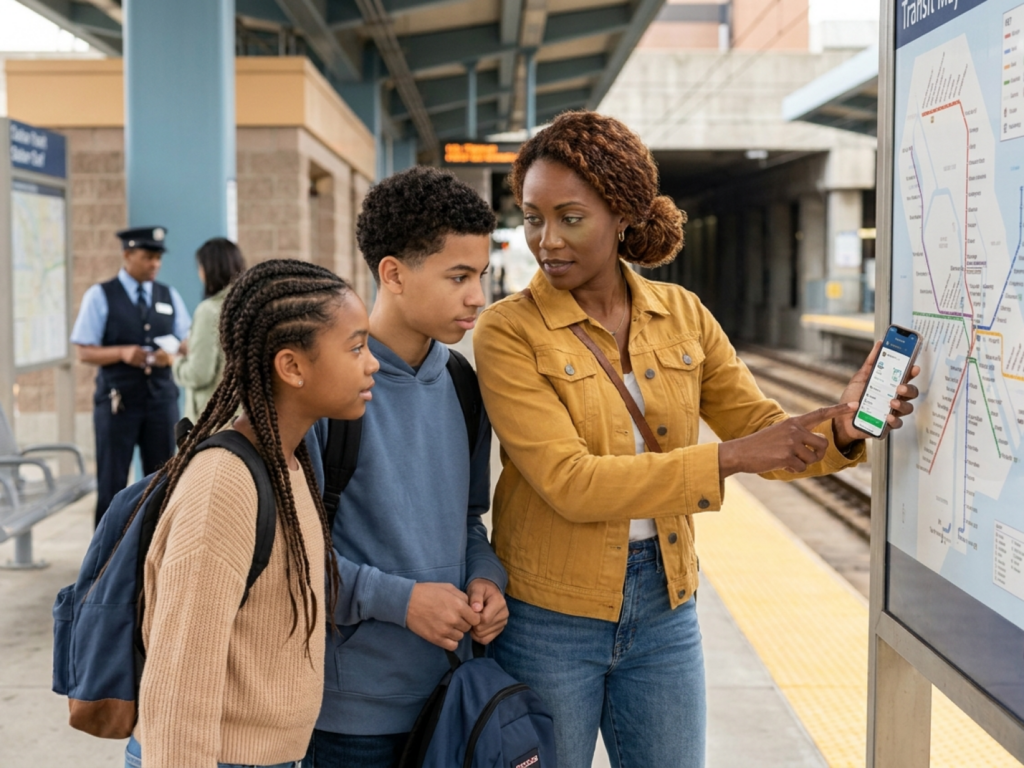
Using buses, trains, trams, and subways can give older children and teens valuable independence. It also requires practical judgment in busy, changing environments: reading signs, managing time, responding to strangers, crossing roads, and knowing what to do when a service is delayed or a plan changes.
Safety teaching works best when it is calm, specific, and practiced before a child travels alone. The goal is not to make young people fearful or to eliminate every possible risk. It is to build reliable routines, confidence, and a clear plan for obtaining help.
Highlights
Most transport safety skills are simple routines that become more dependable through rehearsal.
Platform edges, curbs, moving vehicles, tracks, doors, and traffic require active attention rather than rushed decisions.
A charged phone, backup contact plan, and knowledge of staffed help points can reduce stress during delays or emergencies.
A young person’s perception of safety is shaped by the time, location, crowding, social environment, and previous experiences of a journey.
Independence should increase gradually and reflect the child’s developmental abilities, route familiarity, and individual support needs.
Build readiness before independent travel
Readiness is more than knowing the route. An older child or teen should be able to pause, observe, and make a safer choice when something unexpected happens. Consider whether they can identify the correct stop, read route numbers or destination boards, follow a timetable or journey app, keep track of belongings, and ask an appropriate adult or transport employee for help.
Begin with a familiar journey during daylight and travel together. Let the young person lead parts of the trip: checking the departure point, confirming the vehicle, paying or tapping a travel card, and identifying where to exit. Gradually reduce supervision rather than moving immediately from accompanied travel to a completely unfamiliar solo journey.
Practice realistic disruptions. Discuss what to do if the vehicle is late, a stop is missed, a phone battery is low, a route is diverted, or the child becomes separated from a companion. A simple decision sequence can help: stop moving, move to a safer visible place, check reliable information, contact a trusted person, and ask staff for assistance. Children with developmental, sensory, communication, mobility, or medical needs may benefit from an individualized travel plan developed with caregivers, school staff, and relevant healthcare professionals.
Stay safe at stops, stations, and platforms
Many serious transport injuries occur before a passenger boards. At a bus stop, stand well back from the curb and wait until the bus has fully stopped. Do not step into the road to signal a driver, retrieve a dropped item, or pass another person. Look for traffic in both directions when approaching or leaving a stop, because vehicles may pass a stationary bus or emerge from a side road.
At a rail or subway station, remain behind the marked safety line and away from the platform edge. Never run along a platform, sit near the edge, climb barriers, or enter tracks to retrieve a phone, bag, or other object. Tracks may be electrified, and an approaching train can be difficult to judge accurately. If an item falls onto the track, notify a staff member and follow the station’s procedure.
Encourage young people to use stairs, escalators, and lifts attentively. Hold the handrail where appropriate, keep bags from blocking other passengers, and avoid rushing through closing doors. On escalators, remain facing forward and keep shoelaces, clothing, and belongings clear of moving parts. Follow staff instructions even when the reason for a restriction is not immediately obvious; transport personnel may be responding to a hazard that passengers cannot see.
Board, ride, and exit with attention
Let passengers leave before trying to board. Wait for the vehicle to stop fully, use the designated entrance, and avoid pushing. Keep hands, feet, and bags clear of doors. If the vehicle is crowded, a young person should know where they can stand or sit securely and how to reach an exit without squeezing between closing doors or moving vehicles.
On a bus, use a seat belt if one is provided and remain seated when possible. If standing, hold a stable rail or strap with one hand and keep feet positioned to accommodate sudden braking. Do not distract the driver, block aisles, or lean against doors. On trains and trams, sit or hold a pole, and avoid standing in a vestibule unless necessary. Headphones and phone screens can reduce awareness of announcements, approaching bicycles, doors, or other passengers, so volume should remain low enough to hear the environment.
Before the destination, check the route display or announcements and prepare belongings without standing too early. Exit carefully, looking for a gap between the vehicle and platform where relevant. After leaving, move away from the doors and identify a safe place to orientate. A child who is unsure whether they are at the correct stop should not wander impulsively; they can remain in a visible public area and contact a trusted adult or ask uniformed staff for help.
Manage people, personal space, and unwanted contact
Young people may encounter friendly, distracted, intoxicated, distressed, or aggressive passengers. They do not need to diagnose another person’s behavior or be polite at the expense of their own safety. Teach them to maintain personal space, avoid sharing personal information, and move toward a driver, conductor, station employee, security desk, or group of families when a situation feels uncomfortable.
For unwanted conversation, following, touching, sexual comments, threats, or harassment, a young person can use a brief boundary statement such as, “Please move back,” then leave the area if possible. They should avoid being drawn into an argument. If moving is unsafe, they can speak clearly to a nearby passenger: “I need help. Please stay with me and contact staff.” Trusting an uneasy feeling is reasonable, even when the child cannot explain exactly why the situation feels wrong.
Teach practical Stranger safety for children without suggesting that every unfamiliar person is dangerous. The focus is on behavior and location: choose safe adults and staffed places, do not follow someone to another location, and contact a trusted person before accepting an unexpected offer of help when circumstances allow. If a young person is physically threatened, they should prioritize getting to safety, attracting attention, and contacting emergency services according to local procedures rather than trying to protect property.
Use phones, travel information, and emergency plans wisely
A phone can support safety, but it is not a substitute for situational awareness. Before leaving, charge it, check that the relevant travel app or map is available, and save important contacts. A small power bank may be useful for longer journeys. The child should know how to make an emergency call, share their location when appropriate, and recognize that location sharing should be limited to trusted people and used in ways that respect privacy.
Agree on a communication plan for routine journeys and delays. For example, the young person might send a message when boarding, when changing services, and on arrival. Establish a backup if the phone is lost or dead: a memorized contact number, a safe meeting point, access to a staffed help point, or a trusted adult at the destination. Do not rely solely on a specific vehicle or a precise arrival time, because services can change.
Emergency intercoms, help points, information desks, and customer-service staff can be important resources. Teach the child to state their location using the station name, route, direction of travel, and nearest landmark. In a medical emergency or serious injury, they should alert the driver or staff immediately and call the local emergency number. They should not move an injured person unless there is an immediate danger, and parents should seek professional medical advice after a significant injury or concerning symptoms.
Plan for health, disability, and challenging conditions
Fatigue, pain, dizziness, low blood glucose, seizures, asthma, severe allergies, anxiety, sensory overload, and mobility limitations can affect travel safety. A child with a known health condition should have a travel plan agreed with their parent or guardian and, when appropriate, their clinician or school. The plan may describe warning signs, accessible routes, essential medication or equipment, emergency contacts, and who should be informed. Do not change prescribed treatment or emergency medication arrangements without advice from the responsible healthcare professional.
Weather and lighting also matter. Rain can make floors and platforms slippery; bright sunlight may reduce visibility; extreme heat or cold can increase discomfort; and darkness may make route signs or traffic harder to see. When possible, select well-lit, staffed routes and allow extra time so the young person does not need to run. Consider accessibility features such as step-free entrances, audible announcements, visual displays, priority seating, and the reliability of lifts.
For neurodivergent children or those who experience sensory overload, rehearsing the route with noise-reduction strategies, visual schedules, or a planned quiet location may help. These tools should be individualized rather than assumed to work for every child. Families can consult clinicians, occupational therapists, school personnel, or transport accessibility services when additional support is needed.
Respond to common problems and emergencies
If a child misses a stop, they should remain in a public, visible place and avoid walking through unfamiliar streets while upset or distracted. They can check the official route information, contact their trusted adult, and ask identifiable staff for assistance. If separated from a companion, the safest option is usually to follow a pre-agreed meeting plan rather than searching randomly.
If a bag or phone is stolen, personal safety comes first. Move away from the person involved, tell staff, and contact a caregiver. If a travel card, identification document, or payment card is lost, the child should not chase the person or confront a suspected thief. Families can keep copies of essential information securely and know how to cancel or report lost cards.
For fire, smoke, a collision, a violent incident, or another major emergency, follow staff announcements and move away from danger without pushing. Help younger passengers only if it can be done safely. A person who has been hit, fallen, experienced a head impact, or developed breathing difficulty, chest pain, confusion, fainting, or persistent vomiting needs prompt assessment by emergency or healthcare professionals. Parents should not rely on an online article to determine whether an injury is serious.
Support confidence without blame
Research on young people’s perceptions of personal safety on public transport indicates that feelings of safety can vary with the route, time, crowding, social setting, and prior experiences. A teen who seems confident on one journey may feel apprehensive on another. Listening carefully can reveal practical changes, such as choosing a different transfer point, traveling with a peer, avoiding an isolated area, or arranging a check-in.
Discuss incidents without blaming the child for being targeted, distracted, delayed, or frightened. Ask what happened, what helped, and what could make the next trip safer. Practice child personal safety skills through role-play, including how to say no, move toward help, report harassment, and request assistance from staff. Rehearsal should be brief and repeated over time, not an intimidating test.
Parents and caregivers can model calm problem-solving and respect reasonable privacy as independence grows. Schools can reinforce consistent expectations, provide route-specific guidance, and communicate accessible reporting pathways. If fear, avoidance, panic-like reactions, sleep disturbance, or distress after an incident persists, discuss the situation with a qualified healthcare or mental health professional. Support should address the young person’s emotional wellbeing as well as practical travel arrangements.
Urgent safety reminders
- Never enter tracks or cross platform barriers to retrieve belongings.
- Move away from a threatening person and seek staff or emergency assistance rather than confronting them.
- Do not board or exit while doors are closing or a vehicle is still moving.
- Call local emergency services for serious injury, breathing difficulty, collapse, fire, or immediate danger.
- After a head impact or significant fall, obtain prompt medical advice, especially if concerning symptoms develop.
Tools & Assistance
- A supervised practice journey using the exact route, stops, transfers, and backup options
- A written or memorized emergency contact plan with the young person’s route and relevant health information
- An official transport app, paper timetable, charged phone, and portable power bank
- Station help points, information desks, drivers, conductors, and customer-service staff
- A route-specific accessibility or school travel plan developed with caregivers and professionals when needed
FAQ
What age is appropriate for a child to use public transport alone?
There is no universal age. Consider maturity, route complexity, local conditions, communication ability, health needs, and prior practice. Start with short familiar journeys and increase independence gradually.
What should a teen do if someone is following them?
They should move toward a staffed, busy, well-lit area, avoid going directly home if followed, contact a trusted adult, and tell transport staff or emergency services if there is an immediate threat.
Should children wear headphones on public transport?
They can, but the volume should remain low enough to hear announcements, vehicles, alarms, and nearby people. Screens and headphones should not be used while crossing roads or navigating platform edges.
What if a child becomes lost or misses a stop?
The child should stop in a visible public location, avoid wandering while distressed, check reliable route information, contact a caregiver, and ask identifiable transport staff for help.
When should a transport injury receive medical attention?
Seek urgent help for collapse, breathing difficulty, severe bleeding, suspected spinal injury, confusion, repeated vomiting, or other immediate danger. After a head impact or significant fall, consult a healthcare professional about appropriate assessment.
Sources
- ScienceDirect — Factors Influencing Young Peoples’ Perceptions of Personal Safety on Public Transport
- Healthier Together / NHS — Public Transport
- New York City Public Schools — Safe Travel Tips
Disclaimer
This article provides general educational information and is not a substitute for individualized medical, mental health, emergency, or transport-safety advice. Consult a qualified healthcare professional or local emergency service about injuries, medical conditions, persistent distress, or urgent concerns.















Please log in to leave a comment.