
Intro
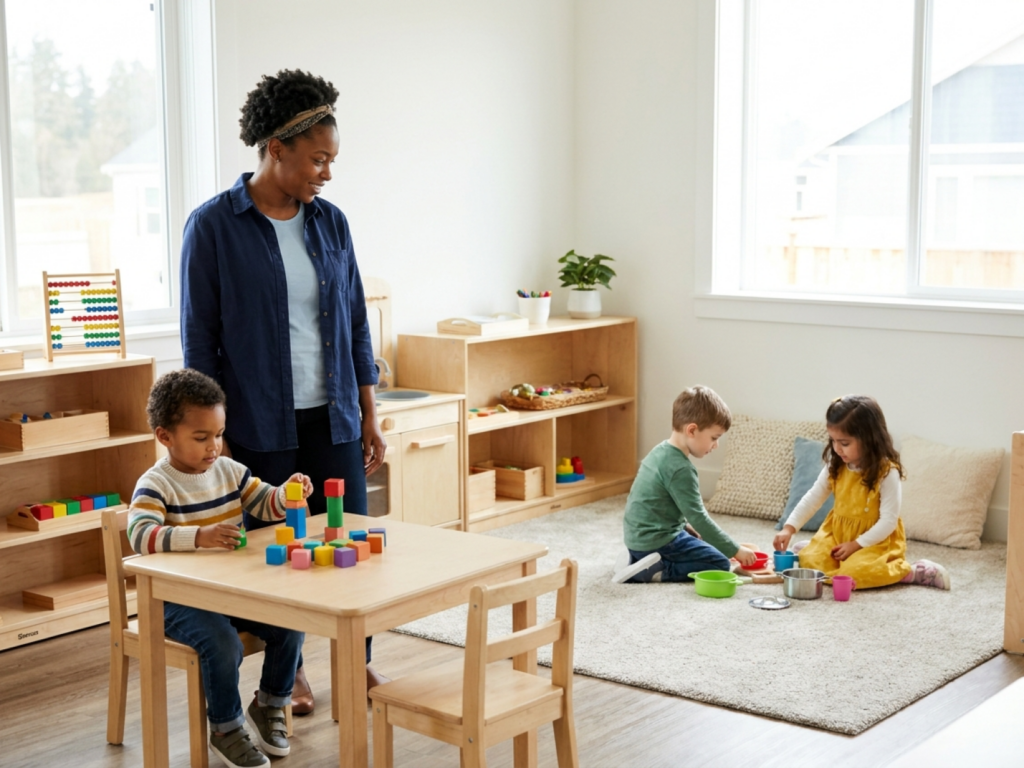
Many parents and caregivers notice that children do not always want the same kind of play every day. Some days a child wants a room full of peers, and other days they seem happiest building quietly on their own. That pattern is often normal. The goal is not to force every child into constant group activity or to assume solo play is always a warning sign. Instead, the question is how to support both group and solo play in a way that fits the child’s temperament, age, and social needs.
Research in young children suggests that solitary play and social play are related to different developmental patterns, not just opposite ends of one scale. Group play can support social competence, while solo play can support concentration, creativity, and self-regulation during play. At the same time, a strong preference for being alone may sometimes reflect lower social engagement, social withdrawal, or difficulty feeling accepted by peers. A balanced approach helps adults notice the difference between healthy independence and signs that a child may need more support.
Highlights
Solo play is not automatically a problem. For many children, it is a normal way to recharge, imagine, and practice independence.
Group play offers different benefits, especially for turn-taking, communication, and the social learning that happens with peers.
A child's preference matters, but so does the broader pattern: mood, flexibility, peer relationships, and daily functioning all add context.
The healthiest balance usually includes both quiet independent time and supported opportunities to play with others.
Why balancing play styles matters
Play is not a single skill. In early childhood, it is a cluster of abilities that includes exploration, communication, imitation, problem-solving, and emotional regulation. A child who enjoys alone time may be practicing different skills from a child who thrives in a busy group, but both are learning. That is why balancing group and solo play is less about choosing the “best” type and more about making sure the child gets enough of both.
Studies of young children show that more social-interactive play is associated with better social competence, while more solitary play is linked in some samples with more problem behavior. That does not mean solo play causes problems. It means the pattern deserves context. A child’s temperament, language level, past peer experiences, and family environment can all shape how they play. Some children are naturally more cautious, more observant, or more sensitive to noise and stimulation. Others may want peers but feel unsure how to join in. In practice, the adult job is to notice whether a child’s play pattern looks flexible and restorative, or rigid and isolating.
What solo play can give a child
Solo play often supports skills that are easy to overlook because they are quiet. When a child plays independently, they may be building executive function, the set of mental processes that includes working memory, flexible thinking, and self-control. They may also be strengthening attention control, because no one else is setting the pace for them. In imaginative play, a child may rehearse ideas, repeat social scripts, or work through feelings at their own speed. This is one reason many clinicians and educators value independent play in children rather than treating it as “just being alone.”
Solo play can also be a form of self-regulation during play. A child who is tired, overstimulated, or recovering from a busy morning may need a quieter mode before they are ready to rejoin others. In that sense, solitude can function as a normal regulatory strategy. The key is whether the child can shift back toward connection when they want to. A child who sometimes chooses a corner, a puzzle, or pretend animals may simply be using a healthy way to focus. A child who never seems able to tolerate others, however, may need closer observation. That is why adults should look at the whole picture, not only the amount of time spent alone.
For some children, a preference for solo play is related to temperament. For others, it may reflect lower social engagement or lower perceived peer acceptance. That distinction matters because a preference is not the same as distress. A child can enjoy solitude and still feel secure, curious, and emotionally connected to others.
What group play adds that solo play cannot
Group play introduces social demands that are hard to reproduce alone. Children must negotiate turn-taking, interpret facial expression and tone, follow shared rules, and repair small conflicts. These are core parts of social competence. They also build frustration tolerance, because another child may change the game, refuse a turn, or introduce a new idea. In a supportive setting, this can be excellent practice in flexibility.
Group play also gives children feedback. They learn how their behavior affects peers, how to ask for help, and how to stay with a shared goal. A cooperative block tower, pretend restaurant, or tag game may seem simple, but under the surface it involves planning, inhibition, memory, and social awareness. That is why adult coaching during preschool play can be so helpful. A brief prompt can reduce confusion, keep a conflict from escalating, and help children notice what the group needs. Children do not need constant adult control, but they often benefit from light scaffolding while they learn how peer play works.
When group play goes well, it can improve confidence. Children who feel accepted by peers often become more willing to approach others again. Over time, that repeated success can shift a child from watching at the edge to participating more fully.
Why some children prefer one mode more than the other
It is tempting to assume that a child who plays alone simply “does not like other children.” In reality, the reasons are often more nuanced. A child’s preference may reflect temperament, sensory sensitivity, speech and language ability, prior peer experiences, or a temporary life stressor. Some children need more time to observe before they join. Others may be more comfortable with one trusted peer than with a busy group. Still others may be using solitary play because they feel uncertain, rejected, or overwhelmed.
The research on solitary play in young children is useful here because it shows that solitary play is not just the opposite of social play. It is associated with specific social-behavior patterns. In one study, children who reported a stronger preference for solitary play also tended to show lower social engagement and lower perceived peer acceptance. That does not prove a problem in every case, but it does mean adults should ask thoughtful questions. Does the child play alone by choice and return to others easily? Or do they seem stuck on the sidelines, wanting connection but unable to access it?
That difference between chosen solitude and social withdrawal is central. Children who choose solo play may still be emotionally comfortable and developmentally on track. Children who avoid peers because of anxiety, conflict, or repeated exclusion may need more support.
How families can build a balanced routine
A balanced child schedule does not need to be complicated. It simply needs room for both recharge time and shared play. Many children do well when the day includes a predictable transition from active social time to quieter independent time. For example, after school or childcare, a child may need a short period of solo drawing, building, or pretend play before they are ready for siblings, neighbors, or a playdate. This kind of rhythm respects energy limits and makes later social time more successful.
At home, adults can support balance by offering open-ended materials that work for both styles: blocks, dolls, art supplies, puzzles, dress-up items, or sensory-safe materials. A child can use these alone or with a sibling. In a classroom or childcare setting, teachers can plan both free-choice centers and small-group play practice. Small groups are often easier than large groups, especially for children who are still learning how to enter play. If a child is hesitant, adult proximity during independent play can provide a bridge; the adult stays available without taking over the activity.
The goal is not to push a shy child into constant interaction. It is to create repeated, low-pressure chances for connection. Over time, many children become more comfortable with joining, leaving, and rejoining play when the environment is predictable and emotionally safe.
When to look more closely and ask for help
It is wise to seek a professional opinion when a child’s play pattern comes with distress, regression, or persistent difficulty functioning. Warning signs can include frequent tearfulness around peers, obvious fear of group settings, strong and ongoing conflict with other children, or a pattern of being unable to enter any play at all. If a child once enjoyed social activity and then suddenly pulls away, that change deserves attention. If there are language delays, loss of skills, extreme rigidity, or a sharp drop in enjoyment, a pediatrician or child development specialist can help decide what to do next.
Other signs may be subtler. A child may say they want friends but seem unable to sustain interaction. They may watch other children from the edge for long periods without joining, or they may repeatedly be excluded because they do not understand the social rules. These situations do not automatically mean a diagnosis, but they do suggest a need for observation and support. Helpful next steps often include talking with teachers, noting play patterns across settings, and asking whether the child has opportunities for both safe solo play and guided peer play.
Most importantly, do not judge the child by one day or one setting. A child who prefers to play alone at a loud birthday party may still thrive in a small, calm group. A child who enjoys group games at school may still need quiet time after lunch. Context matters.
When to get professional advice
- A sudden loss of interest in peers, play, or favorite activities should be discussed with a clinician.
- Persistent distress, panic, aggression, or frequent peer conflict can mean the child needs extra support.
- Regression in speech, behavior, or social skills should not be ignored.
- If a child seems unable to shift between solitude and group play, ask a pediatrician or child psychologist for guidance.
Tools & Assistance
- Keep a simple play diary for 1 to 2 weeks to notice when the child seeks solo time and when they enjoy groups.
- Ask teachers or caregivers how the child behaves in small groups, free play, and transitions.
- Build a weekly rhythm that includes quiet independent play, sibling or peer play, and unstructured downtime.
- Use low-pressure invitations to social play instead of forcing sudden participation.
FAQ
Is it normal for a child to prefer playing alone?
Yes. Many children have a natural preference for quieter, independent play at least some of the time.
Does solo play mean a child is lonely?
Not necessarily. Solo play can reflect temperament, concentration, or a need for recovery from stimulation.
Why is group play still important?
Group play helps children practice turn-taking, shared rules, communication, and conflict repair.
When should parents be concerned?
Concern increases when solitude is paired with distress, persistent peer problems, regression, or loss of skills.
Sources
- PubMed — Young children's preference for solitary play: Implications for social behavior
- Wiley Online Library — ‘I Want to Play Alone’: Assessment and Correlates of Self-Reported Preference for Solitary Play in Young Children
- ERIC — Associations with Social Competence in Young Children: The Role of Social and Solitary Free Play
Disclaimer
This article is for general educational purposes only and is not a diagnosis or a substitute for medical, developmental, or mental health advice. If you are concerned about a child's behavior or development, consult a qualified healthcare professional.
















Please log in to leave a comment.