
Intro
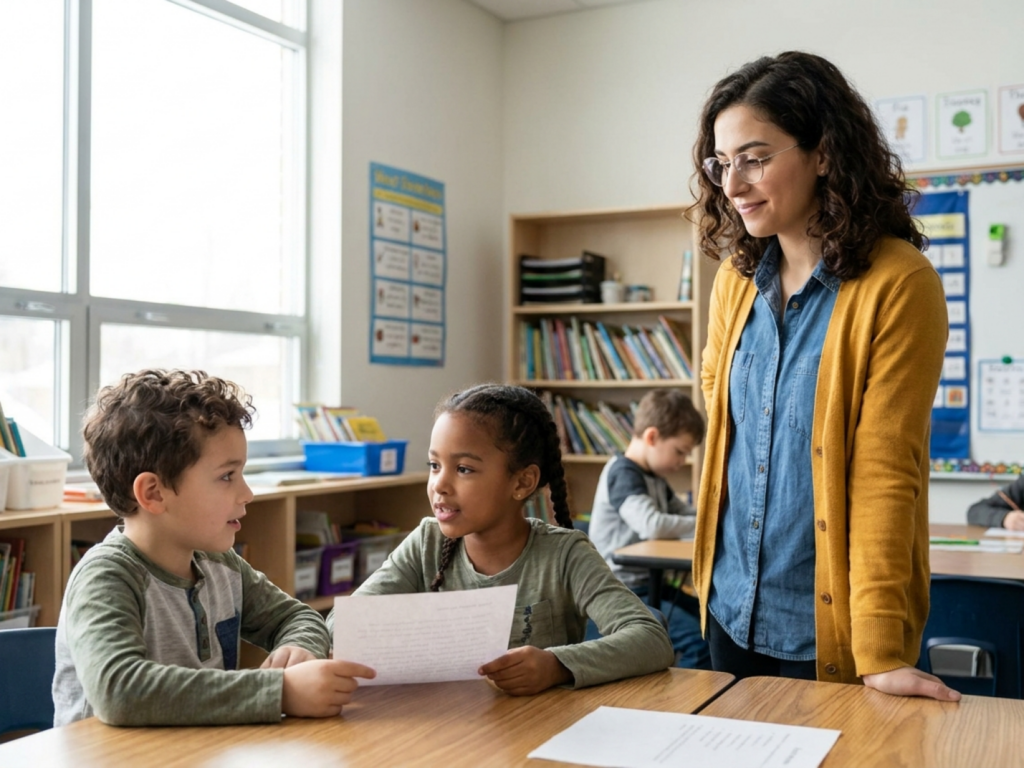
Children often assume that a good friend is someone who thinks alike, wants the same things, and never argues. When a disagreement happens, they may worry that the friendship is over. Adults can help by teaching a simpler and more realistic idea: friends can care about each other, stay connected, and still see things differently.
This lesson matters because conflict is a normal part of growing up. In peer relationships, children practice negotiation, emotional regulation, and perspective-taking. They learn that disagreement does not automatically mean rejection. With patient coaching, children can discover that friendship is not built on perfect agreement, but on trust, repair, and mutual respect.
Highlights
Disagreement is not a sign that a friendship has failed. In childhood, it is often part of learning how to share space, ideas, and feelings.
Children benefit when adults model calm, respectful disagreement instead of pretending that all conflict is dangerous or shameful.
Repair matters more than winning. A child who can listen, apologize, and try again is building durable social skills.
Some conflicts are normal, but repeated cruelty, fear, or exclusion are different and deserve closer attention.
Why disagreement is part of friendship
Children are still learning how to manage desire, fairness, and frustration. That means even close friends will sometimes want different games, different rules, or different turns. Research on middle childhood shows that conflict can be a normal feature of friendship, and it may even happen more often among friends because friends spend more time together and care more about the outcome. In other words, the presence of disagreement does not mean the bond is weak.
This is an important idea for children to hear early. If adults present friendship as a state where everyone always agrees, children may interpret ordinary conflict as a threat. They may panic after a small argument, withdraw, or try to force agreement to keep the relationship safe. A better message is: ‘You can disagree and still be friends.’
That message also supports healthy emotional development. Children who learn to tolerate mild frustration, listen to another view, and return to play after a disagreement are practicing self-regulation and social flexibility. Those skills matter far beyond the playground.
How children usually understand conflict
Young children often think in concrete, immediate terms. If a friend says no, changes the rules, or prefers another partner, the child may experience that moment as rejection rather than simple difference. Their social cognition is still developing, so they may not yet separate ‘We disagree about this game’ from ‘This person does not like me’. Adults can help by naming the difference clearly and calmly.
In young children, disputes also serve a developmental function. Conflict can expose where a child needs more practice with turn-taking, empathy, or flexible thinking. It can reveal whether the child can tolerate another point of view without feeling erased. That is why conflict among friends should not always be treated as a crisis. Sometimes it is part of how friendship skills mature.
For school-age children, the stakes can feel higher because friendships begin to support belonging and identity. A disagreement may feel personal, even when it is about a small issue. Saying this out loud can be reassuring: ‘You are still friends even if you wanted different things today.’ That reassurance protects the child from assuming every rupture is permanent.
What adults can model at home and at school
Children learn a great deal by watching how adults handle disagreement. If caregivers speak respectfully, tolerate different opinions, and repair tension without humiliation, children absorb a template for healthy conflict. If adults mock, escalate, or insist on immediate agreement, children may learn that conflict is dangerous or that the only way to stay safe is to dominate or submit.
Modeling does not require a perfect script. It can be as simple as saying, ‘I see it differently,’ or ‘I need a minute before I answer.’ Adults can also narrate the repair process: ‘We disagreed, but we talked it through and now we are okay.’ This kind of explicit language helps children connect conflict with resolution instead of conflict with loss.
Teachers and caregivers can also normalize difference by pointing out that good classmates and good friends do not think the same way all the time. A child who hears that message repeatedly is more likely to stay calm during a disagreement and less likely to interpret every no as a personal wound.
What to teach children to say
Children do better when they have short, usable phrases ready before conflict starts. The goal is not to make them overly polished or passive; the goal is to help them stay connected while expressing a need. Helpful phrases can include:
- ‘I want a different turn.’
- ‘I do not agree, but I still want to play.’
- ‘Can we find a rule that works for both of us?’
- ‘I need a break, then I can talk again.’
- ‘I am upset, but I am not done being your friend.’
These phrases work because they separate the behavior from the relationship. A child can dislike a choice without rejecting the person. That distinction is central to conflict repair in childhood friendships. It also teaches a useful social principle: the other child has feelings and preferences too, and both perspectives matter.
Adults can rehearse these phrases during calm moments, not only after a blow-up. Role-play with toys, stuffed animals, or pretend scenarios can make the lesson easier to remember. The practice should feel supportive, not scripted or punitive.
When disagreement needs closer attention
Not every conflict is harmless. Children need to know the difference between ordinary disagreement and behavior that is unsafe, relentless, or degrading. A friendship is not healthy if one child repeatedly scares, humiliates, controls, or isolates the other. That pattern is less about ordinary disagreement and more about coercion or relational aggression. It can damage emotional safety in friendships and should not be brushed off as ‘just kids being kids.’
Adults should pay attention when a child becomes persistently withdrawn, tearful, fearful about school, or unusually fixated on one peer relationship. Those signs do not diagnose a problem on their own, but they do suggest the child may need more support. If conflict is frequent and intense, or if a child seems stuck in chronic distress, consult a pediatrician, school counselor, or child mental health professional for individualized guidance.
It is also worth intervening when a child begins to believe that friendship requires silence, compliance, or self-erasure. Children should not feel they must agree with everything to be cared for. Safe friendship allows difference, repair, and boundaries.
Helping friendships stay flexible over time
The long-term goal is not to eliminate disagreement. The goal is to help children become flexible enough to stay connected through disagreement. That flexibility supports friendship quality and peer belonging because children who can repair conflict are less likely to give up on relationships after one hard moment. They are also more likely to choose friends who can tolerate difference in return.
Adults can reinforce this by praising effort, not just harmony. For example: ‘You two had different ideas and still solved it,’ or ‘You came back after the argument and talked.’ This teaches children that repair is a skill. It also encourages them to see friendship as resilient rather than fragile.
Over time, children who learn this lesson often become better collaborators, classmates, and siblings. They can hold two truths at once: ‘I am disappointed’ and ‘This person still matters to me.’ That is a sophisticated social skill, and it grows with practice. The earlier adults make room for respectful disagreement, the easier it is for children to see friendship as something deeper than constant agreement.
When to seek extra support
- Seek help if disagreements are paired with fear, threats, or repeated humiliation.
- Get support if a child begins avoiding school, playdates, or social activities because of one relationship.
- Talk with a professional if the child seems persistently distressed, withdrawn, or unable to recover after conflict.
- Do not assume that every friendship problem is normal if it is ongoing or severe.
Tools & Assistance
- Practice short disagreement scripts during calm family moments
- Ask a teacher or school counselor to observe peer interactions if concerns persist
- Use storybooks or role-play to talk about repair and boundaries
- Keep a simple note of recurring conflict patterns to share with a professional if needed
FAQ
Should I tell my child that friends never fight?
No. It is more helpful to say that friends sometimes disagree and can still care about each other.
What is the main skill children need here?
They need perspective-taking, emotional regulation, and repair skills so they can stay connected without needing constant agreement.
How do I know if a conflict is more serious?
Look for repeated fear, exclusion, control, or distress. If the child seems stuck or unsafe, ask a qualified professional for guidance.
Can practice really help young children handle disagreements?
Yes. Calm rehearsal, role-play, and adult modeling can make respectful disagreement much easier to use in real life.
Sources
- PubMed — Conflict and friendship relations in middle childhood: behavior in a closed-field situation
- ERIC — Conflict and the Friendship Relations of Young Children
- PBS Parents — 5 Ways to Help Kids Handle Disagreements With Friends
Disclaimer
This article is for educational purposes only and does not replace individualized medical, psychological, or school-based advice. If a child has persistent distress, unsafe peer conflict, or major behavior changes, consult a qualified healthcare professional or child mental health specialist.
















Please log in to leave a comment.