
Intro
Siblings often love each other and irritate each other in the same hour. That does not mean something is wrong. Sibling relationships are intense because children compete for attention, have different temperaments, and are still learning how to regulate emotion, tolerate frustration, and share space.
The good news is that sibling closeness can be shaped. With predictable routines, fair limits, and regular opportunities for repair, children can learn not only to fight less, but also to reconnect, cooperate, and enjoy being together.
Highlights
Sibling conflict is common, especially during transitions such as a new baby, a school change, or tired evenings.
Bonding grows best when adults model calm behavior, set clear limits, and avoid favoritism or comparison.
Shared goals, cooperative play, and structured routines help children practice teamwork instead of rivalry.
Repair matters as much as prevention: brief, respectful problem-solving after conflict teaches long-term relationship skills.
Why sibling relationships can feel so intense
Siblings are not simply other children in the home; they are daily relationship partners. They share parents, space, routines, and often attention. That combination makes sibling dynamics especially sensitive to perceived unfairness. A younger child may want to copy an older one, while the older child may feel displaced or burdened by new responsibilities.
When a new baby arrives, jealousy and resentment are normal reactions rather than signs of bad character. The NHS guidance on sibling rivalry notes that children often need help adjusting to the arrival of a baby brother or sister. For many families, the first step is to expect some mixed feelings instead of trying to eliminate them completely.
Age and neurodevelopment also matter. A preschooler may have limited impulse control and a school-age child may understand fairness better but still struggle with self-regulation. Children with developmental differences, sensory sensitivity, or anxiety may need even more structure. The goal is not perfect harmony; it is helping each child build enough emotional safety to stay connected during conflict.
Set the emotional climate before you try to fix behavior
Children usually do better when adults make the rules of the household clear and predictable. Sibling relationships improve when parents avoid comparisons such as who is easier, smarter, or more helpful. Comparison can turn ordinary differences into a status competition. Instead, describe specific behaviors and expectations.
Warmth matters too. The NHS resource recommends special one-on-one time with the older child after a new sibling arrives, along with praise for helpful behavior and firm limits on negative behavior. That combination is powerful because it reduces the sense that attention only arrives during conflict.
Try to notice and name small moments of success. Specific praise for child confidence can sound like, “You waited your turn even though you were annoyed,” or “You used words instead of grabbing.” This kind of feedback strengthens the child’s sense of competence and makes the desired behavior more likely to repeat. When children feel seen for their effort, they are less likely to compete for attention through misbehavior.
Just as important, keep adult emotions steady. If children sense that every disagreement becomes a family emergency, they may become more reactive. A calm, brief response helps create co-regulation, which is the process by which an adult’s steadiness supports a child’s regulation.
Build routines that make cooperation easier
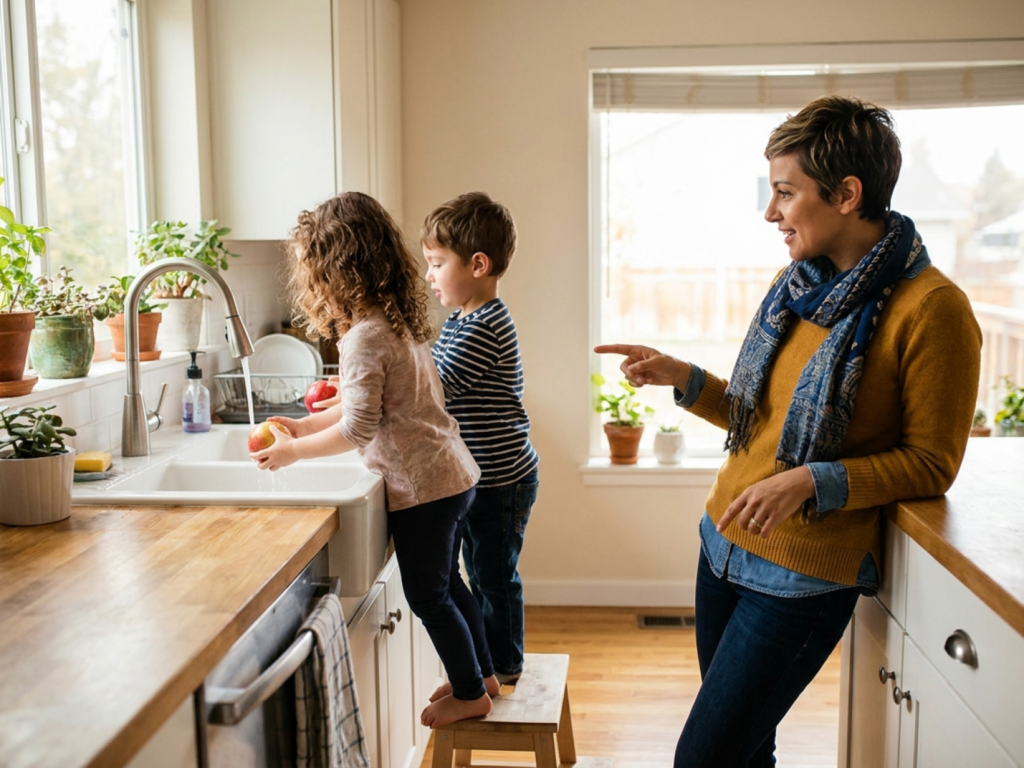
Children often cooperate better when they have a shared goal. That is one reason the idea behind is so useful in sibling work: a joint task gives children something to do together instead of against each other. Shared chores, simple games, building projects, and family rituals can all create that shift.
The research on a parent-focused preventive program for sibling relationships found benefits in areas such as cooperative play, communication, emotion regulation, self-control, and conflict management. In everyday life, those skills can be supported through structure:
- Give children predictable routines for transitions, meals, and bedtime.
- Use short jobs that require teamwork, such as carrying towels, sorting laundry, or setting the table.
- Choose games with turn-taking and a common goal rather than constant competition.
- Keep expectations age-appropriate so cooperation feels possible, not humiliating.
When a task is too hard, children may blame each other. When it is achievable, they can experience success together. That shared success can become a small but meaningful source of bonding. Over time, the sibling relationship starts to include memories of being useful together, not only memories of arguing.
Teach conflict skills, not just obedience
It is tempting to step in with a quick verdict: who started it, who is right, who should say sorry. Sometimes safety requires immediate adult intervention, but if every disagreement is resolved by a parent judge, children do not learn the social skills that sibling life offers. A better long-term goal is teaching children to negotiate disagreements.
That may mean coaching a very brief sequence: stop the behavior, separate if needed, name the problem, let each child say what they want, and identify one next step. Younger children may need simpler language and repeated practice. Older children can begin to use more advanced problem-solving, such as proposing turn schedules or compromise options.
Repair is especially important. After a rupture, repair after conflict with children can include one child checking on the other, replacing or fixing a broken item, or agreeing on a different way to start over. The exact words matter less than the process of acknowledging harm and re-entering connection.
Try to praise the skill, not only the outcome. If two children manage to calm down before a fight escalates, that is progress. If they share a toy for two minutes longer than before, that is also progress. These small wins help children learn that conflict can end without humiliation, and that relationships can survive disagreement.
Protect connection with each child and with the pair
Bonding is easier when each child has a secure place in the family. Individual attention does not have to be elaborate. A few minutes of undivided time can be enough if it is consistent and emotionally present. This reduces the need for children to compete for every bit of adult attention.
It also helps to build sibling rituals that belong to the pair: a bedtime joke, a shared snack, a weekly board game, or a simple walk after school. Repetition matters because rituals create a stable script for connection. Children do not need to be best friends every day; they need reliable opportunities to enjoy each other when the mood is right.
Parents can also use specific praise for child confidence when a child tries a helpful or generous act, especially if it is hard for them. For example, “You handled that without yelling,” or “You gave your sister space and stayed calm.” This type of feedback supports self-efficacy, the belief that one can manage a situation successfully.
At the same time, avoid forcing affection. Some children dislike hugs, teasing, or constant togetherness. Respecting boundaries teaches that closeness is safer when it is chosen, not demanded. Healthy bonding includes room for individuality as well as togetherness.
When sibling conflict needs extra support
Most sibling rivalry is manageable at home, but some patterns need professional attention. Talk with a pediatrician, child psychologist, or family therapist if the conflict is persistent, highly aggressive, or tied to sleep problems, eating changes, school avoidance, regression, or ongoing distress. Seek help sooner if there are threats, injuries, cruelty to animals, or any concern about safety.
Families sometimes need tailored guidance when one child has ADHD, autism, anxiety, language delay, trauma exposure, or other developmental or behavioral differences. That does not mean the child is to blame. It means the siblings may need a different structure for communication, transitions, and repair.
Support can be very practical: coaching, family therapy, parent guidance, or school collaboration. The right plan depends on the child and the family system, so it is better to ask for individualized advice than to guess. Sibling bonding grows more easily when adults treat conflict as a skill-building problem, not a moral failure.
When to get help promptly
- Get urgent support if sibling conflict includes hitting, choking, weapons, or threats of serious harm.
- Ask a professional about persistent withdrawal, sleep disruption, appetite change, or school refusal.
- Do not leave young children unsupervised if arguments regularly escalate fast.
- Seek guidance if one child seems afraid of another or if cruelty is becoming a pattern.
Tools & Assistance
- Pediatrician or family doctor for developmental and behavioral guidance
- Child psychologist or family therapist for sibling conflict coaching
- School counselor if rivalry is affecting school behavior or peer functioning
- A simple family routine chart for turns, chores, and shared activities
FAQ
Is sibling jealousy normal?
Yes. Jealousy, resentment, and rivalry are common, especially after major changes such as a new baby or a move.
Should parents always make children apologize?
Not always. A forced apology can be empty. It is usually better to focus on repair, safety, and what each child will do differently next time.
What helps siblings bond most?
Predictable routines, shared activities, calm adult modeling, and regular one-on-one time with each child.
When should I ask for professional help?
If conflict is severe, persistent, physically unsafe, or linked to distress, developmental concerns, or major behavior changes, speak with a qualified clinician.
Sources
- Wiley / Family Relations — Strengthening children's sibling relationships using an online preventive intervention program for parents
- Child Mind Institute — How to Help Siblings Get Along
- NHS — Sibling Rivalry - The Arrival of a Baby Brother or Sister
Disclaimer
This article is for general educational purposes and does not replace individualized medical or mental health advice. If sibling conflict is severe, persistent, or involves safety concerns, consult a qualified healthcare professional.















Please log in to leave a comment.