
Intro
Sleepwalking can be unsettling to watch, especially when a child seems awake but is not fully conscious. For many families, the biggest concern is not the episode itself but the chance of injury while the child is moving around the house.
In children, sleepwalking is often linked to disrupted sleep, poor sleep habits, or other factors that fragment normal sleep. The focus is usually on safety first, then on finding and reducing common triggers with the help of a healthcare professional when needed.
Highlights
Sleepwalking in children is usually a parasomnia, meaning a partial arousal from sleep rather than deliberate behavior.
The main immediate goal is injury prevention: secure stairs, windows, doors, and other hazards before the child goes to sleep.
Common triggers include sleep deprivation, irregular sleep routines, stress, fever or illness, certain medicines, and sleep disorders.
Most children do better with calm redirection, consistent bedtime routines, and a safer sleep environment.
Recurrent, violent, or injurious episodes deserve medical review rather than guesswork.
What sleepwalking in children usually looks like
Sleepwalking typically occurs when a child is partly aroused from sleep but not fully awake. The child may sit up, walk, mumble, or perform simple actions with a blank or confused expression. In that state, the child may seem responsive in a limited way but is often not truly aware of the surroundings and may not remember the event the next morning.
Families are often reassured to learn that many episodes are brief and self-limited. Still, a child who is moving through the house while partly asleep can bump into furniture, fall on stairs, open doors, or leave the home. That is why the safety plan matters even when the child has had only one or two episodes.
Sleepwalking is one of the Common toddler sleep problems that can make bedtime feel complicated, although it can also occur in older children. The key point is that it is usually not a behavioral problem or intentional misbehavior. It is better understood as a sleep-state disorder, with incomplete awakening from non-REM sleep.
Common triggers and patterns to notice
Several common triggers can make sleepwalking more likely. The strongest and most consistent are sleep deprivation, irregular sleep routines, and disrupted sleep patterns. A child who is chronically overtired may have more fragmented sleep, which can increase the chance of partial arousals at night. Stress can also play a role, including changes in routine, family tension, school pressure, travel, or other emotional strain.
Illness is another frequent trigger, especially when a fever is present. Some medicines can contribute as well, so a new medication should always be considered in the timeline if episodes begin or worsen soon afterward. Sleep disorders that fragment sleep may also be relevant, particularly if a child snores loudly, has breathing pauses, or seems unrefreshed in the morning.
Patterns matter. Some children sleepwalk only during times of sleep loss or illness. Others have clusters of episodes and then long quiet periods. Writing down when episodes happen, what was different that day, and how long the child had been asleep can help a clinician identify the most likely triggers.
How to keep your child safe during an episode
Safety comes first. If you see a child sleepwalking, stay calm and keep your voice low. In most cases, the safest approach is to gently guide the child back to bed rather than shaking, startling, or trying to force full awakening. A quiet, reassuring presence reduces the chance that the child becomes frightened or more confused.
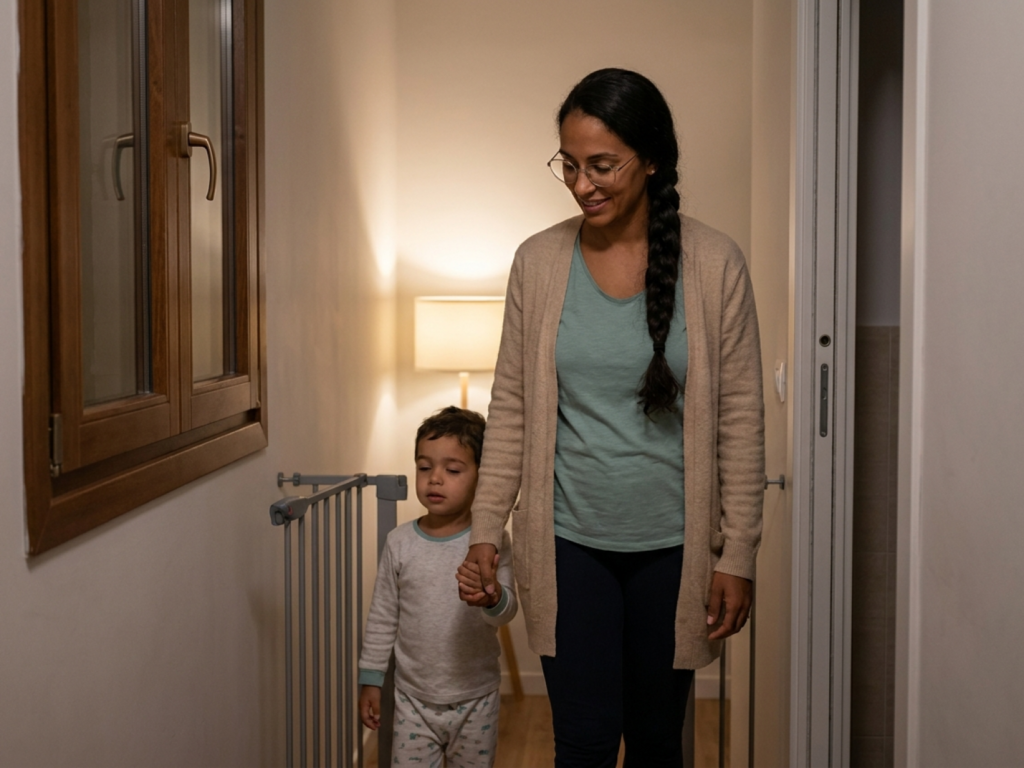
Make the sleeping environment safer before the episode ever happens. Keep doors and windows closed and locked, and use stair gates if your child can access stairs. Remove trip hazards from hallways and bedrooms, such as loose rugs, sharp toys, bags, and cords. Avoid top bunk beds for children who sleepwalk, because a child can fall while climbing down or moving in the dark.
It can also help to think beyond the bedroom. Family kitchens, bathrooms, and entryways may contain glass, sharp objects, medications, or water hazards. A quick nighttime scan can reduce risk. If the child tends to wander, consider door alarms or other alerting systems that are appropriate for your home, and make sure caregivers know the plan.
For families looking for broader home safety for children, the same principle applies: reduce access to anything that could cause a sudden injury while supervision is lower during sleep.
How sleep habits can reduce episodes
Because sleepwalking is often linked to poor sleep habits and disrupted sleep patterns, routine can be a powerful preventive tool. Regular bedtimes and wake times help stabilize the sleep cycle. A calming pre-bed routine, enough total sleep for age, and a predictable sleep environment can all lower the odds of partial arousals.
Try to protect sleep during periods when your child is vulnerable. Illness, jet lag, school stress, overnight events, and inconsistent weekend schedules can all nudge sleep in the wrong direction. If a fever or acute illness is present, more rest and close observation are sensible while the illness runs its course. If a new medicine is involved, ask the prescribing clinician whether sleepwalking has been reported with that treatment.
Stress reduction also matters, even in younger children. A child does not need to articulate anxiety for sleep to be affected. Changes in family schedule, conflict, or overstimulation before bed may show up as restless sleep. A simpler evening routine, dimmer lighting, and less screen exposure before bedtime can help some children settle more predictably, although the right approach varies by child.
If your child has other sleep concerns such as snoring, frequent awakenings, or very restless sleep, bring those details to a clinician. Sleepwalking can coexist with broader sleep disruption, and addressing the underlying sleep issue may reduce episodes.
When to seek medical advice
Occasional sleepwalking that is brief and uncomplicated may simply need safety planning and observation. However, medical review is wise when episodes are frequent, escalating, or happening in a child who is at risk of harm. This is especially true if the child has left the house, approached stairs, handled dangerous objects, or had a fall or other injury during an episode.
It is also appropriate to seek help if sleepwalking starts after a new medication, if it occurs alongside fever or illness and seems unusually severe, or if there are signs of an underlying sleep disorder. Loud snoring, breathing pauses, persistent daytime sleepiness, or highly fragmented sleep are worth mentioning to a healthcare professional. These features do not diagnose anything by themselves, but they can change the evaluation.
Sometimes parents wonder whether the behavior could be something else, such as another parasomnia or a different nighttime event. That is another reason to ask for assessment rather than trying to interpret repeated episodes alone. A pediatrician can help decide whether the pattern sounds typical, whether a sleep specialist is needed, and which risk factors should be addressed first.
Families should also know the pediatric emergency warning signs that follow any nighttime injury, such as significant head trauma, trouble breathing, persistent vomiting, unusual drowsiness, or a child who is not acting normally after an event.
What clinicians usually ask about
A medical assessment is often practical and history-based. Clinicians usually want to know the child’s age, how often episodes happen, what they look like, how long they last, whether the child remembers them, and whether they occur early or later in the night. They will also ask about sleep duration, bedtime routine, stress, recent illness, fever, and any medication changes.
It helps to bring a simple sleep log if you have one. Note the time your child went to bed, whether sleep was delayed, any awakenings, and what happened the next morning. If safe and comfortable for your family, a brief home video can sometimes help a clinician distinguish sleepwalking from other nighttime events. Do not put yourself or your child at risk to capture footage.
Families may also be asked about the sleeping environment. Questions about stairs, locks, windows, bunk beds, and trip hazards are not just housekeeping details; they are part of risk assessment. A clinician may suggest further evaluation if the history points toward recurrent sleep fragmentation or a broader sleep disorder.
Although sleepwalking can be frightening, many children improve once the family understands the pattern and adjusts the environment. The goal is not to panic, but to make the nights safer and the triggers clearer.
Safety warnings
- Keep doors, windows, and stair access secured at night.
- Do not place a sleepwalking child in a top bunk bed.
- Seek prompt medical advice if episodes are frequent, injurious, or linked to a new medicine.
- Treat fever, breathing changes, or a child leaving the house as higher-risk situations.
Tools & Assistance
- Your child's pediatrician or family doctor
- A written sleep diary with episode timing and possible triggers
- A home nighttime safety check for stairs, windows, and trip hazards
- A sleep specialist referral if episodes are recurrent or atypical
FAQ
Should I wake my child during a sleepwalking episode?
Usually no. A calm, gentle redirection back to bed is typically safer than forcing full awakening.
What is the most common trigger?
Sleep deprivation and disrupted sleep routines are among the most common contributors, though fever, stress, medicines, and sleep disorders can also play a role.
Can sleepwalking be prevented completely?
Not always, but regular sleep, trigger reduction, and home safety measures can lower risk.
When should I ask for medical help?
Ask for evaluation if episodes are frequent, cause injury, begin after a new medicine, or happen with snoring, breathing pauses, or strong daytime sleepiness.
Sources
- MedlinePlus — Sleepwalking and children - Medical Encyclopedia
- NHS — Sleepwalking
- Mayo Clinic — Lifestyle And Home Remedies
Disclaimer
This article is for general information only and does not replace medical advice, diagnosis, or treatment. If your child has repeated, risky, or changing sleepwalking episodes, please consult a qualified healthcare professional.
















Please log in to leave a comment.