
Intro
Sleep does not happen in isolation. For children, the bedroom and the wider home setting can either support the brain’s natural sleep drive or keep it on alert. Light, noise, temperature, and even the emotional atmosphere around bedtime all shape sleep latency, sleep continuity, and how rested a child feels in the morning.
The encouraging part is that many environmental changes are practical and low-risk. A cooler, darker, quieter room; fewer screens before bed; and a more predictable evening rhythm can make a meaningful difference. If sleep remains difficult despite these steps, it is worth speaking with a pediatrician or other qualified clinician, because environment is only one part of the picture.
Highlights
A child’s sleep is strongly influenced by temperature, light, noise, and the overall bedtime atmosphere.
Small bedroom changes can support thermoregulation, reduce arousal, and help the body shift into sleep more easily.
Screen exposure and household stimulation can delay sleep onset, even when a child seems tired.
Comfort, predictability, and age-appropriate routines matter as much as the room itself.
Persistent sleep problems, loud snoring, breathing pauses, or daytime impairment deserve medical review.
Why the sleep environment matters
Children sleep best when their surroundings give the nervous system a clear message: it is safe to power down. That message is partly biological. Sleep onset depends on the interaction between homeostatic sleep drive, circadian timing, and the brain’s arousal threshold. When a room is too bright, too warm, or too noisy, the brain receives more sensory input and may stay in a lighter, more alert state.
This is one reason the sleep environment matters even when a child has had an active day. A child may feel tired but still struggle to fall asleep if the room is stimulating or inconsistent from night to night. Reviews of sleep physiology suggest that environmental factors, especially temperature, can influence sleep quality and continuity. In everyday terms, a child does not have to be in a perfect setting, but the bedroom should not be working against sleep.
It is also helpful to remember that children vary. Some are highly sensitive to sound or light, while others notice texture, scent, or the feel of bedding. Improving the environment is not about creating a flawless room; it is about reducing avoidable barriers and making bedtime feel predictable and calm.
Set the room up for comfortable temperature and ventilation
Temperature is one of the most important environmental signals for sleep. The body normally cools as it prepares for rest, and a bedroom that is too warm can interfere with that process. Mayo Clinic guidance recommends a cool room, and the physiology literature supports the idea that thermal comfort can improve sleep continuity. For many children, that means aiming for a room that feels slightly cool rather than warm or stuffy.
Practical adjustments often help more than people expect. Lightweight bedding, breathable pajamas, and avoiding heavy blankets can reduce overheating. In warmer seasons, a fan may improve comfort by moving air and lowering the sensation of heat. In cooler months, it can still help to avoid an overly hot bedroom and to use layers that can be adjusted easily.
Ventilation matters too. A room that feels stale, humid, or crowded can be harder to settle into. Opening a window when safe, using a fan, or simply making sure the room is not packed with unnecessary items can make the space feel calmer. If a child wakes sweaty or complains of being hot, that is a useful clue that the room may need adjustment.
Use light and sound to lower nighttime stimulation
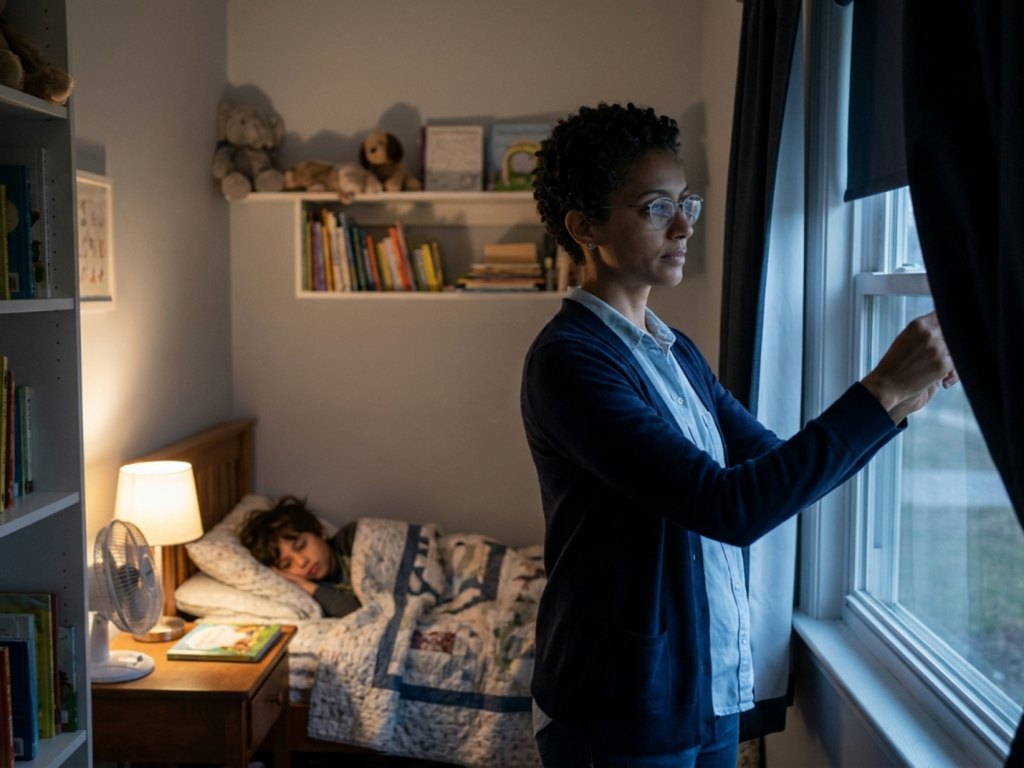
Light is a powerful cue for the circadian system. Bright evening light can delay sleepiness, and even small amounts of light can matter for some children. Room-darkening shades, blackout curtains, or heavier window coverings can help create a stronger contrast between day and night. If a child prefers some light, choose the lowest level that still feels reassuring, ideally a dim and indirect night-light rather than a bright lamp.
Noise is the other major source of nighttime arousal. Intermittent sounds are often more disruptive than steady sounds because the brain keeps orienting toward them. That is why a quiet room, a fan, or other stable background sound can help. In older children who can use them safely, earplugs may be an option, but for younger children it is usually better to address the environment itself rather than rely on devices that are not age-appropriate.
Screen exposure deserves special attention. The combination of light, mental engagement, and emotional stimulation can push sleep farther away. A helpful target is to reduce evening screen exposure well before bed and to keep screen use before bedtime out of the last part of the routine. This is especially relevant when a child says they are sleepy but remains mentally “switched on” after videos, games, or messaging.
Families often notice that the bedroom becomes easier to settle into once light and sound are simplified. That can be one of the most effective forms of sleep hygiene for school-age children.
Make comfort predictable with bedding, texture, and routine
Comfort is not only about softness. It also includes predictability. Children often sleep better when the physical cues at bedtime are consistent: the same pajamas, the same blanket, the same position of the lamp, and the same sequence of quiet activities. Repetition lowers uncertainty, which can reduce pre-sleep arousal.
Some children are especially sensitive to sensory details. A scratchy tag, a pillow that feels too high, or bedding that traps heat can become a real obstacle to sleep. If a child resists bedtime, it may help to think like a clinician and ask what the body is noticing. Is the blanket too heavy? Are seams bothering the skin? Does the child want more pressure, less pressure, or a different texture? Small changes can be surprisingly meaningful.
A consistent bedtime routine is one of the best ways to turn the room into a sleep cue rather than a place of negotiation. The exact routine does not need to be long or elaborate. A short sequence of washing up, dimming lights, reading, and tucking in can be enough if it happens the same way most nights. For many families, the goal is not perfection but a reliable pattern that helps the child’s brain recognize, “This is the time for sleep.”
If you are also working on independent sleep skills, environmental changes can support that process by making the room feel secure and predictable.
Look beyond the bedroom: home, stress, and neighborhood factors
Sleep is shaped by more than the room where a child sleeps. The wider physical and social environment matters as well. A home with late-night noise, irregular schedules, conflict, or frequent interruptions can keep a child’s nervous system activated even when the bedroom itself looks fine. In other words, a child may have a quiet mattress but still live in a noisy sleep context.
Neighborhood conditions can matter too. Street noise, bright outdoor lighting, shared walls, or repeated disturbances can fragment sleep. If those factors are difficult to change, it may still help to work around them by adjusting room placement, using heavier curtains, or creating a steadier pre-sleep rhythm. The aim is to lower the number of unexpected signals that reach the sleeping brain.
Emotional climate is part of the environment. A rushed, tense, or highly stimulating evening can make a child more alert, even if no one is speaking loudly. Calm transitions, predictable goodnight rituals, and reduced conflict around bedtime can all support sleep. This is especially important for children who worry easily or who need more time to downshift after school, sports, or homework.
For some families, improving the sleep environment means simplifying the whole evening rather than changing only the bedroom. That broader view can make the intervention more realistic and more effective.
When to ask for medical guidance
Environmental changes are useful, but they are not a substitute for medical evaluation when symptoms persist. If a child continues to have long sleep latency, frequent awakenings, loud snoring, breathing pauses, restless sleep, or significant daytime sleepiness despite a good sleep setup, it is sensible to speak with a pediatrician. These features can reflect sleep-disordered breathing, pain, allergies, anxiety, restless legs, or another issue that needs assessment.
It is also worth checking whether the child’s total sleep opportunity matches recommended sleep hours by age. Some children are not sleeping poorly because the room is wrong; they may simply be getting too little sleep for their developmental stage, or they may need a different schedule. A clinician can help interpret patterns in the context of growth, mood, school performance, and family routines.
For infants, a safe infant sleep environment follows separate safety guidance, so families should ask a pediatric clinician for age-specific advice rather than applying older-child strategies automatically. The same caution applies if a child has chronic asthma, eczema, reflux, or sensory concerns, because these can change what “comfortable” means at night.
The main message is encouraging: when the bedroom and the surrounding home environment are aligned with sleep biology, many children settle more easily. When they do not, the right next step is not guesswork but professional support.
Seek medical advice sooner if you notice
- Breathing pauses, gasping, or habitual loud snoring during sleep.
- Persistent insomnia, frequent night waking, or extreme bedtime resistance.
- Daytime sleepiness, irritability, behavior change, or school difficulties linked to poor sleep.
- Chronic pain, itching, reflux, asthma, or nasal congestion that may be disrupting sleep.
- Any concern that the child is unsafe, unusually lethargic, or markedly different from their usual self.
Tools & Assistance
- Blackout curtains or room-darkening shades.
- A thermostat, fan, or room thermometer to monitor bedroom comfort.
- A simple bedtime checklist to keep the routine consistent.
- A pediatrician or pediatric sleep specialist for persistent problems.
- A notebook or sleep diary to track bedtime, awakenings, and morning mood.
FAQ
How dark should a child’s room be?
As dark as is comfortable and safe for the child. Many children sleep better with room-darkening shades and only a very dim night-light if one is needed.
What is the best bedroom temperature for sleep?
A cool, comfortable room is usually best. If a child seems sweaty, restless, or overheated, temperature is a good place to adjust first.
Do screens really affect sleep?
Yes. Evening screen exposure can delay sleep by increasing stimulation and light exposure. Reducing screen use before bedtime often helps.
When should I ask a doctor about sleep problems?
Seek guidance if sleep problems are persistent, severe, or linked to snoring, breathing pauses, daytime sleepiness, or behavior changes.
Sources
- Mayo Clinic — Sleep tips: 6 steps to better sleep
- PubMed — Sleep environments and sleep physiology: A review
- PubMed — Physical and Social Environment Relationship With Sleep ...
Disclaimer
This article is for general educational purposes only and does not replace individualized medical advice, diagnosis, or treatment. If a child’s sleep problems are persistent, severe, or accompanied by snoring, breathing pauses, pain, or major daytime impairment, please consult a qualified healthcare professional.


















Please log in to leave a comment.