
Intro
Bedtime can be a difficult transition for many children. After a full day of stimulation, their nervous system may still feel alert even when their body is tired. A calm, predictable evening can help the child’s arousal level gradually fall so sleep comes more naturally.
A screen free bedtime routine is not about perfection. It is about reducing stimulation, protecting the sleep window, and replacing screens with soothing activities that help the brain and body shift toward rest. Small, consistent changes often matter more than a long checklist.
Highlights
Screens can delay sleep by keeping children mentally engaged and exposing them to light and stimulating content close to bedtime.
A short, repeatable wind-down routine helps the body recognize that sleep is approaching.
Quiet activities such as reading, bathing, talking, or soft music can support relaxation without overstimulating the child.
Consistency matters more than complexity; the same sequence each night often works better than a perfect routine.
If sleep problems are persistent or severe, a pediatric clinician can help look for medical or behavioral causes.
Why screens can make bedtime harder
Many children do not simply “tire out” after the evening. Screens can keep the brain in an alert state through rapid visual changes, games, social interaction, or emotionally engaging content. In sleep medicine, this is one reason screen use close to bedtime is considered a sleep-hygiene problem. Sleep hygiene refers to the daily habits that support healthy sleep.
Light from screens may also suppress melatonin secretion, the hormone that helps signal the body that night has begun. Even when the effect is not dramatic in every child, screen use often creates a second problem: it delays the transition from active play to quiet rest. The child may become more talkative, more emotionally reactive, or more resistant once the device is turned off.
For that reason, trusted medical sources commonly recommend turning off electronic devices about one hour before bedtime and keeping screens out of the bedroom. The goal is to lower stimulation early enough that the child can settle before lights-out, not after it.
What a screen free bedtime routine looks like
A screen free bedtime routine works best when it is predictable, brief, and low-pressure. Think of it as a repeated sequence that gives the child’s brain a clear cue: the day is ending, and sleep is next. For many families, the routine lasts 20 to 45 minutes and includes the same steps in the same order most nights.
A simple structure might look like this: clean up, wash up, put on pajamas, spend a few quiet minutes together, then lights out. The exact order matters less than the repetition. Children often do better when they know what comes next because predictability reduces bedtime negotiation and uncertainty.
It can help to create a gentle boundary around screens before bed rather than removing them abruptly without warning. A countdown, a visual timer, or a family rule such as “devices off after dinner” can make the change feel less abrupt. This is especially useful when the child is transitioning from active play or older children are used to seeing screens as part of evening downtime.
Calming activities that actually help
The best calming activities are quiet, familiar, and not highly stimulating. Many parents are relieved to learn that effective bedtime routines do not need to be elaborate. The purpose is not to entertain the child; it is to support parasympathetic activation, the body’s rest-and-digest response.
Helpful options include:
- A warm bath or wash-up routine, which can become a sensory cue that sleep is approaching.
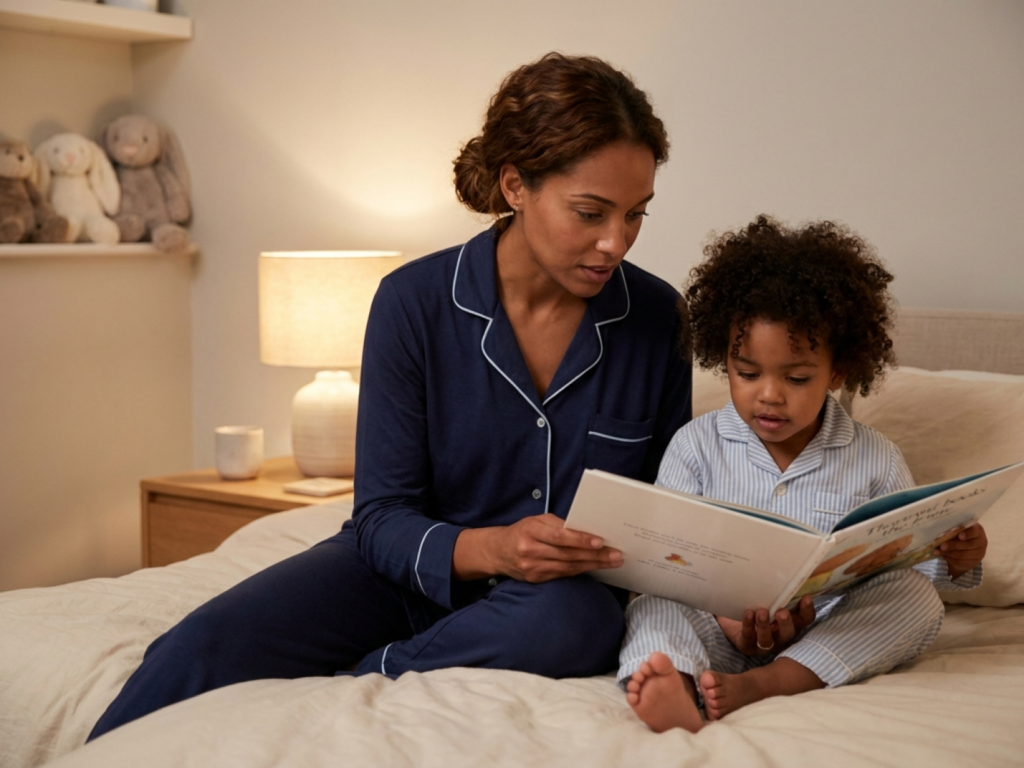
- Reading one or two short books together in soft light.
- Talking about the day with a simple, predictable structure, such as “best part, hard part, tomorrow.”
- Listening to quiet music or a calm bedtime story without a screen.
- Gentle stretching, slow breathing, or a few minutes of cuddling for children who find physical reassurance soothing.
- Journaling, drawing, or worry-writing for older children who need a place to “park” thoughts before bed.
Choose activities that fit your child’s temperament. A child who becomes more energized during pretend play may do better with a short book and lights out, while a child who carries a lot of worry may benefit from a longer decompression step. The best routine is the one your child can repeat calmly night after night.
Age-appropriate ideas for toddlers, preschoolers, and school-age children
Children’s bedtime needs change with development. Toddlers often need more physical reassurance and simpler choices. Preschoolers usually respond well to repetition, visual cues, and short stories. School-age children may want more autonomy and may benefit from being offered two or three acceptable choices within the routine.
For younger children, a screen-free bedtime routine might include bath, pajamas, brushing teeth, one book, a song, and a brief cuddle. For older children, the routine may include shower or wash-up, preparing clothes for tomorrow, a short conversation, reading, and then lights out. Some children also benefit from a dim bedside lamp and a comfort object.
Try to keep stimulating activities, roughhousing, and bright overhead lights out of the last part of the evening. If your child tends to resist sleep, that resistance often reflects a mismatch between the routine and the child’s developmental stage rather than defiance alone. Matching expectations to the child’s age can reduce friction and help the evening feel more manageable for everyone.
How to make the routine realistic for busy families
Consistency is more helpful than perfection. A family does not need an elaborate chart to create healthy screen routines for children. What matters most is a repeatable pattern that is realistic on weekdays, weekends, and stressful days. If the routine only works on ideal nights, it may be too complicated.
Start with one or two nonnegotiables, such as no screens in the last hour before bed and reading a book after pajamas. Then build slowly. Many families find it easier to protect screen boundaries before bed when the whole household follows the same rule, because children are less likely to feel singled out.
It can also help to prepare the environment earlier in the evening: charge devices outside the bedroom, dim lights, set out pajamas, and have books ready. These small changes reduce decision fatigue and make the bedtime sequence feel automatic. Over time, that predictability supports consistent bedtime routines and may reduce the number of reminders a parent needs to give.
If bedtime still feels chaotic, review whether the child is getting enough daytime activity, whether bedtime is too late, and whether naps are interfering with sleep pressure. Sometimes the routine needs a timing adjustment rather than a major overhaul.
When to ask for professional help
Most bedtime struggles improve with a calm routine and clear boundaries, but some sleep problems deserve medical attention. It is worth discussing concerns with a pediatrician if your child snores loudly, pauses breathing during sleep, has frequent night waking with distress, falls asleep unintentionally during the day, or shows a sudden change in mood or functioning.
Also seek advice if bedtime anxiety, repeated crying, or prolonged sleep-onset delay persists despite a stable routine. In some children, sleep disturbance is related to anxiety, restless legs syndrome, sleep-disordered breathing, reflux, neurodevelopmental differences, or medication effects. A clinician can help sort out what is most likely and what kind of support is appropriate.
Sleep problems are common, and parents are not failing when a routine does not work right away. The goal is to understand what your child needs, reduce avoidable stimulation, and build a calmer night in a way that fits your family.
When bedtime problems need medical review
- Loud snoring, gasping, or breathing pauses during sleep.
- Persistent insomnia or very long sleep-onset delay despite a stable routine.
- Frequent night waking with extreme distress or daytime sleepiness.
- New behavior changes, anxiety, or school problems linked to poor sleep.
- Concerns about medication, neurologic symptoms, or developmental differences.
Tools & Assistance
- A printed bedtime checklist or visual schedule
- A dim bedside lamp or warm night light
- Age-appropriate books and a quiet reading corner
- A timer or device reminder for the screen cutoff
- A note pad for worry-writing or tomorrow’s reminders
FAQ
How long before bed should screens stop?
Many medical sources suggest turning off screens about one hour before bedtime. Some children may need more time if screens are especially stimulating.
What if my child only relaxes with a tablet?
That is common, but it can make sleep harder. Try a gradual transition with a timer and replace the tablet with a calming activity the child can repeat every night.
Is reading always better than screen time before bed?
Usually yes, because reading is less stimulating and does not expose the child to bright, interactive content. A very exciting book may still need to be paired with a quieter end to the routine.
What if bedtime turns into a long negotiation?
Keep the routine short, predictable, and consistent. Offering limited choices and starting the routine earlier in the evening can reduce resistance.
Sources
- PubMed Central / NIH — Screen time and sleep in children
- Mayo Clinic — Child sleep: Put preschool bedtime problems to rest
- NIH MedlinePlus Magazine — 7 tips for managing screen use
Disclaimer
This article is for general educational purposes only and is not a substitute for medical advice. If your child has persistent sleep problems, loud snoring, breathing concerns, or major daytime symptoms, please consult a pediatric healthcare professional.


















Please log in to leave a comment.