
Intro
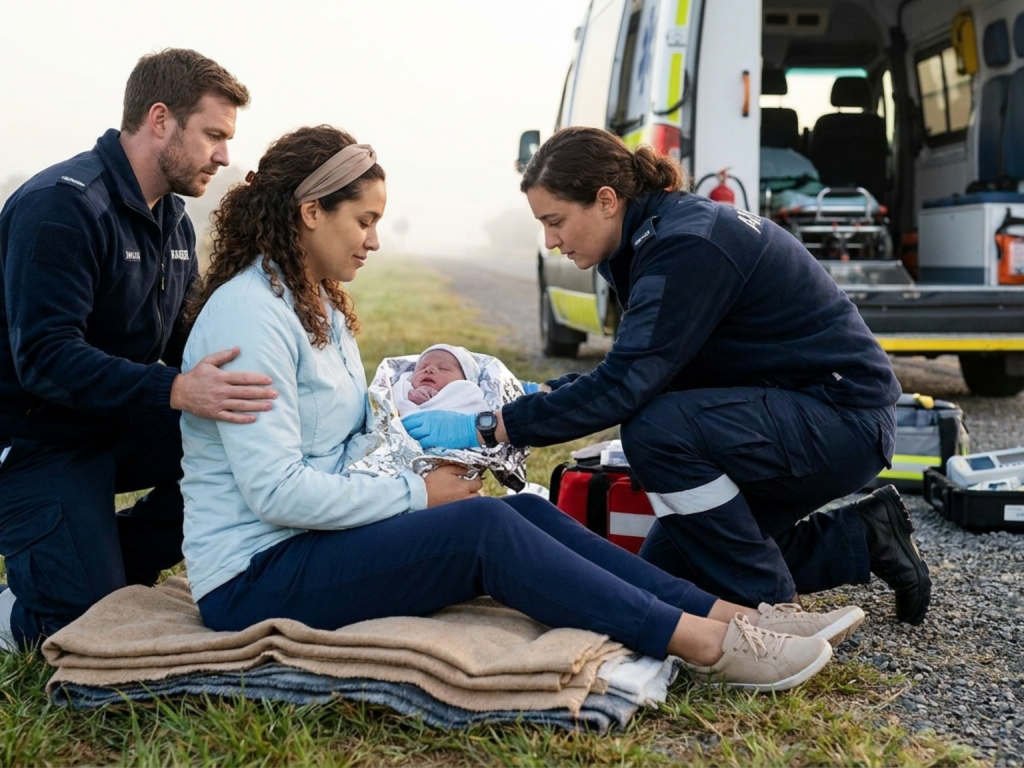
A birth in an unexpected place can become one of the most intense experiences a family ever remembers. Labor may progress rapidly in a car, at home before planned transfer, in a public setting, or in an emergency department entrance. Although the circumstances can feel chaotic, the essential priorities remain clear: obtain emergency help, support the birthing person, protect the newborn from heat loss, and arrange prompt clinical assessment.
This kind of story deserves both compassion and medical context. An unplanned out-of-hospital birth is not automatically a sign that anyone made a mistake, and it should not be treated as a model for avoiding maternity care. It is an event in which timing, geography, labor physiology, fetal position, parity, and access to emergency services can all influence the outcome.
Highlights
Unexpected birth stories often involve rapid labor, but the safest response is organized emergency support rather than panic.
Keeping a newborn warm, assessing breathing, and avoiding unnecessary cord handling are practical priorities while help is arriving.
Both the birthing person and baby need formal post-birth assessment, even when they initially appear well.
Emotional reactions may include relief, shock, pride, fear, or distress, and all deserve respectful attention.
When the planned birth setting is no longer reachable
A birth in an unexpected place usually reflects a mismatch between the speed of labor and the time required to reach planned care. This may happen during a first labor, although people who have previously given birth can sometimes experience a shorter or more rapidly progressive labor. Contractions may intensify quickly, the cervix may dilate faster than anticipated, or the urge to push may appear before transport is complete.
Other factors can include distance from a hospital, traffic, weather, limited transportation, uncertainty about whether labor is truly active, or a sudden change in symptoms. In some cases, the pregnancy has been considered uncomplicated; in others, an urgent event such as bleeding, suspected placental separation, malpresentation, or fetal compromise contributes to the emergency. The story alone cannot establish why birth occurred when it did.
Out-of-hospital birth is medically different from planned birth in a facility because equipment, trained personnel, monitoring, medications, neonatal support, and operative services may not be immediately available. Reviews of unplanned out-of-hospital and emergency department births emphasize that rapid access to a higher level of care matters because complications can develop over minutes, even when labor initially appears normal.
A calm narrative can therefore hold two truths at once: the family may have managed an extraordinary situation effectively, and the event still warrants careful medical evaluation. The fact that a newborn cries promptly or that bleeding seems limited does not remove the need for professional assessment.
The first priorities during an unexpected delivery
When birth appears imminent, the first action is to contact local emergency services and clearly state the location, that delivery is occurring or about to occur, and whether the baby has been born. The dispatcher can provide instructions while sending emergency medical personnel. A second adult, if available, can unlock access, gather clean towels or blankets, and guide responders to the scene.
The birthing person should be supported in a stable position that allows the baby to emerge safely. Unnecessary attempts to delay delivery, pull on the baby, or manipulate the presenting part can cause harm. A trained responder may provide hands-on assistance, but untrained bystanders should focus on support, observation, warmth, and communication with emergency services.
After birth, the newborn should be dried and placed skin-to-skin on the birthing person’s chest when both are stable, then covered with a dry blanket or towel. Heat loss is a significant concern because newborns have a large surface area relative to their mass and limited thermoregulatory capacity. The baby’s face should remain visible, with the airway unobstructed. Wet towels should be replaced with dry material when possible.
Observe whether the baby is breathing effectively, crying, moving, and changing color. Do not routinely suction the mouth or nose, and do not cut or tug the umbilical cord unless directed by qualified emergency personnel or required during resuscitation. If the baby is not breathing normally, is limp, or appears severely cyanotic, follow dispatcher instructions immediately. Neonatal resuscitation may be required, and trained responders should take over as soon as they arrive.
What the emergency team must assess
Emergency clinicians assess two patients: the birthing person and the newborn. For the newborn, the initial evaluation includes respiratory effort, heart rate, tone, color, temperature, and response to stimulation. The team may record Apgar scores at one and five minutes, although an Apgar score is a description of transition rather than a substitute for continuous clinical judgment. If breathing or circulation is inadequate, ventilation and other resuscitation measures take priority.
The newborn also needs examination for traumatic injury, abnormal temperature, hypoglycemia risk, infection risk, and signs that gestational age or the birth process may require additional care. The placenta and umbilical cord are inspected when available, and the team documents the reported time of birth, condition at delivery, cord management, and any interventions performed before arrival.
Assessment of the birthing person includes blood pressure, pulse, respiratory status, temperature, pain, uterine tone, and vaginal blood loss. Clinicians examine for genital tract trauma and evaluate whether the placenta has separated. Retained placental tissue, uterine atony, genital tract laceration, and concealed or underestimated blood loss can cause postpartum deterioration. The absence of dramatic symptoms at first does not exclude these complications.
Emergency department or ambulance staff may establish intravenous access, administer indicated treatment, repair lacerations, monitor both patients, and arrange transfer to obstetric and neonatal services. The exact pathway depends on local protocols, clinical findings, gestational age, and available resources. A family may be transferred even after a reassuring initial examination because observation can identify problems that are not immediately visible.
Why warmth, breathing, and bleeding receive priority
The transition from placental oxygenation to independent breathing is a critical physiological period. Most newborns establish respirations without intervention, but ineffective breathing can rapidly lead to bradycardia and hypoxemia. This is why trained personnel assess respiratory effort and heart rate rather than relying only on whether the baby makes an initial sound.
Thermal protection is equally practical. Drying, skin-to-skin contact, a hat where appropriate, and covering the back and head can reduce heat loss while preserving observation of the face. Excessive handling, bathing, or separating a stable newborn from the birthing person may be unnecessary during the immediate period unless clinical care requires it.
For the birthing person, postpartum hemorrhage is a time-sensitive emergency. Heavy or increasing bleeding, large clots, dizziness, faintness, shortness of breath, confusion, severe weakness, or a rapidly worsening condition requires urgent intervention. A uterus that remains soft rather than firm may indicate uterine atony, one of the important causes of postpartum hemorrhage, but only a clinician can evaluate the overall situation.
Other urgent concerns include chest pain, severe headache, visual changes, seizures, marked abdominal pain, fever, or difficulty breathing. These signs should not be dismissed as ordinary exhaustion after labor. The postpartum period begins immediately after birth, and complications can arise in the hours that follow.
The journey from emergency scene to follow-up care
Once immediate stabilization has occurred, the next priority is coordinated transport and handover. A clear handover includes the pregnancy history, estimated gestational age, onset and pattern of contractions, rupture of membranes, bleeding, fetal movement before birth, time and place of delivery, newborn condition, placental delivery, medications, and any resuscitation or other intervention.
Families may feel that transport is unnecessary when both patients look comfortable. However, clinical assessment can identify subtle respiratory difficulty, temperature instability, anemia, birth trauma, hypertensive disease, infection, retained placenta, or genital tract injury. Newborn screening, preventive care, feeding assessment, blood glucose testing when indicated, and observation are also part of routine post-birth care.
Documentation can be especially valuable after a birth outside the intended setting. The record should preserve what happened without blaming the family or implying that the unexpected location was chosen. Accurate timing and descriptions help clinicians make decisions and can be useful for future pregnancies, particularly if labor was unusually rapid or complications occurred.
Follow-up should include routine postpartum and newborn appointments, review of feeding and elimination, assessment of pain and bleeding, and discussion of warning signs. The care team may also discuss contraception, immunizations, lactation support, pelvic-floor symptoms, sleep, and recovery. The appropriate schedule varies by health system and clinical circumstances.
Making sense of an unexpected birth story
An unexpected delivery can be emotionally complicated. Some parents describe the experience as empowering or astonishing; others feel frightened, exposed, disappointed, helpless, or traumatized. A positive medical outcome does not determine whether the experience was emotionally positive. People can be grateful that the baby is well and still need help processing fear or loss of control.
A structured birth debrief after delivery may help the family understand the sequence of events, what clinicians observed, why transport or interventions were recommended, and whether any findings affect future pregnancy planning. The conversation should use plain language, invite questions, and distinguish known facts from uncertain reconstruction. Shared decision-making remains relevant after birth when discussing follow-up testing, feeding support, and recovery.
Partners, relatives, and bystanders may also need support, particularly if they witnessed resuscitation, severe bleeding, or an apparently life-threatening event. Persistent intrusive memories, nightmares, avoidance, panic, depressed mood, emotional numbness, difficulty bonding, or intense fear of another pregnancy should prompt contact with a qualified healthcare professional or mental health provider.
For future pregnancies, an unexpected birth story can be reviewed with an obstetric or midwifery team. The discussion may cover the prior labor pattern, gestational age, cervical change, distance to care, transfer planning, emergency contacts, and personal warning signs. A flexible birth preferences document can communicate priorities while acknowledging that clinical circumstances may require rapid changes. The goal is informed preparation, not assigning blame or promising that a future labor will follow the same course.
Seek emergency help immediately
- Call emergency services when birth appears imminent or has already occurred outside planned care.
- Treat absent, irregular, or ineffective newborn breathing as an emergency and follow dispatcher instructions.
- Seek urgent help for heavy or increasing postpartum bleeding, faintness, severe weakness, or confusion.
- Do not pull on the baby or umbilical cord, and do not attempt unnecessary cord cutting or placental removal.
- Arrange professional assessment for both patients even when the delivery initially appears uncomplicated.
Tools & Assistance
- Local emergency services and ambulance access
- A written list of maternity and newborn warning signs
- Clean dry towels or blankets kept in the vehicle or birth bag
- A flexible birth preferences document with emergency contact details
- Postpartum, newborn, lactation, and mental health follow-up services
FAQ
What should I do if the baby is born before the ambulance arrives?
Call emergency services, report the exact location, dry the baby, keep the baby warm and breathing unobstructed, and follow dispatcher instructions. Avoid pulling on the baby or cord.
Should the umbilical cord be cut immediately?
Usually, an untrained bystander should not cut or handle the cord unnecessarily. Follow instructions from emergency clinicians, who will consider the condition of both patients and local protocols.
Why is hospital or emergency assessment needed if everyone seems well?
Some newborn and postpartum complications are subtle at first. Professionals can assess breathing, temperature, bleeding, placental delivery, injuries, feeding, and other risks that are difficult to evaluate without clinical equipment.
Can an unexpected birth cause psychological distress?
Yes. Shock, fear, intrusive memories, anxiety, sadness, or a sense of lost control can occur even after a healthy birth. A healthcare professional can provide debriefing, screening, and referral for appropriate support.
Sources
- PubMed — Out-of-Hospital Birth
- PubMed — Out-of-Hospital and Emergency Department Births
- Western Sydney University — What to do when the baby is born before you get to hospital
Disclaimer
This article is for general educational purposes and does not replace emergency services, examination, diagnosis, or individualized advice from a qualified healthcare professional. In an urgent birth or postpartum situation, contact local emergency services immediately.
















Please log in to leave a comment.