
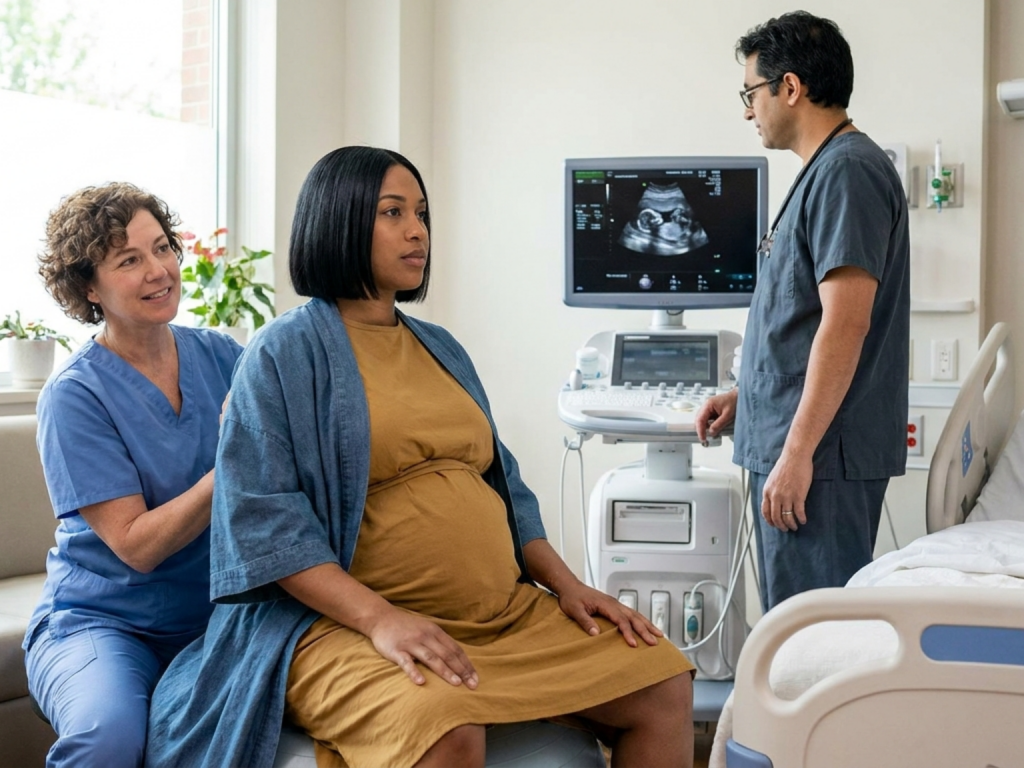
Intro
When a baby is in a posterior or otherwise difficult position during labor, the final part of birth can feel longer, more intense, and less predictable than expected. For parents, this may be emotionally difficult as well as physically demanding, especially when assisted vaginal birth with forceps or vacuum is discussed.
This article explains occiput posterior and related malpositions in medically precise but supportive language. It describes why these positions matter, how clinicians assess them, what assisted birth may involve, and why individualized decision-making with an obstetric team is essential.
Highlights
Occiput posterior position means the baby’s head is down but facing the mother’s abdomen rather than her back, which can make rotation and descent more difficult.
Posterior position is associated with longer labor, back pain, a higher chance of assisted vaginal birth, and increased maternal perineal morbidity in some studies.
Management may include time, position changes, manual rotation, rotational vacuum, forceps, or cesarean birth depending on fetal station, wellbeing, clinician skill, and maternal circumstances.
Assisted birth in malposition is a skilled obstetric procedure, and the safest option depends on the whole clinical picture rather than fetal position alone.
Understanding posterior fetal position
In a cephalic, or head-down, labor the baby’s head usually flexes and rotates so the occiput, the back part of the skull, comes toward the front of the maternal pelvis. This is called an anterior position and is often the most mechanically favorable position for vaginal birth. In an occiput posterior fetal position, the baby is still head-down, but the occiput is directed toward the mother’s back and the baby’s face is oriented more toward the mother’s abdomen.
This position is common enough that many babies rotate out of it before birth. The clinical concern is persistent occiput posterior position, where the head remains posterior late in labor or during the second stage. The fetal head may present a larger diameter to the pelvis, flexion may be less efficient, and descent can be slower. Some parents experience intense sacral or lower back pain, sometimes described as back labor, because the fetal skull presses against posterior pelvic structures.
Occiput transverse fetal position is related but distinct: the baby’s head is sideways in the pelvis. Transverse and posterior positions can overlap in the sense that a baby may rotate through one position on the way to another. Whether this is a problem depends on progress, fetal heart rate, maternal condition, cervical dilation, fetal station, and whether the head is flexed and engaged.
Why posterior positions can make birth harder
Posterior position does not automatically mean something is wrong. Many labors with a posterior baby still end in spontaneous vaginal birth. However, research and clinical experience show that persistent occiput posterior position is associated with more difficult mechanics. Labor may be longer, pushing may be more prolonged, and the birthing person may become exhausted before the baby has completed descent and rotation.
A cohort study of babies in occiput posterior position found that this position was significantly associated with a higher likelihood of instrumental delivery and increased maternal morbidity. Maternal morbidity in this context can include more severe perineal trauma, postpartum hemorrhage, infection risk, or complications related to prolonged labor or operative birth. These associations do not predict an individual outcome, but they help explain why clinicians monitor labor progress carefully when malposition persists.
The higher rate of assisted vaginal birth reflects anatomy and timing. In the second stage, the cervix is fully dilated and the baby may be low enough that vaginal birth is possible, but the head may not be aligned optimally. If there are concerns about fetal wellbeing, maternal exhaustion, or lack of descent, the team may recommend assisted vaginal birth rather than waiting longer. If the head is too high, position is uncertain, or safe vaginal assistance is unlikely, cesarean birth may be the safer option.
Assessment before assisted birth
Before assisted birth for a difficult position, the obstetric team assesses several details. These usually include confirmation of full cervical dilation, fetal head position, station, degree of head molding or caput, maternal pelvis and soft tissue considerations, contraction pattern, bladder emptying, analgesia, and fetal heart rate. Accurate assessment matters because vacuum and forceps work differently depending on the direction of traction and whether rotation is needed.
Clinicians may use abdominal palpation, vaginal examination, and sometimes ultrasound to confirm the fetal occiput position. Ultrasound can be particularly helpful when swelling of the fetal scalp makes position difficult to determine by examination alone. The team also considers consent, pain relief, the availability of senior obstetric expertise, and whether birth should occur in a room where immediate cesarean birth is possible if the attempt is unsuccessful.
Parents may hear terms such as low, mid-cavity, or outlet assisted birth. These describe how far down the fetal head is, and they influence the risk-benefit balance. A low posterior head that needs modest rotation is different from a higher head with uncertain position. In assisted vaginal birth, position, station, and operator experience are central safety factors.
Manual rotation and maternal positioning
When the baby remains posterior, clinicians may first try non-instrumental strategies if the situation is stable. These can include time, supported pushing, position changes, and manual rotation. Manual rotation means the clinician uses a hand during a vaginal examination to gently turn the fetal head toward an anterior position, usually during a contraction and maternal pushing effort. It is a clinical procedure, not a self-care technique, and its suitability depends on the stage of labor and the operator’s judgment.
Maternal positioning may also be used to improve comfort and encourage rotation or descent. Upright positions during labor, side-lying, forward-leaning postures, and the hands-and-knees position for back labor may reduce pressure on the sacrum for some people. After epidural analgesia, position changes after epidural analgesia may still be possible with help from staff, although mobility depends on the type and density of the block and local safety policies.
These approaches are supportive rather than guaranteed. A posterior baby may rotate spontaneously, rotate with manual help, remain posterior but still be born vaginally, or require assisted birth or cesarean birth. The goal is not to force a single pathway but to balance patience with timely intervention when labor progress or fetal wellbeing requires it.
Rotational assisted vaginal birth
When the baby is low enough for vaginal birth but remains in a difficult position, the clinician may consider rotational assisted vaginal birth. This can involve rotational forceps, rotational vacuum, or a sequence in which manual rotation is attempted first and an instrument is then used to complete birth. The purpose is to align the fetal head so traction follows the curve of the pelvis and birth can occur more safely.
Kielland forceps are a specialized rotational forceps historically used for malposition, including persistent occiput posterior or transverse positions. They require substantial training and careful case selection. Vacuum devices may also be used for rotation in some settings, although cup placement and traction direction must be precise. Choice of instrument is influenced by fetal position, fetal station, maternal anatomy, urgency, analgesia, and the clinician’s skill with that instrument.
Evidence on persistent occiput posterior position suggests that instrumental rotation can have an important role, including after failed manual rotation, and may reduce some forms of perineal morbidity compared with non-rotational extraction in selected cases. This does not mean rotational birth is always preferable. It means that, in experienced hands and carefully selected circumstances, correcting the malposition before completing assisted birth may reduce mechanical difficulty.
Forceps, vacuum, and cesarean decision-making
Assisted vaginal birth and second-stage cesarean birth are both significant interventions. Neither is inherently the easy option, and each carries potential benefits and risks. Forceps delivery may provide strong control of the fetal head and can be useful when precise rotation or rapid birth is needed. Vacuum birth may be less invasive for some maternal tissues but is not suitable for every position, station, gestation, or fetal condition. Sequential use of vacuum and forceps is generally approached cautiously because it may increase neonatal and maternal risk.
Cesarean birth may be recommended if the fetal head is high, the position cannot be confirmed, there is suspected disproportion, fetal wellbeing is concerning and vaginal birth is not imminent, or an assisted attempt is unlikely to succeed safely. A cesarean in the second stage can be technically challenging because the head may be deeply engaged in the pelvis. For this reason, the decision is individualized and usually involves senior obstetric input.
Parents should be included in decision-making whenever time allows. Useful questions include: What position is the baby in now? How low is the head? Is rotation needed? Which instrument is being recommended and why? What are the alternatives, including cesarean birth? What happens if the attempt does not work? Clear answers can help parents feel less overwhelmed, even when decisions must be made quickly.
Risks, recovery, and emotional care
Difficult assisted birth can increase the chance of perineal trauma, including obstetric anal sphincter injuries, postpartum hemorrhage, urinary retention, pain, bruising, and emotional distress. Babies may have temporary scalp swelling, bruising, marks from forceps, or vacuum-related swelling. Serious neonatal complications are uncommon but are part of the reason these procedures require careful assessment, consent, and skilled operators.
Recovery should include both physical and emotional follow-up. Parents who have had a complex assisted birth may need assessment of perineal healing, pelvic floor function, bladder and bowel symptoms, pain control, feeding support, and mental wellbeing. It is appropriate to ask for a debrief with the maternity team, especially if events felt frightening, rushed, or hard to understand.
A supportive approach recognizes two truths at once: assisted birth can be the safest way to complete labor in a difficult position, and it can still feel intense or traumatic. People deserve clear explanations, respectful consent, adequate pain relief when possible, and follow-up care that treats recovery as more than simply being discharged with a healthy baby.
Seek urgent help
- Contact maternity triage immediately for reduced fetal movements, heavy bleeding, severe abdominal pain, or concerns about fetal wellbeing.
- During labor, tell the team promptly about overwhelming pain, pressure that feels unusual, dizziness, fever, or a sudden change in symptoms.
- After birth, seek urgent care for heavy bleeding, fever, worsening perineal pain, wound breakdown, difficulty passing urine, or loss of bowel control.
- Ask for senior obstetric review if assisted birth is recommended and you do not understand the indication, position, instrument choice, or alternatives.
- Do not attempt to diagnose fetal position or manage a prolonged second stage without qualified maternity care.
Tools & Assistance
- Ask the maternity team to explain the baby’s position, station, and recommended next step in plain language.
- Request a labor or birth debrief if assisted birth felt confusing, frightening, or rushed.
- Use supported position changes in labor only as advised by your care team, especially after epidural analgesia.
- Arrange postpartum pelvic floor or perineal follow-up if there was significant tearing, forceps birth, or ongoing pain.
- Seek mental health support if memories of the birth feel intrusive, distressing, or difficult to process.
FAQ
Does occiput posterior position always require forceps or vacuum?
No. Many babies rotate before birth or are born vaginally without instruments. Assistance is considered when progress, fetal wellbeing, maternal exhaustion, or head position makes extra help advisable.
Can maternal position turn a posterior baby?
Position changes may improve comfort and sometimes support rotation, but they do not guarantee that the baby will turn. Clinical assessment remains important.
Is rotational forceps birth unsafe?
Rotational forceps can be appropriate in selected cases when performed by a trained clinician. Safety depends on fetal station, confirmed position, urgency, analgesia, and operator experience.
Why not go straight to cesarean birth?
Sometimes cesarean is safest, but if the head is low and assisted vaginal birth is likely to succeed, vaginal assistance may avoid the risks of a technically difficult second-stage cesarean. The choice is individualized.
What should I ask after a difficult assisted birth?
Ask what position the baby was in, why the chosen instrument was used, whether there were tears or other complications, what symptoms need urgent review, and what follow-up is recommended.
Sources
- PubMed Central — Babies in occiput posterior position are significantly more likely to require instrumental delivery and are associated with increased maternal morbidity: a 2-year cohort study
- PubMed — Management of persistent occiput posterior position: a substantial role of instrumental rotation in the setting of failed manual rotation
- NHS inform — How your baby lies in the womb
Disclaimer
This article is for general medical information only and does not replace assessment, diagnosis, or treatment from a qualified healthcare professional. Always follow the advice of your maternity or obstetric team.















Please log in to leave a comment.