
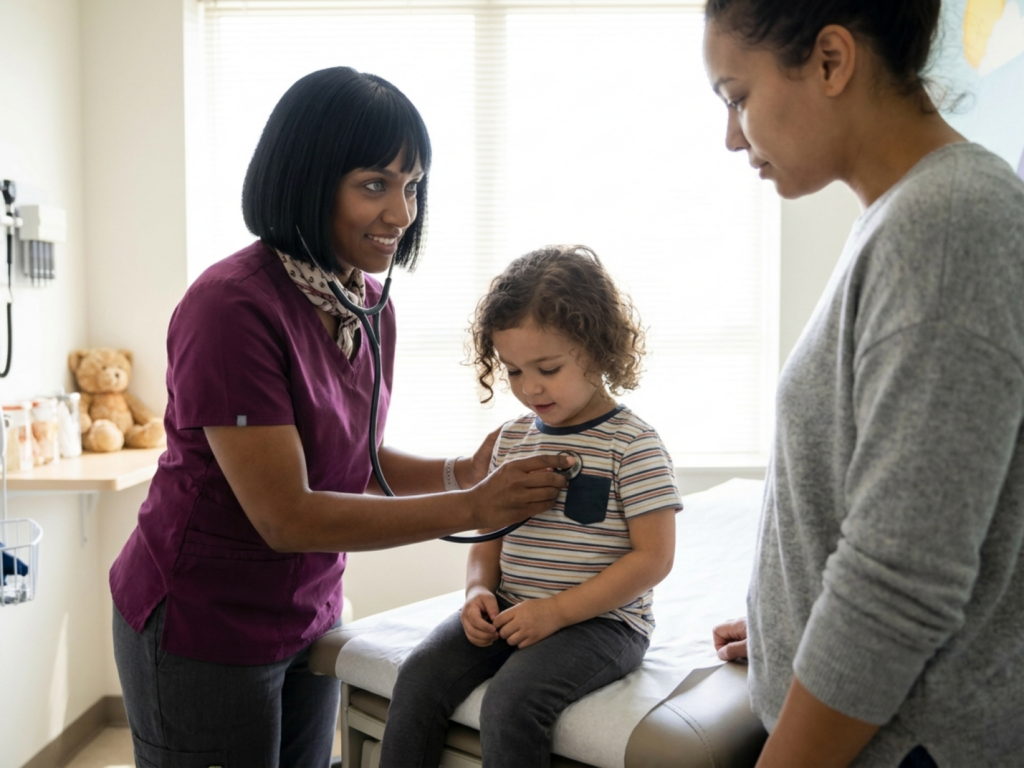
Intro
Respiratory syncytial virus, commonly called RSV, is one of the most frequent causes of respiratory infection in childhood. For many children it looks like a common cold, but in infants, premature babies, and children with certain heart, lung, or immune conditions, RSV can move into the lower airways and cause bronchiolitis or pneumonia.
It is understandable to feel worried when a child is coughing, breathing faster than usual, or feeding poorly. This article explains what RSV can look like, how it spreads, what recovery often involves, and when a child needs prompt medical assessment.
Highlights
RSV usually causes cold-like symptoms, but it can become more serious when it affects the small airways or lungs.
The virus spreads mainly through respiratory droplets, close contact, and contaminated hands or surfaces.
Most children recover within one to two weeks, although cough and congestion may linger.
Babies under 6 months and children with prematurity, chronic lung disease, congenital heart disease, or immune compromise deserve extra caution.
What RSV is and why it matters in childhood
RSV is an enveloped RNA virus that infects the respiratory epithelium, meaning the cells lining the nose, throat, airways, and lungs. Nearly all children encounter RSV early in life, and reinfection is common because immunity after infection is incomplete. Older children and adults often experience a mild upper respiratory tract illness, but younger infants can become significantly unwell because their airways are narrow, their breathing reserve is limited, and mucus or inflammation can obstruct airflow more easily.
In clinical practice, RSV is strongly associated with bronchiolitis, an illness of the small airways most often seen in babies and toddlers. RSV bronchiolitis in infants may cause wheeze, crackles, fast breathing, increased work of breathing, and difficulty feeding. RSV can also contribute to pneumonia, apnea in very young infants, and exacerbations of wheezing disorders in susceptible children. None of these patterns can be reliably diagnosed by appearance alone at home, so a healthcare professional should assess children with concerning breathing, poor hydration, or unusual sleepiness.
RSV tends to circulate seasonally, often peaking in colder months in many regions, although timing varies. Outbreaks are common in childcare settings and households because young children touch shared objects, need close care, and may not cover coughs or wash hands consistently. The medical goal is not to panic about every runny nose, but to recognize which children need closer observation and timely help.
Common symptoms and how they can progress
RSV often begins like an ordinary viral upper respiratory infection. Early symptoms may include a runny or blocked nose, sneezing, mild cough, reduced appetite, low-grade fever, irritability, and tiredness. Some children have no fever at all. In older children, the illness may remain in this cold-like phase and gradually improve with supportive care.
Symptoms can evolve over several days as inflammation and mucus increase. A cough may become more frequent, sleep can be disrupted, and babies may struggle with feeding because they have to coordinate sucking, swallowing, and breathing through a congested nose. Parents often notice that an infant takes smaller feeds, pauses more often, or becomes sweaty or exhausted during feeding. Fewer wet diapers, dry mouth, or lethargy can suggest dehydration risk and should be taken seriously.
Lower airway involvement may show as faster breathing, chest wall retractions, nasal flaring, grunting, wheezing, or a bluish color around the lips. Retractions happen when the skin pulls in between or below the ribs or at the base of the neck because the child is working harder to breathe. Wheeze is a musical sound from narrowed airways, but not every child with RSV wheezes, and wheeze can also occur with asthma, other viruses, or airway irritation.
Very young infants can present differently. Instead of obvious cough and fever, they may have poor feeding, unusual quietness, temperature instability, or pauses in breathing. If a baby is under 3 months, was born prematurely, or has underlying medical complexity, families should have a lower threshold for contacting a clinician. Supportive care for childhood colds may be enough for mild symptoms, but RSV can change quickly in infants, so observation matters.
How RSV spreads between children and families
RSV spreads when infectious respiratory secretions reach another person’s eyes, nose, or mouth. Coughing and sneezing release droplets, and close face-to-face care can transmit the virus directly. Respiratory droplet transmission in children is especially efficient because children commonly cough without covering their mouths, wipe their noses with their hands, and then touch toys, furniture, or caregivers.
RSV can also spread through direct contact, such as kissing a child’s face or sharing cups and utensils, and indirectly through contaminated surfaces. A caregiver may touch a doorknob, toy, crib rail, or tissue with virus-containing secretions and then touch a baby’s face. Hand hygiene is therefore not a small detail; it is one of the most practical ways to interrupt transmission at home and in childcare.
The incubation period is commonly several days, so a child may become ill after exposure before anyone realizes RSV is circulating. Children are often contagious for several days, and some infants or children with weakened immune systems may shed virus for longer. This is one reason RSV can move rapidly through nurseries, siblings, and extended family gatherings.
Risk reduction is most effective when it is layered. Useful steps include washing hands with soap and water, using alcohol-based hand sanitizer when appropriate, cleaning frequently touched surfaces, teaching children to cover coughs, disposing of tissues promptly, and keeping symptomatic children away from young babies when possible. Adults and older siblings with mild cold symptoms should avoid kissing infants, especially on the face or hands. These steps cannot eliminate all risk, but they can reduce exposure intensity and protect the children most likely to become seriously ill.
Which children are at higher risk for severe RSV
Any child can catch RSV, but severe disease is more likely in specific groups. Infants under 6 months are at increased risk because of smaller airways and immature respiratory mechanics. Babies born prematurely may have less developed lungs and fewer transferred maternal antibodies, depending on gestational age and timing. Children with chronic lung disease, significant congenital heart disease, neuromuscular conditions, or immune compromise may also have less physiologic reserve when a respiratory infection increases oxygen demand.
Environmental and social factors can influence exposure and severity. Crowded living conditions, childcare attendance, school-aged siblings, tobacco smoke exposure, and difficulty accessing timely healthcare may increase risk or complicate recovery. Smoke exposure is particularly important because it irritates the airways and can worsen cough and wheeze. If smoking occurs in the household, keeping all smoke completely outside and away from clothing that contacts the child is safer than smoking in another room.
Families of high-risk children should ask their child’s clinician what an individualized RSV plan should include. In some regions and for some infants, preventive immunization products or monoclonal antibody protection may be recommended according to current local guidance. Eligibility, timing, and availability vary, so this is a discussion for a pediatric clinician rather than a decision to make from general information alone.
Risk status does not mean a child will definitely become severely ill, and many high-risk children recover well. It does mean that subtle changes, such as reduced feeding, increasing respiratory rate, or greater sleepiness, deserve prompt attention. When parents feel that a child is “not right,” that observation is clinically meaningful and should be shared with a healthcare professional.
Home care and monitoring during mild RSV
There is no routine home medication that cures RSV itself. Care is usually supportive: helping the child breathe comfortably, maintain hydration, and rest while the immune system clears the infection. Antibiotics do not treat viruses, and cough and cold medicines can be unsafe or ineffective for young children unless a clinician specifically recommends them. Fever or discomfort management should follow pediatric dosing advice based on the child’s age and weight; families should consult a healthcare professional or pharmacist if uncertain.
Nasal congestion can make feeding and sleep difficult, especially for infants. Saline drops or spray and gentle nasal suction for infants may help before feeds or sleep, but suctioning too often can irritate the nose. Offering smaller, more frequent feeds may be easier than expecting a baby to finish the usual volume at once. For older children, fluids, rest, and comfort measures are central. A cool-mist humidifier for congestion may help some children feel more comfortable, but it must be cleaned carefully to avoid mold or bacterial growth.
Monitoring is as important as treatment. Caregivers can watch breathing rate, effort, feeding volume, urine output, alertness, and color. Dehydration signs in children include fewer wet diapers or urination, dry lips or tongue, no tears when crying, dizziness in older children, or unusual drowsiness. Breathing concerns include retractions, grunting, pauses in breathing, persistent fast breathing, or inability to feed because of breathlessness.
It can be emotionally exhausting to watch a child cough through the night. If symptoms feel worse than a typical cold, if a baby is very young, or if caregivers are unsure how hard the child is working to breathe, seeking advice is appropriate. Medical teams would rather assess a child early than have a family wait at home in uncertainty.
Recovery timeline and what to expect
Most RSV infections improve on their own within one to two weeks. The first few days may resemble a cold, and symptoms can peak around the middle of the illness, particularly when lower airway inflammation develops. After the peak, fever typically settles if it was present, feeding and energy gradually improve, and breathing becomes easier. Cough and nasal congestion may persist beyond the point when the child otherwise seems better.
Recovery is not always linear. A child may sleep better one night and cough more the next, or eat well in the morning and seem tired later in the day. What matters is the overall trend: breathing effort should decrease, hydration should improve, and alertness should return. A worsening pattern after initial improvement, new high fever, chest pain in an older child, persistent vomiting, or signs of dehydration should prompt medical advice because complications or another infection may need consideration.
Some infants hospitalized with RSV need oxygen, fluids, or feeding support while the illness runs its course. Hospital care is usually supportive rather than antiviral treatment. Discharge planning often focuses on stable oxygen levels, adequate feeding, and manageable work of breathing. Families may still hear cough or congestion after discharge, so clear follow-up instructions are important.
Return to childcare or school depends on local policy and the child’s clinical recovery. In general, a child should be well enough to participate, have improving symptoms, and not have a fever according to the setting’s rules. Because RSV can still spread from respiratory secretions, ongoing hand hygiene and cough etiquette remain useful even as the child feels better.
When RSV may be confused with other conditions
RSV overlaps with many pediatric respiratory illnesses. Rhinovirus, influenza, COVID-19, parainfluenza, adenovirus, and other viruses can cause fever, cough, runny nose, and wheeze. Common cold symptoms and causes in children often look similar at the start, and testing may or may not be needed depending on the child’s age, severity, risk factors, and local circulation of viruses.
Allergies can also cause nasal congestion, sneezing, and cough from post-nasal drip, but they usually do not cause fever or the same pattern of acute contagious illness. Allergic rhinitis is more likely when symptoms are recurrent, seasonal, itchy, or linked to environmental exposures. Still, allergies in children and symptoms can coexist with viral infections, so persistent or confusing patterns are worth discussing with a clinician.
Asthma or recurrent viral-induced wheeze may become apparent when a child has repeated episodes of coughing or wheezing with respiratory viruses. RSV in infancy has been associated with later wheezing in some children, but this relationship is complex and does not mean RSV alone causes asthma. A child with known asthma or prescribed inhalers should follow their clinician’s action plan and seek urgent help if breathing symptoms do not respond as expected.
Because symptoms overlap, the safest approach is to focus on severity and the child’s whole picture rather than trying to label the infection at home. Breathing effort, hydration, age, underlying conditions, and caregiver concern are often more important than the virus name when deciding whether to seek care.
Seek urgent medical advice if you notice
- Fast, labored, noisy, or paused breathing; grunting; nasal flaring; or chest retractions.
- Blue, gray, or very pale lips, tongue, or face, or any episode of limpness.
- Poor feeding, fewer wet diapers, dry mouth, or other signs of dehydration.
- Unusual drowsiness, confusion, difficulty waking, or a baby who is much less responsive.
- Symptoms in a very young infant, especially under 3 months, or in a child with heart, lung, immune, or prematurity-related risk.
Tools & Assistance
- Call your child’s pediatrician or local nurse advice line for individualized guidance.
- Use urgent care or emergency services for breathing difficulty, dehydration, or color change.
- Keep a simple log of feeds, wet diapers, fever, medicines given, and breathing concerns.
- Ask a pharmacist or clinician before using any cough, cold, or fever medicine in young children.
- Review childcare or school illness policies before your child returns.
FAQ
How long does RSV last in children?
Many children improve within one to two weeks. Cough and congestion can linger, but breathing, hydration, and energy should gradually get better.
Can a child get RSV more than once?
Yes. Reinfection is common because immunity is not complete after one infection, although later infections are often milder in otherwise healthy children.
Does RSV always cause fever?
No. Some children have fever, while others mainly have runny nose, cough, poor feeding, or tiredness. Very young infants may have subtle symptoms.
Do antibiotics treat RSV?
Antibiotics do not treat RSV because it is viral. A clinician may consider antibiotics only if there is concern for a bacterial infection.
When should a baby with RSV be seen by a doctor?
Seek medical advice promptly for babies under 3 months, poor feeding, fewer wet diapers, breathing difficulty, pauses in breathing, bluish color, or unusual sleepiness.
Sources
- MedlinePlus — Respiratory Syncytial Virus Infections | RSV
- NHS — Respiratory syncytial virus (RSV)
- National Center for Biotechnology Information, National Institutes of Health — Respiratory Syncytial Virus Infection in Children
Disclaimer
This article is for general medical information only and does not replace professional diagnosis or treatment. Seek advice from a qualified healthcare professional for concerns about your child’s health.















Please log in to leave a comment.