
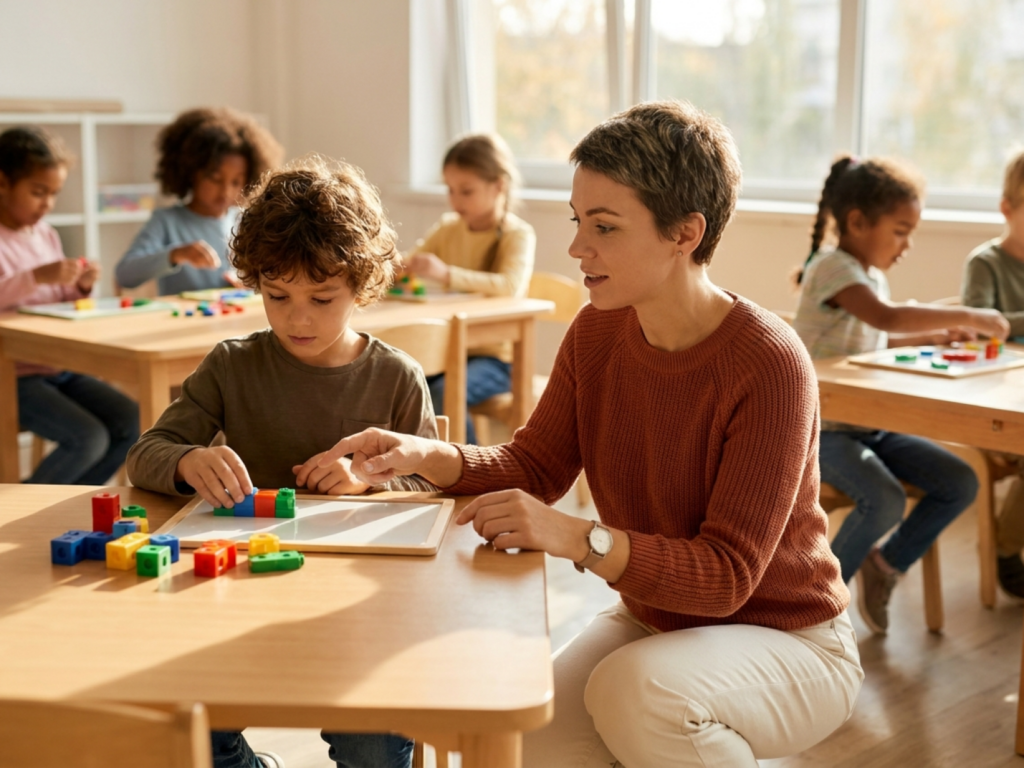
Intro
Self-esteem is a child’s developing sense of personal worth: the belief that they matter, can learn, and deserve care even when they make mistakes. It is not the same as constant confidence, popularity, achievement, or feeling good every day. A child with healthy self-esteem can recognize limitations while still maintaining a stable sense of dignity and belonging.
Because self-esteem develops through relationships, experiences, and interpretation of feedback, it is shaped by families, schools, peers, culture, health, and temperament. Understanding its importance helps adults respond to difficulties with empathy and practical support rather than shame or unrealistic pressure.
Highlights
Self-esteem supports motivation, persistence, emotional regulation, and participation in learning and relationships.
Children build self-worth through repeated experiences of secure relationships, competence, belonging, and respectful guidance.
Low self-esteem may appear as withdrawal, perfectionism, irritability, avoidance, or harsh self-criticism rather than obvious sadness.
Specific encouragement and achievable challenges are generally more helpful than exaggerated praise or comparisons.
Persistent changes in mood, behavior, school participation, eating, sleep, or safety require discussion with a qualified healthcare professional.
What self-esteem means in childhood
Self-esteem is a global evaluation of the self, while self-concept is the broader collection of beliefs a child has about abilities, characteristics, relationships, and identity. These ideas overlap but are not identical. A child may believe they are good at mathematics yet still feel generally unworthy, or they may struggle academically while retaining a strong sense of personal value.
In early childhood, self-esteem is often concrete and closely tied to immediate feedback. A preschool child may feel capable after completing a puzzle or helping with a household task. During school years, children increasingly compare themselves with peers and evaluate competence in several domains, including academics, sports, appearance, friendships, and behavior. Adolescents typically develop more abstract self-evaluations, making social judgment and identity concerns particularly influential.
Self-esteem is also dynamic. It can fluctuate with developmental transitions, failure, conflict, illness, bullying, family stress, or changes in school. A temporary dip does not necessarily indicate a clinical problem. The more relevant concern is a persistent, generalized pattern of self-devaluation that interferes with ordinary activities or causes significant distress.
Why self-esteem supports learning and resilience
A child’s expectations about personal competence influence whether they approach a task, avoid it, or continue after difficulty. Healthy self-esteem does not guarantee academic success, but it can make productive engagement more likely. When children believe mistakes are compatible with being valued, they have greater psychological room to ask questions, tolerate frustration, and use feedback.
This process is related to self-efficacy, the task-specific belief that one can carry out an action or learn a skill. Self-esteem is broader, but the two can reinforce one another. A child who experiences realistic success, receives clear guidance, and notices improvement may develop stronger self-efficacy. Over time, these experiences can contribute to a more stable sense of capability.
Research summarized in a meta-analytic review of 116 studies found that interventions focused on self-esteem could improve self-esteem and self-concept in children and adolescents. The review also identified accompanying positive changes in behavioral, personality, and academic functioning. These findings do not mean that praise alone solves educational or emotional problems. They suggest that strengthening self-perception can be relevant to multiple areas of functioning.
Resilience is not emotional invulnerability. It is the capacity to recover, adapt, seek help, and keep developing after stress. Adults support resilience when they acknowledge disappointment without defining the child by it: “That was difficult, and we can work out the next step.”
Self-esteem, emotional regulation, and relationships
Self-worth and emotional regulation are closely connected. Children who habitually interpret mistakes as evidence that they are bad, stupid, or unwanted may experience disproportionate shame, anger, anxiety, or avoidance. Conversely, a child who feels fundamentally accepted may be better able to reflect on behavior, accept limits, and repair relationships after conflict.
Self-esteem also affects social participation. Children who expect rejection may avoid peers, remain unusually quiet, become defensive, or agree to unwanted behavior to preserve acceptance. Others may respond to insecurity with controlling behavior, boasting, aggression, or perfectionism. These patterns are not reliable proof of a particular diagnosis; they are signals that the child’s internal experience deserves curiosity and careful observation.
Consistent caregiving helps children develop an internal sense of security. Secure connection and unconditional regard mean communicating that the child remains worthy of care while specific behavior is addressed. This is different from permissiveness. Adults can set firm boundaries and still separate the action from the person: “Hitting is not safe. You are not a bad child, and we need to repair what happened.”
Healthy self-esteem in children is therefore relational as well as individual. It grows when children are listened to, included in age-appropriate decisions, and given opportunities to contribute. These experiences communicate that their thoughts, effort, and presence have value.
Physical health and quality of life
Self-esteem can influence how children experience their bodies, health conditions, and daily environments. Appearance-based criticism, weight stigma, chronic symptoms, disability-related barriers, or repeated comparison may affect self-perception even when the child’s underlying medical care is appropriate. Adults should avoid assuming that body size or physical difference reflects motivation, character, or worth.
A systematic review of self-esteem and quality of life in children and adolescents with obesity found that these young people often report lower global self-esteem and reduced quality of life, particularly in physical competence, appearance, and social functioning. The findings highlight the effect of social experiences and stigma, not merely body characteristics. Support should therefore be respectful, health-focused, and free from humiliation or coercive language.
Self-esteem may also affect health-related behavior indirectly. A child who feels hopeless or ashamed may disengage from physical activity, medical appointments, school, or social opportunities. Another child may become excessively focused on achievement, appearance, food, exercise, or approval. These behaviors require context and should not be interpreted without considering development, family dynamics, medical conditions, and mental health.
Healthcare professionals can help families distinguish ordinary developmental concerns from problems requiring further assessment. Pediatricians, family physicians, psychologists, psychiatrists, nurses, dietitians, and school-based professionals may contribute different perspectives depending on the child’s needs.
How adults can strengthen self-worth
Parents, caregivers, teachers, and clinicians do not need to create a child who feels confident in every situation. The practical goal is to provide repeated experiences of safety, competence, belonging, and repair. A child’s self-esteem develops through ordinary interactions, not a single conversation.
- Use specific feedback. Instead of broad approval such as “You are the best,” describe the observable process: “You kept trying different strategies when the first one did not work.” Specific feedback is more credible and links effort or behavior with learning.
- Offer a manageable challenge. Tasks should be difficult enough to require effort but achievable with support. A manageable challenge allows the child to experience progress without being overwhelmed.
- Separate worth from performance. Make clear that grades, athletic ability, appearance, and social status are only parts of experience and do not determine whether the child deserves respect.
- Invite contribution. Age-appropriate responsibilities, collaborative problem-solving, and opportunities to help others can increase a child’s sense of competence and usefulness.
- Model repair. Adults can acknowledge their own mistakes, apologize, and demonstrate that conflict does not permanently damage a relationship.
- Protect belonging. Address bullying, exclusion, discriminatory treatment, and humiliating discipline promptly. A safe school climate and supportive teacher relationships can be important parts of emotional well-being.
Adults should also listen for the child’s meaning rather than immediately correcting it. “You think everyone noticed your mistake” opens conversation more effectively than “That is not true.” Once the child feels understood, adults can help examine the evidence, identify strengths, and plan a small next step.
Recognizing when more support is needed
Low self-esteem in children can be quiet, loud, or easy to misread. Possible signs include persistent self-critical comments, avoiding age-appropriate activities, refusing to try unfamiliar tasks, intense fear of failure, perfectionism, recurrent reassurance-seeking, social withdrawal, irritability, or a sharp decline in school engagement. Some children conceal distress by appearing highly compliant or unusually focused on achievement.
One isolated statement such as “I am bad at this” is common during frustration. Concern increases when negative self-beliefs are frequent, generalized, worsening, or associated with changes in sleep, appetite, mood, energy, concentration, attendance, friendships, or physical complaints. Bullying, family conflict, trauma, neurodevelopmental differences, learning difficulties, chronic illness, and anxiety or depressive disorders can all affect self-esteem, although self-esteem alone cannot identify the cause.
Start with a calm, nonjudgmental conversation and gather information across settings. Ask what happened, how long it has been occurring, what the child thinks it means, and which adults or peers feel safe. Contact the child’s healthcare professional or school support team when concerns persist or interfere with functioning. A clinician may assess emotional health, development, learning, relationships, physical health, and safety before recommending appropriate support.
Any expression of wanting to die, disappear, self-harm, or being better off dead should be taken seriously. Seek urgent professional help or emergency services according to local procedures, especially if there is immediate danger. Children deserve direct, compassionate questions about safety and prompt support without punishment or blame.
When to seek professional help
- Persistent self-hatred, hopelessness, or severe fear of failure
- Withdrawal from school, friends, play, or previously enjoyed activities
- Marked changes in sleep, appetite, concentration, energy, or behavior
- Bullying, abuse, discrimination, trauma, or significant family stress
- Any mention of self-harm, suicide, or not wanting to be alive
Tools & Assistance
- Schedule a discussion with the child’s pediatrician or primary healthcare professional
- Ask the school counselor, nurse, psychologist, or teacher about functioning across settings
- Keep a brief, nonjudgmental record of triggers, strengths, behaviors, and changes over time
- Use age-appropriate routines that include achievable responsibilities and protected connection time
- Contact local crisis or emergency services immediately when there is an urgent safety concern
FAQ
Is high self-esteem always beneficial?
Healthy self-esteem is beneficial, but inflated self-importance or dependence on constant admiration can create difficulties. The goal is a stable, realistic sense of worth that allows humility, empathy, accountability, and learning from mistakes.
Can praise improve a child’s self-esteem?
Praise can help when it is specific, sincere, and connected to effort, strategy, persistence, kindness, or improvement. Exaggerated or constant praise may feel unconvincing and can make approval seem conditional on success.
How can I respond when my child says, “I am stupid”?
Stay calm, acknowledge the emotion, and ask what happened. You might say, “You feel frustrated because this was hard. One difficult task does not define your ability.” Then help identify a manageable next step and consider professional support if such statements are persistent.
Does low self-esteem mean my child has a mental health disorder?
No. Self-esteem can vary normally and may fall temporarily after setbacks. Persistent low self-worth can accompany anxiety, depression, learning difficulties, bullying, trauma, or other concerns, so a qualified professional should assess the broader pattern rather than relying on self-esteem alone.
When should a healthcare professional be contacted?
Seek advice when concerns last, worsen, or interfere with school, relationships, sleep, eating, play, or daily functioning. Seek urgent help for statements or behaviors related to self-harm or suicide.
Sources
- PubMed — Changing self-esteem in children and adolescents: a meta-analytic review
- PubMed — Self-esteem and quality of life in obese children and adolescents: a systematic review
- PubMed — Development and enhancement of self-esteem in children
Disclaimer
This article is for general educational purposes and does not diagnose, treat, or replace advice from a qualified healthcare professional. Seek urgent local help for immediate safety concerns.


















Please log in to leave a comment.