
Intro
Bringing a newborn home can make ordinary social expectations feel unexpectedly demanding. You may feel grateful that people care, while also needing privacy, sleep, feeding support, and time to recover physically and emotionally. Setting visitor boundaries is not a rejection of family or friends; it is part of creating a safe, manageable environment for your baby and your household.
There is no universal timetable for visitors. Your decisions can reflect the baby's health, your postpartum recovery, feeding needs, household support, and comfort with exposure to illness. Clear expectations, communicated early and applied consistently, can reduce misunderstandings and make visits more positive when you are ready for them.
Highlights
You are allowed to delay, shorten, or decline visits while you and your baby adjust.
Advance notice, illness screening, hand hygiene, and limits on physical contact are reasonable newborn precautions.
A visit should support the recovering family rather than create additional hosting responsibilities.
Your baby's clinician can help tailor visitor guidance for prematurity, chronic illness, or other medical considerations.
Start With Your Household's Capacity
The first question is not whether someone else wants to visit; it is whether your household has the capacity for contact that day. The birthing parent may be managing pain, lochia, incision care, breast or chest discomfort, urinary symptoms, sleep deprivation, or the emotional volatility that can accompany major hormonal and lifestyle changes. A partner or other caregiver may also be exhausted and learning new responsibilities. The newborn may feed frequently, have unpredictable sleep, or become overstimulated by handling.
It is reasonable to use a simple readiness check before agreeing to a visit: Are both caregivers comfortable? Can the visit occur without disrupting essential feeding or rest? Is there a plan if the baby cries or needs to be held by a primary caregiver? Would you have enough energy to ask the person to leave? If the answer to any of these questions is no, postponing is appropriate.
Some families choose a quiet period with no in-person visitors. Others allow only one or two trusted people at a time. You might begin with short, scheduled visits and reassess after each one. The decision can change from day to day without requiring a detailed justification.
Define the Rules Before Anyone Arrives
Boundaries work best when they are communicated before a guest is standing at the door. A brief group message can establish the same expectations for everyone and reduce the burden on the recovering parent. Explain when visits may occur, how long they will last, whether advance confirmation is required, and what will happen if the baby is feeding or sleeping.
Specific language is usually more effective than hints. You might say, “Please text before coming, and wait for our confirmation,” or, “We are limiting visits to 30 minutes while we recover.” You can also state, “Please do not visit if you have fever, cough, sore throat, vomiting, diarrhea, a new rash, or a recent known exposure to a contagious illness.” The exact policy should reflect current advice from your healthcare professionals, especially during periods of high community transmission.
Consider assigning one person to manage communication and the door. This may be a partner, family member, or friend. That person can repeat the policy, end a visit, or decline an unplanned arrival without requiring the postpartum parent to negotiate while holding or feeding the baby. Written postpartum visitor boundaries can be especially useful when multiple relatives have different expectations.
Use Layered Infection Prevention
Newborn immune defenses are still developing, and some infections that are mild in adults can be more serious in young infants. Limiting the number of visitors and avoiding large gatherings during the early weeks can reduce exposure opportunities. Johns Hopkins Medicine notes that families may choose to wait before introducing a newborn to larger groups, while also recognizing that decisions should account for family circumstances and clinical advice.
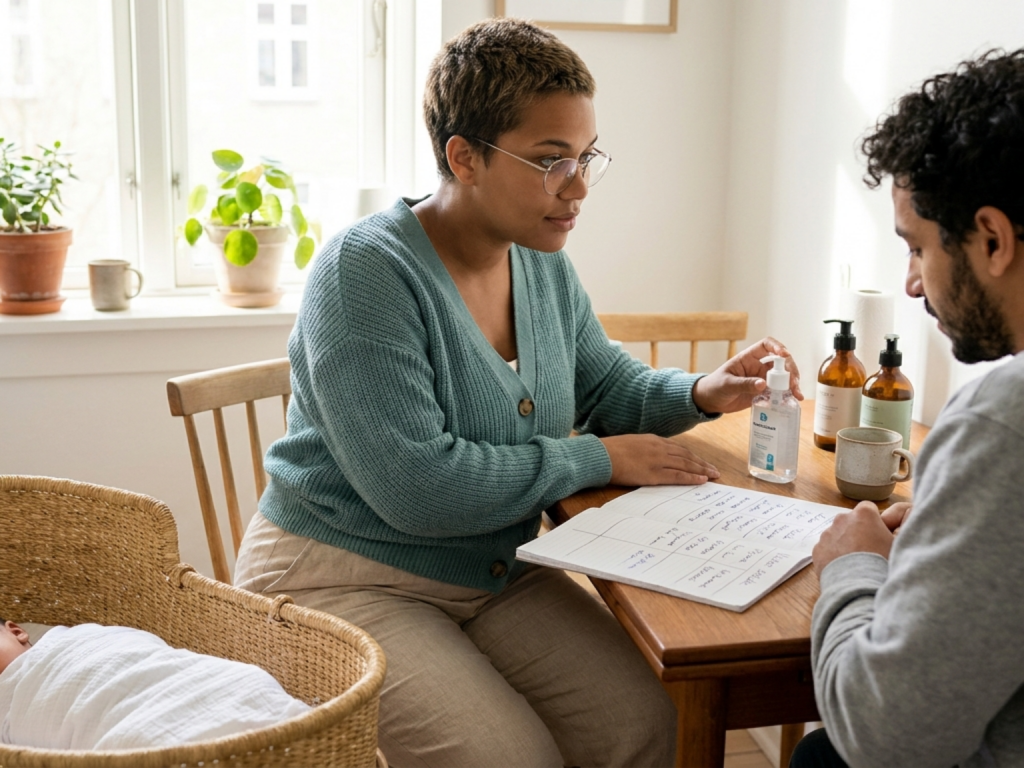
Ask visitors to wash their hands with soap and water before touching the baby. Hand sanitizer may be useful when handwashing is unavailable, but it should be kept safely away from the infant. Visitors should avoid kissing the baby’s face, hands, or mouth because respiratory and oral secretions can transmit infection. You may also limit close face-to-face contact and ask guests to avoid touching the baby’s eyes, nose, or mouth.
Anyone who is unwell should stay away, even if symptoms seem minor or they believe the illness is unrelated to the baby. The HSE and Baystate Health both emphasize keeping sick visitors away and calling ahead. A visitor recovering from a recent infection or exposure should ask a healthcare professional about appropriate precautions rather than relying on household reassurance. Vaccination discussions may also be relevant; ask the baby’s clinician which immunizations and timing are recommended for close contacts in your setting. These measures form part of practical newborn infection prevention, not a judgment about a visitor’s intentions.
Make Visits Helpful, Not Performative
Visitors do not need to be entertained. A useful visit may involve bringing a meal, washing dishes, taking out rubbish, folding laundry, walking an older child, or allowing the parents to shower or sleep. It is appropriate to state what kind of help would be valuable before the person arrives. “We would love a meal and 20 minutes of quiet help, but we are not able to host today” sets a clear scope.
Holding the baby is not an entitlement or the primary purpose of every visit. Parents can decide whether the baby is passed around, whether a visitor may hold the baby while seated, and whether the baby returns immediately when feeding or soothing cues appear. A guest should never pressure a parent to wake the baby, interrupt feeding, or continue holding a distressed infant. If you are uncomfortable, say, “The baby needs me now,” without apologizing.
Keep the environment compatible with safe sleep. If the baby falls asleep, place the infant on a firm, flat sleep surface on their back, according to local safe-sleep guidance. Visitors should not fall asleep while holding the baby, and an infant should not be left unattended on an adult bed, sofa, or chair. A quiet room or a designated recovery space can help preserve rest when the home becomes busy.
Protect Feeding, Sleep, and Recovery
Newborn care is organized around needs that do not follow a visitor schedule. Feeding may involve breastfeeding, chestfeeding, expressed milk, formula, or a combination. Whatever method you use, you do not need to explain, conceal, or defend it. Arrange visits so the primary caregiver can feed privately or comfortably, and make it explicit that feeding takes priority over conversation.
Sleep protection deserves equal attention. Agree on visiting hours that avoid the household’s most valuable rest periods, and establish an end time before the visit begins. A door sign, closed door, or message from the designated contact can signal that the family is unavailable. If the baby is unsettled, the postpartum parent is in pain, or the household has reached its limit, the visit is over. A prepared phrase such as “We are going to rest now; thank you for coming” can make ending a visit easier.
Recovery also includes emotional recovery. Some parents experience anxiety, tearfulness, irritability, intrusive thoughts, or low mood after birth. These experiences deserve compassionate attention, particularly if they are severe, persistent, or interfere with functioning. Visitors who increase distress should be restricted, even if they are relatives. Discuss concerning mental-health changes with a clinician promptly; seek urgent help for thoughts of self-harm or harming the baby.
Handle Pressure and Boundary Violations
People may interpret a boundary as a personal slight, especially when they have strong traditions about newborn visits. You do not need to win an argument before enforcing a decision. Repeat the rule briefly and avoid entering a prolonged debate: “We are following our clinician’s advice,” “We are not accepting drop-in visits,” or “We will invite you when we are ready.” Consistency matters more than providing new explanations each time.
If someone arrives without permission, you may choose not to open the door. If a visitor has symptoms, has not followed hand hygiene, attempts to kiss the baby, or refuses to return the infant, the designated household contact should intervene immediately. The baby can be taken back without asking permission. A visit can end when a boundary is ignored.
For complicated family dynamics, agree privately with your partner or support person on non-negotiable rules, who will communicate them, and what consequence follows a breach. The article Visitors and newborn safety rules can help families organize expectations around illness, hygiene, contact, and respectful behavior. If disagreements involve custody, threats, coercion, or safety concerns, contact an appropriate healthcare, social-service, domestic-violence, or emergency resource in your area.
Adapt the Plan as Circumstances Change
Visitor boundaries are a living plan rather than a one-time announcement. Reassess them as the baby grows, the postpartum parent heals, sleep changes, and public-health conditions shift. A family may begin with virtual contact, then allow brief outdoor visits, and later transition to longer indoor visits. There is no requirement to progress on anyone else’s schedule.
Some infants need more individualized precautions. Babies born prematurely, those with certain congenital or chronic conditions, and infants whose clinicians have identified particular vulnerabilities may need stricter limits or a delayed introduction to groups. Ask the pediatric clinician or other qualified healthcare professional for guidance specific to the baby’s gestational age, medical history, immunization status, and local infection patterns.
Finally, give yourself permission to enjoy visitors selectively. A calm, respectful guest can provide connection and practical support. A demanding or unpredictable guest can wait. The goal is not perfect control; it is a household rhythm in which the baby’s needs, parental recovery, and reasonable infection precautions remain central.
When to Pause a Visit
- The visitor has fever, respiratory symptoms, vomiting, diarrhea, or another potentially contagious illness.
- The visitor refuses hand hygiene, vaccination-related precautions, or a no-kissing rule.
- The baby is difficult to console, feeding, sleeping, or showing signs of overstimulation.
- The recovering parent has significant pain, bleeding concerns, worsening mood symptoms, or needs urgent rest.
- A visitor ignores instructions, will not return the baby, or creates a safety concern.
Tools & Assistance
- A shared visitor policy in a group message
- A calendar with scheduled visit windows and end times
- A designated gatekeeper for calls, texts, and the front door
- A handwashing station with soap, towels, and alcohol-based sanitizer
- A list of the baby's clinician, postpartum clinician, and local urgent-care resources
FAQ
How long should we wait before allowing visitors?
There is no single medically appropriate timeline for every family. Consider parental recovery, the baby's health, illness activity in the community, and advice from your healthcare professionals. Short, scheduled visits may be reasonable when the household feels ready.
Should visitors wear a mask around a newborn?
Masking may be appropriate in some circumstances, such as respiratory illness exposure or high community transmission, but recommendations vary by location and situation. Ask the baby's clinician for current, individualized guidance.
Can visitors hold the baby?
Parents decide who may hold the baby, for how long, and under what conditions. Require hand hygiene, prohibit kissing, and take the baby back whenever feeding, soothing, sleep, or parental comfort requires it.
What if a relative becomes angry about our rules?
Acknowledge the disappointment without negotiating essential boundaries. Repeat the policy, offer a virtual alternative when appropriate, and postpone contact if the person will not respect your instructions.
When should we ask a clinician for more visitor guidance?
Ask before visits if the baby was premature, has a medical condition, had a prolonged hospitalization, or has other identified vulnerabilities. Also seek advice when there is a known exposure to a contagious illness.
Sources
- Health Service Executive (HSE) — Coping with visitors at home after your baby's birth
- Johns Hopkins Medicine — New Parents and Newborns: Are Visitors OK?
- Baystate Health — Visiting a Newborn: What Parents and Guests Should Know
Disclaimer
This article provides general educational information and is not a diagnosis or a substitute for medical advice. Consult your baby's clinician or postpartum healthcare professional for guidance tailored to your circumstances, and seek urgent care for emergencies.















Please log in to leave a comment.