
Intro
Long car rides with a baby require more planning than an adult journey, but they can usually be managed with a thoughtful safety routine. The priorities are appropriate restraint, regular opportunities to stop, feeding and diaper planning, temperature control, and a clear response plan if your baby becomes uncomfortable.
Infants cannot reliably reposition themselves or communicate early signs of distress, so caregivers need to monitor them throughout the trip. A flexible itinerary is often safer and more realistic than trying to maintain an adult travel schedule.
Highlights
Use a correctly installed rear-facing infant car seat and keep your baby secured in the vehicle's back seat whenever possible.
Plan regular stops; many professionals and manufacturers recommend limiting continuous car-seat time to about two hours, although published evidence does not establish one exact maximum for every infant.
Never feed, soothe, or lift your baby from the car seat while the vehicle is moving.
Watch for forward slumping, breathing difficulty, overheating, vomiting, or unusual lethargy, and stop safely when concerns arise.
Start with the car seat and the baby’s health
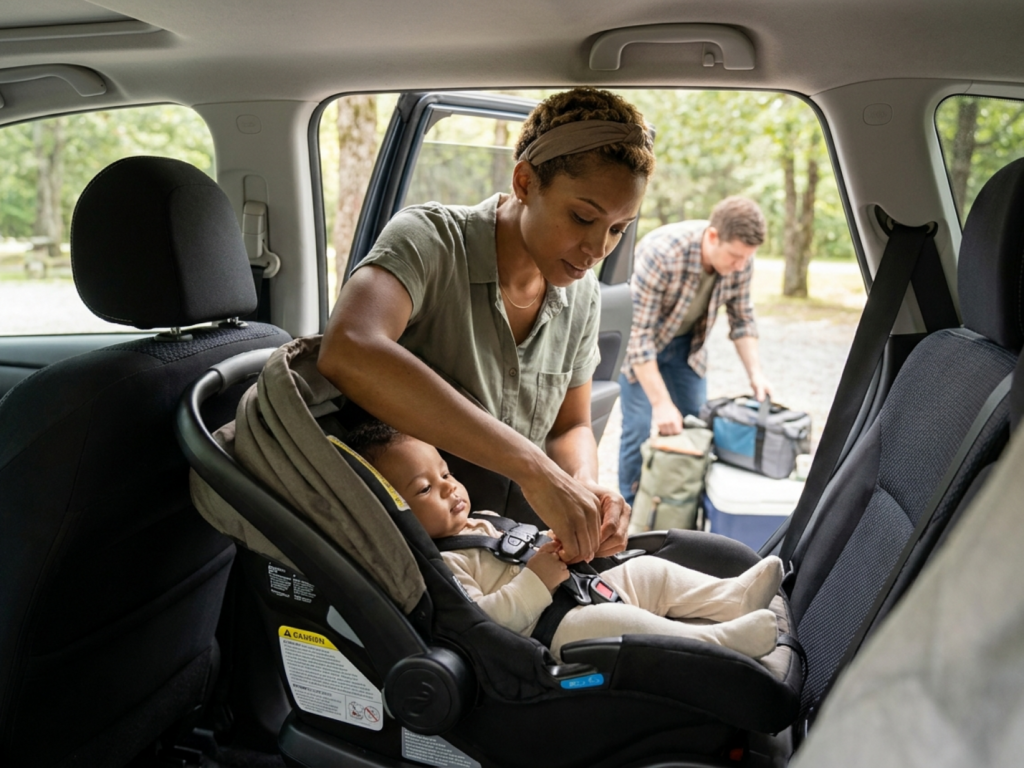
The car seat is the primary safety intervention for every journey. Use a rear-facing infant car seat that is appropriate for your baby’s current size and installed exactly according to both the vehicle and car-seat manuals. The harness should be snug, with the restraint positioned as directed by the manufacturer. Avoid placing bulky coats or other thick clothing beneath the harness because this can interfere with a secure fit.
Place the seat in the back seat whenever possible. A rear-facing seat should never be used in front of an active passenger airbag. Before a long journey, consider having the installation checked by a certified child passenger safety technician or an equivalent local service. A small installation problem that goes unnoticed on a short trip can become more difficult to manage during a prolonged drive.
Consider whether your baby is medically ready for the trip. Very young infants and babies born preterm may need individualized advice, particularly if they have respiratory, cardiac, feeding, or temperature-regulation concerns. Avoid long-distance travel when your baby is acutely unwell unless a healthcare professional has advised you about the journey. Ask your pediatrician, family doctor, midwife, or neonatal team about travel if there is uncertainty about car-seat positioning or tolerance.
Plan the route around breaks, not just arrival time
Build the itinerary around frequent stops rather than assuming that your baby will sleep through the entire drive. There is no published evidence that establishes a single exact maximum time in a car seat for every infant, but many professionals and manufacturers recommend no more than two hours at a time. During a break, remove your baby from the car seat and place them in a safe, supervised position. A car seat is designed for travel restraint, not as a routine sleep or resting space outside the vehicle.
Choose stopping places in advance, including locations with toilets, sheltered space, and enough room to handle feeding and diaper changes. Allow additional time for unexpected pauses. On a long trip, a realistic schedule may include stopping before your baby becomes distressed, rather than waiting for intense crying, hunger, or a wet diaper.
- Check traffic, weather, road closures, and fuel or charging locations before leaving.
- Identify several alternative stopping points in case the baby needs attention sooner than expected.
- Share the driving when possible so one caregiver can focus on the baby without distracting the driver.
- Keep a phone charged, but never use it in a way that diverts attention while driving.
Never stop on a hard shoulder or roadside unless there is an emergency and no safer option. Pull completely off the road at an appropriate location before unbuckling or handling your baby.
Prepare feeding, diapering, and comfort supplies
Pack supplies where an adult passenger can reach them without turning toward the baby or searching through luggage. Useful items include diapers, wipes, spare clothing, a changing mat, burp cloths, feeding equipment, expressed milk or formula as applicable, water for caregiver use, and a securely closed waste bag. Bring more than the expected amount because traffic delays and unplanned stops are common.
Feed your baby before departure when practical, but do not attempt to breastfeed, bottle-feed, or give solids while the vehicle is moving. A moving vehicle creates a choking risk and makes it difficult to respond promptly if the baby coughs or vomits. At a stop, take the baby fully out of the car seat before feeding. Allow time for burping and observation before restarting the journey.
Dress your baby in light, removable layers so you can respond to changes in cabin temperature. Check the baby’s chest or back rather than relying only on hands and feet, which may feel cool normally. Never leave an infant alone in a parked car, even briefly. Interior temperatures can change rapidly, and cracking a window does not make unattended vehicle conditions safe.
A familiar blanket or small comfort item may help during a supervised stop, but do not add loose items around the baby’s head or under the harness during travel. Keep the harness and airway unobstructed.
Reduce crying and sensory overload
Crying is common during car travel and does not necessarily indicate an emergency, but it can make driving unsafe if the driver becomes distracted. If another adult is present, they can speak calmly, check whether the baby is visibly uncomfortable, and wait until the next safe stop to provide hands-on care. The driver should not twist around, reach into the back seat, or attempt to soothe the baby while the car is moving.
Keep the environment comfortable and predictable. Use moderate ventilation, shield the baby from direct sunlight without blocking airflow, and avoid excessive noise or strong smells. A correctly positioned mirror may help an adult monitor a rear-facing baby, but it should not replace direct observation by a passenger during breaks.
Motion-related nausea is less typical in very young infants than in older children, but vomiting or distress can still occur during travel. If nausea begins, stop when safe, remove the baby from the car seat, clean and change them, and offer feeding according to their normal routine. Fresh air during a safe stop and reducing visual or sensory stimulation may help. Do not give anti-motion-sickness medicines or other products unless a qualified healthcare professional has specifically advised you.
If crying remains intense after basic needs have been addressed, treat it as a signal to pause and reassess rather than a reason to drive faster. Check the harness, clothing, temperature, position, diaper, and possible vomiting. Persistent inconsolable crying, especially with fever, breathing changes, poor feeding, or unusual sleepiness, warrants medical advice.
Monitor positioning, breathing, and temperature
Infants have relatively large heads and less mature muscle control, so their airway can become compromised if the head falls forward or the body slumps. At every stop, look at your baby’s head, neck, chest, and harness position. The baby should remain in the position specified by the car-seat manufacturer, with no added padding, inserts, or accessories unless they were supplied or approved for that specific seat.
Forward slumping, chin-to-chest positioning, color change, labored breathing, repeated coughing, or difficulty rousing are reasons to stop immediately in a safe place and remove the baby from the restraint. If breathing appears abnormal or your baby is unresponsive, seek emergency help. Do not attempt to correct a potentially dangerous position while continuing to drive.
Overheating can be difficult to recognize inside a warm vehicle. Use the vehicle’s climate control appropriately, avoid heavy layers, and check your baby during planned stops. A baby who is unusually hot, flushed, weak, difficult to wake, or feeding poorly needs prompt assessment. When in doubt, contact a healthcare professional or emergency service appropriate to the severity of the situation.
Use a practical travel-day routine
Before leaving, give yourself time to install the seat, pack supplies, check the baby’s condition, and confirm the first stopping point. A caregiver can prepare a written or phone-based checklist covering feeding, diaper changes, medications that the child already uses as prescribed, emergency contacts, and the location of medical services along the route. Do not start a journey if the baby has a new or concerning symptom that has not been assessed when professional advice is available.
During the drive, keep the baby in the car seat and maintain a calm rhythm. At each planned stop, take the baby out, assess comfort and breathing, change or feed as needed, and allow a period of movement outside the restraint. Resume only when the baby is secured correctly and the driver is ready to concentrate.
At the destination, remove the baby from the car seat promptly. Transfer them to a firm, flat, safe sleep surface if they are asleep, following local safe-sleep guidance. Do not use the car seat as a substitute for a crib, bassinet, or other approved sleep environment.
Caregivers should also protect their own safety. Fatigue reduces reaction time and judgment. Share driving, take breaks, and postpone the journey if the driver is too tired to drive safely. A delayed arrival is preferable to continuing when either the infant’s needs or the driver’s alertness cannot be managed.
Stop and seek help when needed
- Forward slumping, persistent airway obstruction, blue or gray coloring, or labored breathing
- Unresponsiveness, unusual difficulty waking, seizure-like activity, or sudden marked weakness
- Repeated vomiting, inability to keep feeds down, or signs of dehydration
- Fever or other illness in a very young, premature, or medically complex infant
- A driver becoming too distracted or fatigued to operate the vehicle safely
Tools & Assistance
- Car-seat installation check by a certified child passenger safety technician
- Route planner with preselected safe stopping locations
- Written feeding, diaper, and emergency-contact checklist
- Thermometer and appropriately packed feeding and diaper supplies
- Pediatrician, family doctor, midwife, or neonatal team for individualized travel advice
FAQ
How long can a baby stay in a car seat during a long journey?
There is no single evidence-based maximum that applies to every infant. Many professionals and manufacturers recommend limiting continuous time to about two hours, followed by a safe stop where the baby is removed from the seat.
Can I feed my baby while driving if another adult is holding the bottle?
No. Stop in a safe location and remove the baby from the car seat before feeding. Feeding in a moving vehicle increases choking risk and delays response if the baby coughs or vomits.
What should I do if my baby cries continuously?
The driver should continue only until the next safe stopping place. Check the harness, position, temperature, diaper, hunger, and signs of vomiting or illness. Seek medical advice for persistent inconsolable crying or concerning symptoms.
Is it safe for my baby to sleep in the car seat after we arrive?
Remove the baby from the car seat promptly after the journey and transfer them to a firm, flat, approved sleep surface. Car seats are intended for travel restraint, not routine sleep outside the vehicle.
Should I ask a doctor before traveling with a premature baby?
Yes, individualized advice is appropriate. Ask the baby's healthcare team about respiratory status, feeding, temperature regulation, car-seat positioning, and whether the planned journey should be postponed.
Sources
- Dartford and Gravesham NHS Trust — Travel Safety for your Baby
- Bedfordshire, Luton and Milton Keynes Integrated Care Board — Car seat safety
- Mayo Clinic — Car sickness in children: Can I prevent it?
Disclaimer
This article provides general educational information and does not diagnose, treat, or replace advice from a qualified healthcare professional. Seek urgent medical help for breathing difficulty, unresponsiveness, color change, or other severe concerns.

















Please log in to leave a comment.