
Intro
Flying with a baby can feel daunting, especially when you anticipate crying in a confined cabin. Crying is a normal form of communication, not evidence that you have done something wrong. Infants may become unsettled because of hunger, fatigue, temperature changes, unfamiliar stimulation, restraint, or pressure changes in the middle ear.
A calm flight does not require a silent baby or a perfect routine. The practical goal is to anticipate common triggers, respond safely, and reduce distress where possible. Thoughtful preparation, age-appropriate soothing, and appropriate medical advice can make the experience more manageable for both baby and caregiver.
Highlights
Offer feeding or a pacifier during ascent and descent to encourage swallowing and help equalize middle-ear pressure.
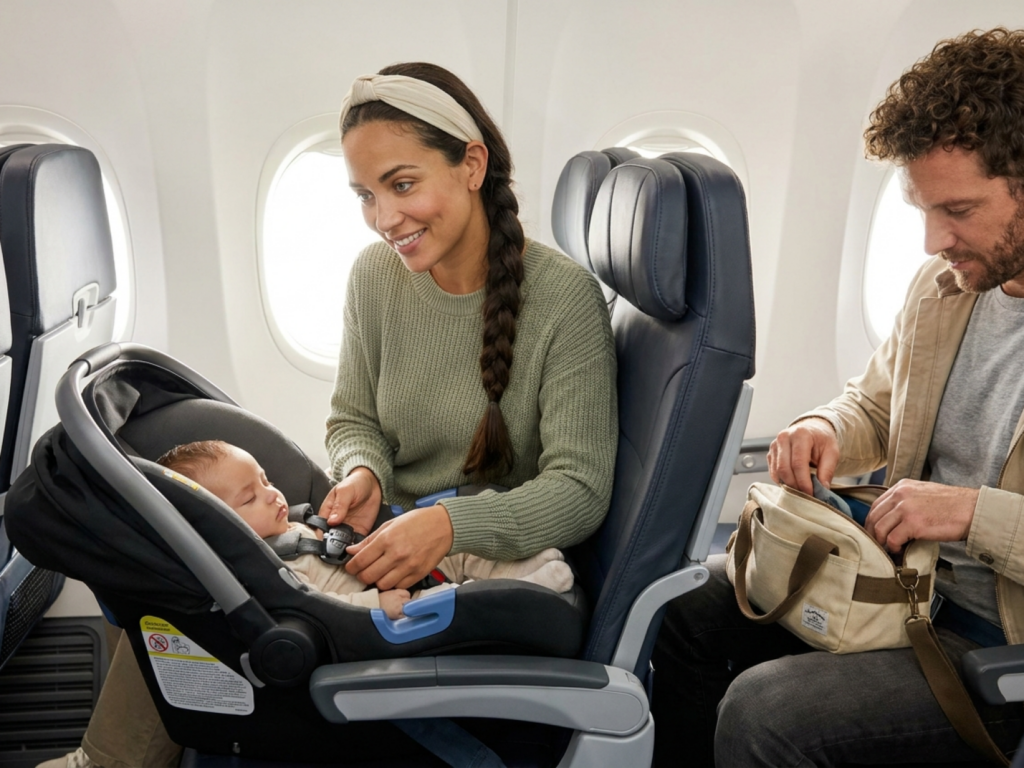
Use an airline-approved child restraint whenever possible; secure positioning is both a safety measure and a source of physical stability.
Protect sleep and reduce stimulation with familiar routines, quiet sensory input, and realistic expectations.
Do not use sedating medicines such as diphenhydramine to make a baby sleep unless a qualified clinician specifically advises it.
Seek professional advice before travel when your baby has a significant medical condition, recent illness, or unusual ear or respiratory symptoms.
Start with a realistic flight plan
Begin by considering your baby’s usual patterns rather than trying to create an entirely new schedule. A flight that overlaps with a customary nap may work well for some infants, while others become overtired when sleep is delayed. Use your knowledge of your baby’s feeding intervals, wake windows, diapering needs, and most effective soothing methods to choose the departure time when options exist.
Build extra time into the airport experience. Rushing can increase caregiver stress and may make it harder to notice early signs of hunger or fatigue. If another trusted adult is traveling with you, decide in advance who will manage boarding documents, luggage, feeding supplies, and soothing. Clear role-sharing reduces the chance that one adult becomes physically and emotionally overloaded.
Expect variability. Cabin noise, turbulence, delays, and changes in lighting cannot be controlled completely. A flexible plan is more useful than a rigid promise that the baby will sleep. Pack enough supplies for delays, including diapers, wipes, feeding equipment, spare clothing, and a small number of familiar comfort items. Keep essential items in the personal bag that stays accessible during the flight, rather than placing everything in checked luggage.
Make feeding and pressure relief part of the plan
Changes in cabin pressure are most noticeable during ascent and descent. Infants cannot intentionally perform pressure-equalizing maneuvers, so swallowing may help open the eustachian tubes and equalize pressure across the tympanic membranes. Feeding, breastfeeding, or offering a pacifier during these phases can provide repeated opportunities to swallow. MedlinePlus and pediatric guidance commonly recommend this approach for ear comfort.
Try to begin before discomfort becomes pronounced. Watch for boarding announcements and the aircraft’s movement, then offer the breast, bottle, or pacifier when descent or ascent is beginning. A baby does not need to finish a feed for it to be useful. Feed responsively and use the method that is already familiar and safe at home. Avoid forcing a bottle or pacifier if your baby refuses it, and do not prop a bottle.
If your baby has nasal congestion, swallowing may be more difficult or uncomfortable. A recent upper-respiratory illness, ear infection, chronic ear disease, or a history of significant pressure-related pain warrants discussion with a healthcare professional before flying. Do not assume that ear pulling during a flight confirms an ear infection; it can reflect fatigue, pressure, or general distress, and diagnosis requires clinical assessment.
Prioritize safe, stable positioning
Babies are safest when transported in an aircraft-approved child restraint that is appropriate for their size and installed according to the manufacturer’s instructions and airline requirements. A properly installed rear-facing car seat can provide stable support and help prevent the baby from being held unsecured during turbulence. Verify the restraint’s approval label, dimensions, and airline policy before travel, because requirements vary by carrier and jurisdiction.
Use the harness exactly as directed. The straps should lie flat and be adjusted according to the seat instructions, without bulky outerwear beneath the harness. Do not add pillows, rolled blankets, head supports, or other accessories unless they are specifically permitted by the manufacturer and appropriate for the restraint. Improvised padding can alter harness fit or obstruct breathing.
Holding a baby may feel soothing, but an adult’s arms cannot reliably protect an infant during unexpected turbulence. Ask the airline about seating arrangements, installation procedures, and whether a separate seat is required or recommended. During the flight, keep the baby’s airway visible and avoid positions that press the face into a caregiver’s chest, blanket, or carrier fabric.
Reduce noise, light, and sensory overload
Air travel combines engine noise, announcements, bright cabin lighting, unfamiliar smells, vibration, and frequent handling. Infants have limited ability to filter sensory input, so overstimulation may appear as turning away, frantic limb movements, yawning, gaze aversion, irritability, or escalating crying. Responding to early cues is often easier than waiting until the baby is fully dysregulated.
Choose a lower-stimulation position when possible and keep the baby’s visual environment simple. A lightweight familiar blanket may provide comfort when the baby is awake and supervised, but it should never cover the face or be used in a way that interferes with airflow. Quiet humming, gentle rhythmic patting, and a familiar caregiver’s voice may be more effective than repeatedly changing techniques.
Noise reduction should be safe and developmentally appropriate. Do not place adult earplugs, loose objects, or unapproved headphones in or over an infant’s ears. The Mayo Clinic recommends reducing noise exposure; practical options include limiting unnecessary sound near the baby and using a properly fitted infant hearing-protection product only if it is designed for infants and used according to its instructions. Never compromise the ability to monitor breathing, alertness, or distress.
Use familiar calming strategies during the flight
When crying starts, pause and assess the basic needs first: hunger, a wet or soiled diaper, temperature, pain, fatigue, or an uncomfortable position. A brief, consistent sequence can be reassuring. Check the harness and clothing, offer feeding or a pacifier if appropriate, use a calm voice, and provide gentle rhythmic movement only when the baby is securely supported. Minimize rapid switching between multiple techniques, which can add stimulation.
Familiarity matters more than novelty. Bring one or two small items the baby recognizes from home, such as a soft cloth used during supervised awake time or a familiar rattle. Avoid loose items that could become hazards during turbulence. For an older infant, a quiet, simple activity may redirect attention, but the cabin is not the place to introduce a complicated toy or screen routine if it usually causes frustration.
Sleep may occur naturally after feeding and soothing, but do not make sleep the sole measure of success. If the baby sleeps, maintain safe positioning and regular observation. Avoid covering the restraint, obstructing the airway, or allowing an exhausted adult to fall asleep while holding the baby in an unsafe position. Guidance about safe sleep during travel remains relevant even when the flight is short.
Avoid medication as a shortcut to calm
Giving a baby a sedating medicine for the purpose of sleeping through a flight is not a routine calming strategy. Diphenhydramine, commonly known by the brand name Benadryl in some countries, can cause paradoxical excitation in children rather than sleepiness. Sedation can also impair arousal, breathing, or the ability to respond normally to illness. The Mayo Clinic and the American Academy of Pediatrics caution against using such medicines for this purpose.
Do not give prescription or nonprescription medication, including products marketed for motion sickness, congestion, or sleep, without individualized advice from a healthcare professional. Dosing depends on age, weight, formulation, medical history, and the reason for use. A clinician can also advise whether travel is appropriate if the baby has respiratory disease, cardiac disease, developmental concerns, recent surgery, or another condition requiring special planning.
If a clinician has already prescribed a medicine for a specific medical indication, clarify the timing, storage, side effects, and what to do if the baby becomes unusually sleepy or difficult to rouse. Keep the medicine in its original labeled container and do not combine products unless instructed.
Support the caregiver as well as the baby
Infant crying can trigger anxiety, embarrassment, and physical tension, particularly when other passengers are watching. These reactions are understandable, but they can make it harder to think through the next safe step. Take a slow breath, lower your voice, and focus on one need at a time. You are responsible for responding to your baby, not for guaranteeing that every passenger remains comfortable.
When traveling with another adult, alternate feeding, holding, diapering, and rest when practical. During a long flight, ask cabin crew for help with logistics, but remember that crew members cannot replace a caregiver’s supervision or make clinical decisions. If you are traveling alone, organize supplies by task and keep the most urgent items within reach.
Never shake, jerk, or handle a crying baby roughly. If you feel overwhelmed, secure the baby in the approved restraint and ask a trusted adult or flight attendant for assistance while you pause. A baby who continues crying may still be safe and cared for. The aim is steady, responsive care rather than immediate silence.
Know when to postpone or seek medical advice
Before departure, contact your baby’s healthcare professional if the baby is acutely unwell, has significant breathing difficulty, fever, persistent vomiting or diarrhea, marked lethargy, dehydration concerns, or a recently diagnosed ear or respiratory condition. The appropriate travel decision depends on the baby’s age, diagnosis, clinical stability, and itinerary. Some infants may need additional planning for oxygen, feeding, medication, or infection exposure.
During the flight, seek assistance from the crew for urgent symptoms such as labored breathing, blue or gray discoloration, unresponsiveness, a seizure, repeated vomiting with reduced responsiveness, or signs of a severe allergic reaction. Crying alone is usually not an emergency, but a sudden change from the baby’s normal behavior combined with concerning physical signs deserves prompt attention.
After landing, arrange medical assessment if unusual irritability persists with fever, drainage from the ear, breathing problems, poor feeding, substantially fewer wet diapers, or difficulty waking. These findings are not diagnoses, but they are reasons to seek professional evaluation rather than assuming the flight caused routine discomfort.
Safety reminders
- Never use diphenhydramine or another sedating medicine solely to make a baby sleep on a plane without individualized medical advice.
- Do not hold a baby unsecured when an approved child restraint is available and appropriate.
- Keep blankets, toys, and clothing away from the baby's face and ensure the harness does not restrict breathing.
- Do not shake, bounce forcefully, or handle a distressed baby roughly.
- Seek urgent help for breathing difficulty, blue or gray discoloration, unresponsiveness, seizure, or severe allergic symptoms.
Tools & Assistance
- Airline customer service for infant seating, restraint approval, baggage, and boarding questions
- A pediatric healthcare professional for illness, ear pressure, medication, and special-travel advice
- A certified Child Passenger Safety Technician for restraint fit and harness guidance before departure
- A written feeding, diapering, medication, and emergency-contact plan
- A small accessible cabin bag organized around feeding, diapering, comfort, and spare clothing
FAQ
Should I feed my baby during takeoff and landing?
Feeding or offering a pacifier during ascent and descent may encourage swallowing and help equalize middle-ear pressure. Follow your baby's usual feeding cues and do not force a feed.
Can I give my baby Benadryl before the flight?
Do not use diphenhydramine to sedate a baby for air travel unless a healthcare professional has given specific individualized instructions. It may cause paradoxical excitation or excessive sedation.
Is a car seat safer than holding a baby on a plane?
An airline-approved child restraint provides more reliable protection during turbulence than an adult's arms. Confirm the seat's approval and the airline's installation requirements before flying.
What if my baby cries for most of the flight?
Check basic needs, offer familiar soothing, reduce stimulation, and ask a traveling companion or crew member for practical help. Persistent crying is distressing but does not mean you have failed.
When should I ask a doctor before flying with my baby?
Ask before travel if your baby is acutely ill or has significant respiratory, cardiac, ear, feeding, developmental, or other medical concerns. The clinician can assess readiness and any special precautions.
Sources
- Mayo Clinic — Air travel with infant: Is it safe?
- HealthyChildren.org / American Academy of Pediatrics — Flying With Baby: Parent FAQs & Tips for Safer, Easier Air Travel
- MedlinePlus — Traveling with children: MedlinePlus Medical Encyclopedia
Disclaimer
This article provides general educational information and is not a diagnosis or substitute for individualized medical advice. Consult your baby's healthcare professional for guidance based on your baby's health, age, and travel plans.
















Please log in to leave a comment.