
Intro
Choosing products for a baby can feel difficult when safety information is spread across labels, recalls, online reviews, and changing developmental needs. A product may look comfortable or convenient while creating risks that are not obvious during routine use. This is especially true for products used during sleep, transportation, feeding, or periods when an adult is briefly out of reach.
Highlights
The safest product is not always the newest, most expensive, or most heavily marketed; it is one that is appropriate for the baby’s age, developmental stage, and intended use.
Unsafe sleep environments are a major source of severe injury and death associated with nursery products.
A recall check, intact instructions, correct assembly, and consistent supervision can prevent many product-related injuries.
Inclined sleep products and products that require a baby to be restrained for sleep raise particular concerns.
When a product seems damaged, modified, poorly designed, or unclear in its intended use, stop using it and seek guidance.
Why baby products can become unsafe
Babies have limited postural control, immature airway-protective reflexes, and rapidly changing motor abilities. A product that was appropriate for a newborn may become hazardous once the baby can roll, sit, pull up, climb, or reach. The same product can also become unsafe when it is used for a purpose different from the manufacturer’s instructions, such as allowing a baby to sleep in a sitting device or adding cushioning to a firm sleep surface.
Risk does not come only from an obvious manufacturing defect. It can result from incorrect assembly, missing hardware, an unfastened restraint, a loose or damaged component, an unstable base, or an accessory that creates gaps or soft surfaces. Modifications made at home may interfere with the product’s structural integrity or alter how a baby’s body is positioned. Even seemingly minor changes, such as adding a pillow, aftermarket insert, strap cover, blanket, or padding, can affect airway position or create entrapment and suffocation hazards.
Marketing claims also deserve careful interpretation. Words such as soothing, ergonomic, anti-reflux, cocooning, or self-settling do not establish that a product is safe for unsupervised use or infant sleep. A product should be judged by its tested design, instructions, warnings, current recall status, and suitability for the child’s developmental stage rather than by comfort claims or online popularity.
Unsafe sleep products and environments
Sleep is the highest-priority area for product safety because an infant may remain in a hazardous position without being able to reposition or signal effectively. The U.S. Consumer Product Safety Commission identifies unsafe sleep environments, including soft bedding and other hazardous setups, as a leading cause of injuries and deaths associated with nursery products. Its reporting also identifies cribs, bassinets, play yards, and infant carriers among the product categories involved in many reported fatalities.
A separate sleep device is not automatically safe simply because it is marketed for infants. Inclined sleepers, loungers, nests, positioners, and products that use restraints can allow the head to fall forward or the body to shift into a position that compromises the upper airway. The American Academy of Pediatrics does not recommend inclined sleep products or sleep products that require restraining a baby. This concern applies even when an infant initially appears comfortable or falls asleep quickly.
For routine sleep, use a separate infant sleep surface with a firm, flat mattress and a fitted sheet designed for that product. Keep the surface free of pillows, loose blankets, bumper-like accessories, stuffed items, and positioners. Avoid placing a sleeping infant on an adult bed, sofa, recliner, or other soft surface. If a baby falls asleep in a sitting or carrying device, follow current professional guidance and the manufacturer’s instructions for moving the baby to an appropriate sleep surface as soon as reasonably possible.
Reflux, congestion, or unsettled sleep can make families understandably interested in positioning devices or inclined products. These concerns warrant discussion with a pediatric clinician rather than improvised elevation or restraint. Changing the sleep surface without medical guidance may create a new hazard while failing to address the underlying concern.
Inspecting nursery and transport equipment
Before using a crib, bassinet, play yard, carrier, stroller, high chair, or similar product, inspect it in good light and compare it with the complete instructions. Confirm that all parts are present, locking mechanisms engage fully, and no component is cracked, bent, frayed, rusted, or loose. Check for openings where a head, neck, limb, or finger could become trapped. Pay particular attention to hinges, folding joints, wheels, base supports, mattress platforms, harnesses, and attachment points.
Follow every age, weight, height, and developmental restriction. A product can become inappropriate before a child reaches its maximum stated weight if the baby can climb, pull up, lean over an edge, or escape the restraint. Never rely on a harness to make a product suitable for unsupervised sleep. In carriers and slings, the baby’s face should remain visible and unobstructed, the chin should not be pressed against the chest, and the airway should be monitored closely. Caregivers should receive hands-on instruction when using a carrier, especially with a newborn or premature infant.
Car seats require a separate level of attention because installation and fit affect protection during a crash. Use the seat according to its labeling and vehicle instructions, confirm that the harness is correctly positioned, and obtain an installation check from a qualified local service when available. Do not use a seat after a crash unless the manufacturer or a qualified safety authority confirms that it remains suitable. Avoid aftermarket products that were not supplied or approved by the car-seat manufacturer.
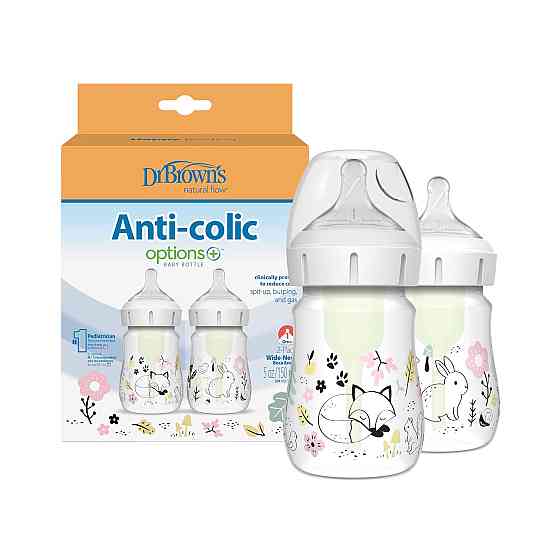
Feeding products also need regular review. Inspect bottle nipples, valves, pump components, and silicone or plastic parts for tears, deformation, discoloration, or deterioration. Discard damaged pieces and use cleaning and replacement schedules provided by the manufacturer. A product that is difficult to clean can permit microbial contamination, particularly when milk residue remains in narrow channels or valves.
Recalls, secondhand products, and missing information
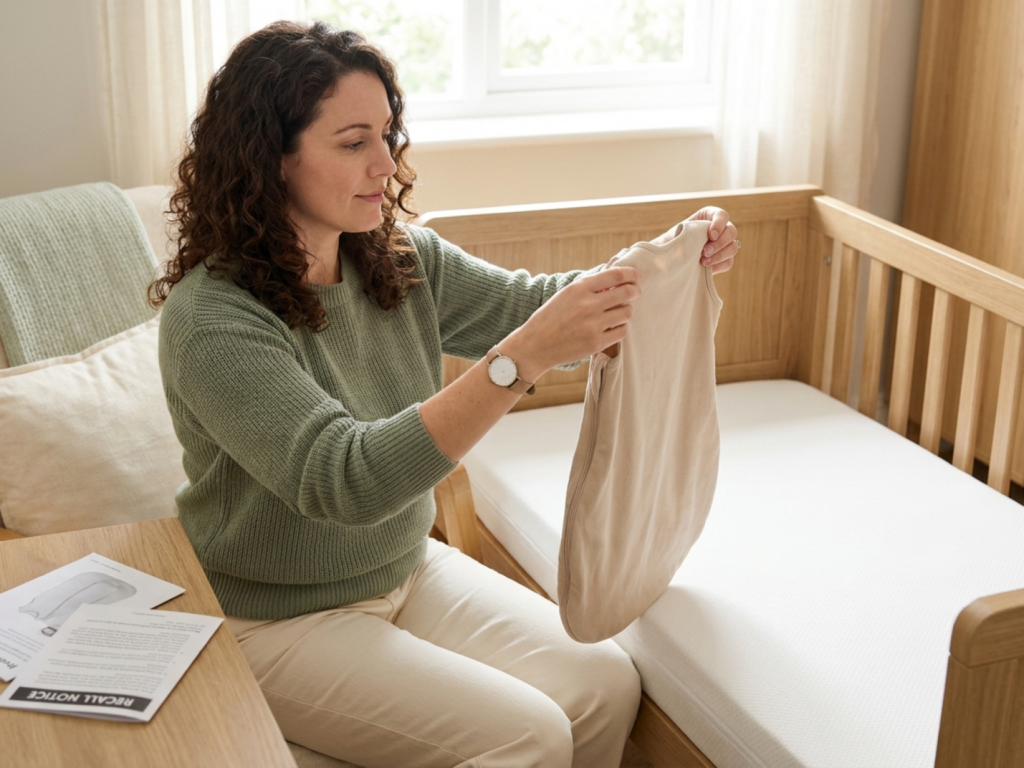
Recall status should be checked before purchase and periodically during use. This is especially important for products bought secondhand, received as gifts, or found through online marketplaces. Product names can be confusing, and similar-looking models may have different safety notices. Record the manufacturer, model number, serial number, and date of manufacture when available. Keep the instructions and registration information, because they may be needed for recall notifications, replacement parts, or safe-use updates.
Do not use a product if its identity cannot be established, its instructions are unavailable, or its safety history cannot be verified. Missing hardware is not a reason to improvise with household screws, cords, ties, or substitute padding. A visually clean product may still have a hidden structural problem, an expired safety design, or a recall that applies only to a particular model range. Used car seats deserve particular caution because crash history, storage conditions, and missing components may be impossible to confirm.
Online reviews can identify recurring usability problems, but they are not a substitute for regulatory notices or professional guidance. A large number of positive reviews does not demonstrate that a product is appropriate for infant sleep or that it meets current requirements. When a seller minimizes a warning, discourages recall checks, or cannot provide basic product documentation, treat that uncertainty as meaningful.
If a product is recalled, stop using it according to the recall instructions and follow the stated remedy, which may involve a repair, replacement, refund, or disposal. Keep recalled products away from other caregivers so they are not accidentally reused. If a product has caused an injury or near miss, preserve identifying information and report the incident through the relevant consumer-safety authority when appropriate.
Common ways products are misused
Many incidents occur during ordinary caregiving rather than deliberate disregard for instructions. A caregiver may use a stroller as a temporary sleep space, leave a baby unattended on a changing surface, place a thick liner in a crib, or attach a toy with a long cord. Fatigue, time pressure, and inconsistent advice from relatives or social media can make these decisions understandable, but they can still increase risk. Clear household rules reduce the chance that a tired caregiver will have to improvise.
Use each product only for its intended function and under the supervision specified by the manufacturer. Keep changing tables, high chairs, and bath supports within immediate reach of an alert adult. Restraints should be fastened as directed, but they should not be treated as protection against leaving a baby unattended. Keep products away from cords, heating sources, unstable furniture, and other items that could create strangulation, fall, burn, or entrapment hazards.
Product safety also depends on the surrounding environment. A stable crib can become unsafe if placed next to a window blind cord or furniture that allows climbing. A carrier can become unsafe in a hot environment or when the caregiver cannot see the baby’s face. A play yard can become unsafe if a mattress or other object is added that was not designed for that model. Review the entire setup, not just the product in isolation.
Caregivers should agree on a short set of non-negotiable practices: where the baby sleeps, which products are never used for sleep, how restraints are checked, and who verifies recall information. Written instructions or a shared product record can be useful when several adults provide care.
What to do after a safety incident
After a fall, entrapment, suspected suffocation, strangulation event, or period in which breathing may have been compromised, remove the baby from the hazard and assess the situation immediately. Call emergency services for unresponsiveness, abnormal breathing, persistent breathing difficulty, blue or gray coloration, seizure-like activity, severe bleeding, or any other emergency sign. If the baby is not breathing normally, follow dispatcher instructions and use infant cardiopulmonary resuscitation if trained.
Even when a baby appears well after an incident, contact a healthcare professional promptly for individualized advice. Infants may not show clear symptoms after trauma or a breathing event, and the significance of an exposure depends on the child’s age, position, duration, and observed response. Do not diagnose the baby at home or assume that a brief event was harmless because the baby quickly settled.
Document what happened while details are fresh: the product and model, the baby’s position, how long the event may have lasted, what the caregiver observed, and any visible injury. Photographing the product and retaining its packaging or instructions may help a clinician, manufacturer, or safety authority evaluate the event. Do not continue using a product involved in a serious incident until its safety has been reviewed.
Seeking help is not an admission of failure. Product-related incidents often occur in seconds, and caregivers may be working with incomplete or conflicting information. A calm review afterward can identify practical changes, clarify when emergency care is needed, and help every caregiver use the equipment consistently.
Stop and reassess these hazards
- Do not use an inclined sleeper, lounger, positioner, or restrained product for routine infant sleep.
- Do not add pillows, loose blankets, bumper-like items, or unapproved padding to a baby’s sleep surface.
- Stop using products with missing parts, damaged restraints, unstable frames, or unverifiable recall status.
- Never leave a baby unattended on a changing table, elevated surface, in a bath, or in a restraint-dependent device.
- Seek emergency help for unresponsiveness, abnormal breathing, blue or gray coloration, or severe injury.
Tools & Assistance
- Manufacturer instructions and product registration records
- Current consumer-product recall database
- Pediatrician, family physician, or nurse advice service
- Certified car-seat inspection or fitting service
- Local emergency services and infant CPR training
FAQ
Can a baby sleep in a car seat or stroller if the baby is supervised?
Sitting devices are not intended to replace a separate, firm, flat infant sleep surface. Follow professional guidance and move a sleeping baby to an appropriate sleep surface as soon as reasonably possible.
Is a secondhand crib safe if it looks clean and undamaged?
Appearance alone is not enough. Verify the model, instructions, parts, current recall status, and compliance with applicable safety requirements. Do not use it if its history or identity cannot be confirmed.
What should I do if I cannot find the instructions for a baby product?
Contact the manufacturer for the exact manual and replacement parts. Until the product’s identity and safe assembly are confirmed, avoid using it, especially for sleep, transport, or restraint.
When should I seek urgent medical help after a product incident?
Call emergency services for unresponsiveness, abnormal breathing, blue or gray coloration, seizure-like activity, severe bleeding, or serious injury. For any possible breathing event or head injury, contact a healthcare professional promptly even if the baby seems recovered.
Sources
- U.S. Consumer Product Safety Commission — New CPSC Report Shows Unsafe Sleep Environments Are Leading Cause of Injuries and Deaths with Nursery Products
- American Academy of Pediatrics — AAP Urges U.S. Consumer Product Safety Commission to Recall Fisher-Price Rock 'n Play Sleeper
- U.S. Consumer Product Safety Commission — Nursery Products Annual Report
Disclaimer
This article is for general educational purposes and does not diagnose, treat, or replace advice from a qualified healthcare professional. Seek urgent medical care for emergencies or any concern about a baby’s breathing, consciousness, or injury.













Please log in to leave a comment.