
Intro
Preparing for accidents at home is not about expecting the worst. It is about making it easier to respond calmly when a baby or another household member is hurt, suddenly unwell, or exposed to a hazard. A practical plan also reduces preventable injuries before they happen.
For families with a baby, preparation needs to evolve as mobility, curiosity, and reach change quickly. Focus on the hazards that matter most in your own rooms, make emergency decisions simpler, and involve every regular caregiver in the plan.
Highlights
A home emergency plan should combine prevention, rapid access to help, and age-appropriate first aid knowledge.
Babies can move or reach unexpectedly, so hazard checks need repeating as developmental abilities change.
Emergency supplies are useful only when caregivers know where they are, what they contain, and when professional care is needed.
Falls, burns, poisoning, choking, drowning, fires, and carbon monoxide exposure each require different prevention measures.
Start with a realistic home risk assessment
Accident preparation begins with observing the home as it is actually used, not as it looks after a tidy-up. Walk through each room at different times of day and consider what could happen while carrying a baby, preparing food, bathing, answering the door, or managing fatigue. Notice poor lighting, trailing electrical cords, loose rugs, clutter on stairs, unstable furniture, accessible medicines, cleaning products, hot drinks, and small objects on low surfaces.
For babies, assess hazards from floor level as well as adult height. An item that appears out of reach may become accessible when a child pulls to stand, climbs, or uses furniture for leverage. Reassess after developmental changes rather than relying on a one-time babyproofing project. Pay particular attention to furniture tip-over risks, button-battery or magnet ingestion, unsecured cords, and containers of liquid left within reach.
Use the assessment to prioritize changes that eliminate or separate the hazard. Store toxic substances and medicines secured and out of reach, keep sharp or hot items away from edges, and remove damaged equipment from use. Good lighting, clear walking routes, non-slip surfaces, and secured rugs are basic protections for everyone in the household, including a caregiver holding a baby.
Build an emergency plan that works under stress
During an emergency, people may struggle to recall phone numbers, medication details, or the location of essential supplies. Make these decisions in advance. Post the local emergency number where it is visible, save it in every caregiver’s phone, and keep the full home address readily available. This is especially useful for visitors, babysitters, or a caregiver who may be too distressed to think clearly.
Create a brief baby medical summary that can be updated after appointments. Include the baby’s full name and date of birth, clinician contact details, known allergies, current medicines, relevant diagnoses, and any emergency instructions from the treating team. Do not substitute this record for professional assessment, but keep it available to help emergency personnel receive accurate information quickly.
Decide who will call for help, who will stay with the baby, and how other children or pets will be kept safe if an incident occurs. Identify two exits from the home, a meeting point outside, and a trusted nearby contact. A plan should be simple enough to use at night and clear enough that every adult caregiver can follow it.
- Keep phones charged and accessible, including near sleeping areas.
- Ensure house numbers can be seen from outside.
- Review the plan with babysitters and relatives before they provide care.
- Keep keys, mobility aids, and a flashlight in predictable locations.
Maintain supplies and safety equipment
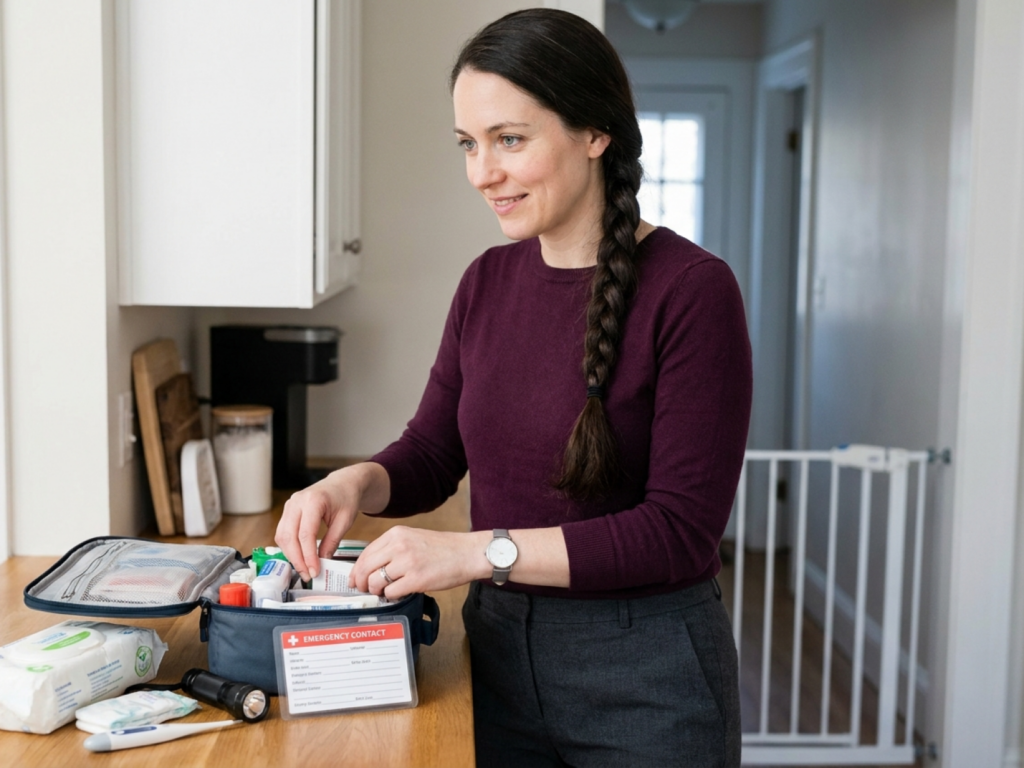
A stocked first aid kit is a practical starting point, but it should be selected and maintained with guidance from a pharmacist or healthcare professional. Keep it in a dry, readily accessible place that adults can reach quickly but children cannot access. Check expiry dates, replace used items promptly, and keep the kit in the same location so regular caregivers do not have to search for it.
Emergency readiness also depends on the home itself. Fit smoke alarms and carbon monoxide alarms as appropriate for the property, test them on the schedule specified by the manufacturer, and replace batteries or devices when required. Carbon monoxide is colorless and odorless; an alarm is a critical warning device, not a replacement for professional inspection and maintenance of fuel-burning appliances.
Consider a flashlight, spare batteries, a charged power bank, and a small supply of essential baby items for temporary disruption such as a power outage or evacuation. These may include diapers, wipes, feeding supplies appropriate to the baby’s usual method, and any prescribed medication. Store medicines only according to their labeled conditions. For safe formula preparation during disasters or service disruption, seek current advice from a healthcare professional or public health authority rather than improvising with unsafe water or storage practices.
Prevent falls, burns, and water-related injuries
Falls are common in homes and can affect both babies and caregivers. Clear stairs and hallways, secure loose rugs, improve lighting, and avoid leaving items on steps. Where stairs are present, use suitable safety gates, especially hardware-mounted safety gates at the top of stairs when recommended by the product instructions. Do not depend on a gate alone; close it consistently and supervise around stairs.
Babies should never be left unattended on a changing table, bed, sofa, or other raised surface, even briefly. Prepare diapers and supplies before beginning a change. A floor-level play area may be a safer temporary option when a caregiver needs to place a mobile baby down during an interruption. Use equipment only as directed and do not assume straps remove the need for direct supervision.
Burn prevention includes keeping hot drinks and pans away from edges, turning pan handles inward, and avoiding carrying hot liquids while holding a baby. Check bath water before placing a baby in it and discuss an appropriate water heater temperature with a qualified professional if there is concern about scald risk. Near any bath, bucket, sink, or pool, continuous supervision near water is essential. Drowning can occur quickly and quietly in very small amounts of water, so empty containers immediately after use.
Plan specifically for choking, poisoning, and breathing hazards
Choking hazards change with a baby’s age and feeding skills. Keep small household objects, coins, button batteries, magnets, and pieces of damaged toys out of reach. Inspect floors, under furniture, and low shelves regularly. Follow age-appropriate feeding guidance from the baby’s clinician and supervise meals. Avoid assuming that an older sibling understands which foods or objects are dangerous for a younger child.
Store medicines, vitamins, nicotine products, detergents, cleaning agents, alcohol, and cosmetics in their original containers, secured and out of reach. Never describe medicine as candy. If a possible poisoning occurs, seek urgent advice through your local poison service or emergency service; do not induce vomiting or give food, drink, or medication unless a qualified professional instructs you to do so.
Safe sleep reduces serious breathing hazards. Use a firm flat infant sleep surface designed for sleep and follow current local safe-sleep guidance from your pediatric clinician or public health service. Sofas, armchairs, adult beds, and soft surfaces are not reliable substitutes for a safe sleep area. Also keep blind cords, electrical cords, plastic bags, and soft furnishings away from the sleep space. If a baby has trouble breathing, becomes unresponsive, turns blue or gray, or has a severe choking episode, call emergency services immediately.
Train caregivers and review the plan regularly
Preparation is strongest when it is shared. Parents, relatives, babysitters, and other regular caregivers should know the home’s emergency contacts, exits, first aid kit location, alarm sounds, and rules for sleep, meals, bath time, and medicines. Consider completing an accredited infant first aid and CPR course. Training can help caregivers recognize when urgent escalation is needed and begin appropriate actions while waiting for emergency responders, but it does not replace emergency medical care.
Practice low-stakes scenarios: locating the first aid kit in the dark, opening a safety gate, leaving the home by two routes, and explaining the address clearly. Check that caregivers can use the phone hands-free or reach it from common baby-care areas. Avoid asking a young child to take responsibility during an emergency; give them one simple, age-appropriate action, such as going to a designated safe location with an adult.
Review the plan every few months, after a move, after changes to the household, and whenever the baby gains a new ability. Update the baby medical summary, inspect alarms, remove recalled or broken products, and check that safety latches still work. Seeking advice from a pediatric clinician, health visitor, pharmacist, or local emergency service can help tailor the plan to medical conditions, housing constraints, and the needs of your family.
Seek urgent help without delay
- Call emergency services for unresponsiveness, severe breathing difficulty, blue or gray color, seizures, major bleeding, or a serious burn.
- Treat possible button battery or high-powered magnet ingestion as an urgent emergency.
- After a fall with loss of consciousness, persistent vomiting, concerning behavior, or a suspected head injury, seek urgent medical assessment.
- Do not leave a baby alone near any water, including baths, buckets, or sinks.
- Do not induce vomiting after a suspected poisoning unless a qualified professional specifically instructs you to do so.
Tools & Assistance
- Local emergency service number and poison information service
- Accredited infant first aid and CPR course
- Pediatric clinician, health visitor, or family doctor
- Pharmacist review of first aid supplies and medicine storage
- Qualified inspection and maintenance service for fuel-burning appliances
FAQ
Where should a household first aid kit be kept?
Keep it in a dry, known location that adults can reach quickly but children cannot access. Tell every regular caregiver where it is.
How often should we review our baby safety plan?
Review it every few months and whenever your baby starts a new skill such as rolling, crawling, pulling to stand, or climbing.
Should every caregiver learn infant CPR?
Formal infant first aid and CPR training is strongly worth considering for regular caregivers. It supports early action while emergency help is being arranged.
What should I do if I suspect my baby swallowed a battery or magnet?
Seek emergency medical help immediately. Do not wait for symptoms, as internal injury can occur quickly.
Sources
- MedlinePlus — Staying safe at home
- World Health Organization — Avoiding injuries
- NHS — Falls
Disclaimer
This article is for general educational purposes and does not replace individualized medical advice. Seek urgent professional care for emergencies and consult a qualified healthcare professional for concerns about your baby.













Please log in to leave a comment.