
Intro
Changing a diaper away from home can feel unexpectedly demanding: space may be limited, surfaces may be unfamiliar, and your baby may be tired, hungry, or overstimulated. A little preparation turns the task into a manageable routine, whether you are in an airport, on a road trip, visiting family, or staying overnight.
The goal is not a perfectly sterile setting. It is a clean, stable surface; close supervision; prompt disposal; and careful hand hygiene. Flexibility matters, especially when travel disrupts usual feeding, sleep, and bowel patterns.
Highlights
Build a compact diaper kit that stays accessible throughout the journey, rather than relying on supplies stored in checked luggage or the trunk.
Prioritize fall prevention and hand hygiene. A clean surface is useful, but an unattended baby on an elevated changing station is the more immediate hazard.
Travel-related stool changes can occur, but diarrhea, dehydration concerns, blood in stool, or a worsening rash warrant clinical advice.
Prepare a diaper kit that works under pressure
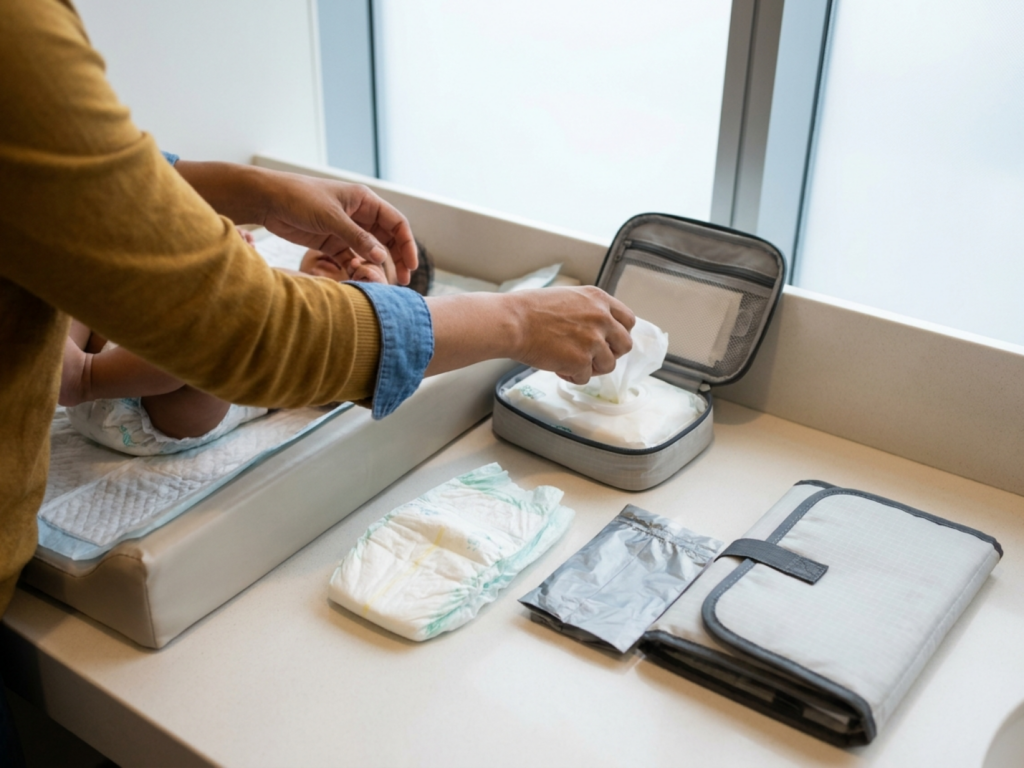
Travel diaper changes go more smoothly when the essentials are together in one small, refillable pouch or organizer. Keep it within reach of your seat, not at the bottom of a large suitcase. For a flight or long drive, bring more diapers than you would normally expect to use, since delays, spills, heat, illness, and changes in feeding patterns can increase the number needed.
A practical kit includes diapers, fragrance-free wipes or a clean washcloth, a portable changing pad, diaper-rash barrier ointment if your baby already uses one, disposable bags, a spare outfit, and a small hand sanitizer. Bring a separate sealable bag for soiled clothing. If your baby has frequent loose stools, pack additional wipes, a waterproof liner, and more than one change of clothes.
For medically complex infants, include any clinician-recommended skin products or ostomy supplies in the carry-on kit. A written medication log and a brief baby travel care plan can also reduce confusion when routines change or another caregiver needs to help. Check supplies at the end of each travel day instead of waiting until the bag is empty.
Choose the safest available changing surface
Look first for a designated changing station in a restroom, family room, airport lounge, or child-friendly venue. Before placing your baby down, inspect the surface for visible soil, moisture, damage, or an insecure hinge. Put your portable pad or disposable liner over it. If you use a changing station, keep one hand on your baby at all times; falls can occur very quickly, including in infants who have not yet rolled consistently at home.
When no changing station is available, choose a low, flat, reasonably clean area away from food preparation and pedestrian traffic. A blanket on the floor of a private space can be safer than an elevated counter, bench, or seat. Avoid changing a baby on restaurant tables, airplane tray tables, or other eating surfaces. These areas are not intended for diapering and can spread gastrointestinal pathogens.
In a vehicle, park legally and safely first. A flat section of the rear seat may work for a brief change, but do not attempt a diaper change while the vehicle is moving. In hot or cold weather, minimize the time your baby is exposed and never leave them alone in the vehicle, even for a moment.
Use a consistent step-by-step routine
A familiar sequence helps you work efficiently when your baby is unsettled. Set out the clean diaper, wipes, ointment, bag, and clothing before opening the used diaper. This prevents you from reaching across your baby or searching through luggage with one hand occupied.
- Place your baby on the prepared surface and keep a hand on them throughout the change.
- Open the soiled diaper while keeping it underneath the baby to catch any stool. For boys, loosely place a clean cloth over the penis during the change to reduce the chance of an unexpected urine spray.
- Clean from front to back, particularly for babies with vulvas, to reduce transfer of stool bacteria toward the urinary tract. Use gentle wiping rather than scrubbing.
- Allow the skin to air-dry briefly or pat it dry. Moisture and friction contribute to irritant diaper dermatitis.
- Apply a thin layer of the barrier product your baby routinely tolerates when there is irritation risk or a history of rash, then position and fasten the clean diaper comfortably.
- Seal the used diaper and wipes in a disposable bag, dispose of them appropriately, clean the changing pad if needed, and clean your hands.
Avoid pulling a baby up by the ankles. Instead, gently lift the hips by supporting the thighs or roll the baby slightly to one side as needed. This is more comfortable and limits strain on the hips and lower back.
Manage hygiene without chasing perfection
Diaper changes involve exposure to stool and urine, so hand hygiene is central to protecting your baby, yourself, and other travelers. Wash with soap and running water when available, especially after a change involving diarrhea. Alcohol-based hand sanitizer is a useful backup when soap and water are not immediately accessible, but visibly soiled hands should be washed as soon as possible.
Use disinfectant wipes only on the changing surface or equipment according to the product label, and allow surfaces to dry if the instructions require contact time. Do not use household disinfectants directly on your baby’s skin. For skin cleansing, use products intended for babies or plain water and a clean cloth when wipes are irritating.
Keep clean supplies physically separate from used diapers and dirty clothing. A simple approach is to designate one side of the bag for clean items and use a sealable pouch for contaminated items. This also reduces the risk of transferring microorganisms to bottles, pacifiers, snacks, or toys. During longer trips, wipe down the portable changing pad after a messy change and allow it to dry before folding it away.
Adapt to planes, trains, and public places
Before boarding a plane or train, identify where diaper changes can realistically happen. Some aircraft lavatories have fold-down changing tables, but space is often narrow. Bring only the supplies needed for one change into the restroom in a small pouch, keeping the rest of the carry-on at your seat. Ask a flight attendant for guidance if the changing table is difficult to locate or unavailable; crew procedures and cabin layouts vary.
On buses or trains, wait for a safe stop or an appropriate changing area whenever possible. A moving vehicle increases the risk of slips and makes thorough cleanup harder. For a short journey, changing immediately before departure and again upon arrival may be more comfortable for your baby than trying to manage a crowded aisle.
Public restrooms can be noisy and overstimulating. Speak calmly, keep the routine brief, and use the same small comfort item if it helps your baby stay settled. Travel can also interfere with sleep and feeding rhythms, so build in extra time rather than treating every change as an emergency. Adjusting care routines while traveling often means responding to your baby’s cues while preserving the basics of safety and hygiene.
Respond thoughtfully to rashes and unusual stools
Heat, prolonged moisture, new foods, antibiotics, and frequent stooling can make diaper-area skin more vulnerable during travel. Mild redness may improve with more frequent changes, gentle cleansing, drying, and the barrier product previously recommended for your baby. Avoid introducing multiple new lotions, fragranced wipes, powders, or medicated creams while away, because irritation or contact dermatitis can be difficult to distinguish from other causes.
Contact your child’s healthcare professional for guidance if the rash is severe, blistering, bleeding, spreading beyond the diaper area, associated with fever, or not improving with routine skin care. A bright-red rash with satellite spots can have different causes from simple irritant dermatitis and may require assessment rather than self-treatment.
Seek timely medical advice for diarrhea in a young infant, blood or black material in stool, repeated vomiting, markedly fewer wet diapers, unusual sleepiness, poor feeding, or signs of dehydration such as a dry mouth or absence of tears when crying. When traveling internationally or far from your usual clinician, know how to access local urgent care and keep relevant medical information available. Emergency situations during travel are less frightening when contact details and a baby-specific emergency travel plan are prepared in advance.
Safety reminders
- Never leave a baby unattended on a changing station, bed, bench, or vehicle seat.
- Do not change diapers on food-service surfaces or while a vehicle is moving.
- Wash hands with soap and water after diarrhea-related diaper changes whenever possible.
- Seek medical advice for dehydration concerns, blood in stool, persistent vomiting, fever in a young infant, or a severe diaper rash.
- Do not apply disinfectants, adult skin products, or new medicated creams to your baby's skin without appropriate guidance.
Tools & Assistance
- Portable changing pad and waterproof liner
- Compact travel diaper kit kept in the carry-on or day bag
- Soap and running water or alcohol-based hand sanitizer
- Family restroom, airport nursery, or designated changing station
- Local pediatric or urgent-care contact information
FAQ
How many diapers should I take for travel?
Bring more than your usual estimated need, with extra capacity for delays, loose stools, and spills. Keep a smaller supply immediately accessible and replenish it daily.
Can I change my baby on an airplane seat?
Use the aircraft changing table when available. Changing on a passenger seat can be difficult to clean adequately and may disturb nearby travelers; ask cabin crew about the best available option.
What should I do if there is no changing station?
Choose a low, flat, cleanable surface away from food and foot traffic, use a portable pad, and keep one hand on your baby. A floor-based change in a private area is often safer than an elevated improvised surface.
When is diaper rash a reason to contact a clinician?
Contact a healthcare professional for a severe, painful, blistering, bleeding, spreading, or persistent rash, or if the rash occurs with fever or your baby appears unwell.
Sources
- Centers for Disease Control and Prevention — Traveling Safely with Infants and Children
- Pampers — How to Change a Diaper in Different Scenarios
- Centers for Disease Control and Prevention — Traveling Safely with Infants and Children: Hand Hygiene Guidance
Disclaimer
This article provides general educational information and does not replace individualized medical advice. Contact a qualified healthcare professional for concerns about your baby's symptoms, hydration, skin, or travel needs.













Please log in to leave a comment.