
Intro
Leaving home with a baby can make even a short errand feel clinically complex: feeding, hygiene, sleep, temperature, transport, and unexpected distress all need attention in an unfamiliar setting. Preparation cannot eliminate every disruption, but it can make decisions simpler when your hands and attention are already full.
A flexible plan built around your baby's usual cues, developmental stage, and any individual medical needs can help outings feel more manageable. The aim is not a perfect schedule; it is safe, responsive care with realistic backup options.
Highlights
A short, adaptable outing plan reduces the cognitive load of feeding, changing, soothing, and getting home safely.
Pack for the length of the outing plus predictable delays, while keeping feeding supplies and essential medicines accessible.
Hydration, temperature regulation, and safe positioning require ongoing observation because an infant cannot reliably communicate discomfort.
For babies with prematurity, chronic disease, feeding difficulty, or medication needs, individualized travel advice from the clinical team is especially valuable.
Start with a realistic outing plan
Managing baby needs on the go begins before you leave. Consider the destination, travel time, access to clean water and changing facilities, weather, likely crowding, and how quickly you could return home. For a first outing after a difficult night, a brief walk or one-stop errand may be more appropriate than a tightly timed itinerary. The goal is to preserve enough time and flexibility to respond to hunger, sleepiness, stooling, or distress without feeling trapped by a schedule.
Use your baby’s usual rhythm as a guide, but avoid treating it as a rigid rule. A feeding just before departure may create a calmer travel window, while a familiar nap routine can sometimes be transferred to a stroller or carrier. Some infants settle well with motion; others become overstimulated. Observe the pattern rather than assuming that a previously successful outing will repeat exactly.
A simple written or phone-based baby travel care plan can be useful when another adult is accompanying you. Include the last feed, expected next feed, usual soothing methods, allergies or relevant diagnoses, clinician-approved medications, and emergency contacts. This is particularly helpful if caregivers need to divide tasks in a transit station, airport, clinic, or busy public place.
- Choose one priority for the outing and make other stops optional.
- Identify a quiet place to feed or reset before you need it.
- Allow extra time for parking, security lines, diaper changes, and feeding.
- Tell a co-caregiver where key items are stored so supplies are not dependent on one person.
Pack by function, not by fear
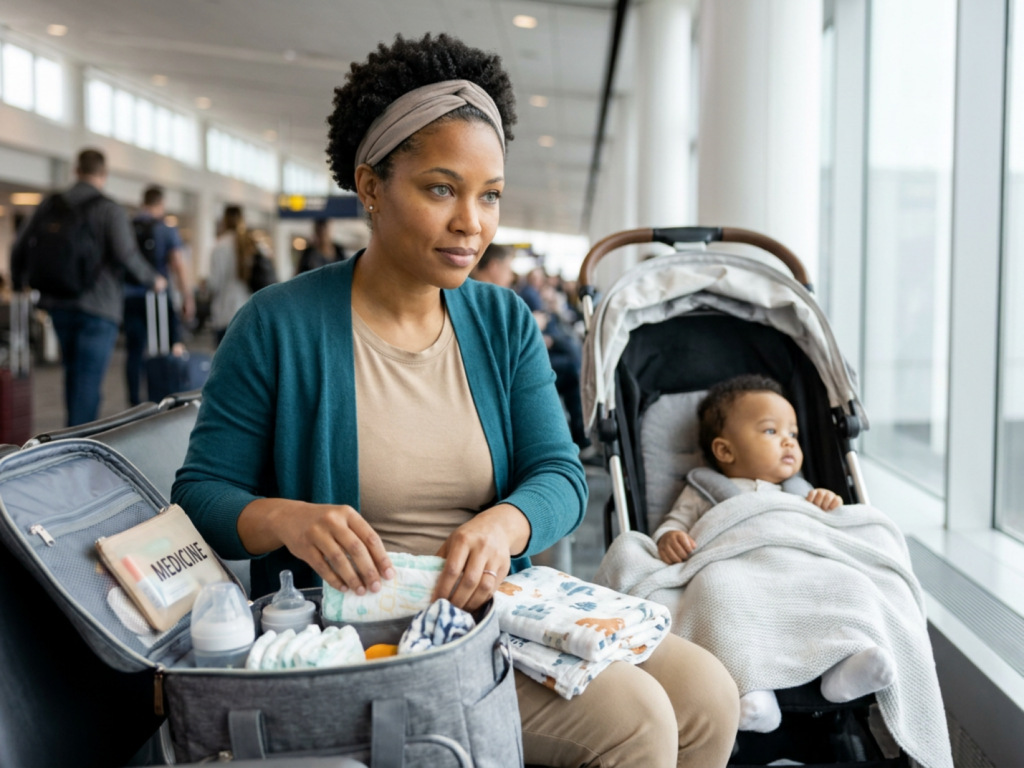
A well-organized bag supports prompt care without requiring excessive gear. Instead of packing every possible item, group supplies according to the needs most likely to arise: feeding, changing, warmth or cooling, soothing, and health. Keep high-frequency items in exterior or top compartments. A spare outfit sealed in a washable bag, a lightweight changing mat, diapers, wipes, and a disposal bag address many common disruptions. Include a change of top for the caregiver on longer outings; infant spit-up or leaking diapers can affect the adult’s ability to continue comfortably.
Your baby outing diaper bag essentials should also reflect the length and setting of the trip. A nearby walk needs less than a full day of travel, but both benefit from a small reserve. Pack more diapers, feeding supplies, and clothing than you expect to use when delays would be difficult to manage. Check items routinely for depleted stock, damaged nipples, expired products, and unsuitable clothing size.
For health-related items, carry only treatments already recommended for your baby and keep original labels and dosing instructions available. If your infant takes regular medication, bring enough for the planned journey plus a reasonable delay, and ask the prescribing clinician or pharmacist how it should be stored. Do not improvise doses based on an adult product or use a medicine to make travel easier without professional guidance.
- Feeding: clean bottles or nursing supplies, food appropriate to age, bibs, and burp cloths.
- Changing: diapers, wipes, barrier cream if routinely used, changing surface, and waste bags.
- Comfort: a familiar small comfort item, weather-appropriate layer, and sun protection appropriate for the baby’s age.
- Health: relevant medication, a thermometer for longer travel when appropriate, and contact details for the pediatric care team.
Plan feeding and hydration with safety in mind
Feeding away from home is usually easier when you decide in advance whether you will breastfeed, express milk, use ready-to-feed formula, prepare powdered formula, or offer complementary foods. Follow the same hygiene principles you use at home. Clean hands before preparing feeds where possible, use safe water for infant feeding, and avoid leaving prepared milk or food at unsafe temperatures. An insulated cooler with ice packs may help transport expressed breast milk or prepared feeds when suitable, but storage and use should follow product instructions and your healthcare team’s advice.
Responsive feeding principles still apply in public: watch for early hunger cues such as rooting, hand-to-mouth behavior, and increasing alertness rather than waiting for intense crying. Feeding before distress escalates can make the process calmer for everyone. A partially consumed bottle should be handled according to established food-safety guidance, because saliva can increase contamination risk over time. When in doubt, discard rather than save milk that has been warmed or started.
Air travel adds logistical issues. Airlines and security processes may have procedures for breast milk, formula, baby food, and medications, so check requirements before departure and allow additional screening time. During takeoff and landing, sucking through breastfeeding, a bottle, or a pacifier may help some babies manage pressure-related ear discomfort. Do not force a feed if the baby is asleep, refusing, or has a swallowing concern; ask a clinician for individualized advice.
Healthy young infants generally meet hydration needs through breast milk or formula rather than plain water. Vomiting, diarrhea, fever, hot conditions, or poor feeding can change the risk picture. Seek clinical advice promptly if you are concerned about dehydration, especially reduced wet diapers, unusual lethargy, a very dry mouth, or an inability to keep feeds down.
Protect sleep, comfort, and temperature regulation
Outings often interrupt sleep, and a missed nap is not inherently harmful. However, cumulative fatigue can make feeding, settling, and emotional regulation harder. Bring a realistic exit strategy: a quiet walk, a return to the car, or going home earlier than planned. Avoid assuming that a baby will sleep safely in any travel device. Car seats are for transport, and sleeping infants should be moved to a firm, flat sleep surface when feasible after arrival. Stroller and carrier use should follow manufacturer guidance, with the baby’s airway visible and unobstructed.
Infant temperature regulation outdoors deserves deliberate attention. Babies can overheat or become chilled more quickly than adults, particularly when inactive in a stroller or carrier. Dress in adjustable layers and reassess after moving between air-conditioned buildings, vehicles, sun, wind, and crowds. Feel the chest or back rather than relying only on hands and feet, which may be cool without indicating dangerous cold stress. Remove excess layers promptly if the baby is sweaty, flushed, or unusually irritable.
Protecting an infant from direct sun is preferable to relying on heavy covers over a stroller, which can impair airflow and raise internal temperature. Use shade, breathable clothing, and age-appropriate sun protection in line with pediatric advice. In cold weather, avoid bulky outerwear under car-seat harnesses because it can compromise harness fit. Add warmth after the harness is secure, such as with a blanket placed over the straps.
Public spaces can also be overstimulating. Loud sound, bright lights, repeated handling by unfamiliar people, and a long sequence of errands may lead to fussiness that resembles hunger or pain. A brief quiet break, reduced sensory input, and familiar soothing can be more useful than adding activities or passing the baby between people.
Use transport systems safely and efficiently
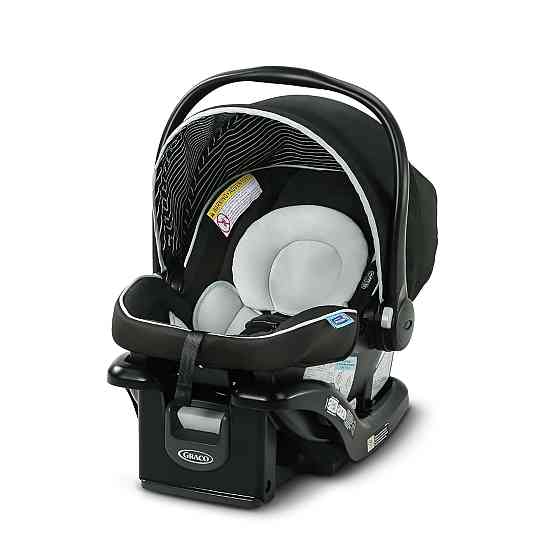
Safe transport for infants is a non-negotiable part of planning. Use an age- and size-appropriate car seat installed and used according to the manufacturer instructions and applicable local regulations. Before a long trip, check the harness fit, recline setting, and whether the baby has any clinician-specific positioning needs. Premature infants and babies with respiratory, neuromuscular, or airway concerns may need individualized guidance about travel positioning and duration.
For public transit or air travel, think through each transition: home to vehicle, parking to terminal, security to gate, and arrival to destination. A stroller can be useful for carrying supplies and providing a contained space, while a carrier can simplify stairs and crowded queues. Choose the option that lets you keep the baby’s face visible, maintain an open airway, and move without rushing. Practice folding the stroller and adjusting the carrier before the travel day.
On road trips, plan regular stops around the baby’s feeding and comfort needs rather than trying to maximize driving time. Never feed a baby while a vehicle is moving if it requires unbuckling or unsafe positioning. An adult seated nearby can observe the infant, but a rear-facing baby may still be difficult to assess from the driver’s seat. Pull over safely when care is needed.
For flights, confirm airline policies for infant seating, car seats, stroller check-in, and luggage. Keep a small in-seat bag with immediate supplies so you are not repeatedly accessing an overhead compartment. Extra clothes for both baby and caregiver, a familiar soothing item, and enough feeds for delays are practical safeguards described in travel guidance for families.
Prepare for illness, delays, and changing needs
Travel preparation should include a proportionate health contingency plan. Know the address and phone number of your destination, how to access urgent care, and whether your health insurance has travel restrictions or assistance services. The World Health Organization emphasizes that travel health planning should account for destination-specific risks and individual health needs. For international travel, discuss immunizations, infectious-disease precautions, medications, and itinerary suitability with a qualified healthcare professional well ahead of departure.
Babies can become unwell quickly, and travel environments can make assessment more difficult. Do not attempt to diagnose a fever, rash, breathing change, or feeding problem through a checklist alone. Seek urgent medical evaluation for breathing difficulty, bluish or gray color, marked lethargy, seizure-like activity, signs of significant dehydration, persistent vomiting, blood in vomit or stool, or a baby who is difficult to rouse. Fever in a young infant requires prompt professional assessment; the appropriate threshold and urgency depend on age and clinical context.
Make delays easier by carrying a modest reserve and revising expectations early. A canceled train, traffic jam, or lengthy airport queue may mean an additional feed, diaper change, or rest break. This is not a failure of planning. It is the reason for planning. Keep caregiver needs visible as well: fluids, a snack, charged phone, and a way to contact support can preserve your capacity to make sound decisions.
After the outing, reset the bag while the details are fresh. Replace used supplies, wash feeding equipment as needed, note what was missing, and adjust your next plan. Over time, this creates a personal system based on your actual baby rather than an idealized packing list.
When to seek urgent help
- Seek urgent medical assessment for breathing difficulty, blue or gray coloration, seizure-like activity, or a baby who is difficult to wake.
- Contact a healthcare professional promptly for fever in a young infant, especially if the baby is under 3 months old.
- Get medical advice for repeated vomiting, poor feeding, markedly fewer wet diapers, or concern for dehydration.
- Do not leave an infant unattended in a vehicle, stroller, car seat, carrier, or other travel device.
- Ask the pediatric care team before travel when a baby was born prematurely or has significant cardiac, respiratory, feeding, or neurologic needs.
Tools & Assistance
- A compartmentalized diaper bag with a restock checklist
- An insulated cooler with ice packs for feeds when appropriate
- A written feeding and medication log for longer trips
- Destination urgent-care and pediatric contact information
- Airline, public transit, and travel-insurance policy pages
FAQ
How many diapers should I bring for an outing?
Bring enough for the expected duration plus several extras for delays or unexpectedly frequent stools. The right number depends on your baby's age, feeding pattern, and destination.
Can a baby sleep in a car seat or stroller during an outing?
Car seats are designed for travel. If a baby falls asleep, move them to a firm, flat sleep surface when feasible after arrival, and always follow product instructions and safe-sleep guidance.
What should I do if my baby refuses a feed while traveling?
Offer calm, responsive opportunities to feed and consider whether fatigue, heat, noise, congestion, or overstimulation may be contributing. Seek professional advice if refusal persists or hydration is a concern.
How can I reduce ear discomfort on a flight?
Sucking during takeoff and landing may help some babies equalize pressure. Breastfeeding, a bottle, or a pacifier may be options when appropriate for your baby.
Sources
- MedlinePlus — Traveling with children: MedlinePlus Medical Encyclopedia
- Mayo Clinic Press — Air travel with an infant
- World Health Organization — Travel and health
Disclaimer
This article provides general educational information and is not a substitute for medical advice, diagnosis, or treatment. Consult a pediatric healthcare professional for advice tailored to your baby and travel plans.












Please log in to leave a comment.