
Intro
There is no single schedule for changing baby clothes. Most infants need a change when clothing becomes wet, soiled, sweaty, uncomfortable, or unsuitable for the surrounding temperature. A newborn may go through several outfits in one day because of spit-up, milk spills, stool leakage, or diaper changes, while an older baby may wear the same clean outfit for much longer.
The practical goal is to keep the baby's skin clean and dry, support thermal comfort, and use clothing that is appropriate for the baby's stage and environment. Clothing changes are therefore guided more by the baby's condition than by the clock.
Highlights
Change clothing promptly when it is soiled with urine, stool, vomit, breast milk, formula, or other material.
A clean outfit can usually remain on a baby until it is dirty, damp, sweaty, uncomfortable, or too warm.
Check the baby's torso and neck for heat and moisture rather than relying only on hands and feet.
Keep several spare outfits available during the newborn period and when starting complementary foods.
Contact a healthcare professional if skin irritation persists, spreads, or is accompanied by other concerning signs.
There is no fixed number of daily outfit changes
Healthy babies do not need their clothes changed a predetermined number of times each day. Some babies remain clean and comfortable in one outfit for many hours; others need multiple changes before midday. The difference often reflects feeding patterns, reflux or uncomplicated spit-up, stool frequency, diaper fit, drooling, sweating, and developmental activity.
During the first weeks, caregivers commonly change a newborn’s clothes one to several times daily. This is not because newborn clothing must be replaced on a strict timetable, but because newborns have frequent feeds and unpredictable elimination. A small amount of milk on the shoulder may be harmless once it has dried, whereas a wet, sour-smelling, or repeatedly soiled garment should be replaced.
An outfit can generally stay on when it is visibly clean, dry, comfortable, and appropriate for the room temperature. Before sleep, check that the clothing is not damp, excessively loose, twisted, or too warm. Safe sleep clothing should allow free movement and should follow current guidance from the baby’s clinician or recognized public health authority.
Parents and caregivers may feel pressure to keep a baby perfectly spotless. In practice, prompt attention to significant soiling matters more than changing clothes for every tiny mark. A realistic routine protects the baby’s skin while limiting unnecessary laundry and disruption.
Change clothes when they are wet or soiled
The clearest reason to change baby clothes is contamination or moisture. Replace the garment when it is wet from urine, soaked with spit-up, stained with breast milk or formula, contaminated by stool, or damp from sweat. Moisture held against the skin can increase friction and maceration, meaning softening and weakening of the outer skin layer. These effects can make irritation more likely, particularly in the neck, axillae, groin, and skin folds.
Stool deserves prompt attention because it contains microorganisms and digestive enzymes that can irritate skin. If a diaper leak reaches a bodysuit, trousers, socks, or bedding, remove the soiled items and clean the baby’s skin according to the family’s usual hygiene routine. Diaper care and clothing care are closely related, so caregivers may also benefit from reviewing diaper dermatitis prevention and practical guidance about diaper changes how often newborn.
For spit-up, change clothing if the fabric is wet, the baby seems uncomfortable, the material is cold against the skin, or the stain covers a substantial area. A minor dry spot on an otherwise clean garment does not always require an immediate full change. However, repeated exposure to milk residue may irritate sensitive skin, so a fresh outfit is reasonable when staining is extensive or persistent.
Place wet or soiled clothing in a designated laundry container rather than leaving it against the baby’s skin. Wash garments according to their care instructions. The American Academy of Pediatrics advises washing baby clothes before first use and provides guidance for managing stains from spit-up, breast milk, formula, and stool.
Use temperature and moisture checks to guide changes
Babies cannot reliably communicate that they are too hot or cold, and their thermoregulation is still developing, especially during the newborn period. Clothing should therefore be adjusted according to the environment and the baby’s torso, neck, and general behavior. Hands and feet may feel cool even when the baby’s core temperature is comfortable, so they are not the best sole measure.
Feel the baby’s chest, back, or neck with the back of your hand. Sweaty skin, damp hair, flushed skin, a hot trunk, unusual irritability, or rapid breathing can indicate that the baby is overheated and needs a clothing or environmental adjustment. Remove a layer or change out of damp clothing promptly. NHS guidance specifically advises removing clothing if a newborn is sweating or feels hot. Plunket similarly recommends removing a layer when a baby is hot or sweaty.
As a general starting point, babies often need about one more layer than an adult in the same setting, but this is not an inflexible rule. Layering makes it easier to respond to changing temperatures. A lightweight base layer can be paired with a removable outer layer in a cool room, while excessive bundling should be avoided indoors, in a warm car, or under heavy bedding.
Check clothing after a walk, car journey, contact nap, feeding, or time in a carrier because heat can accumulate in enclosed areas. If the garment is damp from perspiration, change it even if it is not visibly dirty. Prolonged moisture and heat can contribute to prickly heat and irritant dermatitis. If you are uncertain whether a baby is too hot or too cold, ask a pediatrician, midwife, health visitor, or other qualified clinician for advice specific to the baby’s age and circumstances.
Consider age, feeding, and developmental stage
Clothing needs change as babies become more mobile and begin interacting with food. Newborns who spend much of the day feeding and sleeping may need frequent upper-body changes because of milk transfer and spit-up. Once babies roll, crawl, or spend more time on the floor, clothing may collect perspiration, saliva, dust, and food residue. The appropriate response remains condition-based: change when the fabric is dirty, damp, restrictive, or uncomfortable.
Feeding is a particularly common source of outfit changes. Keep a clean bib or absorbent cloth available, but do not rely on a bib to manage a large amount of wetness or contamination. If the bib is saturated, replace it and inspect the clothing underneath. During the introduction of solid foods, stains are expected, but clothing should be changed if food remains wet against the skin or enters folds around the neck.
Some babies have sensitive or eczema-prone skin. They may tolerate rough seams, heat, fragrances, or residual detergent poorly. Soft, breathable fabrics and correctly sized garments may reduce friction. Wash new clothes before use, use a laundering approach that suits the baby’s skin and the household, and avoid keeping a damp garment on the baby simply because it is only lightly stained.
Clothing should not restrict hip or leg movement, compress the abdomen, or leave deep marks. Replace items that have become too small, stretched, damaged, or difficult to fasten safely. Check snaps, cords, loose threads, and decorative parts regularly. Clothing for sleep and travel should be selected with the relevant safety guidance in mind, including guidance for car seats and wearable blankets.
Build a practical changing routine
A simple routine can reduce stress without turning clothing care into a constant task. At each diaper change, quickly inspect the back, neck, chest, and leg openings for wetness, stool, milk residue, pressure marks, or overheating. If the clothing is clean and dry, it can usually remain in place. If it is damp or contaminated, change the affected garments and clean the skin as needed.
Prepare clothing in small, accessible groups rather than keeping every item in circulation. For a newborn, a caregiver may find it useful to keep several bodysuits, sleepsuits, socks or foot coverings when appropriate, and one or two warmer layers available. The exact quantity depends on laundry access, climate, and how often the baby soils clothing. A spare outfit in a diaper bag is useful for appointments, travel, and unexpected leaks.
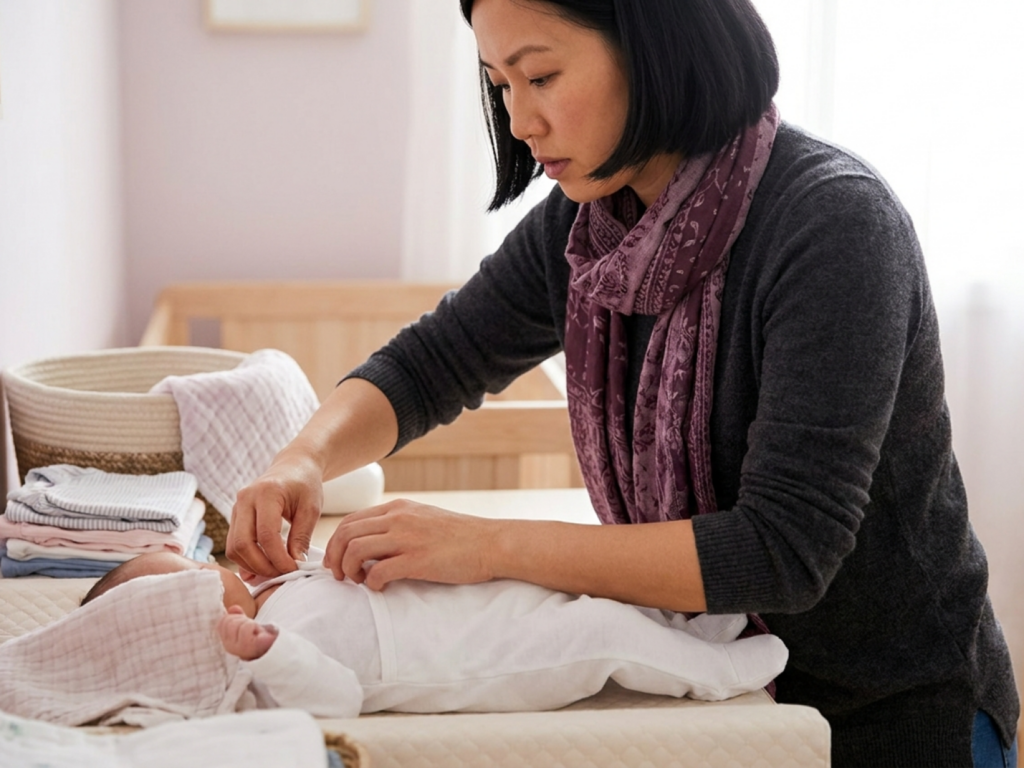
When changing a baby, use a secure, flat surface and keep one hand on the baby whenever the baby is elevated. Gather the new clothes before removing the old ones. Avoid pulling tight neck openings over the face; choose garments with practical fasteners and follow the manufacturer’s instructions. Keep wet or dirty laundry separate from clean garments.
At the end of the day, a bath is not required solely because a baby had a small clothing stain. Local cleaning of the affected area and a clothing change may be enough. Excessive washing of the skin can contribute to dryness, so use a gentle baby hygiene routine that fits the baby’s needs and clinical advice. Clothing hygiene and bathing frequency are related but are not the same decision.
Recognize skin concerns and seek appropriate advice
Most mild redness from heat, moisture, or friction improves when the area is kept clean, dry, and free from irritating clothing. Change out of damp garments, use breathable layers, and avoid rough or tight fabrics. Do not apply a medicated product solely because a rash is present unless a healthcare professional has recommended it for that baby and situation.
Seek medical advice if redness is persistent, worsening, spreading, painful, blistered, weeping, crusted, or associated with fever, reduced feeding, unusual sleepiness, breathing difficulty, or a baby who appears significantly unwell. A clinician can distinguish common irritant dermatitis, heat-related irritation, eczema, infection, and other conditions that may look similar but require different management.
Premature infants, babies with impaired thermoregulation, infants with significant medical conditions, and babies recovering from illness may need individualized clothing and temperature guidance. Their care plan may differ from general advice for healthy full-term infants. Ask the neonatal, pediatric, or primary-care team how to monitor comfort and temperature.
Caregivers should also seek urgent medical help when a baby feels abnormally hot or cold and does not improve with a reasonable environmental adjustment, particularly if there are changes in alertness, color, breathing, or feeding. Clothing is only one factor in temperature regulation; it should not be used to explain away concerning clinical signs.
When to seek medical advice
- Get urgent help for breathing difficulty, marked lethargy, abnormal color, or a baby who is difficult to wake.
- Ask a clinician about persistent, painful, blistered, weeping, crusted, or rapidly spreading skin irritation.
- Seek advice if the baby remains very hot or cold after clothing and environmental adjustments.
- Premature or medically complex babies may need an individualized temperature and clothing plan.
- Do not use prescription or medicated skin treatments without professional guidance.
Tools & Assistance
- Keep a spare outfit and absorbent cloth in the diaper bag.
- Check the baby's neck or torso for heat and moisture during routine care.
- Use a separate laundry container for wet or stool-soiled clothing.
- Ask a pediatrician, midwife, health visitor, or primary-care clinician about individualized clothing advice.
FAQ
How many times a day should I change my newborn's clothes?
There is no universal number. Change the outfit whenever it is wet, soiled, sweaty, uncomfortable, or too warm. A newborn may need several changes on a messy day and none beyond the usual outfit on a clean, comfortable day.
Should I change clothes after every spit-up?
Not necessarily. Change the clothing if it is wet, cold, extensively stained, irritating the skin, or uncomfortable for the baby. A small dry mark on an otherwise clean garment may not require an immediate full change.
How can I tell whether my baby is too hot?
Feel the chest, back, or neck rather than relying only on the hands and feet. Sweating, damp skin, a hot torso, flushed skin, irritability, or rapid breathing should prompt removal of a layer and reassessment. Seek medical advice if concerning signs continue.
Do baby clothes need to be changed before sleep?
Use clean, dry, comfortable sleep clothing that is appropriate for the room temperature and the baby's developmental stage. Change clothing if it is damp, soiled, excessively warm, loose, twisted, or otherwise unsuitable for safe sleep.
Should I change clothes because of a small stain?
A small dry stain does not always require an immediate change, but wet milk, stool, urine, sweat, or food should be removed from contact with the skin. Babies with sensitive skin may benefit from changing sooner.
Sources
- HealthyChildren.org / American Academy of Pediatrics — Cleaning Baby Clothes
- NHS — How to dress a newborn baby
- Plunket — Clothing
Disclaimer
This article is for general educational purposes and does not diagnose, treat, or replace advice from a qualified healthcare professional. Seek medical care promptly for concerning symptoms or if you are unsure about your baby's condition.











Please log in to leave a comment.