
Intro
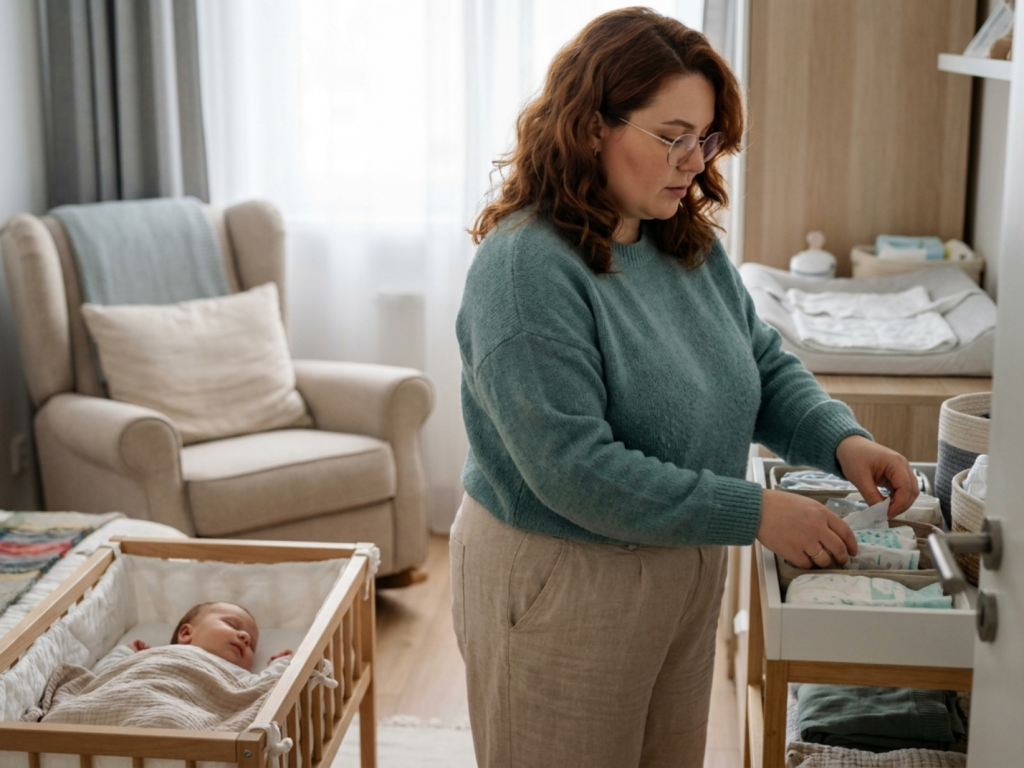
A small home can support safe, responsive infant care when each area has a clear purpose and the layout reflects how care actually happens. You do not need a separate nursery or a large inventory of equipment. Thoughtful placement, reliable routines, and careful removal of hazards can make feeding, diapering, sleep, play, and recovery more manageable.
The goal is not to make every room look perfect. It is to reduce unnecessary walking, bending, reaching, and searching while preserving safe movement for caregivers and the baby. Because every family and infant has different medical and developmental needs, discuss specialized equipment, positioning, feeding concerns, or home nursing requirements with your pediatrician, midwife, lactation professional, occupational therapist, or other qualified clinician.
Highlights
A care area can be a defined zone rather than a dedicated room.
Clear walkways and open space around the bed or changing surface support safer movement.
Frequently used supplies should be accessible to the adult but secured from the baby.
Safe sleep requires a firm, flat, uncluttered infant sleep surface.
Flexible routines help small homes remain functional as the baby grows.
Start With a Care-Flow Assessment
Before buying furniture or storage products, observe a typical day. Note where feeding occurs, where diapers are changed, where the baby sleeps, and which routes caregivers use to reach the bathroom, kitchen, entrance, and laundry. Include nighttime movement, because dim lighting and fatigue increase the likelihood of trips, dropped items, or unsafe improvisation.
Measure the usable floor area, door widths, and the clearance around existing furniture. A small home often works best when one surface serves several purposes at different times, provided each use can be reset safely. For example, a sturdy table may hold feeding supplies during the day and remain clear for another household activity later. Do not use a surface for infant care if it is unstable, near a heat source, or difficult to clean.
Prioritize the care activities that happen most frequently. A compact home may benefit from a primary care station and a small secondary basket or caddy in another area. The primary station can hold the full supply of clean diapers, wipes, clothing, burp cloths, and waste bags. The secondary station should contain only enough for short periods, reducing clutter and the need to carry loose items through the home.
Keep walkways as direct as possible. Remove excess furniture, trailing cords, low objects, and decorative items that can catch a foot or block a caregiver carrying the baby. Leave enough room to turn and sit without striking a corner. If a mobility aid, oxygen equipment, or home health service is involved, ask the relevant clinician or agency to review the layout rather than estimating clearance yourself.
Create a Safe Sleep Zone
Sleep equipment deserves its own clearly protected zone, even when the baby sleeps in the caregiver’s bedroom. A crib, bassinet, or other approved infant sleep product should be placed on a stable surface away from windows, blind cords, heaters, radiators, lamps, and furniture that could be climbed or pulled over. Follow the manufacturer’s instructions and current guidance from your pediatric clinician or public health authority.
The sleep surface should be firm, flat, and free of pillows, loose blankets, stuffed toys, sleep positioners, and other soft objects. A fitted sheet designed for that specific mattress is generally the only bedding used in the sleep space. Do not use a sofa, adult bed, recliner, or improvised container as the baby’s routine sleep surface. If the baby falls asleep elsewhere, move the baby to the designated sleep surface as soon as practical and safe.
In a small bedroom, keep a clear approach to at least one long side of the sleep space whenever possible. This supports transfers, visual checks, and nighttime care without forcing the caregiver to lean over obstacles. Place a low, stable light nearby so the adult can see the floor and the baby without relying on a phone flashlight or bright overhead lighting.
Room-sharing may make feeding and monitoring easier, but it should not require sharing an adult sleep surface. If the infant was born preterm, has respiratory or neurologic concerns, or requires monitoring or medical equipment, ask the treating team how the sleep arrangement should be adapted. Do not add products marketed to correct sleep position without professional advice.
Organize Feeding and Recovery Areas
Choose a feeding location that allows the caregiver to sit with back support and keep both feet stable. In a small home, this may be a chair, the end of a sofa, or a designated corner near the kitchen. Keep a clean, washable cloth, water for the caregiver, burp cloths, and any routinely used supplies within easy reach. Items should be reachable without standing while holding the baby, but they should not be positioned where the infant can later pull them down.
For breastfeeding, bottle-feeding, or combination feeding, organize supplies according to the plan recommended by the family’s clinician. Feeding equipment should be cleaned and stored according to manufacturer instructions and local health guidance. Avoid preparing formula, storing expressed milk, or warming bottles in ways that depart from professional or product instructions. A small lidded container can separate clean supplies from used items until they are washed.
Caregivers recovering from birth may need a place to sit, rest, hydrate, and reach the baby without repeated lifting. A feeding station should therefore support the adult as well as the infant. Keep a phone or call device nearby, especially if another adult may need to assist. However, do not let charging cables, hot drinks, medications, or small objects accumulate near the baby.
When more than one caregiver feeds the baby, use a simple shared system: one clearly labeled location for clean bottles or pump parts, one location for items awaiting cleaning, and a written record if the clinical team has recommended tracking intake. A record can be useful for communication, but it should not replace assessment by a healthcare professional when feeding is difficult or the baby seems unwell.
Build a Practical Diapering Zone
A diapering zone may be a changing table, a floor-level changing mat, or a carefully prepared surface that meets safety requirements. The essential principle is continuous supervision and physical contact when the baby is on an elevated surface. Never leave an infant unattended, even briefly, to retrieve a diaper, answer a message, or dispose of waste.
Store diapers, wipes, clean clothing, barrier products, and waste supplies before beginning a change. Keep these items on the caregiver’s side of the station, not in a place that requires reaching across the baby. As the child develops new movement skills, reassess the setup frequently; rolling, pivoting, and pushing up can emerge quickly.
Use a washable surface and a nearby closed container for waste. Hand hygiene before and after diapering reduces transmission of pathogens, particularly when the infant or a household member is medically vulnerable. Keep creams, medicines, disinfectants, laundry products, and other chemicals in secure storage. A container that is merely placed high on an open shelf may become accessible when the baby can climb or when another object is used as a step.
If space is extremely limited, a portable diapering caddy can reduce repeated trips, but it should be returned to secure storage after use. Do not carry the baby and an open caddy, hot water, or cleaning chemicals at the same time. Establish a clear path from the changing zone to the hand-washing area and waste container.
Make the Bathroom and Bathing Area Safer
Bathing requires preparation because water, height, and distraction create immediate hazards. Gather all supplies before placing the baby in or near the bath. An infant must remain within the caregiver’s immediate reach and sight for the entire bath; never rely on a bath seat, ring, sibling, pet, or another device as a substitute for hands-on supervision.
Use a stable bathing setup that is appropriate for the baby’s age and developmental stage, and follow its instructions. Check water temperature using a reliable method recommended by your healthcare professional or local safety authority. Hot water can cause scald injuries rapidly. Keep electrical appliances away from water, and do not leave the baby near a filled basin, bucket, toilet, or tub, even if the water level appears shallow.
In a compact bathroom, remove loose floor mats that slide, keep the route between the changing and bathing areas clear, and dry spills promptly. Store toiletries, razors, cosmetics, medicines, and cleaning agents in latched or otherwise secure storage. Consider how the setup will work when the caregiver is holding a wet infant: towels and clean clothing should be accessible without turning away or stepping over objects.
Families managing a baby with medical devices, limited muscle tone, casts, feeding tubes, or other special considerations should request individualized bathing instruction. An occupational therapist, nurse, or pediatric clinician can recommend positioning and equipment suited to the infant rather than relying on generic products.
Protect Movement, Play, and Development
Small homes can still provide meaningful opportunities for movement and learning. Reserve a clean, uncluttered floor area for supervised play, with enough space for the baby to move without contacting cords, sharp edges, unstable furniture, or small detachable parts. A floor-based area is often easier to monitor than a high surface and can be adapted as the baby gains new skills.
For young infants, include supervised tummy time while awake when recommended by the child’s healthcare professional. Alternate positions, respond to cues, and stop when the baby shows fatigue or distress. The play area should never be used as a sleep area if it contains toys, cushions, or other objects. Move a sleeping baby to the designated safe sleep space.
Use a small rotation of age-appropriate books and toys instead of keeping every item available. Fewer objects make cleaning easier and reduce choking hazards. Inspect toys, pacifiers, and equipment for loose parts, damage, and age restrictions. Keep coins, batteries, medication, food, and other small objects outside the baby’s access. As mobility increases, secure tall furniture to the wall and consider hardware-mounted safety gates where a barrier is clinically and practically appropriate.
Reduce overstimulation by creating one quieter corner with softer lighting and fewer sounds. This can help a caregiver recognize when the baby needs a break, but persistent inconsolable crying, unusual lethargy, breathing difficulty, poor feeding, or other concerning changes warrant prompt medical advice rather than environmental adjustment alone.
Plan Storage, Cleaning, and Emergency Access
Storage should make safe actions easy. Place frequently used, nonhazardous supplies at adult waist or shoulder level, while keeping medicines, chemicals, sharp objects, batteries, cords, and hot items secured. Avoid overloading shelves or stacking containers where they could fall. Use labeled bins only if labels remain accurate as supplies change; unclear storage can contribute to medication or feeding errors.
Keep at least one route through the home free of boxes, laundry, bags, and equipment. Do not block exits, heating vents, smoke alarms, carbon monoxide alarms, or access to a breaker panel. Ensure that caregivers know where emergency contacts, insurance information, medication lists, and the baby’s clinical instructions are kept. A concise written plan can be especially helpful when several adults share care.
Clean high-touch surfaces regularly and follow product instructions for disinfectants. Never mix cleaning chemicals, and keep wet floors inaccessible until dry. If a household member has an infection or the infant is immunocompromised, ask the medical team for specific hygiene and visitor guidance.
Review the arrangement every few weeks and after any developmental change. A layout that was safe for a nonmobile newborn may become hazardous once the baby rolls, crawls, pulls to stand, or reaches. Seek advice from a pediatrician, public health nurse, occupational therapist, or home health professional when the home must accommodate complex care, caregiver disability, or repeated near-falls.
Safety Warnings
- Never leave a baby unattended on an elevated changing surface, near water, or with a hot drink.
- Use a firm, flat, uncluttered sleep surface; sofas, recliners, and adult beds are not routine infant sleep spaces.
- Keep medicines, cleaning agents, batteries, cords, and small objects secured as soon as they enter the home.
- Do not use specialized positioning, monitoring, or bathing equipment without understanding its limitations and obtaining professional guidance when needed.
- Seek urgent medical help for breathing difficulty, unresponsiveness, a seizure, severe injury, or another emergency.
Tools & Assistance
- A floor-plan sketch with walking routes and furniture measurements
- A labeled care-supply caddy for portable, nonhazardous items
- A wall-mounted or secured storage unit for medicines and chemicals
- A washable floor mat and stable caregiver chair
- A pediatrician, public health nurse, occupational therapist, or home health assessment
FAQ
Do I need a separate nursery for my baby?
No. A separate nursery is not required for safe care. A defined sleep zone and organized care areas within shared rooms can work well when walkways remain clear and the baby has an appropriate sleep surface.
Where should I keep baby supplies in a small home?
Keep frequently used, nonhazardous supplies close to the primary care station and secure them from the baby. Store medicines, chemicals, batteries, and other hazards in closed, child-resistant storage rather than an open high shelf.
Can I change my baby on the bed or sofa?
Elevated or soft surfaces increase the risk of falls and should not be used casually. Use a setup designed for infant care, keep one hand on the baby when elevated, and follow the equipment instructions.
How often should I redesign the care areas?
Review them whenever the baby develops a new skill, such as rolling, crawling, pulling to stand, or reaching. Also reassess after acquiring medical equipment or when a caregiver’s mobility or recovery needs change.
Sources
- VNA Health Group — Preparing Your Home for Home Health Care Services
- VNA Health Group — Preparing Your Home for Home Health Care Services
- VNA Health Group — Preparing Your Home for Home Health Care Services
Disclaimer
This article is for general educational purposes and does not diagnose, treat, or replace advice from a qualified healthcare professional. Seek individualized guidance for your baby’s medical, developmental, feeding, sleep, or equipment needs.














Please log in to leave a comment.