
Intro
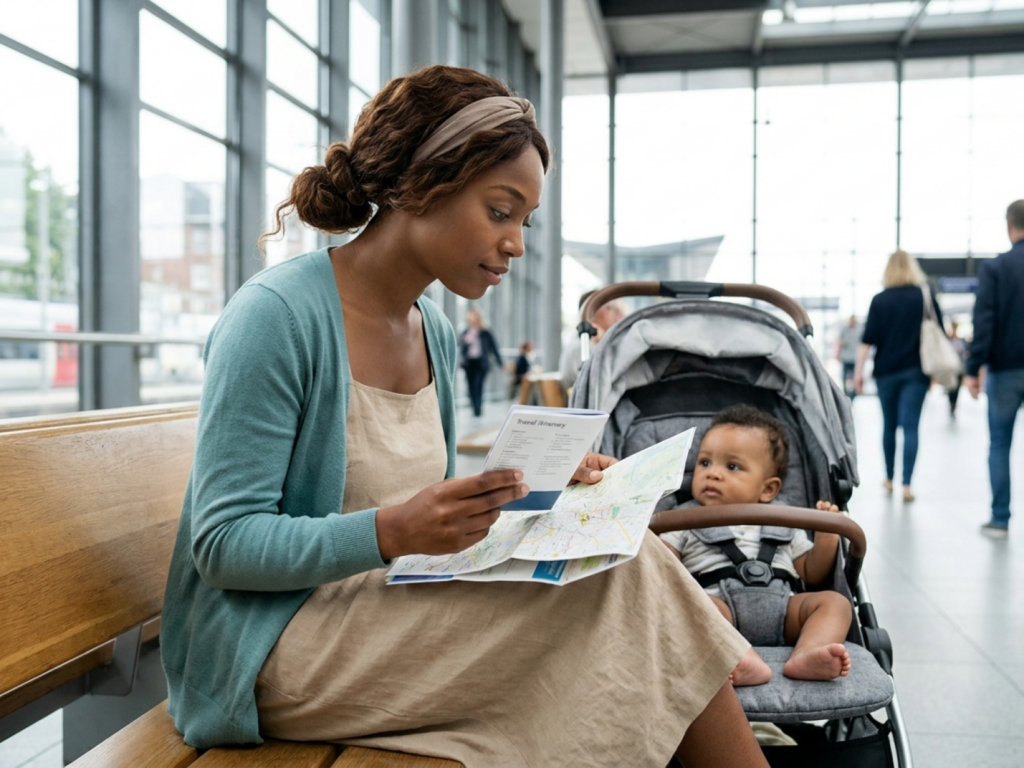
Deciding where to go with a baby is rarely just a question of choosing the most appealing destination. You are balancing your baby’s age, birth history, medical needs, feeding and sleep patterns, transport options, infection exposure, weather, access to care, and your own physical and emotional capacity. A destination that looks ideal on paper may be exhausting in practice, while a simpler nearby option may offer a more comfortable and enjoyable experience.
A useful approach is to treat the decision as a gradual filtering process. Start with your family’s non-negotiable needs, then compare destinations for feasibility, safety, and support before considering scenery or activities. Research on travel decision-making suggests that people gather information, update their judgments, and narrow several alternatives over time. Perceived risk and uncertainty can strongly influence the final choice, so it is reasonable to take those concerns seriously without allowing them to eliminate every opportunity for family life outside the home.
Highlights
The best destination is one that fits your baby’s current needs and your available support, not necessarily the most exciting or distant option.
Assess travel readiness, transport, accommodation, medical access, infection exposure, climate, and recovery time before committing.
A short, flexible trip can provide useful information about how your baby manages outings and travel.
Risk assessment should be specific and practical rather than based only on alarming headlines or vague reassurance.
Start with the reason for going
Begin by identifying what you want the trip or outing to accomplish. The purpose may be practical, such as attending a medical appointment, visiting family, moving home, or managing an administrative task. It may be relational, such as meeting relatives or spending time with a partner. It may also be restorative: getting outdoors, changing your surroundings, or taking a short break from the repetitive demands of early parenthood.
Your purpose determines which compromises are acceptable. A destination chosen for a family event may justify a longer journey if trusted support and a quiet place to feed and sleep are available. A recreational trip may need stricter limits on travel time, heat exposure, activity intensity, and schedule. If the goal is simply to leave the house and regain confidence, a local park, quiet cafe, library, or short walk may provide more benefit than a complicated overnight journey.
Write down your essential requirements before looking at destinations. These might include a private sleeping space, a refrigerator for expressed milk, step-free access, nearby food and pharmacies, a calm environment, or a hospital within a reasonable travel time. Separate requirements from preferences. A lift may be essential if you are recovering from birth or carrying equipment, whereas a scenic view may be desirable but negotiable.
It is also useful to ask what would make the trip feel unsuccessful. If missing a planned activity would cause significant stress, choose somewhere with low-pressure alternatives. If your baby’s routine is unpredictable, avoid destinations where every day depends on timed reservations. Destination choice is partly logistical, but it is also a psychological process shaped by expectations, invitations, recommendations, family ties, and spontaneous impulses. Recognizing those influences can help you distinguish your family’s actual needs from pressure to accept someone else’s preferred plan.
Use a practical destination filter
Once you have several possible places, compare them using the same criteria. A simple table can prevent one attractive feature from dominating the decision. Consider travel duration, number of transfers, road or flight conditions, accommodation, climate, local healthcare, infection exposure, cost, cancellation flexibility, and the amount of help available at the destination.
Travel time is more than the number of hours shown on an itinerary. Include packing, reaching the station or airport, security procedures, waiting, loading equipment, feeding delays, nappy changes, and the journey from the arrival point to the accommodation. A direct two-hour trip may be less demanding than a ninety-minute journey requiring multiple connections. For a road trip, identify safe places to stop and avoid planning a schedule that depends on keeping a baby settled continuously.
Accommodation should support basic care rather than merely provide a place to sleep. Check whether the room is quiet, ventilated, temperature-controlled, and large enough for safe sleep arrangements. Confirm access to clean water, a bathroom, food, and laundry. Ask whether there are stairs, smoke exposure, pets, renovation work, or other conditions that could create avoidable problems. A private room may be especially valuable when caregivers need to feed, express milk, recover, or sleep in shifts.
Healthcare access deserves a specific check. Identify the nearest emergency department, urgent care service, pharmacy, and primary care option, and verify how they can be reached outside normal hours. If you are traveling internationally, review insurance and local emergency numbers. Do not assume that a destination’s reputation as family-friendly means that medical services will be nearby or easy to access.
Research on perceived travel risk indicates that safety and uncertainty affect destination choice, sometimes even when the actual probability of harm is difficult to estimate. Convert general concern into concrete questions: What is the credible exposure? How likely is it during this season? What preventive steps are available? What would we do if the plan changed? This produces a more useful decision than either ignoring risk or treating every possibility as equally threatening.
Match the plan to your baby’s current stage
Age alone does not determine whether a baby is ready for a particular trip. Consider gestational age at birth, current medical stability, growth, feeding, sleep, immunization status, respiratory health, and any ongoing follow-up. A healthy term baby may tolerate a short local outing differently from a premature infant, a baby with cardiopulmonary disease, or a baby who needs regular specialist care.
Before making a nonessential plan, discuss individualized concerns with your pediatrician, family doctor, midwife, or relevant specialist. This is particularly important after a recent hospitalization, surgery, significant respiratory illness, poor weight gain, recurrent vomiting or diarrhea, or if your baby uses oxygen, feeding equipment, or prescribed medication. A clinician can help clarify whether the proposed environment, altitude, temperature, journey length, or access to care is appropriate.
Feeding and sleep are practical indicators of how demanding a destination may be. Ask whether you can maintain your feeding plan safely and discreetly, whether formula preparation supplies will be reliable, and whether there will be opportunities for responsive feeding rather than rushing between activities. Babies who are breastfed, formula-fed, or combination-fed may all need different equipment and time. It is reasonable to select a destination with easy access to food, water, cleaning facilities, and private space.
Consider your own recovery as part of the medical context. Postpartum pain, anemia, pelvic-floor symptoms, cesarean recovery, breastfeeding difficulties, and sleep deprivation can affect mobility and decision-making. The caregiver who will be lifting luggage, installing a car seat, navigating transfers, or responding overnight should be included in the assessment. A destination is not truly feasible if it depends on one exhausted adult doing every task.
Plan transport and the journey itself
Choose the mode of transport according to the baby’s needs, the caregivers’ capacity, and the quality of safety controls. For car travel, use a correctly installed rear-facing infant car seat and plan regular breaks so a baby is not left restrained for longer than necessary. Never use a car seat as a routine sleep space outside the vehicle, and never leave a baby unattended in a parked car.
For air or rail travel, check the carrier’s current rules for infants, seating, baggage, and approved restraints. Build extra time into the itinerary for feeding, burping, changing, and calming. Keep essential supplies in the hand luggage or day bag, including feeding equipment, nappies, spare clothing, prescribed medicines, and contact information for the baby’s healthcare professionals. A plan that cannot tolerate one missed connection is too rigid for early infancy.
Think about the final transfer. A destination may be reachable by plane but difficult to navigate once you arrive. Consider stairs, cobblestones, heat, crowded public transport, long walks, and whether a stroller or carrier can be used safely. Review guidance on safe transport for infants and age-appropriate equipment before departure. If a stroller is part of the plan, verify that it provides appropriate positioning for your baby’s age and does not create an airway risk.
For a first substantial trip, consider a shorter rehearsal outing. A half-day visit or one-night stay can reveal how your baby responds to transfers, unfamiliar sleep settings, feeding in public, and changes in temperature. Treat the experience as information rather than a test that must be passed. You can adjust the destination, duration, or timing based on what you learn.
Account for exposure, climate, and flexibility
Environmental conditions can change the level of difficulty quickly. Heat increases the risk of dehydration and overheating, while cold weather requires careful attention to clothing, skin exposure, and safe sleep temperature. High altitude, poor air quality, wildfire smoke, extreme humidity, and limited shade may be unsuitable for some babies, especially those with respiratory or cardiac conditions. Ask a healthcare professional for tailored advice when your baby has a relevant medical history.
Crowding and infection exposure should be considered in proportion to your baby’s age, health, vaccination status, and the current local situation. Review practical infection prevention during travel, such as hand hygiene, avoiding close contact with visibly unwell people, improving ventilation where possible, and checking whether routine vaccines are up to date. Do not place a mask on a young infant unless specifically directed by a qualified clinician; instead, focus on caregiver and environmental measures that are appropriate for the baby’s age.
Flexibility is a safety feature. Choose refundable accommodation when possible, avoid overbooking activities, and keep one unscheduled period each day. Have a simple plan for returning home or obtaining medical help if your baby becomes unwell. Pack enough essential supplies for delays, but avoid bringing so much equipment that moving around becomes unsafe or exhausting.
Before leaving, review a baby travel safety checklist that covers identification, emergency contacts, feeding supplies, safe sleep, transport, medication storage, and weather protection. Recheck conditions shortly before departure because travel advisories, outbreaks, transport disruptions, and weather can change. A destination that was reasonable a month ago may need a different plan today.
Make the decision and revisit it calmly
After screening the options, choose the destination that meets your non-negotiable requirements with the least avoidable strain. You do not need perfect certainty. Instead, aim for a decision that is proportionate to the situation and supported by a contingency plan. A useful final question is: if one part of the day goes badly, will we still have a safe place to rest, feed, and recover?
Discuss the decision with the adults who will actually travel. A relative’s enthusiasm or an attractive booking should not override a caregiver’s concern about exhaustion, transport, or medical access. If the trip is primarily for someone else, clarify what support they will provide in practical terms. “We will help” is less useful than an agreed plan for meals, luggage, overnight care, and transport.
Set clear reasons to postpone or shorten the trip. These may include a new fever, breathing difficulty, repeated vomiting or diarrhea, markedly reduced feeding, unusual lethargy, or advice from your baby’s clinician. Seek urgent medical care for serious or rapidly worsening concerns rather than trying to continue with the itinerary.
Finally, remember that choosing a nearby destination is not a failure to travel. Early family experiences can be meaningful even when they are modest, slow, and close to home. As your baby grows and your confidence increases, the range of feasible destinations can expand. Reassessing the plan is a form of responsive caregiving, not indecision.
When to pause and seek advice
- Seek urgent care for breathing difficulty, blue or gray coloration, seizures, severe dehydration, or a baby who is difficult to wake.
- Contact a healthcare professional before travel after recent hospitalization, surgery, or a significant acute illness.
- Ask for individualized guidance for premature infants or babies with cardiac, respiratory, neurologic, or immunologic conditions.
- Postpone nonessential travel if your baby develops a fever or a clear deterioration in feeding, alertness, or breathing.
- Do not rely on travel insurance, online forums, or destination marketing as a substitute for medical advice.
Tools & Assistance
- A destination comparison table covering travel time, transfers, accommodation, climate, healthcare access, infection exposure, cost, and cancellation terms
- A written baby travel safety checklist
- Local emergency numbers, nearby pharmacy details, and the address of the nearest emergency department
- A flexible itinerary with planned feeding, rest, and contingency periods
- A pre-travel discussion with your pediatrician, family doctor, midwife, or specialist when medical concerns apply
FAQ
How far should I travel with a newborn?
There is no universal distance or age threshold. The appropriate plan depends on the baby’s health, birth history, transport method, destination, and access to care. Discuss longer or medically complex travel with your baby’s clinician.
Is a nearby destination always safer than a distant one?
Not always, but shorter and simpler travel often reduces exposure to transfers, fatigue, delays, and limited access to familiar healthcare. Compare the actual conditions rather than relying on distance alone.
What should I prioritize when choosing a destination with a baby?
Prioritize medical access, safe transport, suitable accommodation, manageable climate, feeding and sleep support, infection prevention, and flexibility. Activities and scenery can be considered after these needs are met.
Should I cancel travel if my baby has mild symptoms?
Mild symptoms can have different implications depending on the baby’s age and medical history. Contact a healthcare professional for advice, and seek urgent care for breathing problems, dehydration, unusual drowsiness, or rapid worsening.
Sources
- PubMed Central — Which travel risks are more salient for destination choice? An experimental study
- Tourism Analysis — The psychological process of travel destination choice
- University of St.Gallen — Study on travel decisions: What attracts us to certain places?
Disclaimer
This article provides general educational information and is not a diagnosis or a substitute for individualized medical advice. Consult a qualified healthcare professional about your baby’s specific travel plans, and seek urgent care for serious or rapidly worsening symptoms.











Please log in to leave a comment.