
Intro
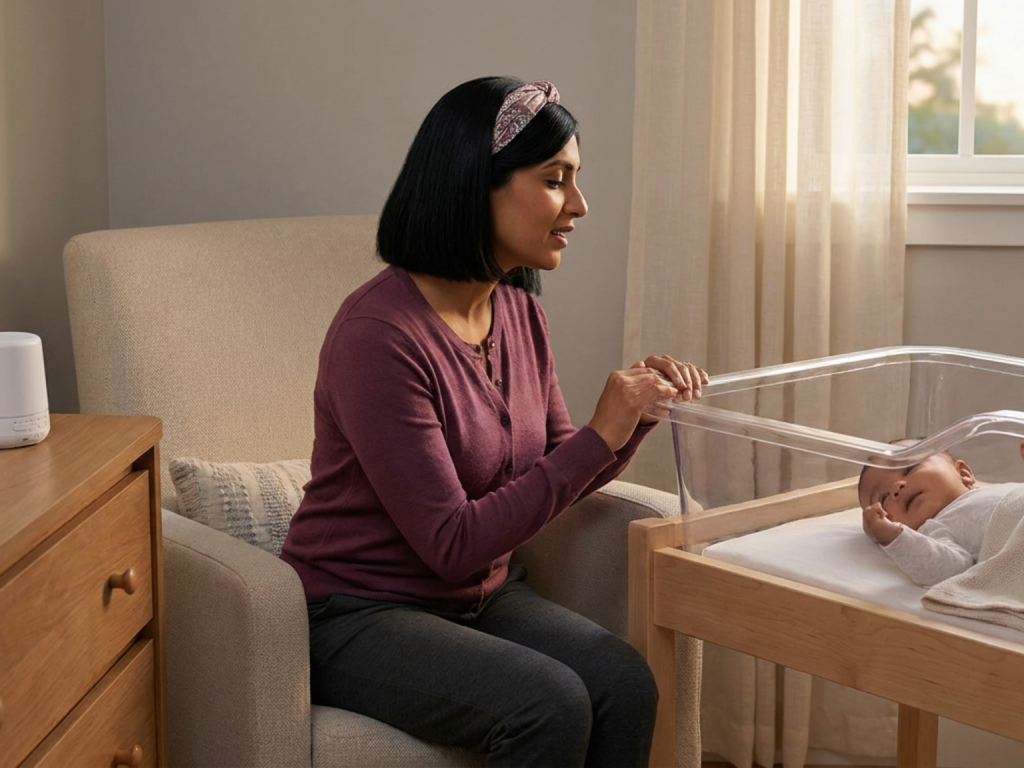
A calm voice, a steady hum, or a simple repeated sound can be a useful part of comforting a baby during ordinary unsettled periods. These sounds do not make every cry stop, and they do not replace attending to hunger, discomfort, illness, or safety needs. They can, however, offer a predictable sensory cue while a caregiver observes, responds, and stays connected.
For medically literate caregivers, it may help to view soothing sounds as support for infant state regulation: reducing competing stimulation, offering familiar rhythm, and pairing sound with responsive care. The goal is not silence at any cost. It is helping the baby move toward a calmer, safer state while remaining alert to signs that need clinical assessment.
Highlights
A low, unhurried caregiver voice can become a familiar cue of safety, especially when it is paired with prompt, responsive care.
Repetitive sounds may reduce sensory unpredictability, but the evidence does not show that one sound works for every baby.
Use sounds at a soft conversational level and preserve safe sleep conditions; sound should never obscure crying or respiratory changes.
Persistent inconsolability, feeding difficulty, fever, respiratory effort, or a change from the baby's usual behavior warrants professional advice.
Why Predictable Sound Can Feel Settling
Infants are developing the capacity to regulate arousal: the shift between alertness, distress, drowsiness, and sleep. In early life, this regulation is largely co-regulated, meaning that the baby relies on an adult’s responsive presence, touch, movement, feeding, and voice. A calm vocal pattern may contribute because it is socially meaningful, familiar, and comparatively predictable amid a moment of sensory overload.
Repetition matters because it reduces novelty. A slow phrase repeated in the same gentle cadence, quiet humming, or a consistent shushing sound gives the auditory environment a stable pattern. For some babies, this may make it easier to orient attention away from multiple competing sensations. It is not a sedative effect, and it should not be described as treatment for colic, reflux, pain, or a sleep disorder. It is a comfort strategy that can be tried alongside basic caregiving checks.
Research on sound interventions in adults and laboratory settings suggests that nonmusical auditory input, including calming voices, may influence perceived stress and relaxation. Studies of autonomous sensory meridian response, often called ASMR, also show that soft speech and repeated auditory cues can be associated with relaxation-related brain responses in some participants. These findings provide plausible context, but they cannot be directly converted into claims about infant physiology or clinical outcomes. Babies have different sensory thresholds, developmental needs, and communication abilities.
The most relevant feature in daily care is often not a particular recording or technique. It is the predictable pairing of sound with an available caregiver. A baby may learn that a familiar voice accompanies being held upright after a feed, having a diaper changed, or settling after an overstimulating outing. This is why recognizing a caregiver’s voice can be meaningful even before language comprehension is established.
Using a Calm Voice Responsively
A soothing voice is usually slower, quieter, and less variable than excited play speech. Try speaking a few simple words, humming one short melody, or making a gentle sustained vowel sound while looking at the baby’s cues. The content of the words matters less than vocal prosody: pitch, rhythm, pace, and emotional tone. Infants may respond to a low, even cadence, but there is no requirement to whisper. Whispering close to an infant’s ear can still be too loud or startling.
Start with a brief needs check. Consider whether the baby may be hungry, need a diaper change, be too warm or cold, need a burp, be overtired, or need a quieter setting. Then use your voice while providing the relevant care. For example, during a late-day fussy interval, dimming the room, holding the baby securely, and repeating the same short phrase may be more effective than introducing multiple songs, toys, lights, and movements.
Watch the response rather than assuming the sound is soothing. Signs that a baby may be settling include less frantic limb movement, softer facial tension, a more organized suck, quieter vocalization, or relaxed attention. Signs of overload can include turning away, stiffening, arching, widening the eyes, escalating crying, or becoming more unsettled. If the response worsens, pause the sound, lower environmental stimulation, and reassess the baby’s needs.
Responsive turn-taking with infants remains valuable even when the aim is soothing. If a baby coos during a calm period, pause briefly and answer warmly rather than maintaining an uninterrupted soundtrack. This preserves the social quality of the interaction and avoids treating sound as a tool to override communication. Talking to baby for development can occur naturally within these small exchanges, without demanding constant speech from an exhausted caregiver.
Repetitive Sounds: Simple, Soft, and Limited
Repetitive sounds can include quiet humming, a steady fan-like household sound, a simple recording of rainfall, or an unchanging shush made from a comfortable distance. The best choice is usually the least stimulating sound the baby tolerates. Complex music with abrupt percussion, frequent advertisements, changing playlists, or wide swings in volume can be activating rather than calming.
There is no evidence-based need to play sound continuously. Use it as a short part of a routine, then reduce it once the baby is calm or asleep. Continuous sound can make it harder for caregivers to notice changes in crying, coughing, vomiting, or breathing. It may also become burdensome if the household feels unable to settle without a device. A flexible routine is more useful than an essential ritual.
Keep the sound source away from the baby’s head and use a low volume. A practical benchmark is quiet conversation at a distance, not a sound loud enough to cover adult speech. Avoid placing phones, speakers, headphones, or sound machines inside the cot, bassinet, pram, or car seat. Infants’ ear canals are small, and close sound sources can create a higher sound exposure than caregivers expect. Do not use earbuds or headphones on a baby.
When choosing recordings, consider the caregiver’s own regulation as well. A neutral, steady sound that helps an adult breathe more slowly and speak more gently may indirectly help the baby through calmer co-regulation. Conversely, an irritating loop can increase caregiver tension. The sound does not need to be special or optimized; it needs to be tolerable, low intensity, and easy to stop.
- Use one sound at a time rather than layering music, white noise, and speech.
- Keep devices outside the sleep space and cords fully inaccessible.
- Lower the volume before entering the room, then assess the baby’s reaction.
- Turn sound off if it seems to increase crying, vigilance, or agitation.
Sound Is Not a Substitute for Safe Sleep
Calming sound is compatible with safe sleep only when the sleep environment itself remains safe. A baby who has fallen asleep while being soothed should be placed on their back in an appropriate clear, firm sleep space according to local safe-sleep guidance. Sound machines, toys, pillows, loose blankets, and other objects should not be placed in the cot to create a soothing atmosphere.
It is also useful to separate settling from forcing sleep. Some babies vocalize, twitch, briefly cry, or make intermittent noises during active sleep. Parents may feel compelled to add sound or pick the baby up immediately, but a short pause to observe can sometimes prevent unnecessary stimulation. This does not mean ignoring sustained distress. It means checking whether the baby is actually awake and escalating before intervening.
Sound should never be used to mask a baby who is crying intensely, repeatedly waking from apparent discomfort, or showing a change in breathing. A white-noise device cannot distinguish normal noise from clinically important noise, and neither can a tired adult relying on it to reduce the impact of crying. If a caregiver needs distance because crying is overwhelming, the safer approach is to place the baby in a clear, safe cot, step away briefly, and seek support from another adult or a healthcare service as appropriate.
For travel, avoid using sound as a way to prolong time in a car seat or other sitting device once the journey has ended. If a baby falls asleep there, follow current local advice about moving them to an appropriate sleep surface when feasible. The convenience of a successful sound routine should not override safe positioning and supervision.
When Crying Needs More Than Soothing
Most infant crying is communication, not misbehavior. The causes may be straightforward, such as hunger or fatigue, but they can also include illness, pain, feeding problems, constipation, or sensory overload. Repetitive sounds may briefly reduce distress regardless of cause, so apparent calming does not reliably identify why the baby was crying. Keep assessing the broader pattern: onset, duration, feeds, wet diapers, stools, temperature, sleep, and changes from baseline.
Contact a clinician promptly for a baby who is difficult to rouse, feeds poorly, has significantly fewer wet diapers, has repeated vomiting, or seems markedly different from usual. Seek urgent medical care for breathing difficulty, bluish or gray color, seizures, injury, or other acute concerns. In young infants, fever requires timely professional guidance; follow local pediatric advice regarding the temperature threshold and the baby’s age.
Respiratory signs deserve particular attention. Grunting with every breath, persistent rapid breathing, nostril flaring, chest retractions, or a baby who cannot feed because of breathing effort are not situations to manage with a sound routine. These can signal respiratory distress and need urgent assessment. Similarly, a high-pitched or unusual cry, persistent inconsolability, or crying that worries a caregiver should be discussed with a healthcare professional.
A useful principle is that soothing is supportive, while assessment is protective. Use calm sound to make caregiving less frantic, but trust your observation when something feels wrong. Caregivers often know a baby’s usual behavior well. You do not need to prove that a symptom meets a technical threshold before asking for advice.
A Sustainable Routine for Caregivers
Repeating a calm phrase or hum can be grounding for the caregiver as well as the baby. During prolonged crying, an adult’s autonomic stress response may rise quickly: heart rate, muscle tension, frustration, and urgency can increase. A simple routine creates a pause: place the baby safely, take two slow breaths, check immediate needs, reduce stimulation, then use a quiet voice for a few minutes while observing the response.
Keep expectations modest. Some babies prefer silence, some settle with a caregiver’s voice, and some need feeding, movement, contact, or a change of environment. Preferences may also vary by time of day and developmental stage. There is no caregiving failure when a carefully chosen sound does not work. How to calm baby safely includes accepting that no single method is universally effective.
Share the routine with other caregivers when possible. Agree on a few phrases, a preferred volume, and clear limits, such as no device in the sleep space and no sound used to cover persistent crying. Consistency can be helpful, but preserving caregiver capacity is equally important. If sound is becoming the only way anyone can cope, or if crying is affecting mental health, sleep, or safety, discuss the situation with a pediatric clinician, health visitor, or family support service.
The most soothing input is often a regulated adult who is present, observant, and willing to change course. Gentle sound can support that relationship, but attentive care remains the central intervention.
Seek Help Without Delay
- Seek urgent care for breathing difficulty, bluish or gray color, seizures, injury, or a baby who is difficult to wake.
- Do not use sound to cover persistent crying, coughing, vomiting, or changes in breathing.
- Keep speakers, phones, cords, and toys out of the cot, bassinet, and other sleep spaces.
- Avoid headphones or earbuds for babies and keep all sound at a low level and away from the head.
- Ask a healthcare professional about fever, poor feeding, reduced wet diapers, repeated vomiting, or behavior that is markedly unusual for your baby.
Tools & Assistance
- A pediatrician, family doctor, or pediatric nurse advice line
- A health visitor or community infant-feeding service
- A simple feeding, sleep, diaper, and crying log for clinical discussions
- A low-volume timer to limit sound sessions
- A trusted adult who can take over while you reset
FAQ
Can white noise soothe every baby?
No. Some babies settle with steady sound, while others become more alert or distressed. Use the baby's cues and stop if the sound seems unhelpful.
Should I leave sound playing all night?
Continuous sound is not necessary for most babies. If used, keep it low, distant from the sleep space, and easy to turn off; do not let it mask crying or breathing changes.
Is a parent's voice better than a recording?
A familiar voice can add responsive social contact because you can adjust pace, volume, and timing based on the baby's cues. A recording may be acceptable at low volume, but it cannot replace observation and care.
Can calming sounds treat colic or reflux?
They may provide brief comfort but do not diagnose or treat an underlying medical cause. Discuss persistent crying, feeding concerns, vomiting, or poor growth with a pediatric healthcare professional.
Sources
- PubMed Central — Effects of Sound Interventions on the Mental Stress Response
- PubMed Central — Induction of Relaxation by Autonomous Sensory Meridian Response
- MDPI — Capacity of Autonomous Sensory Meridian Response on the Reduction of Mental Stress
Disclaimer
This article is for general educational purposes and is not medical advice. Consult a qualified healthcare professional for concerns about your baby's crying, feeding, breathing, sleep, or behavior.

















Please log in to leave a comment.