
Intro
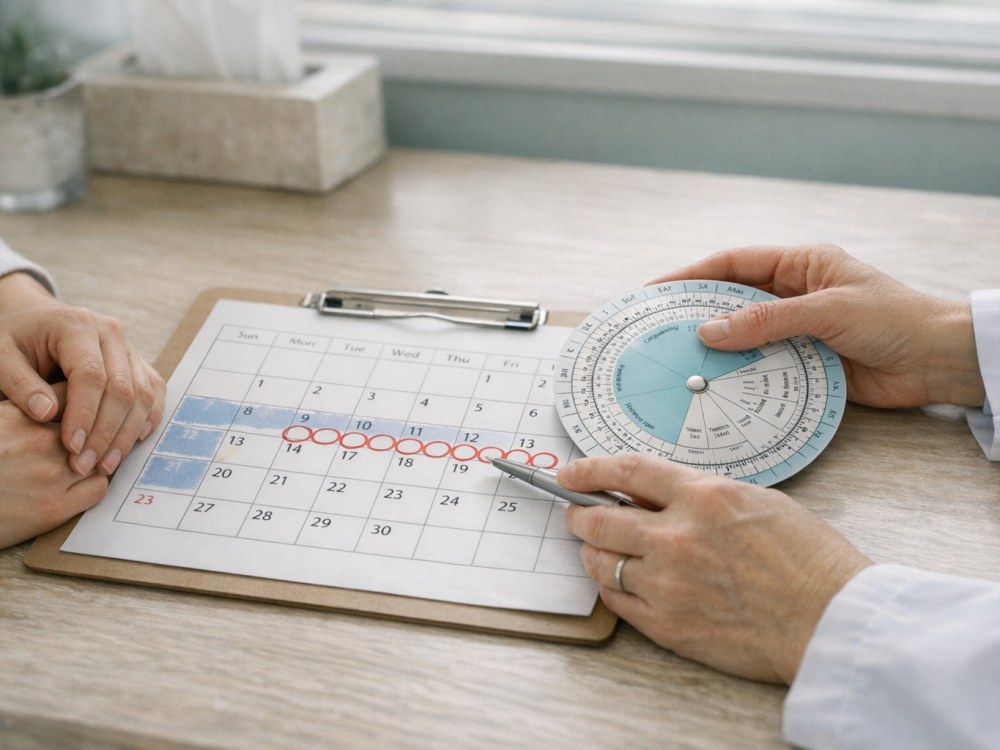
Week 1 of pregnancy can feel confusing because, medically speaking, you are usually not pregnant yet. In standard obstetric dating, pregnancy begins on the first day of your last menstrual period, often called the LMP, rather than on the day of conception. This convention gives clinicians a consistent starting point for estimating gestational age and the due date.
If you are tracking cycles, trying to conceive, preparing for fertility treatment, or newly pregnant and counting backward, understanding Week 1 can be reassuring. This first “week” is really the menstrual phase of the cycle that may later lead to conception, and it is a useful time to focus on preconception health, medication review, and supportive habits.
Highlights
Week 1 is counted from the first day of the last menstrual period, even though fertilization has not usually occurred.
The standard pregnancy timeline is approximately 40 weeks from the LMP, while fetal development after conception is closer to 38 weeks.
During Week 1, your body is shedding the uterine lining and beginning hormonal changes that prepare for ovulation later in the cycle.
A first-trimester ultrasound can help refine pregnancy dating, especially when cycles are irregular or the LMP is uncertain.
If pregnancy is possible or planned, this is a meaningful time to review folic acid, medications, vaccines, chronic conditions, and lifestyle factors with a healthcare professional.
Why Week 1 is counted before you are actually pregnant
The phrase “Week 1 of pregnancy” is a medical dating convention rather than a statement that an is already developing. In most spontaneous pregnancies, occurs around , typically about two s the first day of the ]] in a 28-day cycle. Because many do not know the exact day of or , obstetric care uses a more reliable reference: the first day of the LMP.
Using the LMP, clinicians calculate gestational age and estimate a due date about 40 weeks later. This explains the common mismatch between “gestational age” and “nic” or “fetal” age. The biologic duration from to birth is closer to 38 weeks, or about 266 days, but the clinical pregnancy clock includes the roughly two weeks .
This approach may feel odd, especially if you have just had a positive pregnancy test and are told you are already four or five weeks pregnant. However, it helps standardize prenatal care, laboratory interpretation, ultrasound timing, screening windows, and communication between professionals.
What is happening in your body during Week 1
During Week 1, your body is generally in the menstrual phase of the cycle. The uterine lining, or endometrium, is shedding because progesterone and estrogen levels have fallen at the end of the previous cycle. Menstrual bleeding is the visible sign of this process.
At the same time, the next cycle is already beginning. In the ovaries, several follicles start to respond to follicle-stimulating hormone, or FSH. One follicle will usually become dominant later in the cycle and release an egg at ovulation. Estrogen levels gradually rise as the follicle develops, helping the endometrium rebuild in preparation for a possible after fertilization.
Common experiences during this week may include menstrual cramps, lower back discomfort, breast tenderness, fatigue, mood changes, bloating, or headache. These are cycle-related symptoms, not pregnancy symptoms. If conception occurs later in the cycle, ]] pregnancy symptoms typically do not begin until after and rising human chorionic gonadotropin, or hCG, levels.
How your due date is estimated
The basic method for estimating a due date is to count 40 weeks, or 280 days, from the day of the . This assumes a roughly 28-day cycle with near day 14. In real life, cycles vary. Some people ovulate earlier or later, and some have irregular that makes the LMP difficult to identify.
Because of this, the LMP is a starting estimate rather than an absolute truth. A – ultrasound, especially measurement of the or fetus in pregnancy, can refine dating. Ultrasound dating is particularly helpful if you have irregular cycles, recently stopped hormonal contraception, are unsure of your LMP, conceived while breastfeeding, or have that could be mistaken for a period.
Healthcare professionals may also use conception-related information when it is reliable. For example, if induction, intrauterine insemination, or IVF was used, the timing may be known more precisely than in a spontaneous cycle. Even then, clinicians usually translate that information into a gestational age so that prenatal care remains standardized.
Week 1 in IVF and assisted reproduction
In IVF pregnancies, is handled differently because the date of fertilization and transfer is known. Instead of relying on the LMP, clinicians calculate gestational age based on the ’s developmental stage at transfer. For example, differs for a day-3 transfer versus a day-5 transfer.
The important point is that IVF still reports pregnancy in gestational weeks, not simply weeks since transfer. This can be surprising: a person may be considered several weeks pregnant shortly after transfer because the standard obstetric clock includes time equivalent to the pre-ovulatory phase.
If you conceived through IVF or another assisted reproductive technique, follow the provided by your fertility clinic or obstetric clinician. They can align transfer details, stage, blood hCG timing, and early ultrasound findings into one consistent pregnancy timeline.
Can you have pregnancy symptoms in Week 1?
True pregnancy symptoms are not expected in Week 1 because fertilization and usually not happened yet. Symptoms during this time are more likely related to menstruation and normal hormonal fluctuations. Cramping, bleeding, fatigue, breast tenderness, and mood changes can all occur as part of the menstrual phase.
However, if you are looking back after a positive test, you may remember this ]] as the start of pregnancy timeline. That does not mean you missed signs or should known. The body has not yet begun producing pregnancy-level hCG, which is the hormone detected by home pregnancy tests.
If bleeding is unusually heavy, pain is severe, bleeding occurs dizziness or fainting, or you a positive pregnancy test pain or bleeding, contact a healthcare professional promptly. These symptoms may require assessment and should not be interpreted only as a normal period.
Preconception health: what matters during this week
Week 1 is a valuable window for preconception care. If pregnancy is possible or desired, consider it a time to prepare the healthiest environment you can, while remembering that not everything is in your control.
- Folic acid: Many guidelines recommend folic acid before conception and in early pregnancy to support neural tube development. Ask your clinician what dose is appropriate for you, especially if you have higher-risk factors or take certain medications.
- Medication review: Do not stop prescribed medicines without medical advice. Instead, ask whether your current medications, supplements, or herbal products are compatible with conception and pregnancy.
- Chronic conditions: Conditions such as diabetes, hypertension, thyroid disease, epilepsy, kidney disease, autoimmune disease, and mental health conditions may benefit from preconception planning.
- Vaccines and infections: A clinician can review immunization status and discuss infection prevention, including rubella, varicella, influenza, COVID-19, and other relevant risks based on your location and history.
- Lifestyle factors: Avoiding tobacco, limiting or avoiding alcohol when trying to conceive, discussing substance use support, optimizing nutrition, and maintaining realistic physical activity can all support reproductive health.
Emotional reality of the first week
Trying to conceive can bring hope, uncertainty, grief, pressure, or all of these at once. Week 1 may be the start of another cycle after disappointment, or it may be the cycle that later becomes a pregnancy. Both possibilities can carry emotional weight.
If you are tracking ovulation, cervical mucus, basal body temperature, or cycle apps, try to use these tools as supports rather than sources of blame. Cycle variability is common, and even well-timed intercourse or insemination does not guarantee conception in any single cycle.
Seek support if the process feels overwhelming, especially if you have a history of pregnancy loss, infertility, trauma, anxiety, depression, or medical complications. Compassionate care includes emotional wellbeing as much as physical health.
When to seek medical advice promptly
- Very heavy bleeding, soaking pads rapidly, or passing large clots should be discussed with a healthcare professional.
- Severe pelvic pain, shoulder-tip pain, fainting, or dizziness needs urgent medical assessment, especially if pregnancy is possible.
- A positive pregnancy test with bleeding or one-sided pain should be evaluated to rule out complications such as ectopic pregnancy.
- If you take medications that may affect pregnancy, ask a clinician before stopping, changing, or starting anything.
- If your cycles are very irregular, absent, or difficult to date, early professional guidance can improve pregnancy dating and care planning.
Tools & Assistance
- Record the first day of your last menstrual period and typical cycle length
- Schedule a preconception or early pregnancy consultation with a healthcare professional
- Use a reputable pregnancy dating calculator as a starting estimate, not a diagnosis
- Prepare a current list of medications, supplements, medical conditions, and allergies
- Contact your fertility clinic for official dating if you conceived through IVF or assisted reproduction
FAQ
Am I actually pregnant during Week 1?
Usually no. Week 1 is counted from the first day of your last menstrual period, before ovulation and fertilization in most spontaneous pregnancies.
Why is pregnancy called 40 weeks if fetal development is about 38 weeks?
The 40-week timeline starts from the last menstrual period. Actual development after fertilization is closer to 38 weeks, but LMP dating gives clinicians a consistent reference point.
Can a pregnancy test be positive in Week 1?
In a standard cycle, no. hCG usually becomes detectable after implantation, which occurs later. If a test is positive while you think you are in Week 1, your dates may be different or the bleeding may not be a true period.
What if I do not know my last menstrual period?
Tell your clinician. A first-trimester ultrasound and your cycle or fertility treatment history can help refine gestational age and estimated due date.
Should I change my medications while trying to conceive?
Do not stop or change prescribed medication on your own. Ask a healthcare professional to review benefits, risks, and pregnancy-compatible options.
Sources
- Mayo Clinic — Fetal development: The first trimester
- Flo Health — Gestational age: How do you count pregnancy weeks?
- HealthXchange Singapore — Pregnancy Week 1: Here's How It's Calculated
Disclaimer
This article is for informational purposes only and does not replace professional medical advice, diagnosis, or treatment. Consult a qualified healthcare professional for personal guidance, especially if you have pain, heavy bleeding, medical conditions, or fertility treatment questions.














Please log in to leave a comment.