
Intro
Preparing food in batches can make complementary feeding more manageable, especially on busy days. Safe storage and freezing are important because infants have developing immune systems and may be more vulnerable to foodborne illness. A few consistent habits, such as rapid cooling, careful portioning, accurate labeling, and thorough reheating, can substantially reduce risk.
This guide explains how to handle homemade and commercially prepared purées and soft foods. Storage recommendations can vary by country, product, refrigerator, freezer, and the ingredients used, so follow the package instructions and advice from your health professional when they are more specific.
Highlights
Cool cooked baby food quickly, then refrigerate or freeze it promptly.
Use clean, shallow, covered containers and label every portion with the food and date.
Shorter refrigerator limits apply to foods containing meat, eggs, or mixed ingredients.
Thaw food safely, reheat it evenly, and discard leftovers that have contacted your baby's mouth.
Why storage safety matters for infants
Foodborne pathogens can multiply when cooked food remains in the temperature range that supports bacterial growth. Infants may be less able to tolerate a high pathogen load because their immune defenses and gastrointestinal systems are still developing. Contamination can occur during cooking, blending, portioning, storage, thawing, or feeding, so safety depends on the entire handling chain rather than on one step alone.
Homemade baby food is not automatically safer than commercial food. Its safety depends on ingredient quality, cooking temperature, equipment hygiene, cooling speed, and storage conditions. Wash hands before handling food, clean preparation surfaces, and use utensils and containers that have been washed thoroughly. Keep raw meat, poultry, seafood, and eggs separate from cooked foods and produce to reduce cross-contamination.
Use a refrigerator that is reliably cold and a freezer that maintains a stable freezing temperature. A refrigerator door is generally warmer and experiences more temperature fluctuation than interior shelves, so store baby food toward the back rather than in the door. If food has been left at room temperature for an uncertain period, smells unusual, looks abnormal, or has a damaged container, discard it rather than relying on appearance or smell as a safety test.
Cool and portion homemade baby food promptly
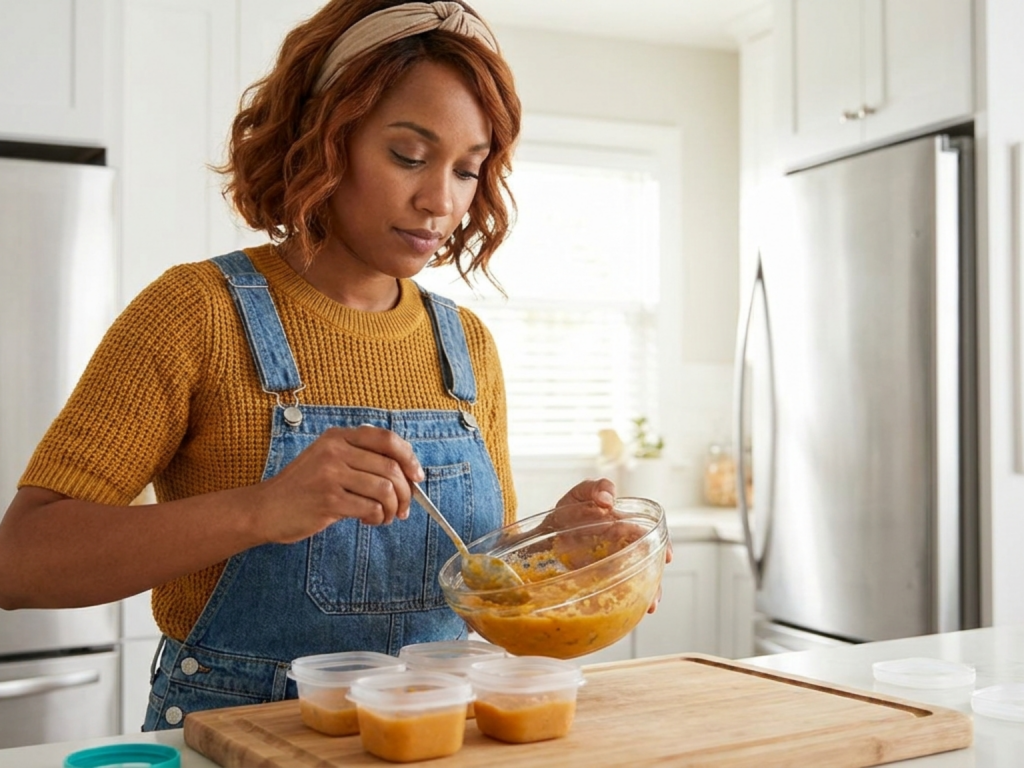
After cooking, divide baby food into small, shallow portions so heat can escape efficiently. Large, deep containers cool slowly in the center, allowing bacteria to multiply even when the surface feels cool. Transfer the food into clean containers, cover them, and refrigerate or freeze promptly after cooking. The NHS recommends cooling batch-cooked food quickly before refrigeration or freezing.
Do not leave a large pot of purée on the counter to cool for a prolonged period. You can place covered portions in the refrigerator once they have stopped steaming heavily, provided this is consistent with your appliance and local food-safety guidance. Avoid overloading the refrigerator, because this can raise its internal temperature and slow cooling.
Portion food according to your baby’s usual serving size. Small portions reduce waste and make it easier to thaw only what you need. Ice-cube trays can be useful if they are clean, food-safe, and covered, but transfer fully frozen portions to a sealed freezer container or bag to protect them from freezer burn. Leave headspace in rigid containers because food expands as it freezes. Do not fill glass containers unless they are specifically designed for freezing.
Label each portion with the food name and preparation or freezing date. Date labels are especially helpful when several foods have similar colors or textures and when more than one caregiver prepares meals. Use the oldest safe portion first and maintain a simple written or digital inventory if you freeze food regularly.
Refrigerator and freezer timelines
Storage times depend on the ingredients and preparation method. As a conservative practical approach, refrigerated homemade baby food should generally be used within one to two days. The NHS advises using refrigerated batch-cooked baby food within up to two days. Foods containing meat, eggs, or combinations of meat and vegetables may have shorter limits in some official guidance, so use the most restrictive applicable recommendation.
FoodSafety.gov distinguishes among categories of baby food. Strained fruits and vegetables generally keep longer in the freezer than foods containing meat or eggs, while meat-based and mixed foods have shorter recommended freezer periods. These limits are primarily about maintaining quality and safety under the stated storage conditions. Food that has thawed, warmed, or been handled repeatedly may no longer fit the original timeline.
For homemade food, a useful household practice is to freeze portions that will not be used within the refrigerator window. The FDA recommends labeling frozen homemade baby food and using it within a limited period, commonly up to three months for best quality when stored appropriately. Follow the specific timeline from your local food-safety authority, because official recommendations may differ.
Commercial baby food has its own instructions. An unopened pouch or jar can usually be stored according to the manufacturer’s date and directions, but once opened it should be refrigerated and used within the stated period. Do not freeze food in its original container unless the manufacturer says that it is freezer-safe. A bulging, leaking, cracked, or visibly damaged package should be discarded.
Freeze baby food in a way that protects quality
Freezing in small, single-use portions limits repeated thawing and refreezing. Choose airtight, freezer-safe containers or bags, remove excess air from freezer bags, and leave enough space for expansion. Seal portions securely to prevent dehydration and freezer burn. Although freezer burn is mainly a quality problem, dried or discolored areas can make food less appealing and alter texture.
Foods with high water content may separate after thawing. This is common with purées containing fruits, vegetables, yogurt, or other ingredients whose water and solids behave differently when frozen. Separation does not necessarily mean the food is unsafe; stir thoroughly after thawing and assess the texture before serving. Some foods, particularly potato-based or starch-heavy purées, may become grainy or watery. Freezing components separately can preserve texture better than freezing a fully mixed meal.
Do not place hot containers tightly against already frozen food if doing so will raise the freezer temperature. Arrange portions so cold air can circulate, and avoid repeatedly opening the freezer while food is freezing. Once portions are solid, group them in a clearly labeled outer container. Keep a record of the date and discard food that has been stored beyond the recommended period or has experienced an extended power interruption.
Freezing does not sterilize food. It pauses or slows microbial growth, but many microorganisms can remain viable and multiply again after thawing. Safe preparation, rapid cooling, clean handling, and appropriate thawing therefore remain essential.
Thaw, reheat, and serve safely
The safest routine is to thaw frozen baby food in the refrigerator, ideally in a covered container. Food may also be thawed using a microwave when it will be reheated immediately, but microwave heating can create hot spots. Stir the food thoroughly and allow it to stand briefly before checking the temperature. Never serve food directly from a microwave without mixing and testing it.
Reheat only the portion you plan to serve. Heat it until it is steaming hot throughout, then stir and let it cool to a comfortable serving temperature. A food thermometer can help verify even heating, although temperature alone does not correct poor handling before or after reheating. Test a small amount before offering it to your baby, and supervise feeding as usual.
Do not reheat baby food more than once. Discard any portion left in the bowl after your baby has eaten from it, because saliva can introduce bacteria. Do not return that portion to the refrigerator or freezer. If you have thawed more food than needed but it has remained refrigerated and untouched, follow local guidance about how long it may be kept; do not refreeze it unless an official source or product instructions specifically permit that practice.
Never thaw food at room temperature or leave reheated food sitting out while waiting for the next feed. Keep hot food hot until serving or refrigerate it promptly when appropriate. These precautions are especially important for foods containing meat, eggs, dairy, or cooked grains.
Special situations and practical routines
Caregivers often prepare food while also managing breast milk, expressed milk, or infant formula. These products have separate storage rules. For bottle feeds, consult guidance on How to store formula properly rather than applying baby-food timelines to prepared formula. Keep feeding equipment and baby-food utensils separate from raw-food preparation tools when practical, and clean them thoroughly after use.
For infants born prematurely, infants with immunocompromising conditions, or babies receiving specialist nutritional care, ask the pediatrician, dietitian, or neonatal team whether more stringent handling and storage limits apply. A medically complex infant may need individualized advice about raw ingredients, texture, pasteurization, food allergies, or the use of commercial products.
Consider creating a repeatable workflow: prepare food with clean equipment, portion it immediately, label it, place refrigerator portions in one area, freeze the rest, and record the date. Before feeding, select one portion, thaw it safely, reheat only that portion, stir, test, and discard leftovers. This routine reduces decisions during tired moments and makes it easier for another caregiver to follow the same process.
Storage safety does not replace developmental feeding safety. Food must also have an age-appropriate consistency and size, and your baby should be seated upright and supervised while eating. For advice about safe textures for infant feeding, choking risk, or introducing particular ingredients, speak with a qualified healthcare professional.
Discard food when safety is uncertain
- Discard food left at room temperature for an uncertain or excessive period.
- Discard food with a bulging, leaking, cracked, or damaged container.
- Discard any leftovers that your baby has already eaten from.
- Do not taste food to decide whether it is safe.
- Use extra caution after a refrigerator or freezer power interruption.
- Seek medical advice promptly if your baby develops concerning illness after eating.
Tools & Assistance
- Food-safe shallow containers with secure lids
- Freezer labels and a waterproof marker
- A refrigerator and freezer thermometer
- A food thermometer for checking reheated portions
- Advice from a pediatrician, dietitian, or local food-safety authority
FAQ
Can I freeze homemade purée in an ice-cube tray?
Yes, if the tray is clean, food-safe, and covered. Once the portions are frozen, transfer them to an airtight freezer container or bag, label them, and use them within the recommended time.
How long can homemade baby food stay in the refrigerator?
A conservative general limit is one to two days, with shorter limits potentially applying to foods containing meat, eggs, or mixed ingredients. Follow local official guidance and any recipe-specific advice.
Can I refreeze baby food after thawing?
Do not refreeze food that has been thawed and reheated or that has been left at room temperature. When in doubt, discard it and use a fresh portion.
Is separation after freezing a sign that purée is spoiled?
Not necessarily. Water separation and texture changes are common after freezing. Stir the food thoroughly, check for abnormal odor or appearance, and follow safe storage limits before serving.
Should I reheat the whole jar or pouch?
Reheat only the amount you expect your baby to eat. Pouring a portion into a separate dish helps prevent saliva contamination of the remaining food.
Sources
- FoodSafety.gov — Safe Storage of Puréed and Solid Baby Food
- U.S. Food and Drug Administration — Once Baby Arrives (Food Safety for Moms-to-Be)
- NHS — Storing and reheating baby food - Best Start in Life
Disclaimer
This article provides general food-safety information and does not diagnose, treat, or replace advice from a pediatrician or other qualified healthcare professional. Seek individualized guidance for premature, medically complex, or immunocompromised infants.













Please log in to leave a comment.